
Coin Encyclopedia
Search and identify coins from around the world — with country, denomination, metal, mint, history, and how to tell them apart.
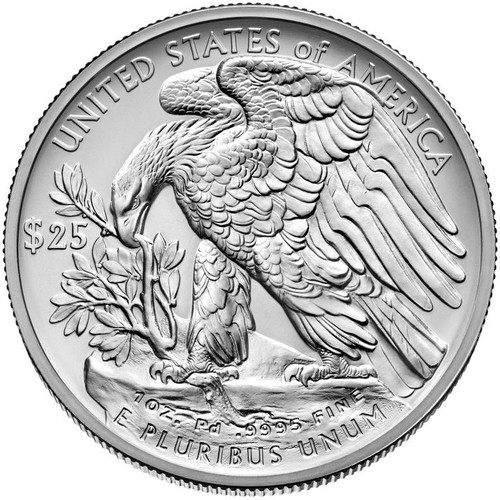
American Palladium Eagle
The U.S. Mint's one-ounce .9995 fine palladium bullion coin, launched in 2017 with classic Weinman Mercury dime and eagle designs.
Bullion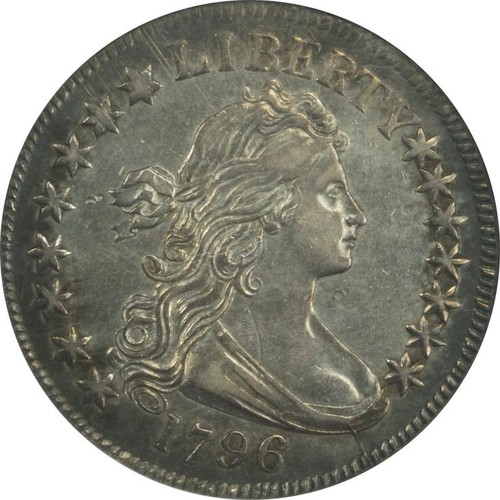
Draped Bust Half Dollar
Early U.S. silver fifty-cent piece of 1796–1807. The pictured 1796 Small Eagle with 15 stars is among the rarest of all American coins.
Half Dollar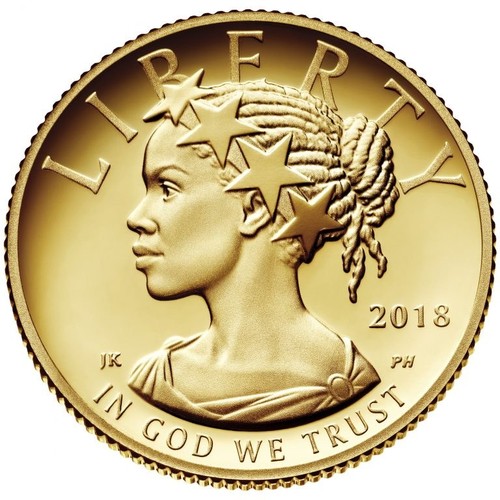
American Liberty High Relief Gold Coin
A modern one-ounce, .9999 fine gold $100 coin from the US Mint's American Liberty series, struck in dramatic high relief with a contemporary Liberty and eagle design.
Bullion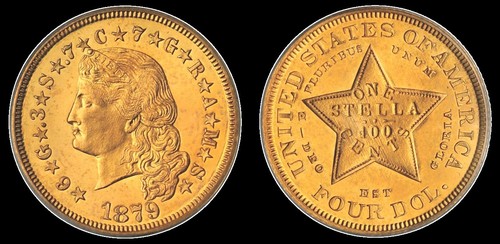
Flowing Hair Stella
An 1879 U.S. $4 gold pattern coin with a flowing-hair Liberty obverse and a large-star "ONE STELLA" reverse; famous rarity, never circulated.
Stella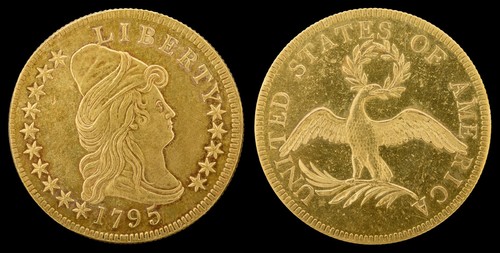
Turban Head Eagle
The first U.S. ten-dollar gold coin, struck 1795–1804, with a right-facing Liberty in a soft cap and an eagle reverse.
Eagle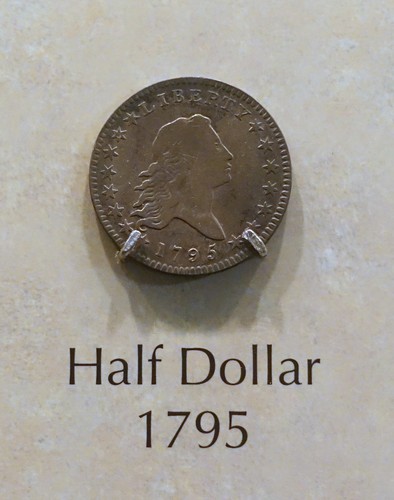
Flowing Hair Half Dollar
The first U.S. half dollar, struck 1794–1795 in silver, with a flowing-hair Liberty facing right and a small eagle within a wreath on the reverse.
Half Dollar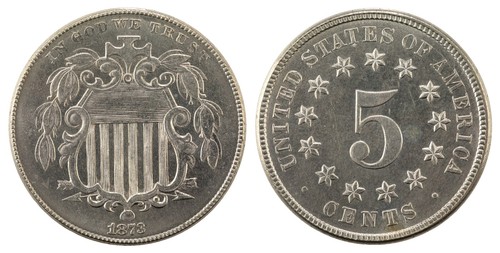
Shield Nickel
The first U.S. five-cent piece struck in copper-nickel, showing a Union shield on the obverse and a large numeral 5 on the reverse, made 1866–1883.
Nickel Five Cent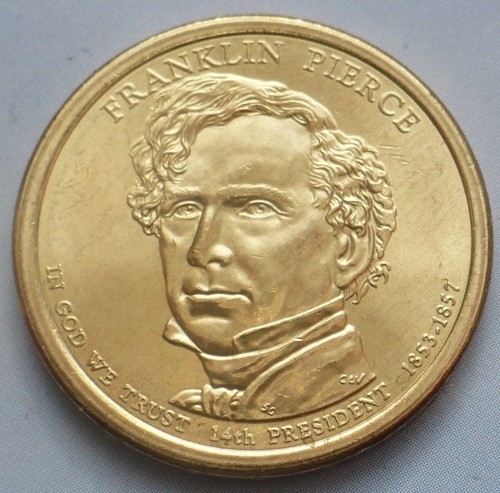
Franklin Pierce Presidential Dollar
Golden-colored U.S. dollar from the Presidential $1 Coin series, honoring Franklin Pierce, the 14th President, with a Statue of Liberty reverse.
Dollar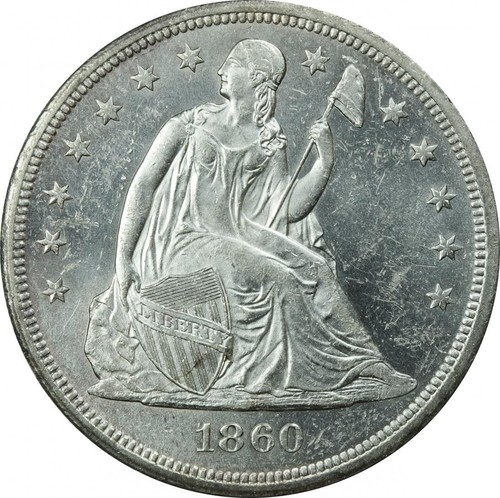
Seated Liberty Dollar
U.S. silver dollar (1840-1873) with Liberty seated holding a shield and a liberty-cap pole, ringed by stars. The pictured coin is dated 1860.
Dollar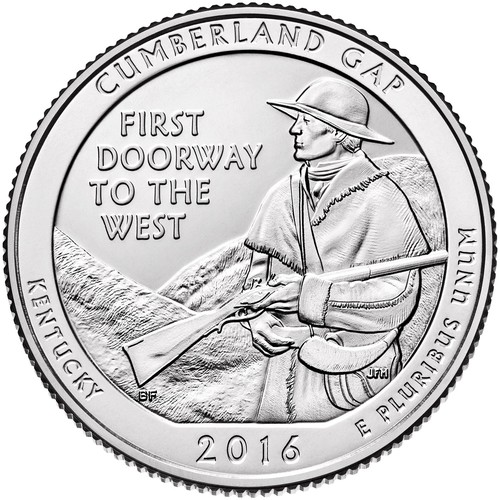
Cumberland Gap Quarter
2016 U.S. copper-nickel clad quarter for Cumberland Gap National Historical Park, Kentucky, showing a frontiersman with a long rifle and "First Doorway to the West."
Quarter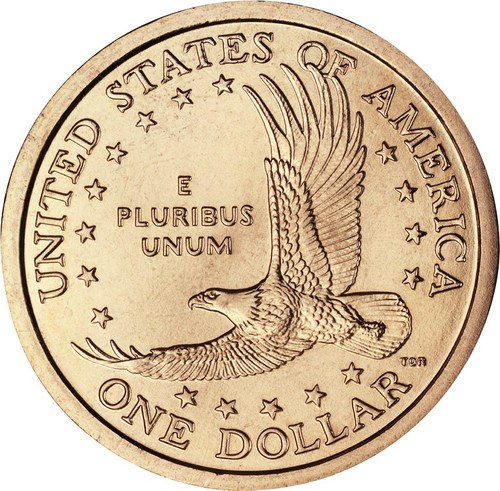
Sacagawea Dollar
U.S. golden-colored dollar coin showing Sacagawea and her infant son on the obverse and a soaring eagle on the reverse, struck 2000–2008.
Dollar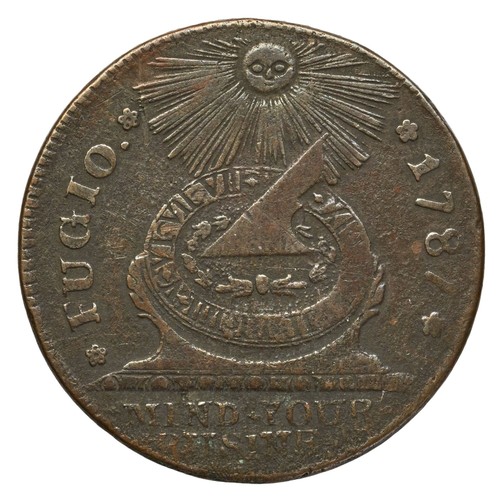
Fugio Cent
1787 copper cent, among the first coins issued under the United States, with a sundial and sun on the obverse and thirteen linked rings on the reverse.
Colonial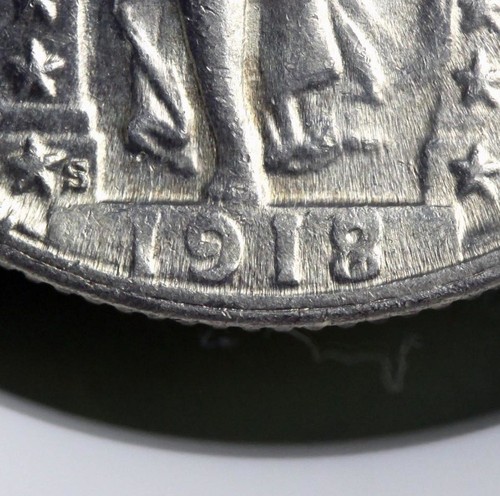
Standing Liberty Quarter
U.S. 90% silver quarter struck 1916–1930, showing a standing Liberty with shield on the obverse and an eagle in flight on the reverse.
Quarter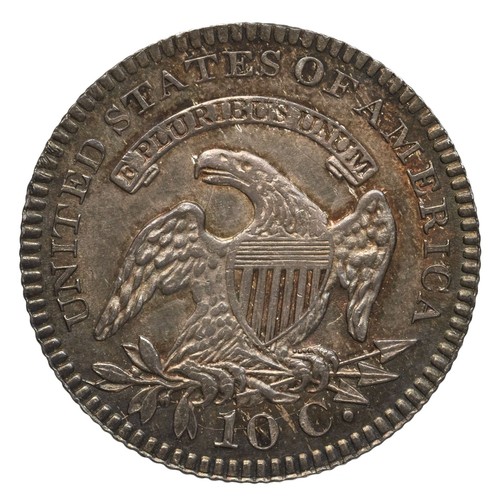
Capped Bust Dime
An early U.S. silver ten-cent piece showing Liberty in a cloth cap over a shield-breasted eagle, struck at Philadelphia from 1809 to 1837.
Dime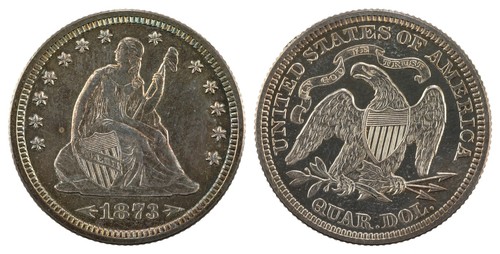
Seated Liberty Quarter
U.S. twenty-five-cent silver coin struck 1838–1891, showing Liberty seated with shield and staff on the obverse and a shield-breasted eagle on the reverse.
Quarter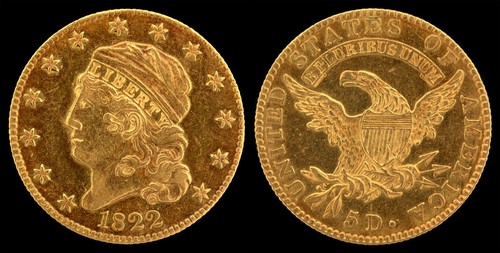
Capped Bust Half Eagle
Early U.S. five-dollar gold coin with a left-facing capped Liberty and a shield-breasted eagle marked "5 D."; the 1822 shown is a legendary rarity.
United States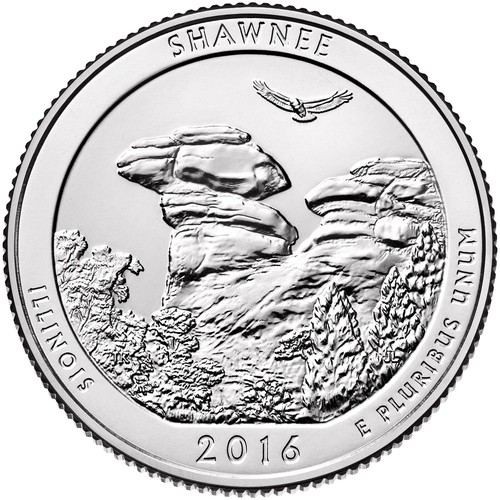
Shawnee Quarter
2016 U.S. America the Beautiful quarter honoring Shawnee National Forest in Illinois, showing the rock formations at Garden of the Gods.
Quarter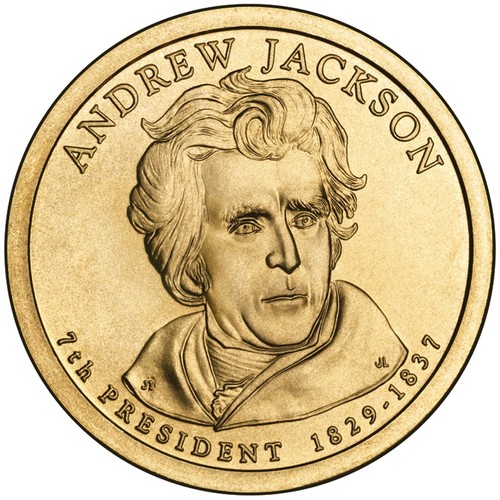
Andrew Jackson Presidential Dollar
2008 U.S. golden dollar honoring Andrew Jackson, the seventh president; part of the Presidential $1 Coin Program with edge-lettered inscriptions.
United States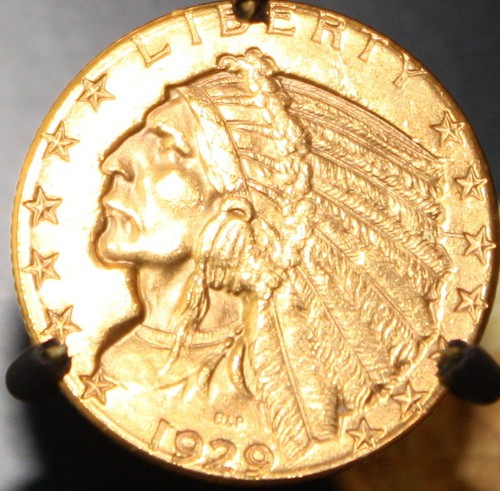
Indian Head Half Eagle
U.S. $5 gold half eagle struck 1908–1929, with an unusual sunken (incuse) design: a headdressed Native American obverse and a standing eagle reverse.
Half Eagle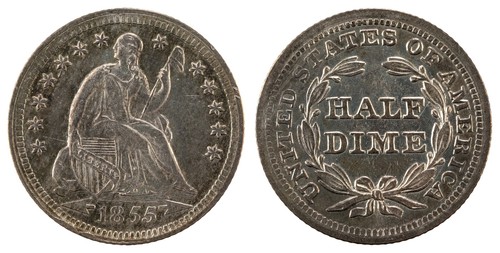
Seated Liberty Half Dime with Arrows
A tiny silver five-cent piece: Liberty seated with a shield, small arrows flanking the date to mark a reduced weight, over a wreath reverse.
Half Dime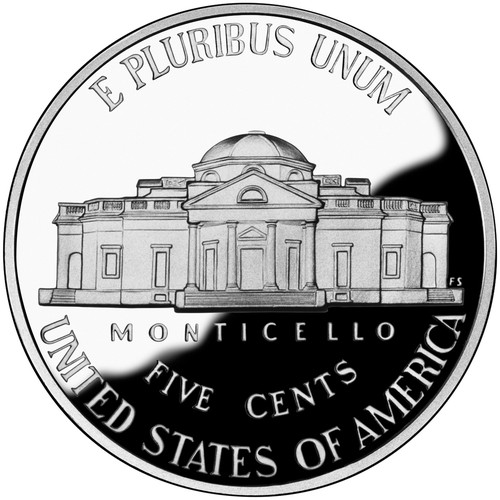
Jefferson Nickel
U.S. five-cent piece introduced in 1938, showing Thomas Jefferson on the obverse and his Monticello home on the reverse. 1942–1945 issues are 35% silver.
Nickel Five Cent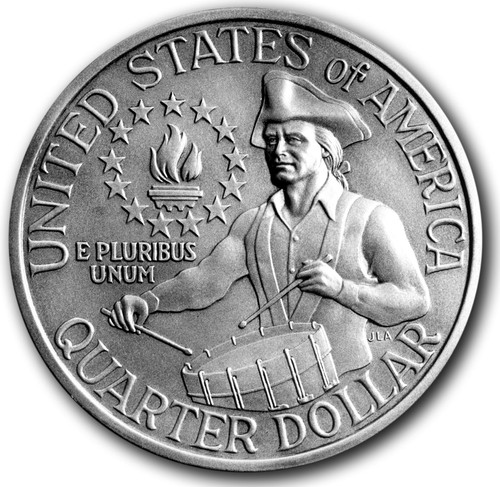
Bicentennial Quarter
U.S. 25-cent coin issued for the 1976 Bicentennial, pairing Washington's portrait with a Colonial drummer and the dual date 1776-1976.
Quarter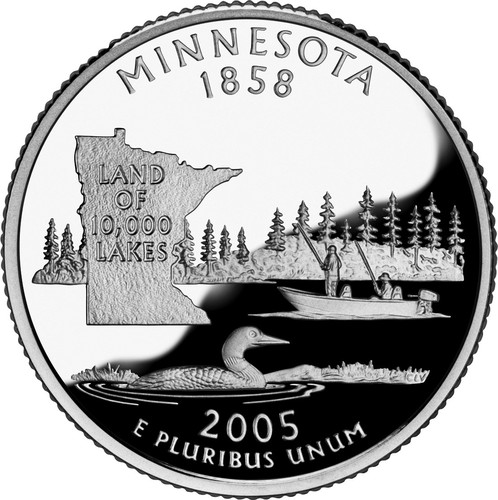
Minnesota State Quarter
2005 U.S. 25-cent coin in the 50 State Quarters series, showing Minnesota's outline, a common loon, anglers in a boat, and pines above 1858.
Quarter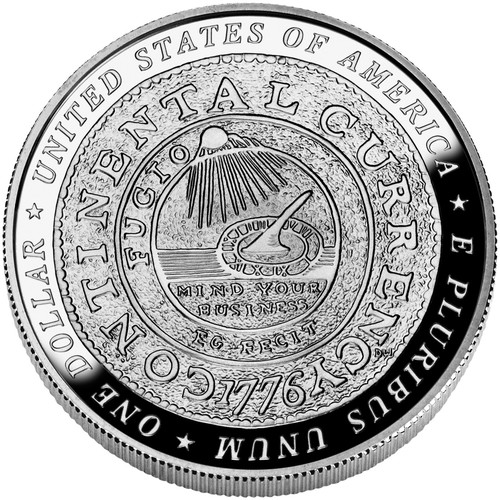
Benjamin Franklin Founding Father Commemorative Silver Dollar
A 2006 U.S. commemorative silver dollar honoring Benjamin Franklin, showing him flying his kite in the electricity experiment, with a 'MIND YOUR BUSINESS' reverse.
Dollar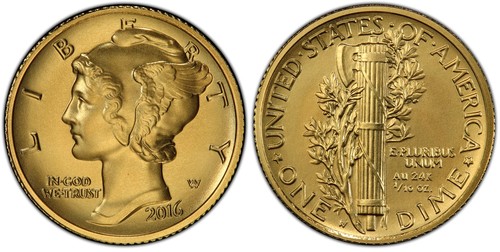
Mercury Dime Centennial Gold
A 2016-W gold collector coin marking the centennial of the 1916 Mercury dime, struck in 1/10 oz of 24-karat gold at West Point.
Dime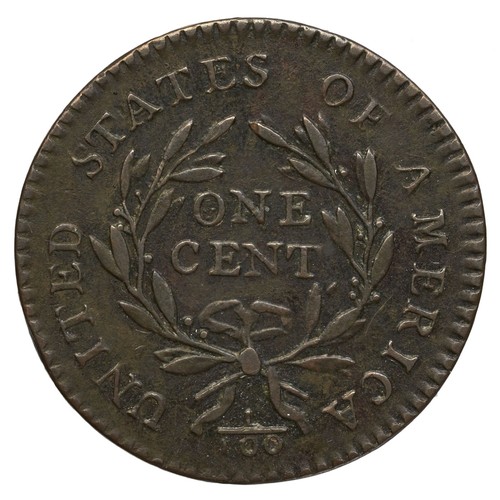
Liberty Cap Large Cent
An early U.S. copper cent (1793-1796) showing Liberty with a cap on a pole, flowing hair, and a wreath reverse.
Large Cent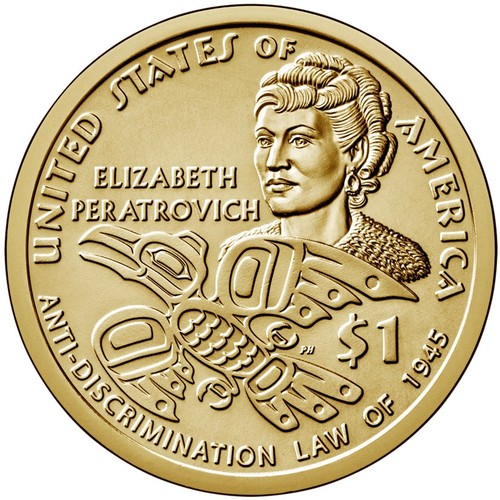
Native American Dollar - Peratrovich
The 2020 U.S. golden dollar in the Native American series, honoring Tlingit civil rights leader Elizabeth Peratrovich and the 1945 Alaska Anti-Discrimination Law.
Dollar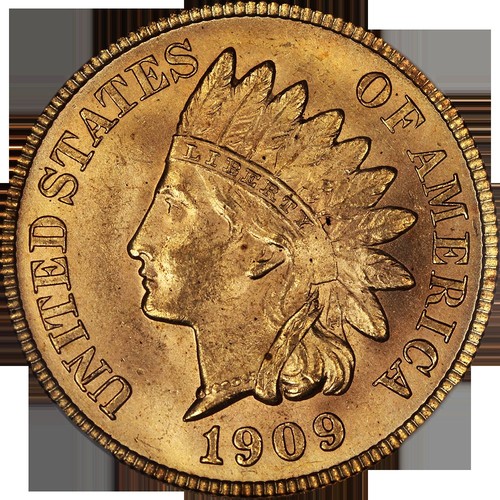
Indian Head Cent
Classic U.S. one-cent piece struck 1859–1909, showing Liberty in a feathered headdress; later dates like 1909 are bronze with an oak-wreath-and-shield reverse.
Small Cent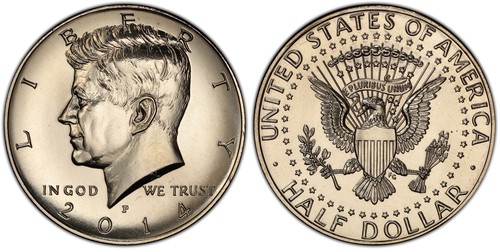
Kennedy Half Dollar 50th Anniversary High Relief
U.S. 90% silver half dollar issued in 2014 for the 50th anniversary of the Kennedy design, with a restored high-relief JFK portrait.
Half Dollar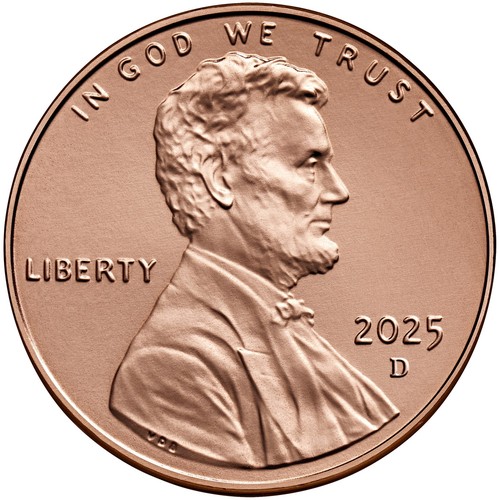
Lincoln Shield Cent
The current U.S. one-cent coin, struck since 2010, pairing Lincoln's profile with a Union Shield reverse on a copper-plated zinc planchet.
Small Cent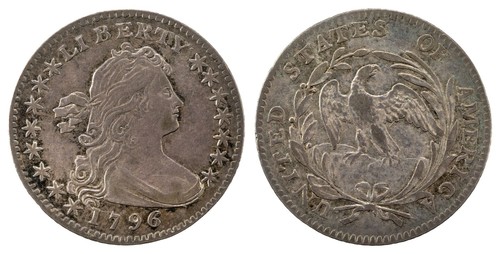
Draped Bust Half Dime
An early U.S. silver five-cent piece showing a draped bust of Liberty ringed by stars; the tiny half dime was struck 1796–1805.
Half Dime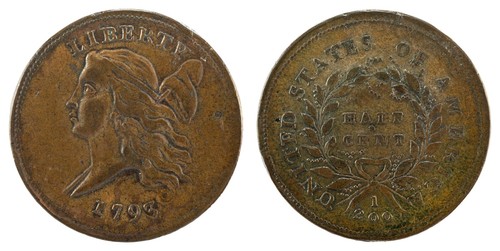
Liberty Cap Half Cent
The first U.S. half cent, struck only in 1793, showing Liberty in a cap facing left with a wreath reverse. A famous one-year copper key date.
Half Cent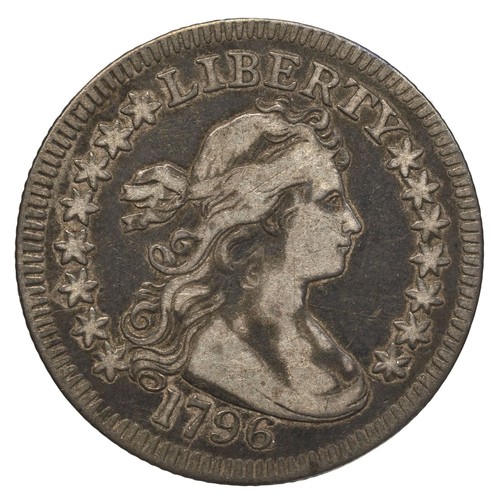
Draped Bust Quarter
The first United States quarter dollar, struck in silver with a draped Liberty and border stars on the obverse and an eagle reverse; the type began in 1796.
Quarter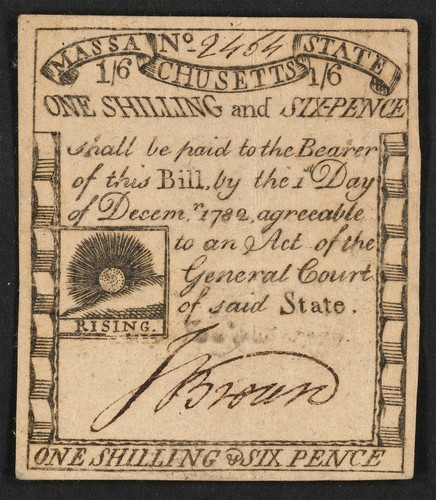
Massachusetts Shilling (1 Shilling 6 Pence)
A colonial-era Massachusetts silver piece valued at one shilling and sixpence, joining a pine-tree obverse with a rising-sun reverse and the date 1779.
Colonial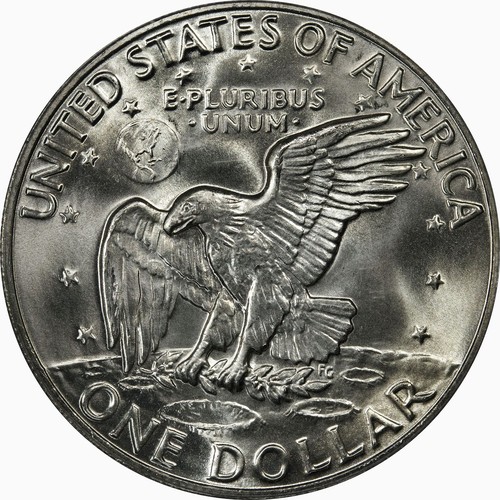
Eisenhower Dollar
Large U.S. dollar coin struck 1971–1978 with Eisenhower's profile and an eagle landing on the Moon, most circulation issues in copper-nickel clad.
Dollar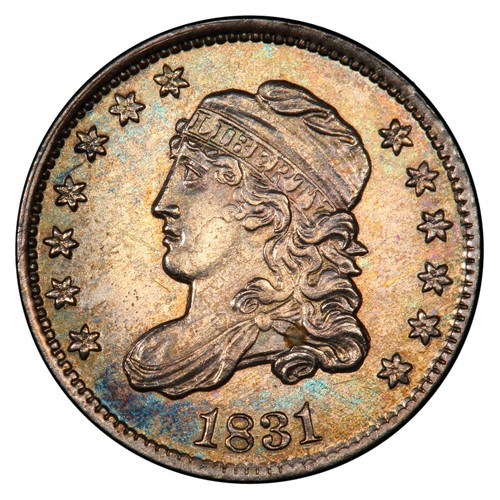
Capped Bust Half Dime
A small early U.S. silver five-cent piece showing Liberty in a Phrygian cap and a shielded eagle reverse, struck at Philadelphia from 1829 to 1837.
Half Dime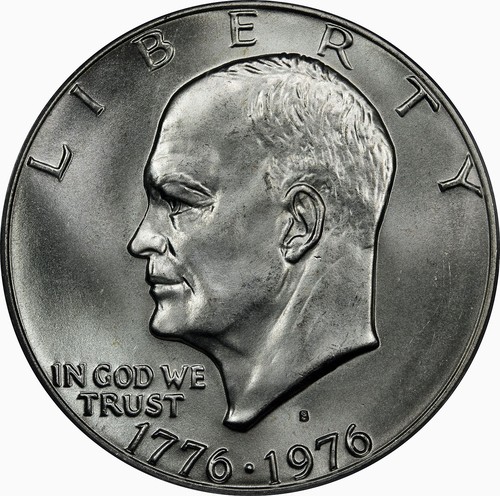
Eisenhower Dollar Bicentennial
U.S. one-dollar coin for the 1976 Bicentennial, with Eisenhower's profile and a special Liberty Bell superimposed on the Moon reverse.
Dollar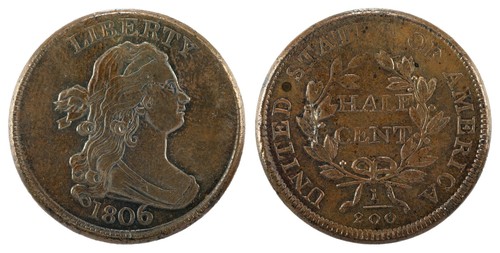
Draped Bust Half Cent
An early U.S. copper half cent showing draped Liberty with flowing hair; the smallest denomination the Mint ever struck, made 1800–1808.
Half Cent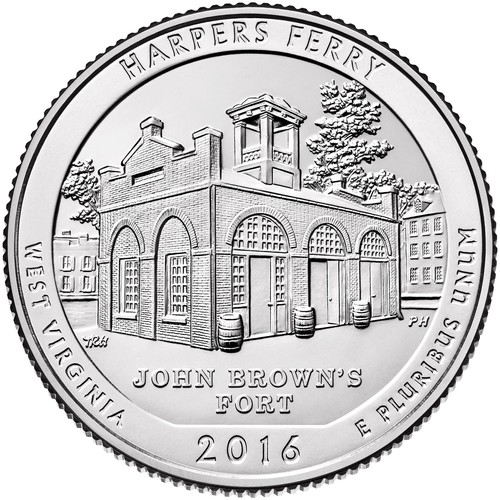
Harpers Ferry Quarter
U.S. 25-cent coin from the 2016 America the Beautiful series, showing John Brown's Fort at Harpers Ferry National Historical Park, West Virginia.
Quarter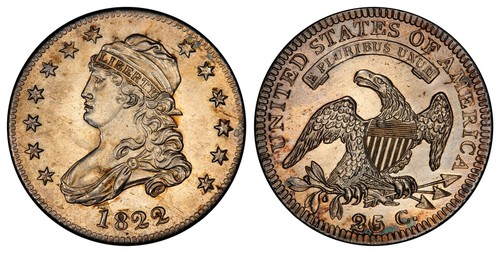
Capped Bust Quarter
An early U.S. silver quarter dollar showing Liberty in a cloth cap over a shield-breasted eagle, struck at Philadelphia from 1815 to 1838.
Quarter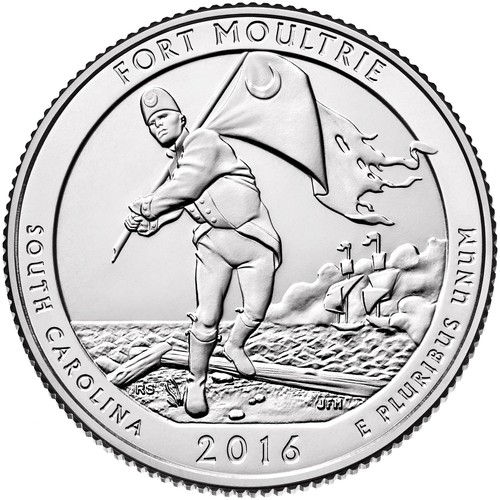
Fort Moultrie Quarter
2016 U.S. copper-nickel clad 25-cent piece, the final America the Beautiful quarter, showing a Continental soldier with a flag defending Fort Moultrie, South Carolina.
Quarter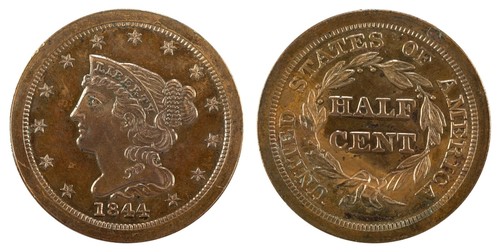
Braided Hair Half Cent
The final U.S. half cent design, a small copper coin showing Liberty with braided hair and a coronet, paired with a wreath reverse, struck 1840–1857.
Half Cent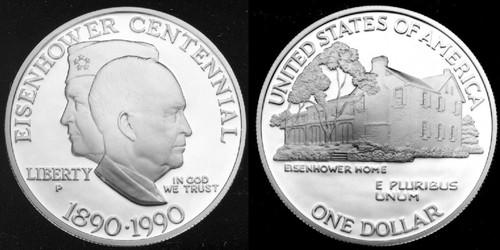
Eisenhower Centennial Dollar
A 1990 U.S. commemorative silver dollar marking 100 years since Dwight D. Eisenhower's birth, with his left-facing profile and his Gettysburg home on the reverse.
Dollar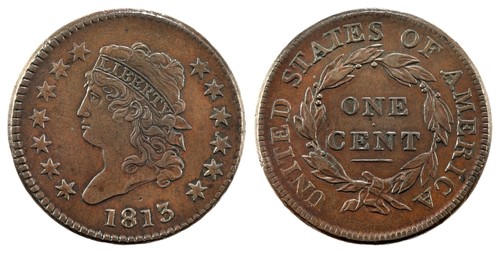
Classic Head Large Cent
A pure-copper U.S. large cent struck 1808–1814, showing John Reich's classical left-facing Liberty ringed by stars over a wreath reverse.
Large Cent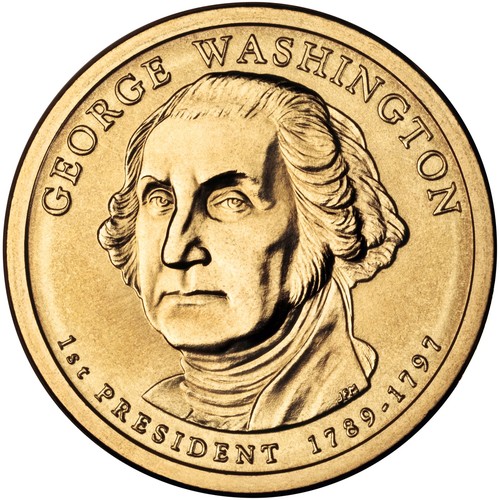
George Washington Presidential Dollar
The 2007 golden dollar honoring George Washington, first coin in the U.S. Presidential $1 series, with a left-facing portrait and Statue of Liberty reverse.
Dollar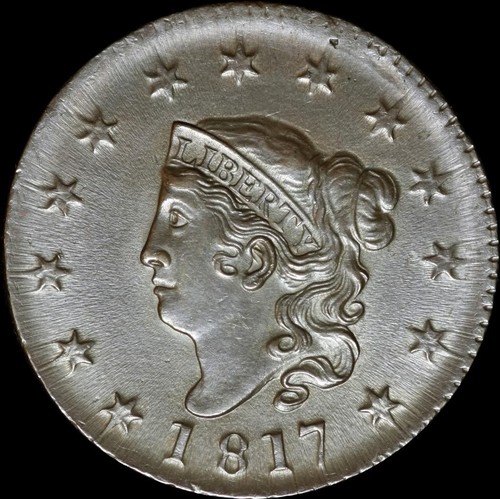
Coronet (Matron Head) Large Cent
A pure-copper U.S. one-cent piece from 1816–1839, showing Liberty in a beaded coronet on the obverse and ONE CENT inside a wreath.
Large Cent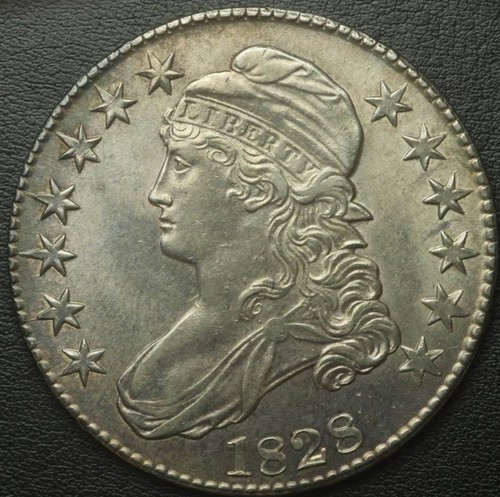
Capped Bust Half Dollar
U.S. fifty-cent silver coin struck 1807–1839, showing Liberty in a Phrygian cap surrounded by stars and a heraldic eagle on a shield.
Half Dollar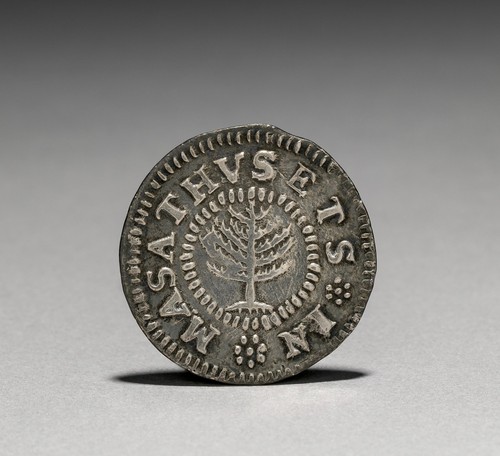
Pine Tree Shilling
Silver shilling from the Boston mint, struck about 1667–1674 but dated 1652, showing a pine tree beside the legend MASSACHUSETTS.
Colonial