
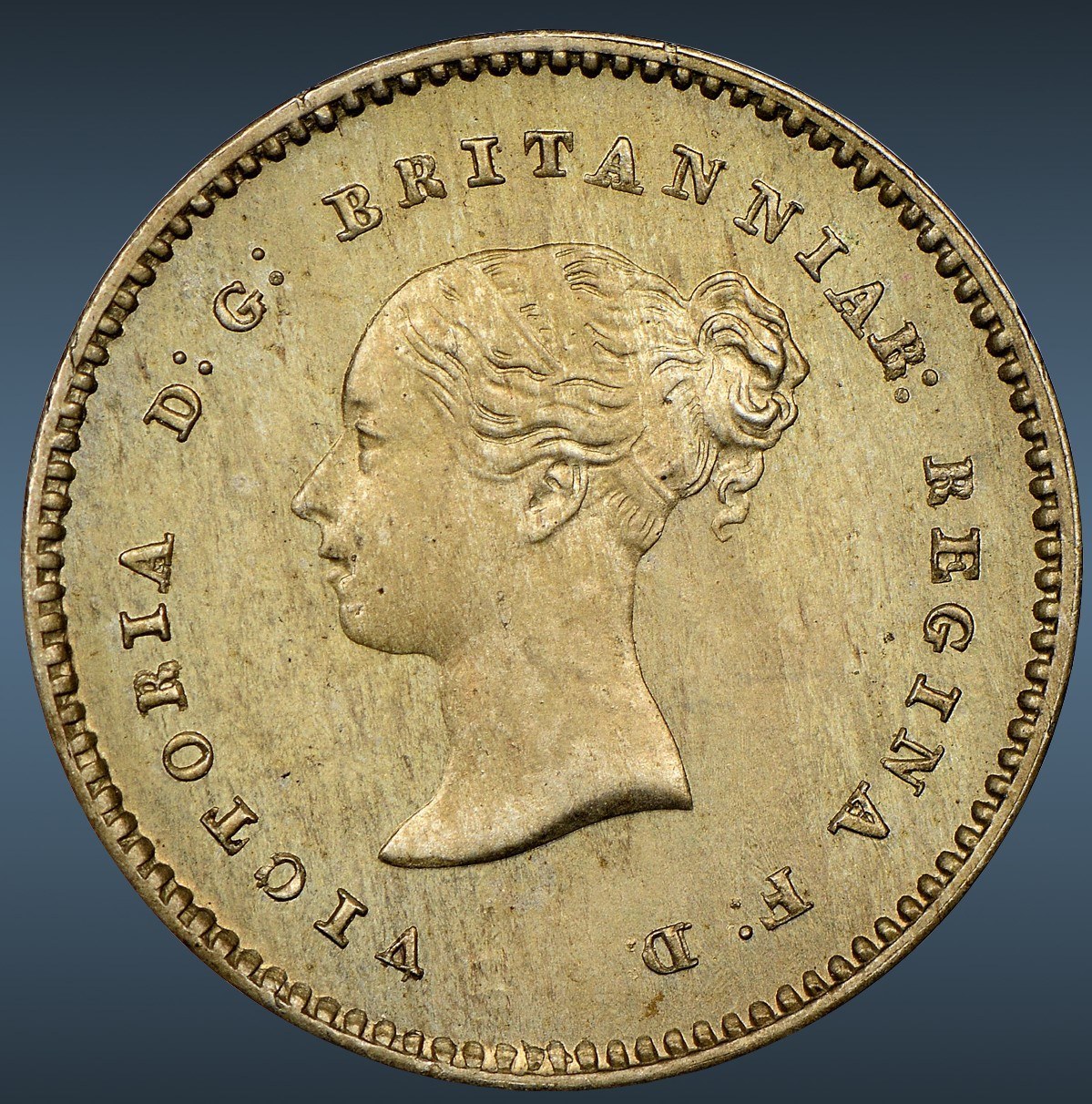
Quarter Farthing
Tiny copper coin of Queen Victoria worth one-sixteenth of a penny, struck for use in Ceylon; the smallest-value British denomination ever made.
- Country
- United Kingdom
- Denomination
- Quarter Farthing
- Metal
- Copper
Got a coin like this?
Identify any coin from a photo, free.
Overview
The Quarter Farthing is one of the smallest and lowest-value coins in the British series, worth just one-sixteenth of a penny (a quarter of a farthing). The example shown here is a Queen Victoria copper issue, with the young Queen's head facing left on the obverse and the denomination spelled out on the reverse.
The reverse carries the words QUARTER FARTHING with the date inside a design of circular banding and a crown, rather than the seated Britannia figure used on the larger British copper coins. This piece is dated 1868, the last year the denomination was produced.
The coin is struck in copper, is very small (roughly 13-14 mm across and only a little over a gram in weight), and was intended not for circulation in Britain but for the colony of Ceylon (modern Sri Lanka).
History & Background
The Quarter Farthing was authorised specifically for use in Ceylon, where it served as a convenient fraction matching the local rupee and its subdivisions rather than meeting any need within the United Kingdom itself. It was never a general circulating coin at home, which is one reason it is unfamiliar to many collectors.
Production under Queen Victoria took place in a handful of scattered years across her reign, beginning in 1839 and running through to 1868, the date on this example. The Royal Mint in London struck the coins, all bearing the same young left-facing portrait of Victoria that appears on the early copper issues.
Because it was tied to a single colonial use rather than domestic commerce, the Quarter Farthing was minted only in small quantities and in limited years before the denomination was discontinued. It remains a curiosity of the Victorian copper coinage and the smallest face value the British ever expressed on a coin.
How to Identify
Size is the first clue: the Quarter Farthing is a very small copper coin, only about 13-14 mm in diameter, noticeably smaller than a farthing or a modern small coin. The obverse shows the young head of Queen Victoria facing left.
The decisive feature is the reverse, which spells out the value in words, QUARTER FARTHING, together with the date and a crown within circular banding. This written denomination distinguishes it from the farthing, half farthing, and third farthing, which carry different reverse designs. The date on this piece is 1868.
Confirm the metal is copper (a warm brown tone, non-magnetic) and note the tiny size and light weight of just over a gram. There is no separate mint-mark letter to look for; all were struck at the Royal Mint.
Value & Collectibility
The Quarter Farthing is scarce because it was made only in a few years and in limited numbers for a single colonial use. As a result even well-worn examples carry a collector premium over their trivial face value, and the coin is more sought-after than its tiny denomination might suggest.
Value depends heavily on the specific date and on condition. Circulated pieces are typically modest collector coins, while sharp, high-grade examples with original colour command a substantial premium, and proof or specimen strikings are rarer still. The 1868 date is usually encountered as a late-reign issue and, like the others, is valued by grade.
Because condition and eye appeal drive price so strongly in this small series, treat any figure as indicative. For a specific coin, seek an opinion from a reputable dealer or a third-party grading service before buying, selling, or insuring.
Frequently asked questions
How much was a Quarter Farthing worth?
One-sixteenth of a penny, that is a quarter of a farthing. It is the smallest face value ever placed on a British coin.
Why was such a tiny coin made?
It was struck for use in the colony of Ceylon (modern Sri Lanka), where it fitted the local currency, rather than for circulation in Britain.
What metal is the Quarter Farthing?
Copper. It shows the warm brown tone of copper, is non-magnetic, and weighs only a little over a gram.
What years was it minted?
It was struck in scattered years under Queen Victoria between 1839 and 1868. The coin shown here is dated 1868, the final year of issue.
Is the Quarter Farthing rare?
It is scarce. Made only in a few years and in small numbers for colonial use, it carries a collector premium over face value, with high-grade examples worth considerably more.
Quarter Farthing guides
In-depth guides for identifying, valuing, and collecting Quarter Farthing.
Other coins you may enjoy
Medieval Penny of Edward III
1327–1377
Medieval Silver Cut Farthing
1272-1509
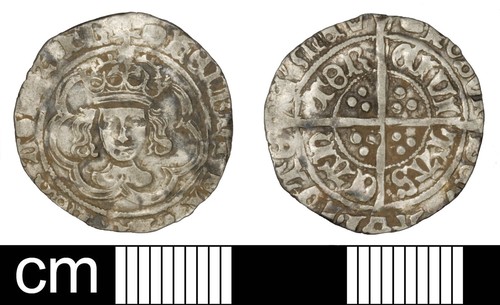
Medieval Halfgroat of Henry VII
1485-1509
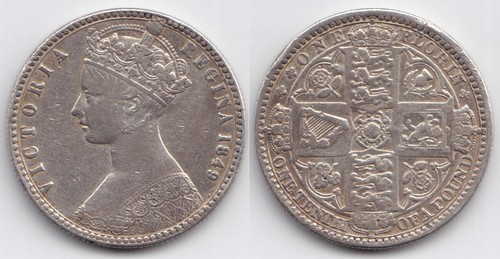
Godless Florin
1849
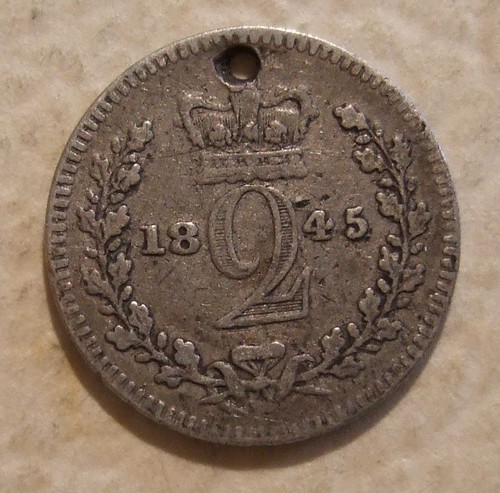
Victoria Maundy Twopence
1838–1901 (Young Head example shown: 1845)
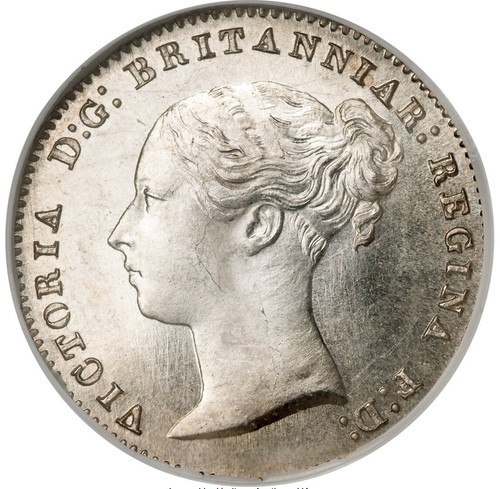
British Silver Threepence
1838-1944
Victoria Maundy Fourpence
1838–1901 (Jubilee Head type shown: 1888–1892)
Imitation Guinea Gaming Piece
c. 1790-1900 (undated)
British Crown
1927–1936 (George V wreath crown; example dated 1934)
British Decimal Half Penny
1971–1984
British Brass Threepence
1937-1967
British Half Crown
1928 (George V type; series ran 1816–1946 in silver)