
How to Identify the Quarter Farthing
Practical checks for the smallest British coin: its tiny size, copper metal, left-facing Victoria, and the written QUARTER FARTHING reverse.
Read the full Quarter Farthing encyclopedia entry →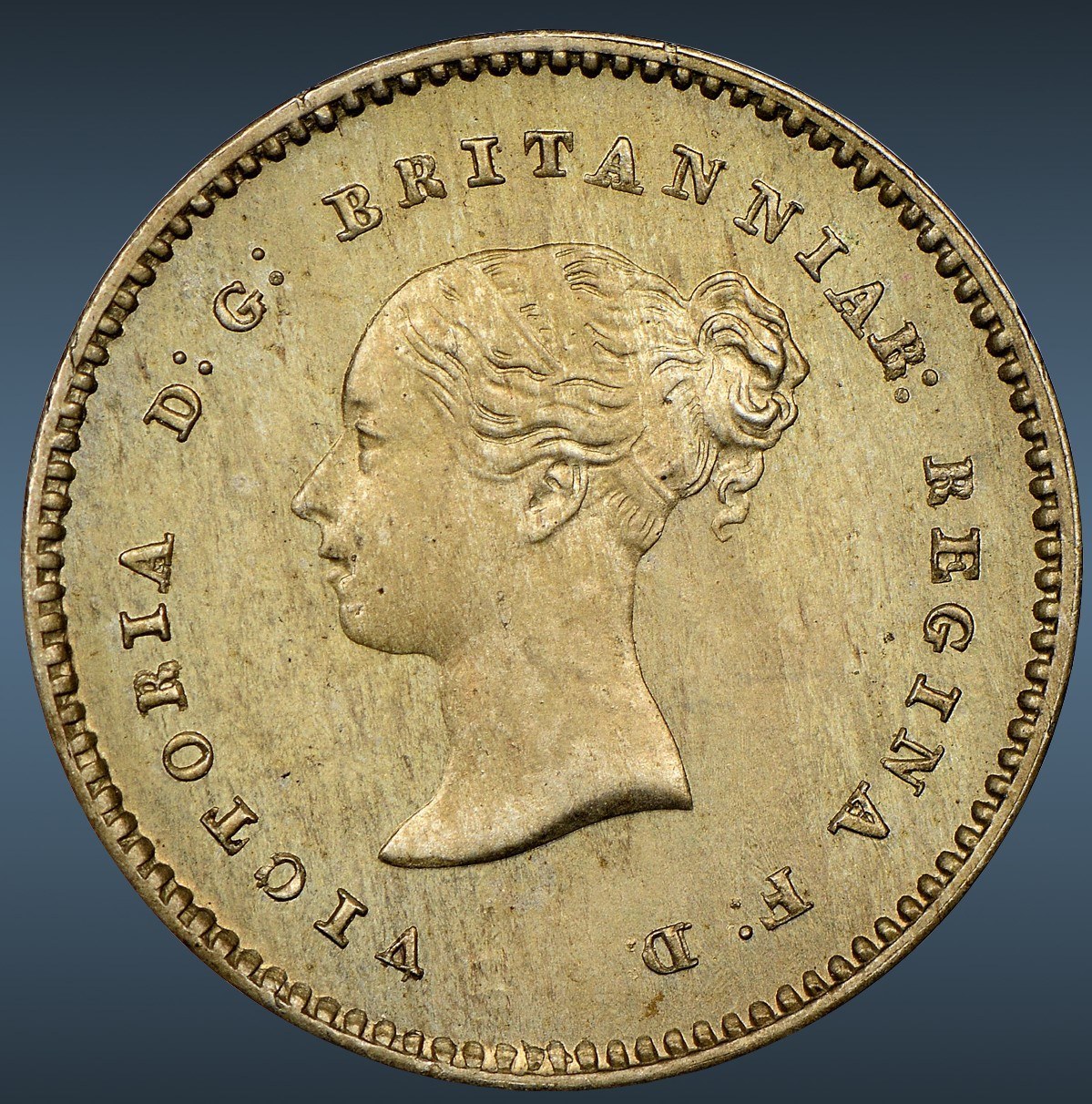
Begin with size, because it is the quickest test. The Quarter Farthing is a very small copper coin, only about 13-14 mm across and just over a gram in weight, distinctly smaller than a farthing. If a coin bearing Victoria's head is unusually tiny, the Quarter Farthing should be on your shortlist.
Read the reverse. The value is written out in words as QUARTER FARTHING, accompanied by the date and a crown within circular banding. This spelled-out denomination is the single most reliable diagnostic, because the related small coppers do not word their value the same way. Confirm the date, here 1868.
Check the obverse portrait: the young head of Queen Victoria facing left. Then confirm the metal is copper by its warm brown colour and non-magnetic response. There is no mint-mark letter to hunt for, as every piece came from the Royal Mint.
Mind the look-alikes within the small copper series. The third farthing (also made for a colonial use, in Malta) and the half farthing are similar in date and portrait but differ in size and in their reverse wording; the ordinary farthing and half farthing carry a seated Britannia rather than a written value. Comparing the exact diameter and the reverse legend together prevents confusion between these fractional coppers.
Authenticate with care. Because the coin is scarce and valuable in high grade, examine the date digits under magnification for alteration or tooling, and be wary of a coin whose size or weight is off. For any piece that appears choice, or a scarcer date, seek confirmation from a reputable dealer or a third-party grading service before relying on it.
Frequently asked questions
How do I tell a Quarter Farthing from a farthing?
Size and reverse. The Quarter Farthing is much smaller (about 13-14 mm) and spells out QUARTER FARTHING in words, whereas the farthing is larger and shows a seated Britannia.
Is there a mint mark to look for?
No. All Quarter Farthings were struck at the Royal Mint and carry no separate mint-mark letter. Identify the coin by its size, portrait, and written reverse instead.
Which small copper coins are most easily confused with it?
The third farthing and half farthing, which share Victoria's portrait and similar dates. Distinguish them by exact diameter and by the reverse wording or design.
Should I get one professionally authenticated?
For a worn common-looking piece, careful measurement usually suffices. For a choice, high-grade, or scarcer-date coin, have it verified by a reputable dealer or grading service.