
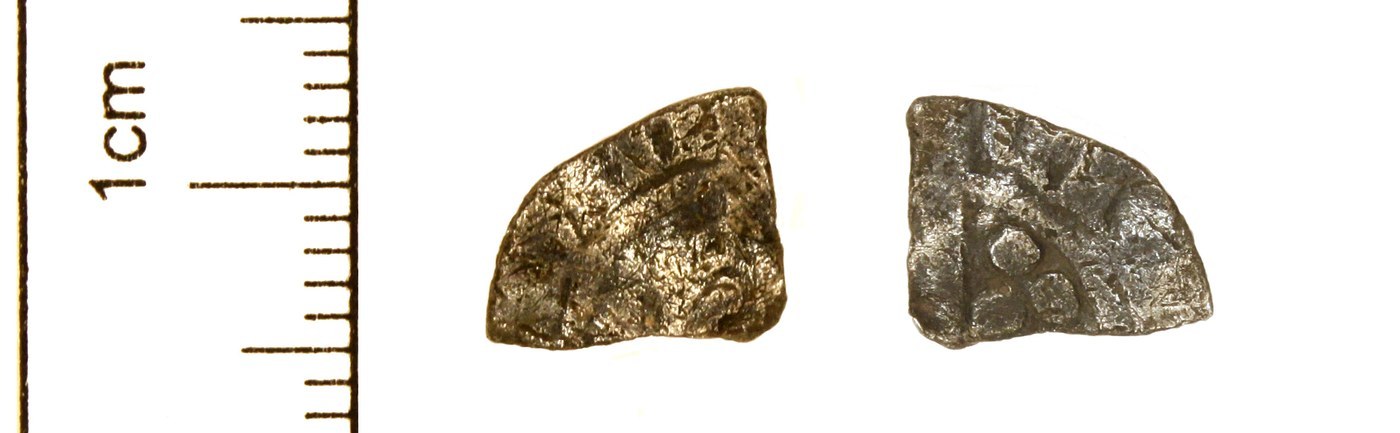
Medieval Silver Cut Farthing
A quarter of a medieval silver penny, physically cut along the reverse cross to make small change before round farthings became common.
- Country
- England
- Denomination
- Farthing
- Metal
- Silver
Got a coin like this?
Identify any coin from a photo, free.
Overview
The Medieval Silver Cut Farthing is not a coin struck as a farthing but a fragment of a full silver penny, physically cut into quarters to provide small change. The example shown is a wedge-shaped piece bearing part of a crowned royal portrait and heraldic detail on one face, and part of a long cross with pellets on the other.
Because the standard medieval penny carried a long cross dividing the reverse into four, the design itself acted as a cutting guide. Snipping a penny in half produced two halfpennies, and cutting again along the cross arms produced four farthings (from Old English feorthing, a fourth part). Each piece was still valued for its silver.
These cut pieces are irregular by nature: roughly a quarter-circle, thin, and showing only a portion of the original legends and design. What survives on any given fragment depends entirely on where it was cut and how much wear it saw in circulation.
History & Background
For much of the medieval period England's smallest routinely struck coin was the silver penny, which was often too valuable for everyday petty purchases. To make change, people simply cut pennies along the reverse cross into halves and quarters, a practice that was widespread from the Anglo-Saxon and Norman periods onward and remained common through the reigns spanning Edward I to Henry VII (1272-1509).
The long-cross penny design, introduced in the mid-13th century and continued under Edward I's major recoinage, deliberately extended the cross to the edge of the coin so that cutting would leave a clear line and reassure users that each fragment was a true fraction. Cutting was so normal that quartered pieces circulated openly as farthings alongside any officially struck small coins.
Round, purpose-struck silver farthings were issued intermittently from Edward I onward, but they were tiny, easily lost, and never fully replaced the convenience of cutting a penny. Cut fractions therefore persisted for generations, which is why so many surviving medieval pennies are found today as halves and quarters rather than whole coins.
How to Identify
The defining feature is the shape: a genuine cut farthing is roughly a quarter of a round coin, a wedge or pie-slice with two straight cut edges meeting near the centre and one curved original edge. The cut edges typically run along the arms of the reverse cross.
On the reverse fragment look for part of a long cross with groups of pellets (dots) in the angles, a hallmark of the long-cross penny series. The obverse fragment usually shows a portion of a facing crowned bust and fragments of a Latin legend around the rim. Only part of any inscription will be present.
The metal is silver, thin and often toned grey or dark from age. Size is dictated by the parent penny (whole pennies were roughly 18-20 mm across), so a farthing fragment is a small quarter of that. Because only a slice of the design survives, precise dating or attribution to a single reign can be difficult and often requires matching the visible portrait style and legend fragments to known penny types.
Value & Collectibility
Cut farthings are among the more affordable medieval silver pieces because they are fragments rather than complete coins, and because cutting was so common that many survive. Worn or heavily broken quarters with little visible design tend to sit at the low end of the market.
Value rises with how much of the original design and legend is readable, how cleanly the piece was cut, and whether the parent penny type or reign can be identified. A well-preserved quarter showing a clear portrait, an identifiable cross-and-pellet reverse, and legible letters is more desirable than a plain sliver.
As fragments, these pieces are difficult to grade by standard scales and prices vary widely with eye appeal and attribution. Treat any figure as a rough guide only, and for a specific fragment seek an opinion from a dealer or specialist familiar with medieval English hammered coinage.
Frequently asked questions
Is a cut farthing really just a broken coin?
In a sense, yes, but the cutting was deliberate and accepted. A silver penny was cut along its reverse cross into quarters to make small change, and each quarter circulated legitimately as a farthing valued for its silver.
Why were coins cut instead of striking small denominations?
For much of the medieval period the penny was the smallest routinely struck coin and was too valuable for tiny purchases. Cutting it into halves and quarters was a simple, trusted way to make change, guided by the long cross on the reverse.
What does 'farthing' mean?
The word comes from the Old English feorthing, meaning a fourth part. A cut farthing is literally one-quarter of a penny.
Can a cut farthing be dated to a specific king?
Sometimes. Because only part of the design and legend survives, attribution relies on matching the visible portrait style and lettering to known penny types. Many fragments can only be placed broadly within the Edward I to Henry VII era.
Are cut farthings valuable?
They are usually among the more affordable medieval silver pieces since they are fragments and were common. Value depends on how much design and legend remain and whether the coin type can be identified. Have a specific piece appraised.
Medieval Silver Cut Farthing guides
In-depth guides for identifying, valuing, and collecting Medieval Silver Cut Farthing.
Other coins you may enjoy
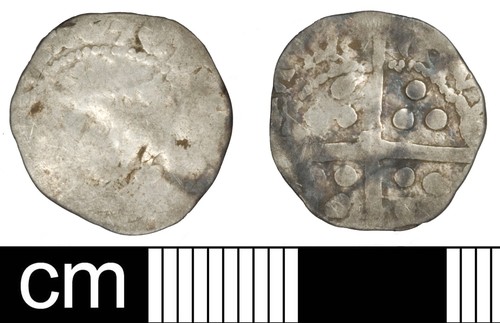
Medieval Penny of Edward III
1327–1377
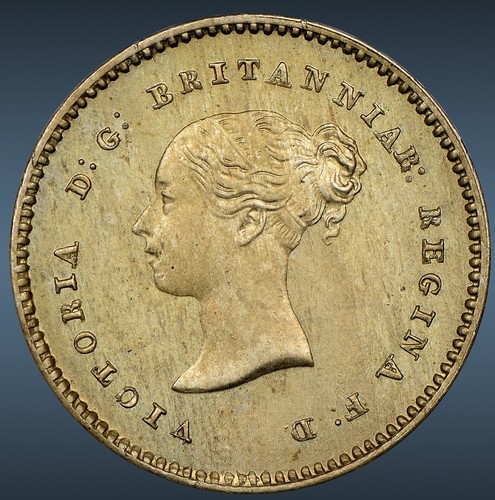
Quarter Farthing
1839-1868
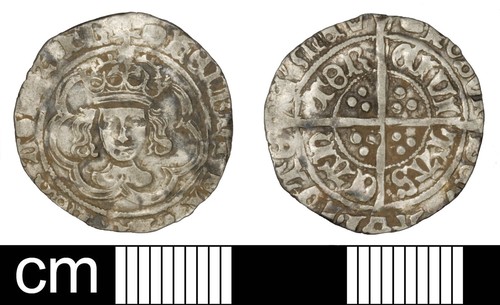
Medieval Halfgroat of Henry VII
1485-1509
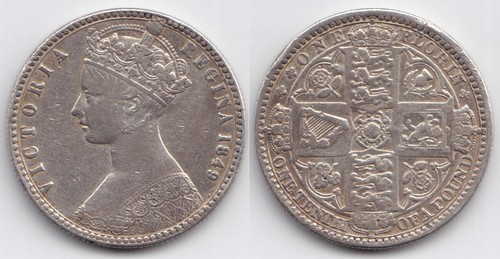
Godless Florin
1849
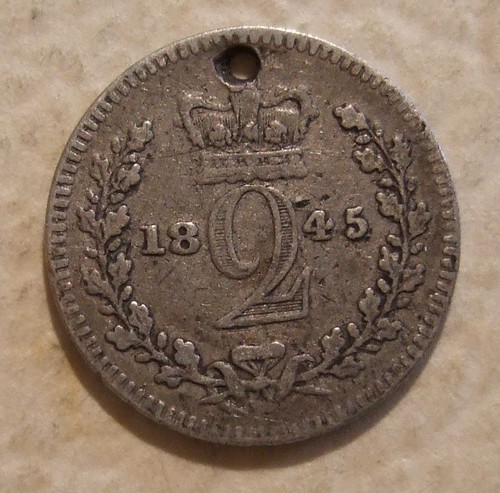
Victoria Maundy Twopence
1838–1901 (Young Head example shown: 1845)
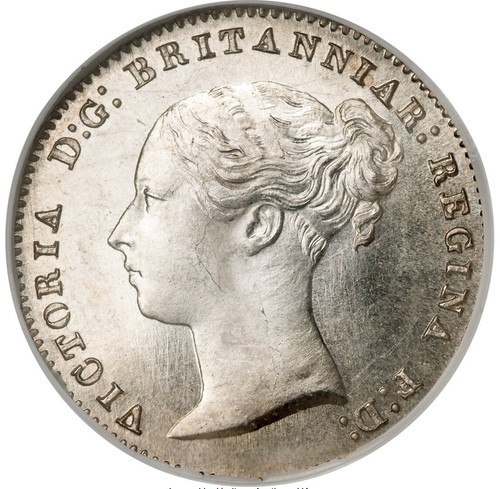
British Silver Threepence
1838-1944
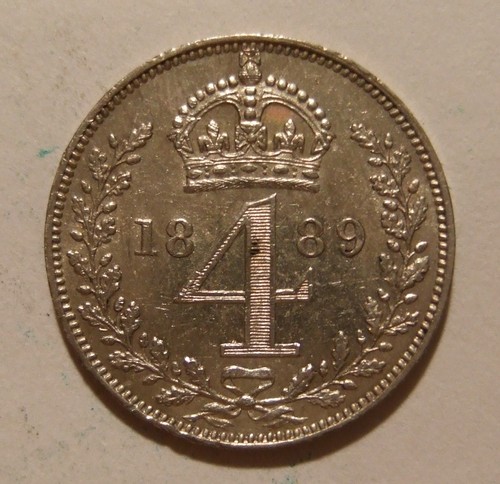
Victoria Maundy Fourpence
1838–1901 (Jubilee Head type shown: 1888–1892)
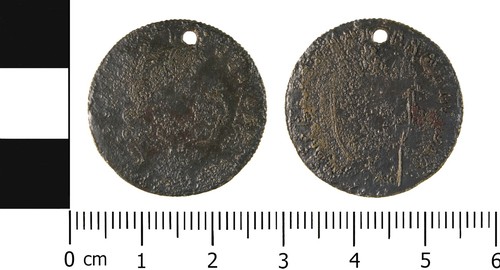
Imitation Guinea Gaming Piece
c. 1790-1900 (undated)
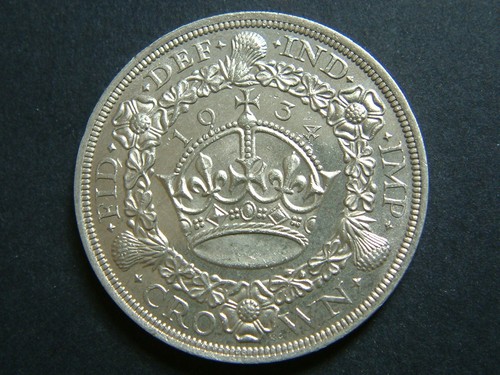
British Crown
1927–1936 (George V wreath crown; example dated 1934)
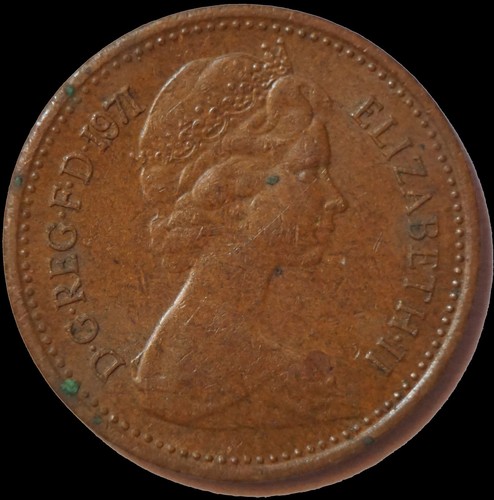
British Decimal Half Penny
1971–1984
British Brass Threepence
1937-1967
British Half Crown
1928 (George V type; series ran 1816–1946 in silver)