
How to Identify the Medieval Silver Cut Farthing
Practical checks for a quartered medieval penny: the wedge shape, long-cross reverse, cut edges, silver metal, and authentication cautions.
Read the full Medieval Silver Cut Farthing encyclopedia entry →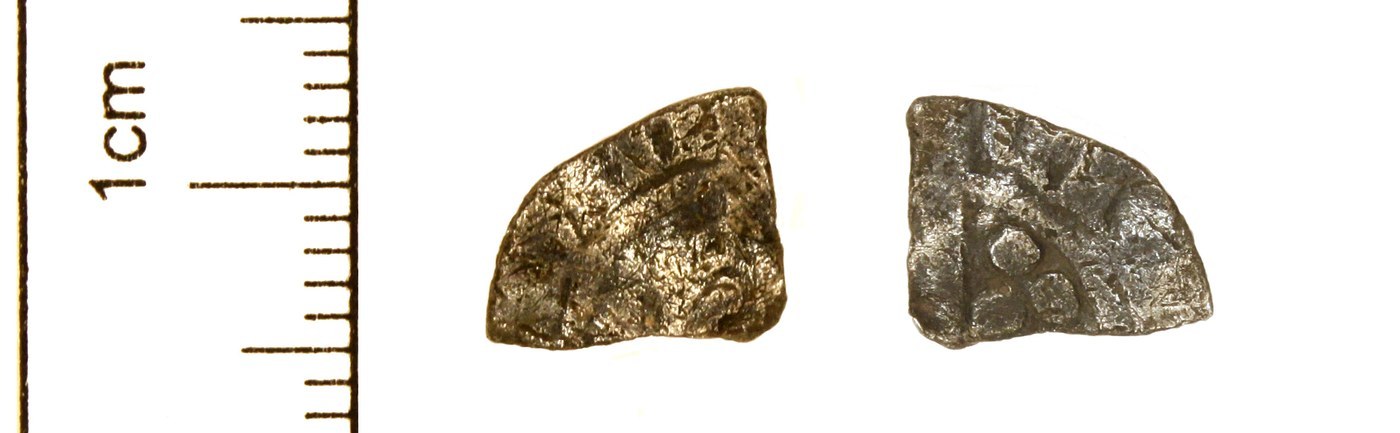
Begin with the outline. A cut farthing should look like a slice of pie, roughly one quarter of a round coin, with two roughly straight cut edges and one curved original rim. A cut halfpenny is a semicircle; a full quarter is the farthing. If the piece is a complete small round coin rather than a fragment, it is a struck farthing or a different coin, not a cut one.
Examine the reverse fragment for the diagnostic long cross with pellets in the angles. The cross arms should run toward the straight cut edges, because the cross was the cutting guide. On the obverse fragment, look for part of a facing crowned bust and a few surviving letters of a Latin rim legend. Only a portion of each will be present, and that is normal for a genuine cut piece.
Confirm the metal and size. Medieval pennies were thin hammered silver, roughly 18-20 mm in diameter as whole coins, so a farthing quarter is a small, light sliver, usually toned grey or dark. The surface should show the slightly uneven, off-centre character of hammered striking rather than the sharp, uniform look of a machine-made coin.
Be cautious with look-alikes and authentication. Modern damage can mimic a cut fragment, so genuine cut edges usually show old toning consistent with the rest of the coin rather than bright, fresh metal. Purpose-struck round farthings, later milled farthings, and non-silver tokens are all different objects. Because attribution depends on fragmentary detail, matching the visible portrait and cross type to catalogued penny series is the surest route, and a dealer in hammered coinage can confirm both authenticity and the likely reign.
Frequently asked questions
How can I tell a cut farthing from a modern broken coin?
Look at the cut edges and toning. A genuine medieval cut usually follows the reverse cross and shows old, even toning, while a recent break exposes bright fresh metal. The fabric should also be thin hammered silver with an uneven strike.
Which side shows the cross?
The reverse. Long-cross pennies carry a cross extending to the rim with pellets in the angles, and the coin was cut along those cross arms into quarters.
What size should the fragment be?
It is a quarter of a penny, and whole pennies of this era were only about 18-20 mm across, so expect a small, thin wedge weighing only a fraction of a gram.
Do I need an expert to attribute it?
Often, yes. Since only part of the portrait and legend survive, placing a fragment to a specific king can be hard. A specialist in medieval English hammered coins can confirm authenticity and narrow the date.