
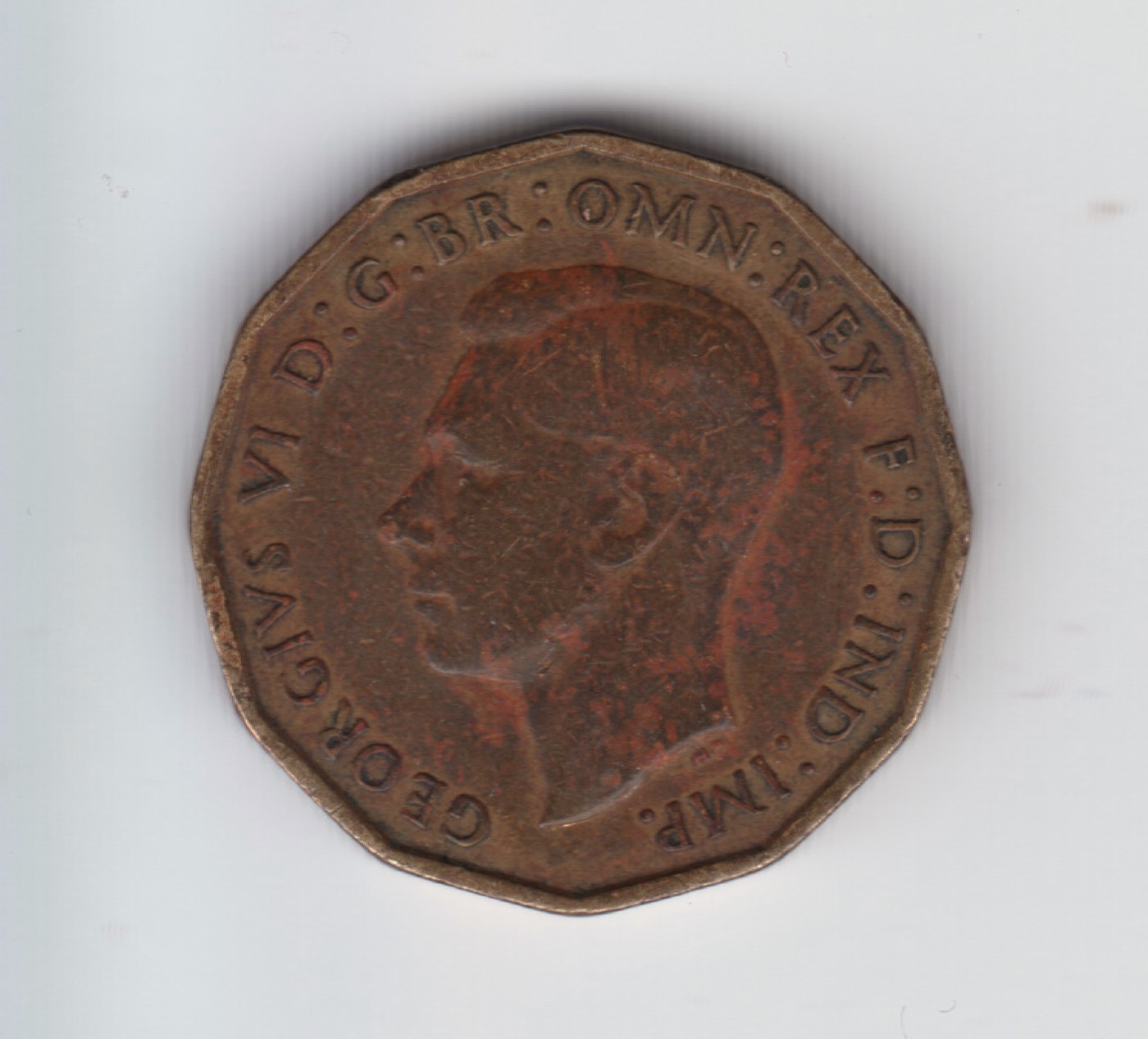
British Brass Threepence
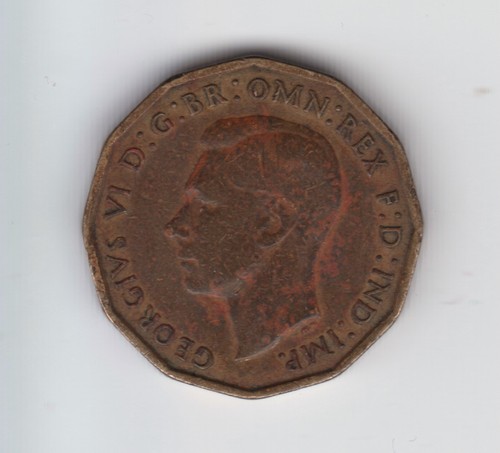
Chunky twelve-sided nickel-brass threepence of George VI, showing his head and a thrift plant reverse; the example shown is dated 1942.
- Country
- United Kingdom
- Denomination
- Threepence
- Metal
- Nickel-brass
Got a coin like this?
Identify any coin from a photo, free.
Overview
The British Brass Threepence is a thick, twelve-sided (dodecagonal) coin struck in golden nickel-brass. The example shown carries the left-facing head of King George VI on the obverse and a flowering thrift plant on the reverse, with a date of 1942. Its unusual angular shape and warm yellow colour set it apart from the round silver coins that circulated alongside it.
The coin is comparatively heavy for its face value, weighing around 6.6 grams and measuring roughly 21 mm across the flats. The thrift-plant reverse, showing a low seaside flower above the words THREE PENCE, was the standard design for George VI brass threepences and gives the type its nickname, the "thrift threepence."
It was one of the most familiar coins of mid-twentieth-century Britain, easily recognised by touch in a pocket thanks to its faceted edge. It circulated widely through the 1940s, 1950s, and 1960s before the move to decimal currency retired it.
History & Background
The twelve-sided brass threepence was introduced in 1937, the first year of George VI's reign, as a modern replacement for the tiny silver threepence that had become inconvenient and easy to lose. Its distinctive multi-sided shape and yellow nickel-brass alloy were chosen to make the denomination instantly recognisable by sight and touch. A small number of nickel-brass threepences prepared for Edward VIII in 1937 never entered general circulation.
George VI brass threepences were struck through his reign, and the thrift plant reverse, designed by Frances Madge Kitchener, appeared throughout. Wartime and post-war years, including the 1942 date on the example shown, saw large numbers of these coins produced for everyday use. The obverse legend around the King's head reads in the abbreviated Latin style of the period.
After George VI's death the denomination continued under Queen Elizabeth II from 1953, keeping the same shape and alloy but adopting a crowned Tudor portcullis reverse and a new portrait. The whole brass threepence series ended with decimalisation: it ceased to be legal tender in 1971, when the pound was divided into 100 new pence.
How to Identify
The two strongest clues are shape and colour. A genuine brass threepence is twelve-sided and made of golden nickel-brass, not round and not silver-coloured. On the type shown, the obverse bears the bare left-facing head of George VI with a Latin legend, and the reverse shows a thrift plant (a clump of low flowers on stalks) above THREE PENCE, with the date, here 1942, at the foot.
Check the physical standard to confirm the denomination: about 6.6 grams in weight and roughly 21 mm measured across the flats, appreciably thick in profile. The coin is non-magnetic. A round threepence, or a silver-coloured one, is a different (earlier) type rather than this brass issue.
There is no mint-mark letter to look for; all were struck at the Royal Mint. Distinguish the reign by the reverse: a thrift plant indicates George VI (1937-1952), while a crowned portcullis indicates an Elizabeth II threepence (1953-1967). Read the obverse legend and date together to place the exact coin.
Value & Collectibility
The brass threepence was made in enormous quantities for circulation, so most worn examples, including common wartime dates, are inexpensive and trade for small sums to collectors. Value is driven mainly by date, condition, and eye appeal rather than by the metal, which is base nickel-brass with no bullion content.
A circulated 1942 threepence is a common, affordable coin. Higher grades with sharp detail and original lustre command a premium, and a handful of scarce dates and varieties across the wider George VI and Elizabeth II series are worth considerably more. Uncirculated examples and proof pieces from official sets sit at the top of the range.
Because condition makes such a large difference, treat any single figure as indicative only. For a specific coin, compare it against recent sales of the same date and grade, or ask a reputable dealer, before buying, selling, or insuring it.
Frequently asked questions
What is the British brass threepence made of?
Nickel-brass, an alloy of copper with zinc and a little nickel, which gives the coin its warm golden-yellow colour. It contains no silver or precious metal.
Why is the threepence twelve-sided?
The dodecagonal shape and yellow alloy were introduced in 1937 so the coin could be recognised instantly by sight and touch, distinguishing it from the round silver coins of the day.
What plant is on the reverse?
A thrift plant (sea pink), a low flowering plant of coastal cliffs, designed by Frances Madge Kitchener. It appears on George VI brass threepences above the words THREE PENCE.
Is a 1942 brass threepence rare or valuable?
No. It is a common wartime date, made in large numbers for circulation. Worn examples are inexpensive, though sharp, lustrous, or uncirculated pieces are worth more.
When did the brass threepence stop being used?
The type was struck into the 1960s and ceased to be legal tender in 1971 with the introduction of decimal currency.
British Brass Threepence guides
In-depth guides for identifying, valuing, and collecting British Brass Threepence.
Other coins you may enjoy
Medieval Penny of Edward III
1327–1377
Medieval Silver Cut Farthing
1272-1509
Quarter Farthing
1839-1868
Medieval Halfgroat of Henry VII
1485-1509
Godless Florin
1849
Victoria Maundy Twopence
1838–1901 (Young Head example shown: 1845)
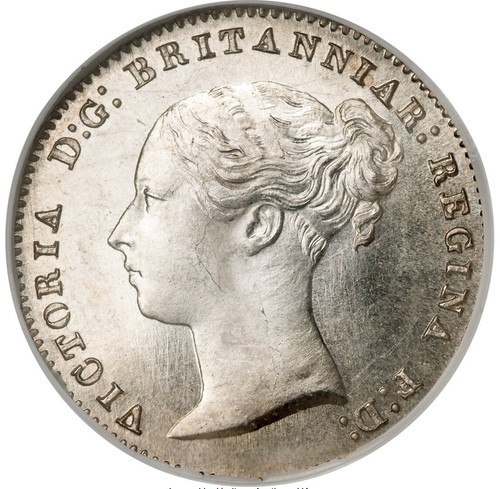
British Silver Threepence
1838-1944
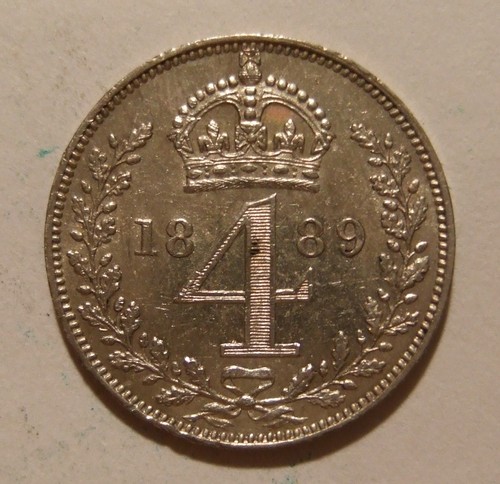
Victoria Maundy Fourpence
1838–1901 (Jubilee Head type shown: 1888–1892)
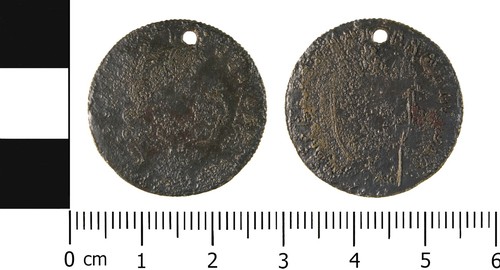
Imitation Guinea Gaming Piece
c. 1790-1900 (undated)
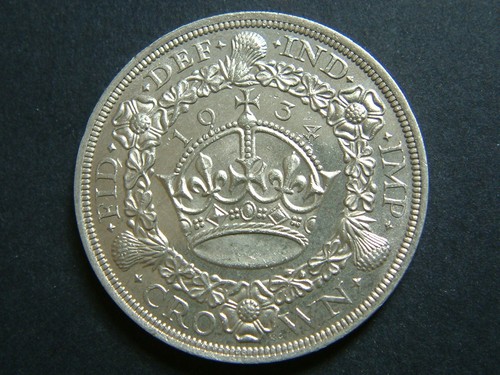
British Crown
1927–1936 (George V wreath crown; example dated 1934)
British Decimal Half Penny
1971–1984
British Half Crown
1928 (George V type; series ran 1816–1946 in silver)