
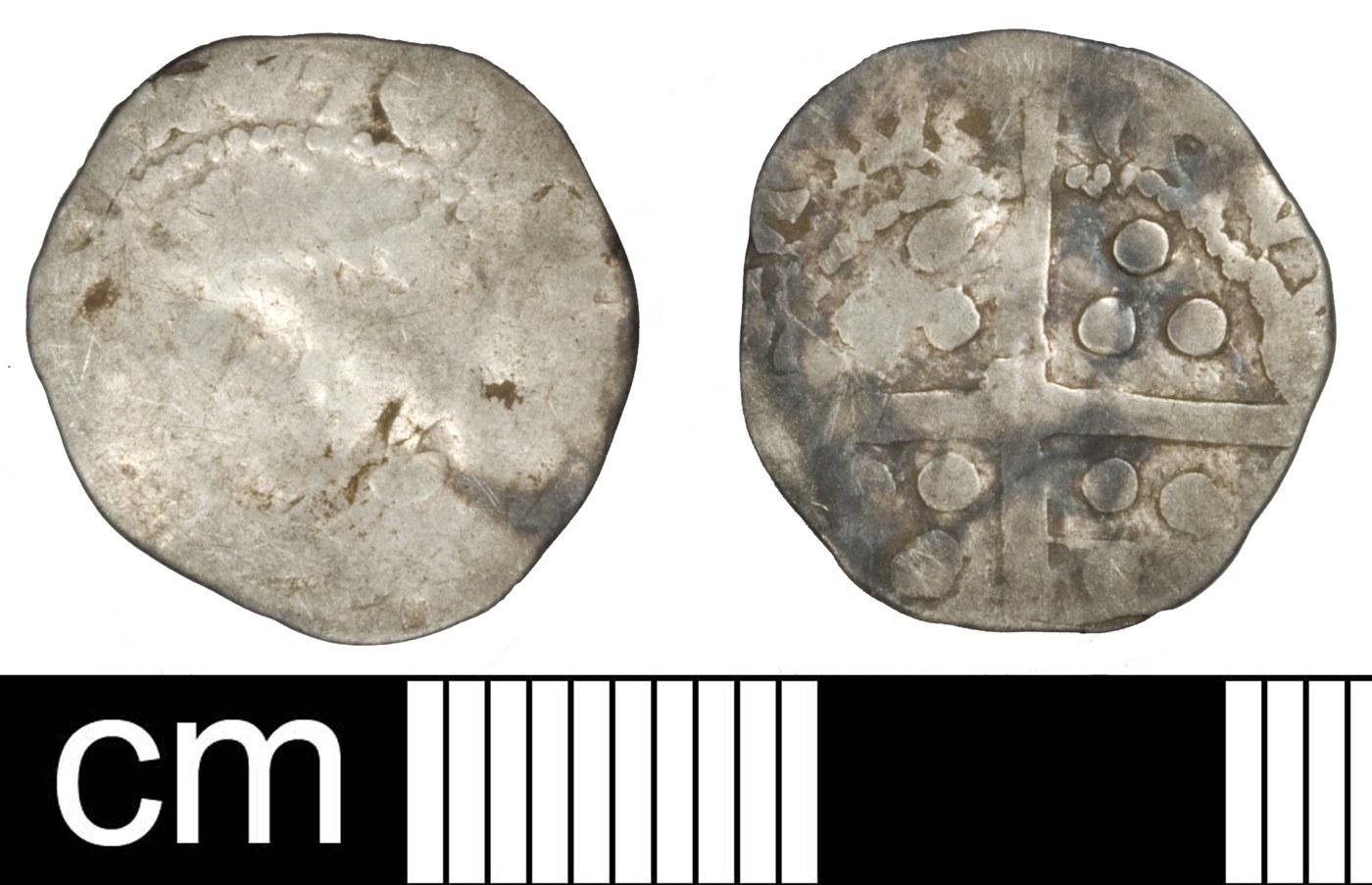
Medieval Penny of Edward III
A hammered silver penny of Edward III (1327–1377): a crowned facing royal bust on one side and a long cross with pellets on the other.
- Country
- England
- Denomination
- Penny
- Metal
- Silver
Got a coin like this?
Identify any coin from a photo, free.
Overview
The Medieval Penny of Edward III is a small hammered silver coin from Plantagenet England, struck during the long reign of Edward III between 1327 and 1377. The example shown is heavily worn from centuries of handling: the obverse carries a royal portrait—a crowned facing bust—now flattened and soft, while the reverse shows the classic long cross dividing the coin into quarters, each filled with pellets and dots.
The penny was the workhorse of English money in the fourteenth century, the everyday coin of wages, rents and market trade. It is a tiny piece, roughly 18 mm across and only around a gram or so of silver, made one at a time by hand between hand-cut dies rather than by machine.
Because these pennies circulated for generations and survive in large numbers, most worn examples are affordable and collected for their history and their direct link to medieval life rather than for high value. Well-struck, legible coins with a clear mint name are the ones collectors prize.
History & Background
Edward III came to the throne in 1327 and reigned until 1377, a period that included the opening decades of the Hundred Years' War and sweeping changes to England's coinage. His silver pennies belong to a series of long-cross designs that had been standard in England since the mid-thirteenth century, continuing a form used by his grandfather Edward I and father Edward II. To an untrained eye the pennies of all three Edwards look much alike.
During Edward III's reign the coinage was reformed more than once. The silver penny was reduced in weight as the century went on, and the king's government introduced new gold coins—the florin experiment and then the successful noble—alongside larger silver groats and halfgroats. The humble penny, however, remained the backbone of small change and was struck in very large quantities.
Pennies were produced at several mints, with the royal mint in London and the ecclesiastical mints such as Canterbury, York and Durham among the most active. Each coin names its mint in the reverse legend, a practice that lets collectors today attribute a worn penny to a particular town even when the portrait has all but vanished.
How to Identify
Look for a small, thin silver coin about 18 mm across and only around a gram in weight, clearly hand-struck rather than machine-made: expect an irregular, slightly off-centre flan and uneven edges. The obverse shows a crowned facing bust of the king with a Latin legend running around the rim, typically an abbreviated form of Edward's name and titles such as EDWARDVS REX. On worn pieces like this one the face is flattened and the letters are only partly readable.
The reverse is the most recognisable feature: a long voided cross that reaches the edge of the coin and divides the field into four quarters, each containing a group of pellets. The outer legend usually gives the mint, in the form CIVITAS followed by a town name—CIVITAS LONDON for London, CIVITAS EBORACI for York, and so on—which is the key to attributing the coin.
Distinguishing Edward III's pennies from those of Edward I and Edward II can be difficult, since all share the facing bust and long-cross design; specialists rely on details of the crown, lettering style, bust and mint combinations. The metal is silver and should show a grey tone rather than the brown of copper; genuine medieval silver often has a dull, naturally toned surface rather than a bright shine.
Value & Collectibility
Worn, common pennies of Edward III are among the more affordable medieval English coins, and heavily circulated examples like the one shown typically sell for modest sums—usually in the range of everyday collector coins rather than large amounts. Value is driven mainly by how much detail survives, how legible the legends are, and which mint and coinage period the coin represents.
A sharp, well-centred penny with a clear portrait and a fully readable mint name is worth considerably more than a flat, illegible piece. Scarcer mints, unusual varieties and coins in exceptional state of preservation command higher prices, while damaged, clipped, bent or badly corroded coins are worth less.
Because the pennies of Edward I, Edward II and Edward III look so similar, correct attribution matters for value. If you want to know exactly what you have, it is worth having the coin identified by mint and coinage period; for anything that appears unusually well preserved or scarce, compare it against a specialist reference or seek an expert opinion rather than relying on the common-coin baseline.
Frequently asked questions
How old is a penny of Edward III?
It dates to Edward III's reign, 1327 to 1377, making it roughly 650 to 700 years old. It is a genuine medieval coin from Plantagenet England.
Is it real silver?
Yes. English pennies of this period were struck in silver of close to sterling fineness. Centuries of wear and natural toning often leave the surface dull grey rather than bright.
Why is the portrait so worn and flat?
These tiny coins were hand-struck and then circulated for generations as everyday money, so the high points of the crowned bust are usually the first detail to wear away.
What do the pellets and cross on the back mean?
The long cross divides the coin into quarters, each holding a cluster of pellets, and the surrounding legend names the mint town. It is the standard reverse of English pennies of this era.
How can I tell it apart from an Edward I or Edward II penny?
It is genuinely difficult, as all three share the facing bust and long-cross design. Specialists use the crown style, lettering and mint details; a worn coin often needs expert attribution.
Medieval Penny of Edward III guides
In-depth guides for identifying, valuing, and collecting Medieval Penny of Edward III.
Other coins you may enjoy
Medieval Silver Cut Farthing
1272-1509
Quarter Farthing
1839-1868
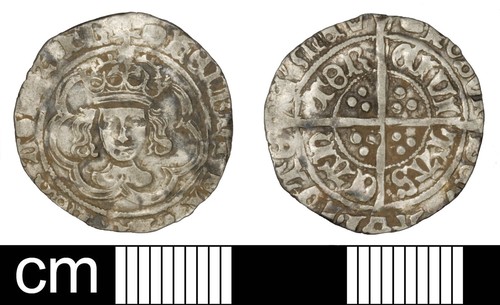
Medieval Halfgroat of Henry VII
1485-1509
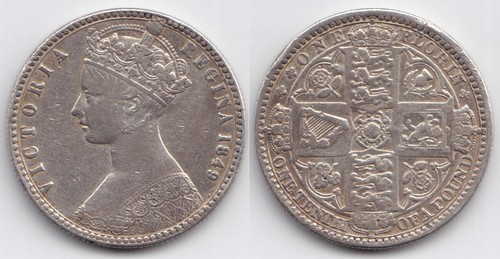
Godless Florin
1849
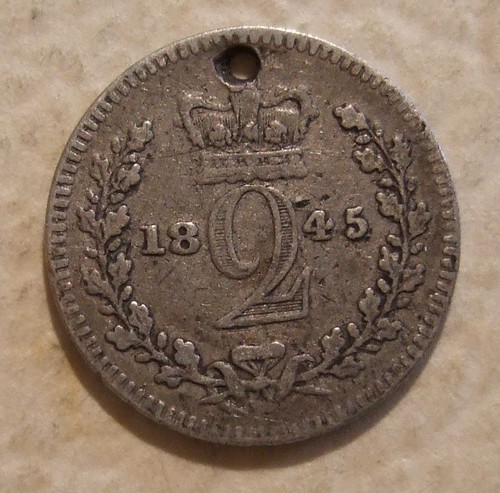
Victoria Maundy Twopence
1838–1901 (Young Head example shown: 1845)
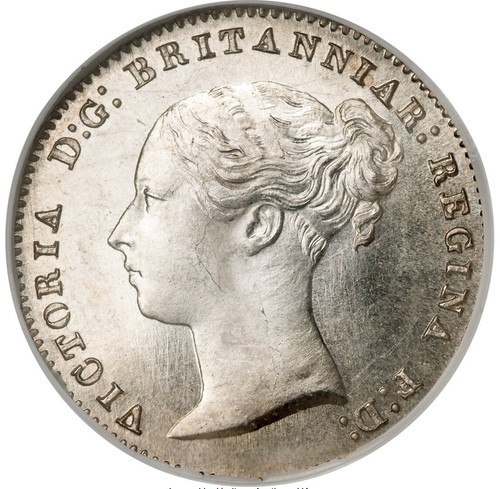
British Silver Threepence
1838-1944
Victoria Maundy Fourpence
1838–1901 (Jubilee Head type shown: 1888–1892)
Imitation Guinea Gaming Piece
c. 1790-1900 (undated)
British Crown
1927–1936 (George V wreath crown; example dated 1934)
British Decimal Half Penny
1971–1984
British Brass Threepence
1937-1967
British Half Crown
1928 (George V type; series ran 1816–1946 in silver)