
How to Identify the Medieval Penny of Edward III
Recognise a hammered Edward III penny by its small silver flan, crowned facing bust and long-cross reverse—then read the mint name to attribute it.
Read the full Medieval Penny of Edward III encyclopedia entry →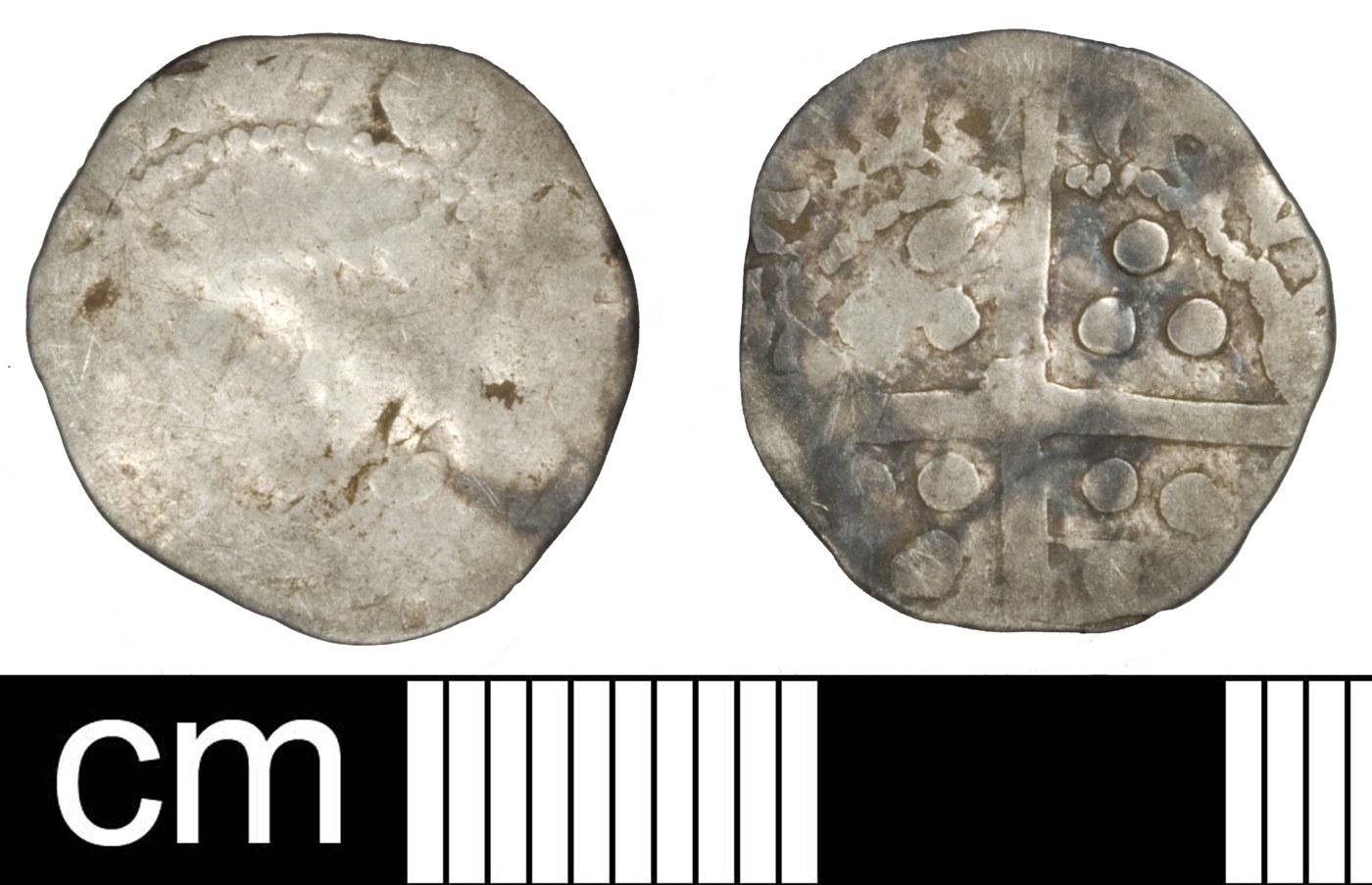
Begin with size, metal and manufacture. An Edward III penny is a small silver disc about 18 mm across and only around a gram in weight, struck by hand between two dies. Genuine examples look hand-made: the flan is often slightly irregular or off-centre, the edges are uneven, and the silver has a dull grey tone from age rather than a bright modern shine. A perfectly round, machine-smooth 'medieval' coin should raise suspicion.
Read the obverse. You should see a crowned bust facing straight out of the coin, surrounded by a Latin legend based on the king's name and titles, such as an abbreviated EDWARDVS REX. On well-worn coins the face flattens first, so concentrate on the crown outline and any legible letters around the rim. The facing bust alone tells you the coin belongs to the long-cross penny series but not which of the three Edwards struck it.
Use the reverse to attribute the coin. The defining feature is a long voided cross running to the edge and splitting the field into four quarters, each with a cluster of pellets. The outer legend normally reads CIVITAS plus a town name—CIVITAS LONDON, CIVITAS EBORACI (York), and so on—which identifies the mint. A legible mint name is the single most useful clue for placing and valuing the coin.
Beware the close look-alikes. The pennies of Edward I and Edward II share the same facing bust and long-cross design and are routinely confused with Edward III's; distinguishing them relies on subtle differences in crown form, lettering style, bust and mint combinations that often need a specialist. Contemporary Continental 'sterling' imitations and later forgeries also exist, so an unusually crisp or suspiciously uniform coin deserves extra scrutiny.
For authentication, weigh and measure the coin against the small silver penny standard and check that wear is even and consistent with genuine circulation. Be cautious of coins that are unnaturally bright, have tooled or re-cut lettering, or show casting seams rather than the sharp strike of hammered dies. For any piece you believe is scarce, high grade or from an unusual mint, compare it to a reliable reference or have it examined by a specialist before assuming an attribution or value.
Frequently asked questions
What is the quickest way to spot an Edward III penny?
Look for a small hammered silver coin with a crowned facing bust on one side and a long cross with pellets in the quarters on the other. The reverse legend usually names the mint.
How do I read which mint struck the coin?
Check the reverse legend around the cross for CIVITAS followed by a town name, such as CIVITAS LONDON for London or CIVITAS EBORACI for York. It is the key to attributing the penny.
Can I be sure it is Edward III and not another Edward?
Not from the design alone. Edward I, II and III pennies look very similar; separating them relies on crown, lettering and mint details, so a worn coin often needs expert attribution.
How can I tell a genuine hammered penny from a fake?
Genuine coins show an irregular hand-struck flan, even honest wear and naturally toned silver. Casting seams, unnatural brightness or re-cut letters are warning signs worth checking closely.