
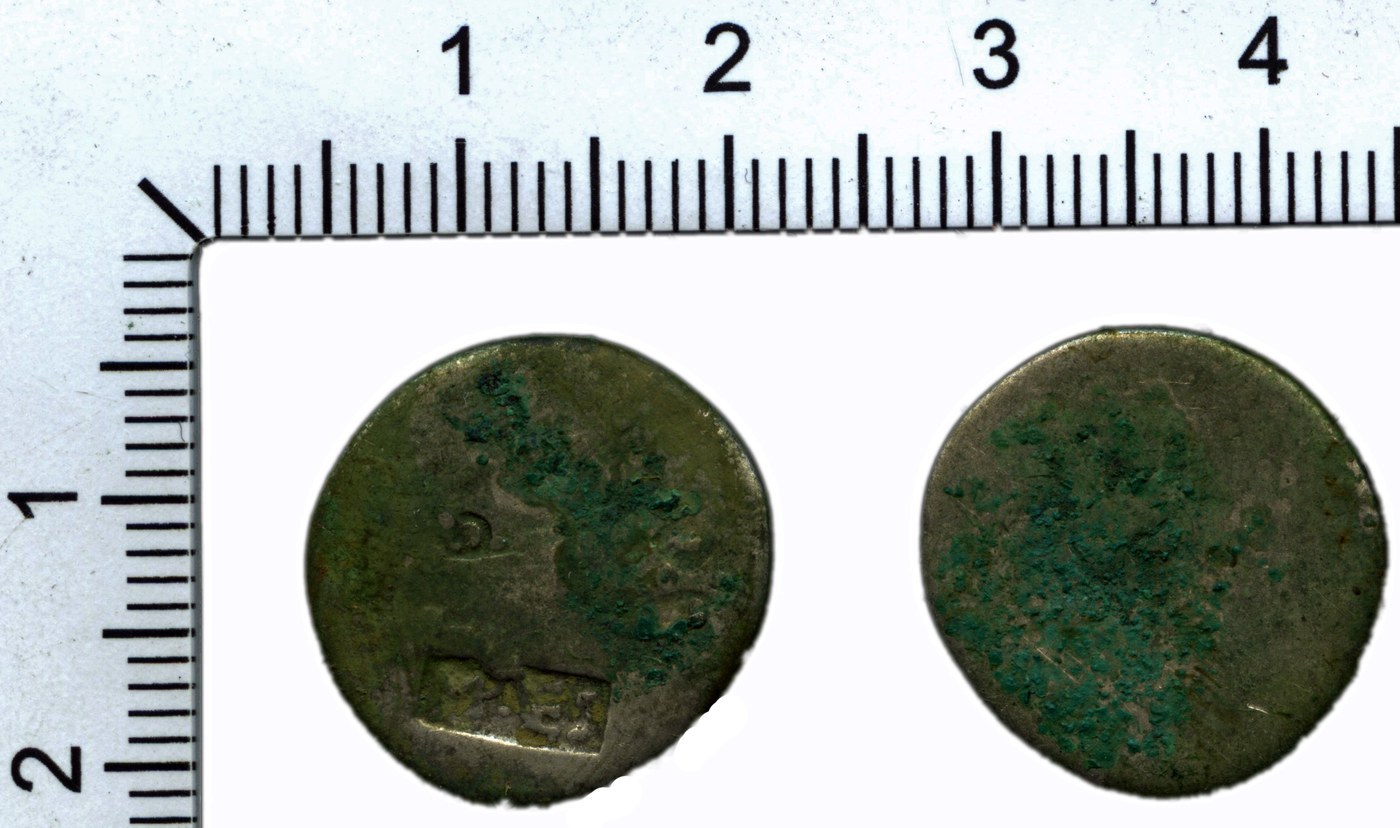
Mark Antony Legionary Denarius
Silver denarius struck by Mark Antony in 32-31 BC to pay his army and fleet; reverse aquila between two standards, this example countermarked IMP VES.
- Country
- Roman Republic
- Denomination
- Denarius
- Metal
- Silver
Got a coin like this?
Identify any coin from a photo, free.
Overview
The Mark Antony Legionary Denarius is one of the most historically charged silver coins of the late Roman Republic. It was issued by Marcus Antonius (Mark Antony) in 32-31 BC, on the eve of the Battle of Actium, as a mass military coinage to pay the legions and the fleet that would face Octavian. The reverse — a legionary eagle (aquila) standing between two military standards (signa) — is the unmistakable hallmark of the type.
The example shown here also carries a later countermark reading IMP VES, punched into the coin under the emperor Vespasian (AD 69-79). Because Antony's legionary denarii were struck in slightly debased silver, they stayed in circulation for well over a century, and pieces like this were re-validated by later authorities — making the countermark a tangible record of the coin's long working life.
History & Background
By 32-31 BC the alliance between Mark Antony and Octavian had collapsed into open war. To pay the enormous army and navy he assembled in Greece, Antony struck this denarius at a travelling military mint, most likely moving with his fleet. The coinage was produced in vast quantities, which is why the type survives in far greater numbers than most Republican denarii.
Each reverse names a specific unit of Antony's forces, with legends such as LEG II, LEG III and onward through the legions, plus special issues for the praetorian and other elite formations. This is the earliest Roman coinage to systematically honor individual legions by number, tying the money directly to the soldiers it paid.
The silver was deliberately debased, so the coins were worth little more than their metal. As a result they were not hoarded away but kept circulating, still passing through soldiers' hands generations later. This example's IMP VES countermark reflects that longevity: it was re-authorized during the reign of Vespasian, roughly a century after it was first struck.
How to Identify
The decisive feature is the reverse: a legionary eagle (aquila) flanked by two standards (signa), with a legend that names a legion — typically the abbreviation LEG followed by a Roman numeral. No other Republican type repeats this military design across so many issues, so the eagle-between-standards reverse is the fastest confirmation.
The obverse of this specimen shows a bust of Mark Antony facing right. Note that the legionary series is most famous for a war-galley obverse bearing the legend ANT AVG III VIR R P C (Antony, Augur, Triumvir); portrait obverses of Antony also occur and are the scarcer presentation. Either way, the reverse remains the anchor for the identification.
Expect a small silver coin about 17-19 mm across and roughly 3.3-3.9 grams, often duller and greyer than a pure-silver denarius because of the debased alloy. On this piece, look also for the incuse countermark IMP VES, a small stamped punch abbreviating Imperator Vespasianus, added long after the coin left the original mint.
Value & Collectibility
Legionary denarii are among the most affordable genuinely ancient Roman silver coins tied to a household name, precisely because Antony struck so many. Well-worn but authentic examples of the common legions often trade from the low tens into the low hundreds of dollars, with condition, sharpness of the eagle and standards, and legibility of the legion legend driving the price.
Certain legends command strong premiums: the rarer legions, the praetorian cohort issue, and the speculatorum (marines) type are far scarcer than the common numbers. A period countermark such as IMP VES adds historical interest and can appeal to specialist collectors, though it does not by itself make a common coin rare.
Because the type is so heavily collected, it is also widely faked and frequently found as ancient silver-plated fourrées. Value is best confirmed against recent auction results for the same legion and grade, and higher-value examples benefit from expert authentication.
Frequently asked questions
What is a Mark Antony Legionary Denarius?
It is a silver denarius struck by Mark Antony in 32-31 BC to pay his legions and fleet before the Battle of Actium. Its reverse shows a legionary eagle between two military standards, with a legend naming a specific legion.
What does the IMP VES countermark mean?
IMP VES abbreviates Imperator Vespasianus. It is a later countermark punched into the coin under the emperor Vespasian (AD 69-79), re-authorizing the still-circulating denarius roughly a century after it was first minted.
Why are these coins still relatively common today?
Antony struck them in enormous numbers, and because the silver was debased they kept circulating instead of being hoarded. Large surviving quantities make them one of the more accessible ancient Roman denarii.
How do I know which legion my coin names?
Read the reverse legend beneath or beside the eagle and standards. It usually reads LEG followed by a Roman numeral, identifying the legion. Rarer legends, including praetorian and marine issues, are more valuable than the common numbers.
Is the coin made of good silver?
It is silver but deliberately debased, so genuine examples often look greyer and duller than a pure-silver denarius. Beware ancient silver-plated fourrées and modern fakes, which are common for this popular type.
Mark Antony Legionary Denarius guides
In-depth guides for identifying, valuing, and collecting Mark Antony Legionary Denarius.
Other coins you may enjoy
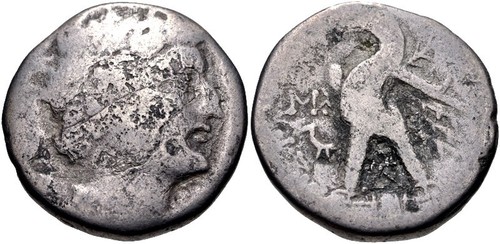
Tetradrachm of Ptolemy XII
80-51 BC
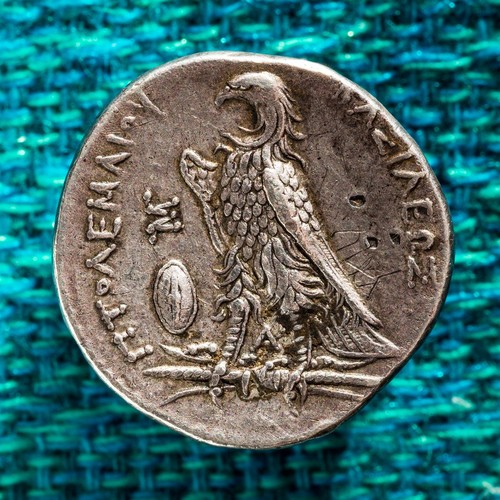
Tetradrachm of Ptolemy I
305-283 BC
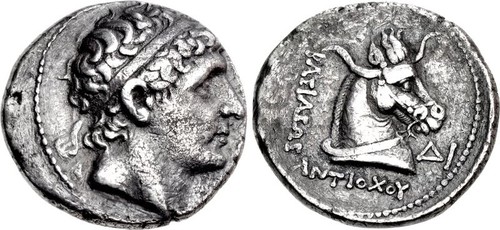
Tetradrachm of Antiochos I Soter
281-261 BC
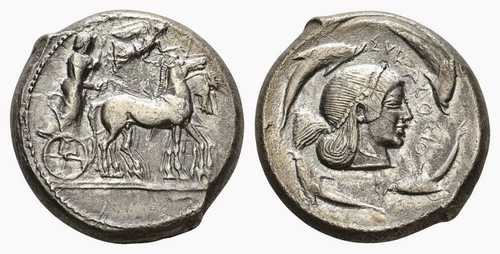
Syracuse Tetradrachm
c. 5th-4th century BC (Classical period)
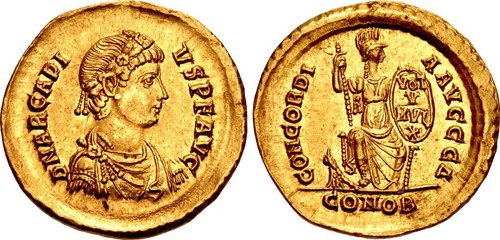
Solidus of Arcadius
AD 395-402
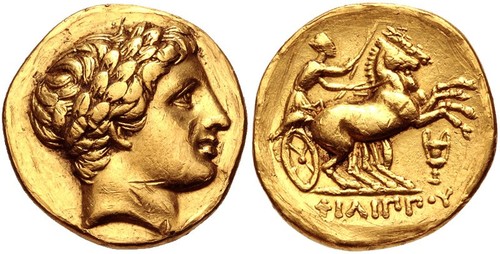
Philip III Gold Stater
323-317 BC
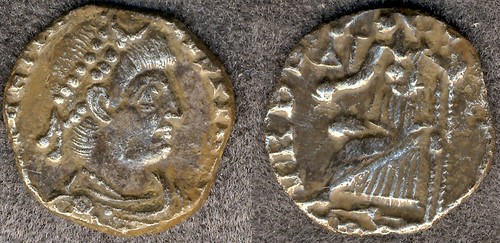
Siliqua of Gratian
AD 367-383
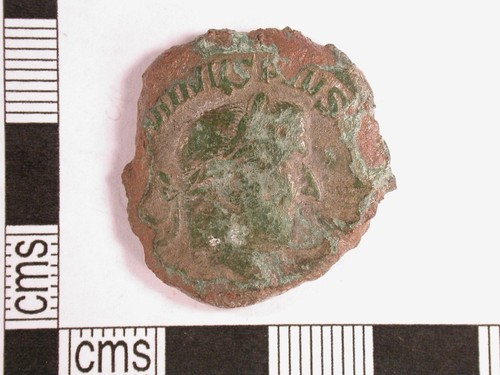
Sestertius of Maximinus Thrax
235-238 AD
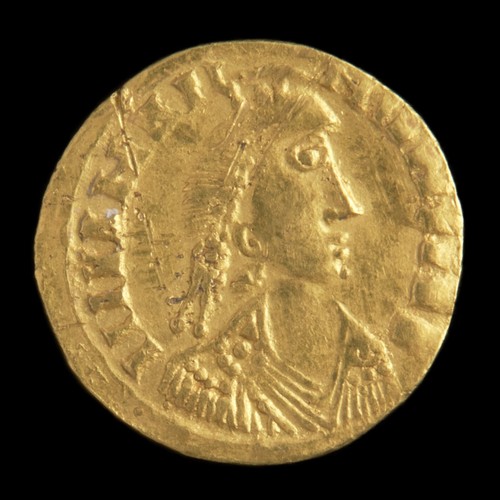
Solidus of Valentinian III
AD 425-455
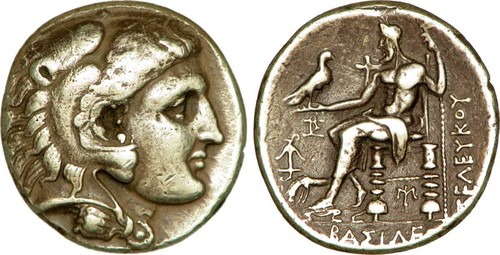
Seleucus I Nicator Tetradrachm
Late 4th-3rd century BC
Nummus of Magnentius
AD 350-353
Follis of Galerius
AD 308-310