
How to Identify the Mark Antony Legionary Denarius
A collector's guide to confirming Antony's legionary denarius by its eagle-and-standards reverse, legion legend, size, metal, and countermarks.
Read the full Mark Antony Legionary Denarius encyclopedia entry →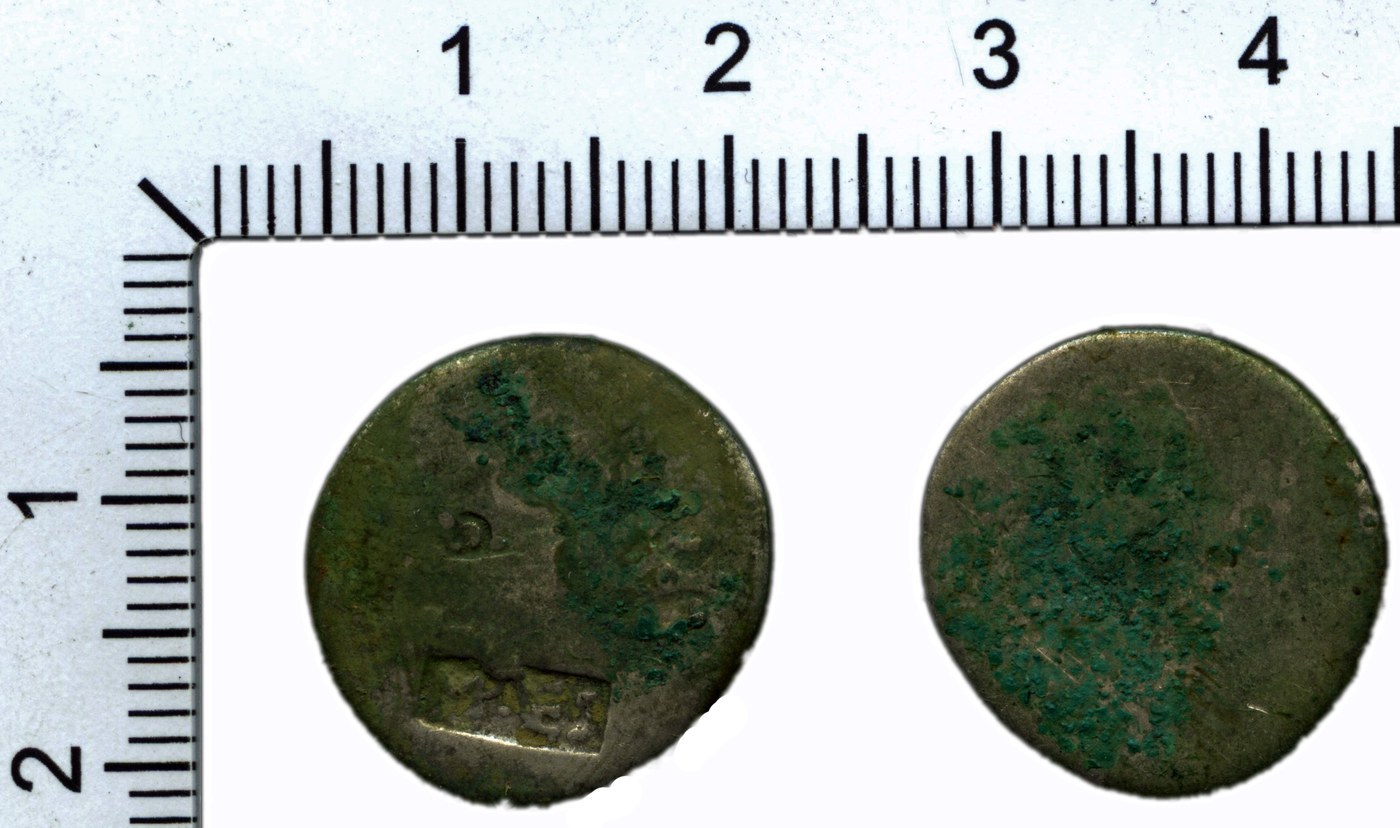
Begin with the reverse, because it defines the type. Look for a legionary eagle (aquila) standing upright between two military standards (signa). Below or around it should be a legend reading LEG followed by a Roman numeral — the legion being paid. This eagle-between-standards design, repeated across dozens of legion numbers, is the single most reliable diagnostic; if the reverse shows anything else, it is not this type.
Next read the legend carefully. The common obverse legend of the series is ANT AVG III VIR R P C, naming Antony as Augur and Triumvir. On the coin here the obverse carries a bust of Mark Antony facing right; portrait obverses are scarcer than the well-known war-galley obverse, so use the reverse legion legend, not the obverse, as your primary identifier and to pin down the exact issue.
Check size, weight, and metal. A genuine legionary denarius is about 17-19 mm and roughly 3.3-3.9 grams. The alloy is debased, so the surfaces often look greyer and less bright than a high-silver denarius — this is normal and expected, not a sign of a fake. A coin that is oddly light, magnetic, or shows a copper core breaking through the silver is a warning of a plated fourrée or modern forgery.
Inspect any countermarks separately from the original design. This example bears an incuse IMP VES punch applied under Vespasian, a small stamped abbreviation sunk into the surface rather than part of the struck relief. Countermarks are later additions; note them, but identify the base coin from its own dies first.
Finally, apply authentication caution. This is one of the most imitated ancient types. Compare the eagle, standards, and lettering against verified examples, watch for the soft detail and repeated surface bubbles typical of casts, and treat suspiciously sharp or artificially toned pieces with care. For rarer legions or higher-value coins, seek expert opinion or third-party certification before buying.
Frequently asked questions
What is the quickest way to confirm this type?
Find the reverse eagle standing between two standards with a LEG legend naming a legion. That eagle-and-standards design, tied to a numbered legion, is unique to Antony's legionary denarii.
Should I identify the coin from the portrait or the reverse?
Use the reverse. The legion legend fixes the exact issue, and portrait obverses are a scarcer variant of a series better known for its war-galley obverse. The eagle-and-standards reverse is the anchor.
How can I spot a fake or fourree?
Check weight and size (about 17-19 mm, 3.3-3.9 g), look for a copper core showing through worn silver, and watch for cast-style soft detail or repeated surface bubbles. Debased grey silver is normal, but a magnetic or underweight coin is not.
Does the IMP VES countermark change the identification?
No. The countermark is a later Vespasianic addition punched into the surface. Identify the base denarius from its original dies first, then record the countermark as a separate feature of that specimen.