
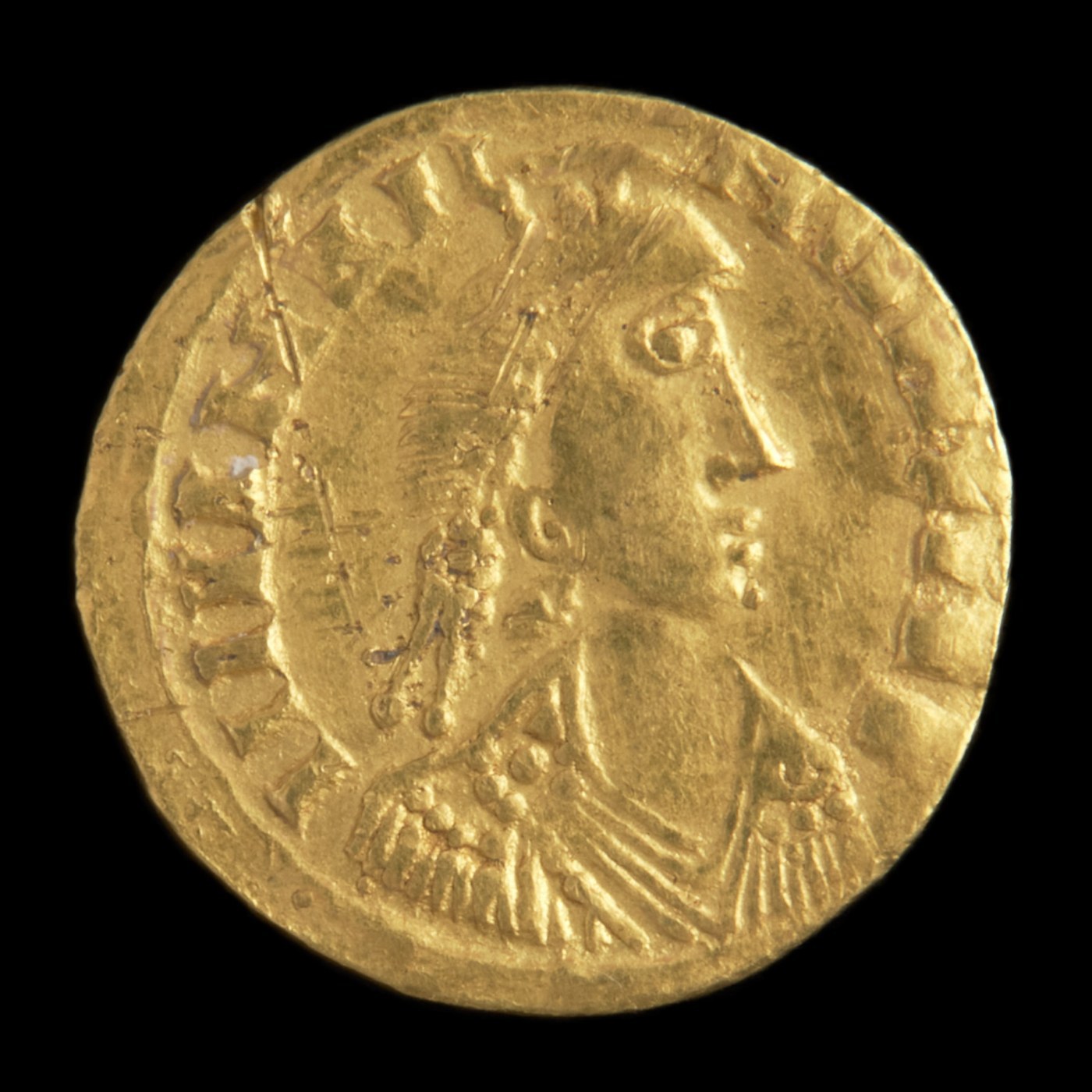
Solidus of Valentinian III
A gold solidus of the Western Roman emperor Valentinian III (AD 425-455), with his diademed profile and an imperial or military reverse.
- Country
- Roman Empire
- Denomination
- Solidus
- Metal
- Gold
Got a coin like this?
Identify any coin from a photo, free.
Overview
The solidus of Valentinian III is a gold coin of the Western Roman Empire struck during the long reign of the emperor Flavius Placidius Valentinianus (AD 425-455). The solidus was the standard high-value gold coin of the late Roman world, a small but thick disc of nearly pure gold that anchored the imperial economy from the reign of Constantine onward.
The obverse observed on this coin shows the diademed profile of Valentinian III facing right, surrounded by a Latin legend naming the emperor. The reverse carries an imperial or military type, most commonly the emperor standing in military dress with the emblems of victory and, on many issues, a foot placed on a captive or serpent. Struck in the twilight decades of the Western Empire, these coins circulated widely and were also paid out in tribute and subsidy.
Because the solidus held its weight and purity as a matter of state policy, examples of Valentinian III survive in reasonable numbers today and are among the more attainable late Western imperial gold coins for collectors of the period.
History & Background
Valentinian III came to the Western throne in AD 425 as a child of six, installed with the backing of his cousin Theodosius II in the East, and reigned until his assassination in AD 455. For much of that time real power lay with his mother, the regent Galla Placidia, and with the general Aetius, whose armies checked the Huns and held the Western provinces together for a generation.
His reign spanned the slow contraction of Western Roman authority: the loss of much of Africa to the Vandals, the campaigns against Attila that culminated at the Catalaunian Plains in AD 451, and mounting reliance on gold to buy peace with barbarian powers. The solidus was central to this world, used to pay troops, reward allies, and settle subsidies, so its weight of about 4.5 grams and its high purity were maintained deliberately even as the empire weakened.
Most of his gold was struck at the Western mints of Ravenna, the imperial capital of the period, and Rome, with related issues from Constantinople and other centres. The coinage projected an image of stable, victorious rule at a time when the political reality was increasingly precarious, and it continued to circulate long after his death.
How to Identify
The defining features are the pure gold fabric and the diademed imperial portrait. On this piece the obverse shows the profile bust of Valentinian III facing right, wearing a pearl diadem, with the surrounding legend typically reading D N PLA VALENTINIANVS P F AVG or a close variant. The name VALENTINIANVS, combined with the P F AVG title, is the key to attribution; some issues render the bust three-quarter facing rather than in strict profile.
The reverse carries an imperial or military type. A very common design shows the emperor standing in military dress holding a long cross or standard and a Victory on a globe, often with a foot on a human-headed serpent, accompanied by a legend such as VICTORIA AVGGG. Other reverses show a seated Roma or Constantinopolis or a cross within a wreath. In the exergue below the reverse, look for a mint mark such as RV (Ravenna), R M or ROMA (Rome), or CONOB, the last indicating gold of the standard fineness.
In hand the solidus is a small, thick gold disc roughly 20-21 mm across and about 4.4-4.5 grams. The metal is soft, high-purity gold with a warm yellow tone, and genuine strikes show crisp hand-cut lettering and slightly irregular flans. The combination of the diademed VALENTINIANVS portrait, a victory or military reverse, and a Western mint mark with CONOB confirms the type.
Value & Collectibility
Solidi of Valentinian III are collectable gold coins that carry both a bullion floor and a numismatic premium. Ordinary examples with typical wear and a common reverse generally trade from the middle hundreds into the low thousands of dollars, while sharply struck coins with full legends, strong portraits, and good centring bring higher figures.
Value is driven by the mint, the specific reverse type, the quality of the strike and portrait, centring, and overall eye appeal, as well as any notable provenance. Coins from scarcer mints, unusual bust or reverse varieties, and exceptional condition can command substantial premiums over the ordinary run, while clipped, bent, mounted, or ex-jewellery pieces sell for less.
The figures here are general context rather than appraisals; the gold market, condition, and rarity can move an individual coin well outside these ranges. Because late Roman gold is a target for forgery, specialist attribution and reputable provenance materially affect what a given solidus will realise.
Frequently asked questions
Is the solidus of Valentinian III made of real gold?
Yes. The solidus was struck in nearly pure gold at a controlled weight of about 4.5 grams, a standard the late Roman state maintained deliberately. The mark CONOB in the exergue of many issues refers to this standard of refined gold.
How can I tell it is Valentinian III and not another late emperor?
Read the obverse legend. His coins name VALENTINIANVS, usually as D N PLA VALENTINIANVS P F AVG. Several fifth-century emperors struck near-identical diademed solidi, so the name in the legend, not the portrait style alone, identifies the ruler.
What does the reverse usually show?
A common reverse shows the emperor standing in military dress with a long cross and a Victory on a globe, often with his foot on a human-headed serpent, under a legend such as VICTORIA AVGGG. Seated Roma or Constantinopolis and cross-in-wreath types also occur.
Where were these solidi minted?
Most were struck at the Western mints of Ravenna and Rome, with related issues from Constantinople and other centres. Look in the reverse exergue for marks such as RV, ROMA, or CONOB to place the coin to a mint and confirm the gold standard.
Are solidi of Valentinian III rare?
They are not among the rarest late Roman gold, as the solidus was struck steadily throughout his long reign, but they are far scarcer and more valuable than base-metal coins. Scarcer mints, reverse types, and top condition command significant premiums.
Solidus of Valentinian III guides
In-depth guides for identifying, valuing, and collecting Solidus of Valentinian III.
Other coins you may enjoy
Tetradrachm of Ptolemy XII
80-51 BC
Tetradrachm of Ptolemy I
305-283 BC
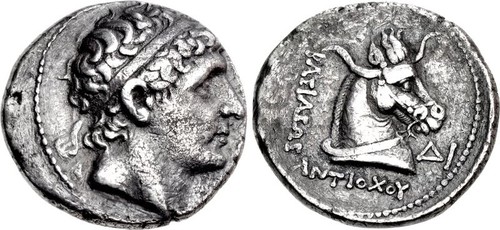
Tetradrachm of Antiochos I Soter
281-261 BC
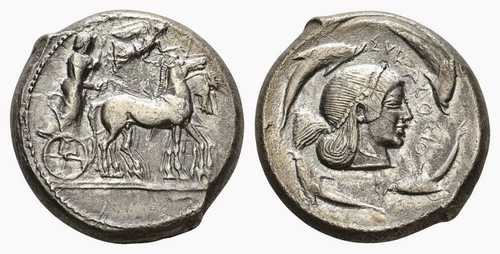
Syracuse Tetradrachm
c. 5th-4th century BC (Classical period)
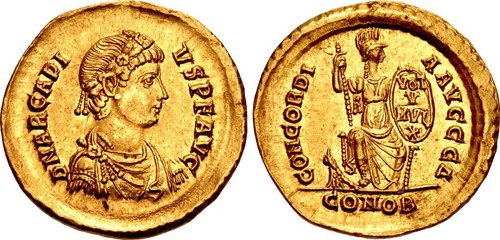
Solidus of Arcadius
AD 395-402
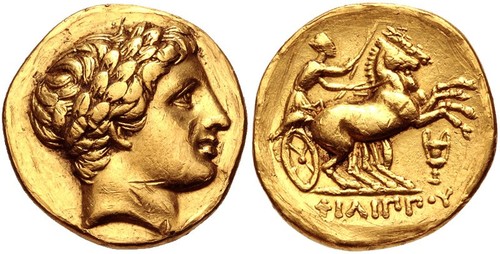
Philip III Gold Stater
323-317 BC
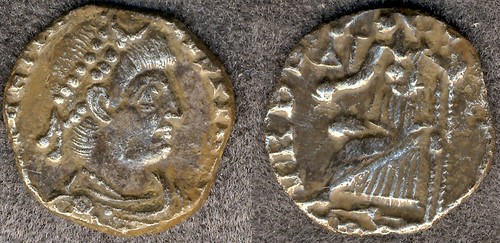
Siliqua of Gratian
AD 367-383
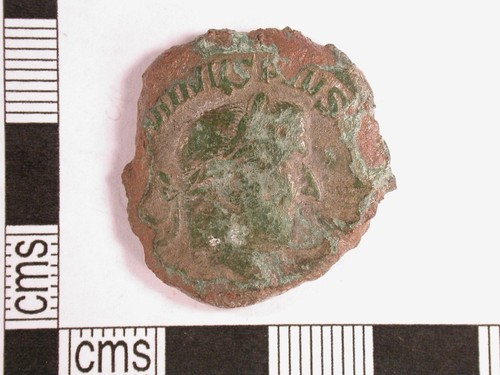
Sestertius of Maximinus Thrax
235-238 AD
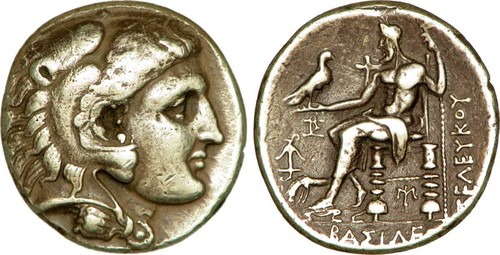
Seleucus I Nicator Tetradrachm
Late 4th-3rd century BC
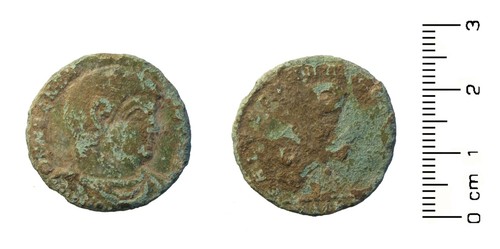
Nummus of Magnentius
AD 350-353
Follis of Galerius
AD 308-310
Follis of Licinius I
AD 320-321