
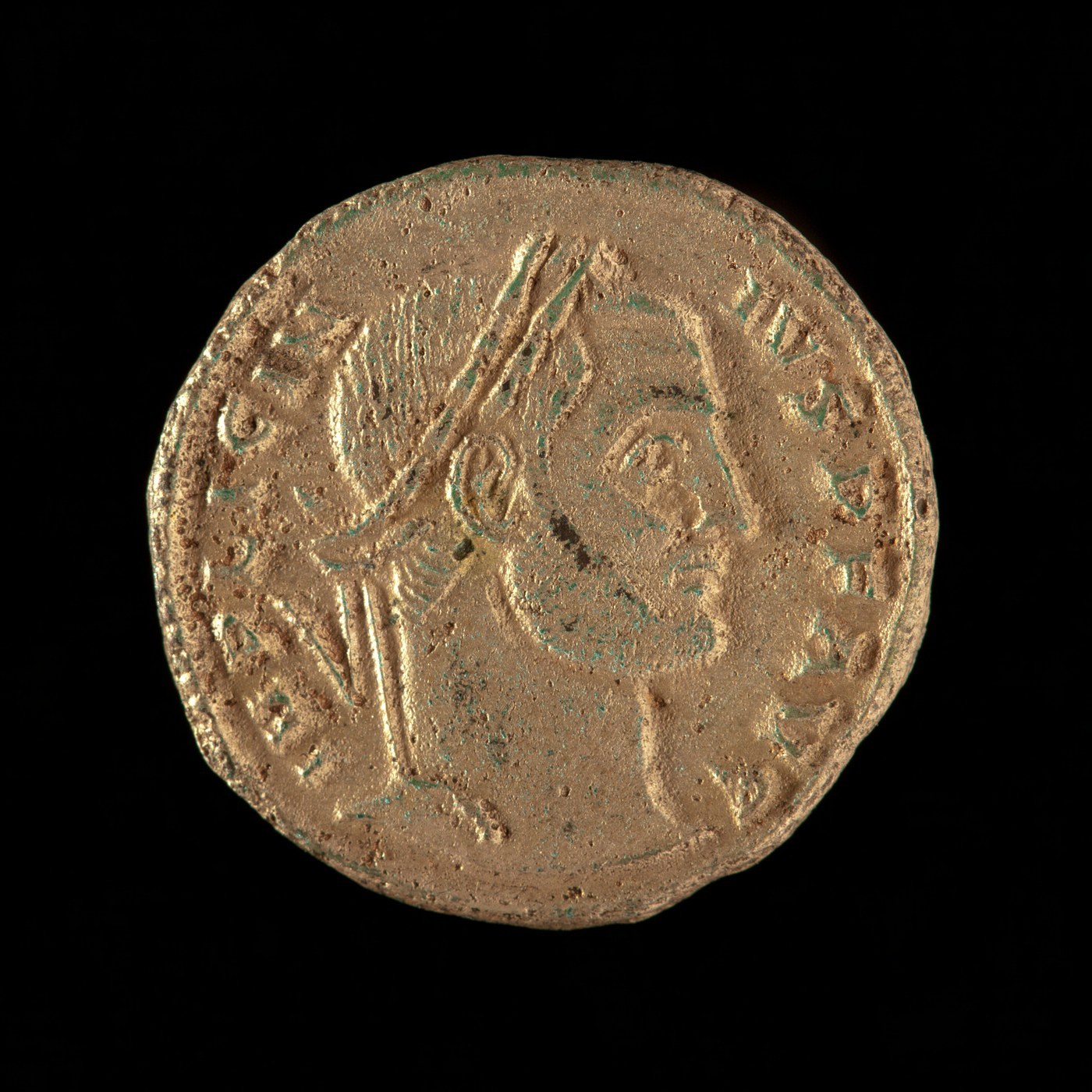
Follis of Licinius I
A small bronze follis of the emperor Licinius I (AD 308-324), showing his portrait and a standing deity reverse, struck around AD 320-321.
- Country
- Roman Empire
- Denomination
- Follis
- Metal
- Bronze
Got a coin like this?
Identify any coin from a photo, free.
Overview
The follis of Licinius I is a base-metal Roman coin struck during the reign of the emperor Valerius Licinianus Licinius (AD 308-324), the eastern colleague and eventual rival of Constantine the Great. The follis was the standard bronze denomination of the age, introduced by Diocletian's reform of the coinage, though by the date of this piece it had shrunk to a small, light coin sometimes catalogued by collectors as a nummus or AE3.
The obverse observed on this coin shows the portrait of Licinius I facing right, surrounded by a Latin legend naming the emperor. The reverse carries a standing figure, most likely a deity or divine personification identified by its attributes and the accompanying legend. For the period around AD 320-321 the common reverse for Licinius is Jupiter, his protector, shown standing with Victory, a sceptre, and an eagle.
Struck across the eastern mints that Licinius controlled, these small bronzes survive in large numbers and are among the more accessible coins of the Constantinian era for collectors today.
History & Background
Licinius rose to power in AD 308, appointed Augustus of the West by Galerius as the Tetrarchic system of shared rule was breaking apart. He soon came to control the eastern provinces and, after defeating the emperor Maximinus II in AD 313, ruled the entire eastern half of the empire alongside Constantine I in the West.
The two emperors held an uneasy partnership for a decade, marked by intermittent conflict and rival propaganda. Around AD 320-321, the date of this coin, Licinius was still a legitimate Augustus striking coinage in his own name and that of his son Licinius II. He remained a defender of the traditional gods, and his coinage continued to invoke Jupiter as his divine protector even as Constantine increasingly favoured Christian and solar imagery. The rivalry ended in open war: Licinius was defeated at Adrianople and Chrysopolis in AD 324, deposed, and executed the following year.
The follis by this time had been reduced far from the large coin of Diocletian's original reform. Repeated reductions in size and weight over the early fourth century left a small bronze piece, still the everyday circulating denomination, produced in enormous quantities at mints throughout the eastern empire.
How to Identify
The key to attribution is the obverse legend, which names the emperor. On this coin the obverse shows the portrait of Licinius I facing right, usually laureate or with a radiate or cuirassed bust depending on the issue, within a legend such as IMP LICINIVS AVG or IMP LIC LICINIVS P F AVG. The name LICINIVS is the decisive element; take care to distinguish the father, Licinius I, from his son Licinius II (Caesar), whose coins carry a similar name but a youthful bust and junior titles.
The reverse carries a standing figure whose identity is fixed by its attributes and legend. For Licinius around AD 320-321 the most common type is Jupiter, legend IOVI CONSERVATORI, shown standing with a small Victory on a globe in one hand and a sceptre in the other, often with an eagle and sometimes a captive at his feet. Other reverses of the reign include military and vota types. Matching the figure and its attributes to the surrounding legend is how a specific type is attributed.
In hand the coin is small, roughly 18-20 mm across and about 2.5-3.5 grams, struck in bronze with a brown or green patina; some retain traces of the original silvery surface wash. Look in the reverse field and exergue for officina letters and a mint mark such as SMN (Nicomedia), SMK (Cyzicus), SMH (Heraclea), SMANT (Antioch), or TS (Thessalonica), which place the coin to a specific mint and workshop.
Value & Collectibility
Folles of Licinius I are common and generally inexpensive, reflecting the very large quantities struck across the eastern mints. Well-worn or ordinary examples frequently trade in the low tens of dollars, while sharp coins with clear portraits, complete legends, and attractive patina bring higher figures.
Value is driven by the strength of the strike, the completeness of the legends, surviving surface silvering, the rarity of the particular reverse type and mint, and overall eye appeal. Scarcer reverse legends, unusual bust types, and coins from less common mints can command premiums above the ordinary run, and pieces securely attributed to Licinius I rather than his son may be preferred by collectors.
The figures here are general context, not appraisals; condition, type, and provenance can move an individual coin outside these ranges. Specialist attribution to a specific mint, officina, and reverse variety adds interest for a well-preserved example.
Frequently asked questions
What metal is the follis of Licinius I made of?
It is a bronze coin. By this period the follis carried at most a thin surface silvering with only a trace of silver, so most surviving examples show a brown or green bronze surface. It is not a silver coin.
How do I tell Licinius I from his son Licinius II?
Read the legend and look at the portrait. Both carry the name LICINIVS, but Licinius I is the Augustus with a mature bust and the title AVG, while Licinius II is shown as a youthful Caesar with junior titles such as NOB C or CAES. The bust age and title distinguish them.
Which deity appears on the reverse?
For coins of this date the standing figure is most often Jupiter, marked IOVI CONSERVATORI, holding a small Victory on a globe and a sceptre with an eagle at his feet. Jupiter was promoted as the divine protector of Licinius, in contrast to Constantine's increasingly Christian imagery.
Why is this coin so much smaller than an early follis?
The follis shrank steadily after Diocletian introduced it. Repeated reductions in size and weight through the early fourth century left the small bronze piece of about 18-20 mm seen here, which is why numismatists sometimes catalogue it as a nummus or AE3.
Are folles of Licinius I rare or valuable?
They are common and usually affordable, since huge numbers were struck at many eastern mints. Scarcer reverse types, unusual mints, and coins with strong surfaces or original silvering command higher prices, but most examples are within easy reach of beginning collectors.
Follis of Licinius I guides
In-depth guides for identifying, valuing, and collecting Follis of Licinius I.
Other coins you may enjoy
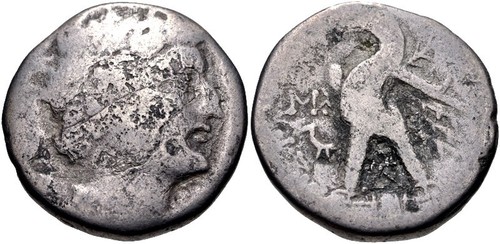
Tetradrachm of Ptolemy XII
80-51 BC
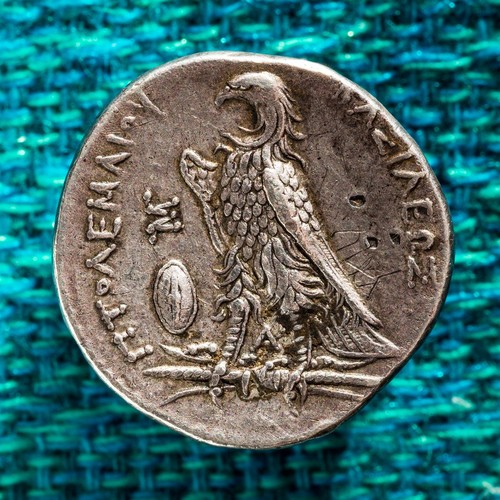
Tetradrachm of Ptolemy I
305-283 BC
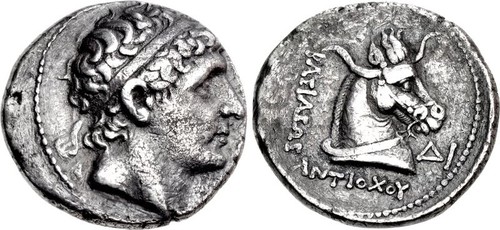
Tetradrachm of Antiochos I Soter
281-261 BC
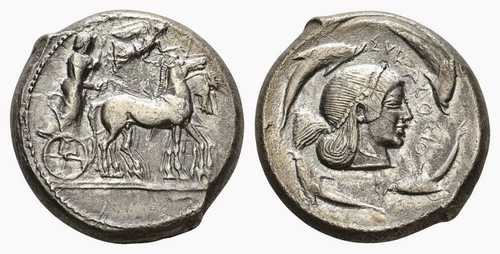
Syracuse Tetradrachm
c. 5th-4th century BC (Classical period)
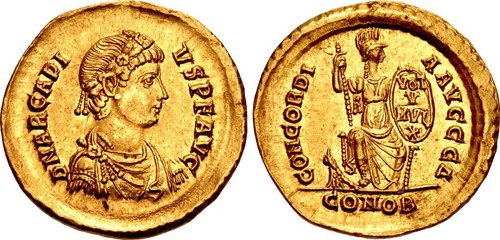
Solidus of Arcadius
AD 395-402
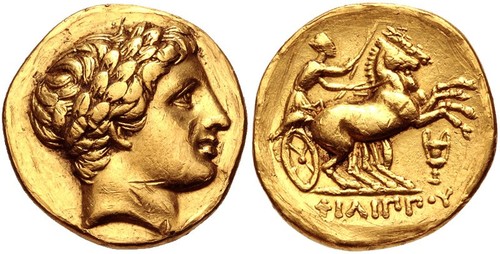
Philip III Gold Stater
323-317 BC
Siliqua of Gratian
AD 367-383
Sestertius of Maximinus Thrax
235-238 AD
Solidus of Valentinian III
AD 425-455
Seleucus I Nicator Tetradrachm
Late 4th-3rd century BC
Nummus of Magnentius
AD 350-353
Follis of Galerius
AD 308-310