
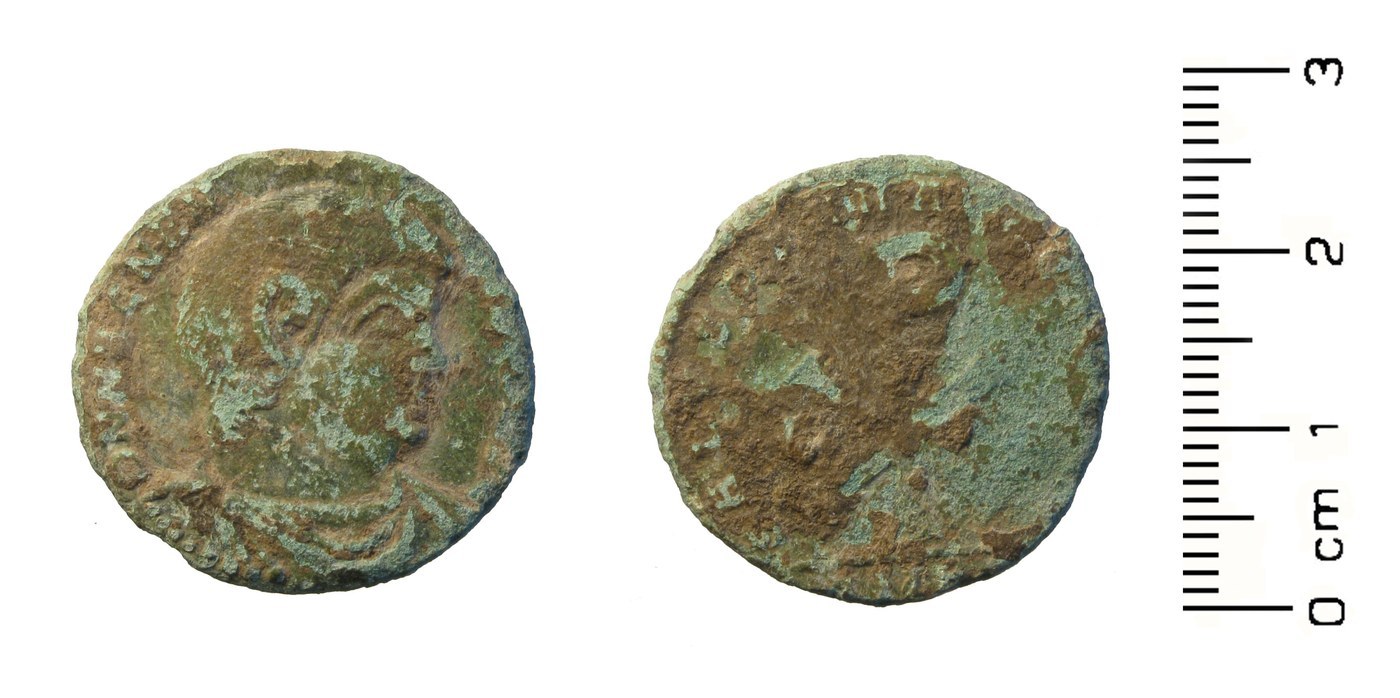
Nummus of Magnentius
A late Roman bronze struck for the usurper Magnentius (AD 350-353), noted for its bold bare-headed portrait and large Chi-Rho reverses.
- Country
- Roman Empire
- Denomination
- Nummus
- Metal
- Bronze
Got a coin like this?
Identify any coin from a photo, free.
Overview
The nummus of Magnentius is a late Roman bronze coin struck during the short reign of the usurper Flavius Magnus Magnentius, who ruled the western provinces from AD 350 to 353. "Nummus" is the general term used for the base-metal coinage of the fourth century, whose exact denominations and names are debated; collectors and catalogues also describe Magnentius bronzes as centenionales or maiorinae depending on size.
These coins are immediately recognizable for their strong, individualized portraiture. The obverse shows a bare-headed, cuirassed bust of Magnentius with distinctive curly hair, a break from the usual diademed emperors of the period. The reverse carries a Latin inscription and various numismatic marks, and Magnentius is especially famous for large bronzes displaying a prominent Christian Chi-Rho monogram.
Because his reign was brief and ended in defeat by Constantius II, Magnentius coinage forms a compact, historically vivid series that appeals to collectors of the later Roman Empire.
History & Background
Magnentius was a military officer of barbarian descent who was proclaimed emperor in January AD 350 after the murder of the western emperor Constans, brother of Constantius II. He controlled Gaul, Britain, Spain, Italy, and Africa, and struck coinage at a network of western mints including Trier, Lyon, Arles, Amiens, and Aquileia to pay his troops and assert his legitimacy.
His bronze coinage reflects the currency system of the mid-fourth century, in which reformed base-metal denominations circulated after the collapse of earlier silver coinage. Late in his reign Magnentius issued a series of heavy bronzes bearing a large Chi-Rho (the Christogram, sometimes flanked by the Greek letters Alpha and Omega), one of the most overtly Christian reverse designs on Roman coinage.
Magnentius was defeated by Constantius II at the great Battle of Mursa in AD 351 and finally crushed in AD 353, after which he took his own life. Following his fall the victorious government demonetized and recalled much of his coinage, which is one reason his large Chi-Rho bronzes are comparatively scarce today.
How to Identify
Start with the portrait. The obverse of a Magnentius nummus shows a bare-headed, cuirassed and draped bust facing right, with thick curly hair and often a slight forward tilt, rather than the pearl-diademed head used by most contemporary emperors. The legend usually reads D N MAGNENTIVS P F AVG, and some issues place the letter A behind the bust.
Read the reverse inscription and marks to attribute the type. Common reverses include two Victories holding a shield inscribed VOT V MVLT X (VICTORIAE DD NN AVG ET CAES), an emperor on horseback (GLORIA ROMANORVM), and the celebrated large Chi-Rho monogram (SALVS DD NN AVG ET CAES), the last frequently flanked by Alpha and Omega. A mintmark in the exergue and small field letters or symbols identify the mint and officina.
In hand these are bronze coins that vary in size with the issue: smaller pieces run roughly 18-22 mm, while the heavy Chi-Rho and horseman types can reach about 24-28 mm and be notably thick. Surfaces are usually brown, green, or earthen from burial, sometimes with traces of the original silvering the mint applied.
Value & Collectibility
Magnentius bronzes are collectable across a wide price range. The smaller and more common types, such as the two-Victories issues, are affordable and frequently trade in the low tens of dollars in worn to moderate grade. Well-centered examples with a sharp portrait and clear legends bring more.
The large Chi-Rho bronzes and the emperor-on-horseback types are the most sought-after. Attractive examples with good detail, even patina, and traces of silvering can reach the mid-tens to several hundred dollars, and exceptional pieces higher still, driven by the popularity of the overt Christogram design and the coin's historical association with a dramatic usurpation.
Value depends on size and type, strike quality, surviving surface, and the presence of silvering, as well as correct attribution to mint and officina. Figures here are broad context ranges, not appraisals; any individual coin should be judged on its own condition and provenance.
Frequently asked questions
Who was Magnentius?
Flavius Magnus Magnentius was a Roman military commander who seized power in the western empire in AD 350 after the death of Constans. He was recognized in Gaul, Britain, Spain, Italy, and Africa until his defeat by Constantius II and death in AD 353.
What is the large monogram on the reverse of some coins?
It is the Chi-Rho, or Christogram, formed from the first two Greek letters of "Christ." On Magnentius bronzes it is often flanked by the letters Alpha and Omega and makes his coinage among the most openly Christian of the era.
What denomination is a nummus of Magnentius?
"Nummus" is a general modern term for fourth-century Roman base-metal coinage. Depending on size, Magnentius bronzes are also described as centenionales or maiorinae; the precise ancient names and values of these coins remain debated.
Why are some Magnentius coins scarce?
After Magnentius was defeated, the government of Constantius II recalled and demonetized much of his coinage. This, combined with his short three-year reign, makes certain issues, especially the large Chi-Rho bronzes, harder to find.
Nummus of Magnentius guides
In-depth guides for identifying, valuing, and collecting Nummus of Magnentius.
Other coins you may enjoy
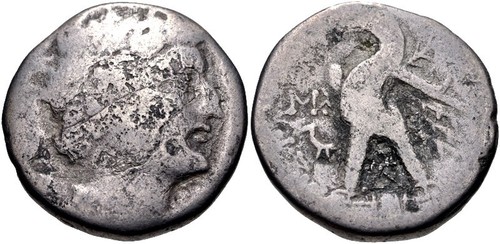
Tetradrachm of Ptolemy XII
80-51 BC
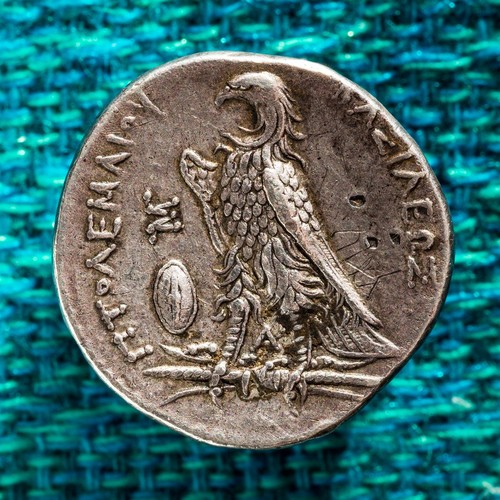
Tetradrachm of Ptolemy I
305-283 BC
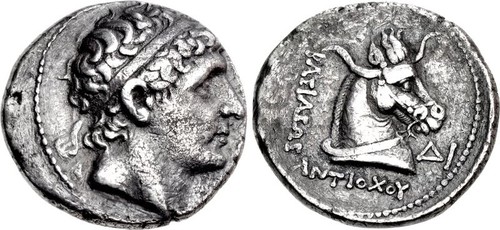
Tetradrachm of Antiochos I Soter
281-261 BC
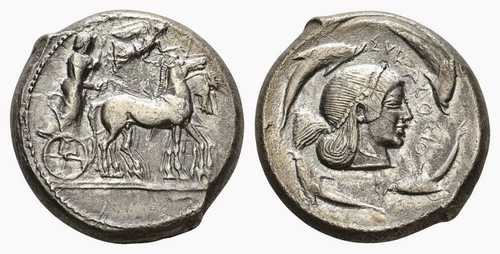
Syracuse Tetradrachm
c. 5th-4th century BC (Classical period)
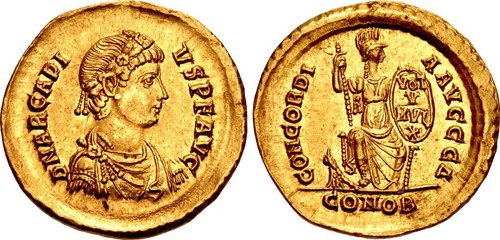
Solidus of Arcadius
AD 395-402
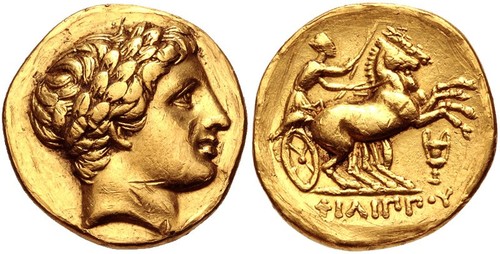
Philip III Gold Stater
323-317 BC
Siliqua of Gratian
AD 367-383
Sestertius of Maximinus Thrax
235-238 AD
Solidus of Valentinian III
AD 425-455
Seleucus I Nicator Tetradrachm
Late 4th-3rd century BC
Follis of Galerius
AD 308-310
Follis of Licinius I
AD 320-321