
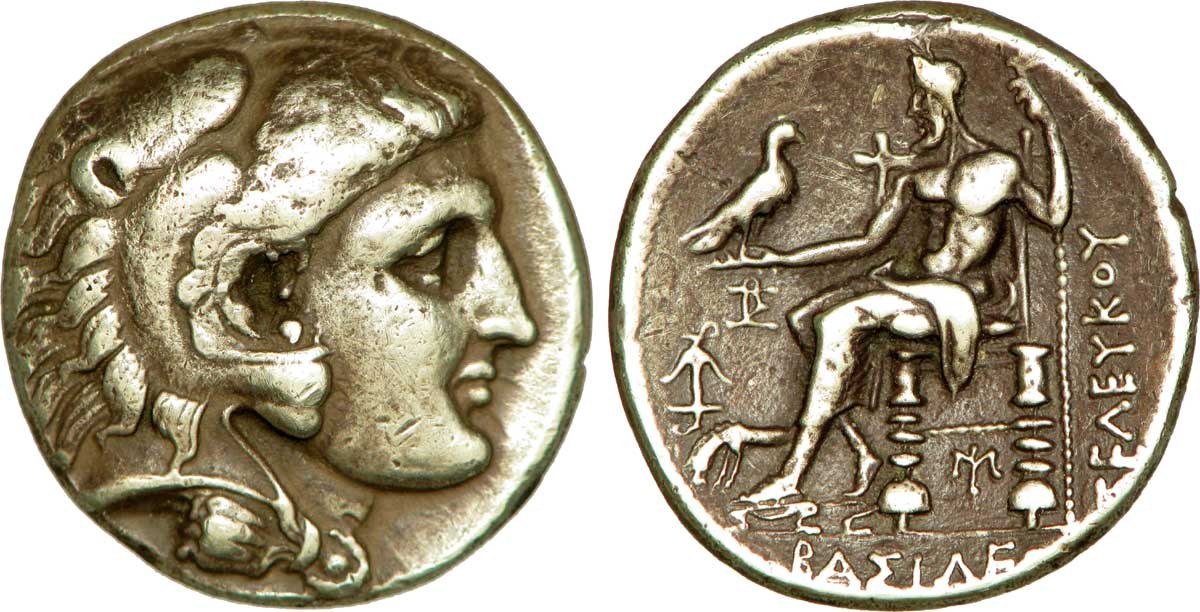
Seleucus I Nicator Tetradrachm
Large silver tetradrachm of Seleucus I Nicator, founder of the Seleucid Empire, showing a horned Alexander-type head and a mounted figure with a spear.
- Country
- Seleucid Empire (Ancient)
- Denomination
- Tetradrachm
- Metal
- Silver
Got a coin like this?
Identify any coin from a photo, free.
Overview
The Seleucus I Nicator tetradrachm is a large silver coin struck under Seleucus I, the general of Alexander the Great who founded the Seleucid Empire in the wars that followed Alexander's death. The example here shows a youthful head facing right, with curly hair and the horns of divinity, on the obverse, and a mounted figure or deity carrying a spear on the reverse. It belongs to the late fourth to third century BC.
The tetradrachm, worth four drachms, was the workhorse high-value silver coin of the Hellenistic world, and Seleucus struck it in quantity to pay soldiers and fund a vast realm that reached from Anatolia toward the Indus. The coin's imagery blends the memory of Alexander with the new imperial identity Seleucus was building for his own dynasty.
Because the types draw directly on Alexander's coinage and on divine and royal symbolism, the coin is identified by its imagery and, where present, its Greek legend and mint controls rather than by any date. It is a substantial piece of ancient silver associated with one of the great successor kings of the Hellenistic age.
History & Background
When Alexander the Great died in 323 BC, his empire was divided among his generals, the Diadochi. Seleucus I secured Babylon and the eastern provinces and, through decades of warfare, assembled the largest of the successor kingdoms, the Seleucid Empire. He took the title Nicator, meaning "the Victor," and founded cities and mints across his territory, striking coinage on a large scale to hold the realm together.
Seleucus's silver initially continued the familiar Alexander types, which had become an international currency, before developing designs that asserted his own authority. The horned, Alexander-inspired head and the imagery of mounted riders, deities, and symbols of victory placed his coinage within the visual language of the age while advertising the divine favor and military success on which his power rested.
The coins circulated widely across the Near East and were struck at numerous mints throughout the empire, so surviving tetradrachms vary in style and detail. They remain an important record of the turbulent Hellenistic period after Alexander, when former officers turned themselves into kings and founded dynasties that ruled for generations.
How to Identify
The obverse shows a youthful head facing right in the Alexander tradition, with thick curly hair and small horns of divinity at the brow. The horns and the idealized, heroic features are the key marks that link the coin to the deified image of Alexander used and adapted on Seleucid silver; there is no realistic aged portrait here.
The reverse carries a figure with a spear, shown on this type as a mounted rider or a standing deity, part of the repertoire of victory and divine imagery Seleucus used. Hellenistic royal tetradrachms typically also bear a Greek legend naming the king, often reading BAΣIΛEΩΣ ΣEΛEYKOY ("of King Seleucus"), together with small control symbols or monograms that identify the mint; the presence and arrangement of these is central to attribution.
In hand the coin is a broad, heavy piece of high-purity silver on the Attic tetradrachm standard, weighing on the order of roughly 17 grams and measuring in the mid-to-high twenties of millimeters across. Genuine examples show hand-struck irregularity and often grey or iridescent toning. The combination of a horned Alexander-type head with a spear-bearing reverse figure and a Seleucid legend distinguishes it from the plain Herakles-and-Zeus types of Alexander's own coinage.
Value & Collectibility
Silver tetradrachms of Seleucus I are genuine ancient coins of a famous founder-king, and they hold a strong and steady collector market. Worn but clearly identifiable examples generally trade in the low-to-mid hundreds of dollars, while well-centered coins with a sharp horned head, a clear reverse figure, and a legible legend can reach well into the four figures.
Value depends on the strength and style of the portrait, the clarity of the reverse and its legend, the specific mint and control marks, the surfaces and toning, and overall eye appeal. Coins from prestigious mints, in fine Hellenistic style, or with documented provenance command notable premiums, while common issues in modest grade remain accessible.
The figures here are general context, not appraisals. Any specific coin's price turns on condition, attribution, and authenticity, and higher-value Seleucid silver is frequently sold with specialist attribution or third-party certification.
Frequently asked questions
Who was Seleucus I Nicator?
He was a general of Alexander the Great who, after Alexander's death, founded the Seleucid Empire and took the title Nicator, "the Victor." His realm stretched from Anatolia toward the Indus, and he struck coinage across it.
Why does the head have horns?
The horns are a mark of divinity attached to the Alexander-inspired image on the coin. Hellenistic rulers used the deified likeness of Alexander and divine attributes to advertise their legitimacy and heaven-sent success.
How big and heavy is the coin?
It is a tetradrachm, worth four drachms, struck on the Attic standard. It weighs on the order of about 17 grams and is a broad coin in the mid-to-high twenties of millimeters across, made of high-purity silver.
Is the head Alexander or Seleucus?
The type derives from the idealized, deified image of Alexander the Great rather than a lifelike portrait of Seleucus himself. It projects a link between Seleucus and Alexander rather than showing the king's true features.
Does the coin have an inscription?
Royal Seleucid tetradrachms typically carry a Greek legend naming the king, often reading "of King Seleucus," along with small mint control marks. Wear can make these hard to read, so identification also relies on the types.
Seleucus I Nicator Tetradrachm guides
In-depth guides for identifying, valuing, and collecting Seleucus I Nicator Tetradrachm.
Other coins you may enjoy
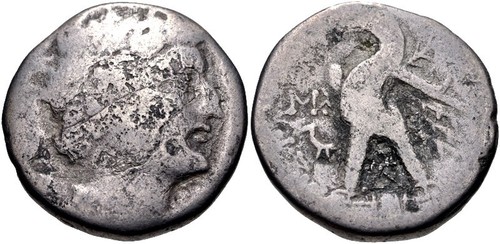
Tetradrachm of Ptolemy XII
80-51 BC
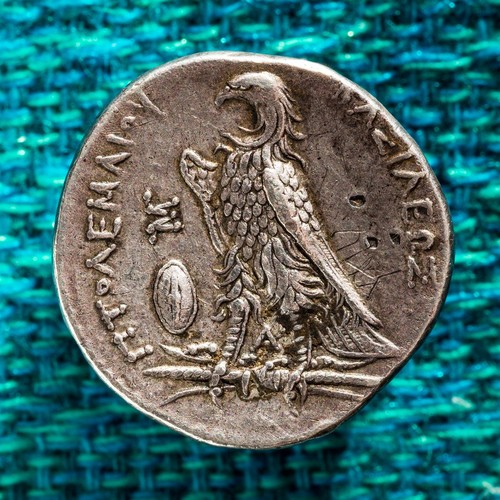
Tetradrachm of Ptolemy I
305-283 BC
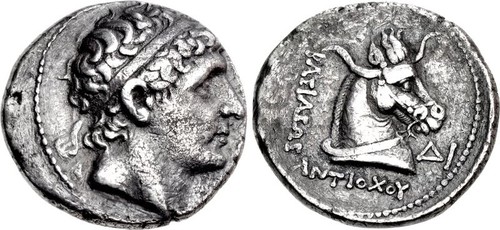
Tetradrachm of Antiochos I Soter
281-261 BC
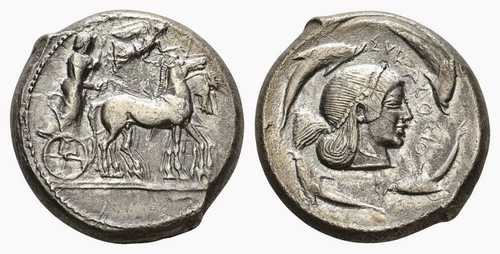
Syracuse Tetradrachm
c. 5th-4th century BC (Classical period)
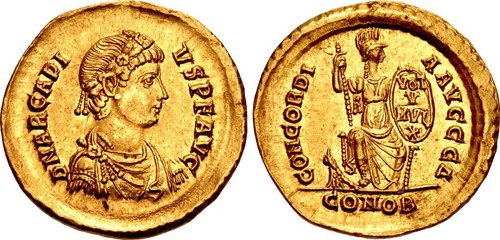
Solidus of Arcadius
AD 395-402
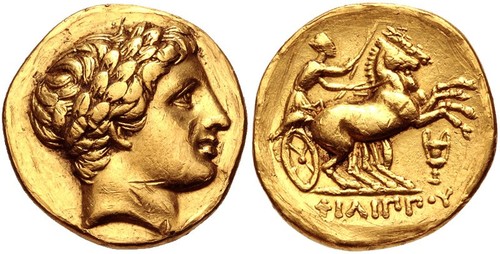
Philip III Gold Stater
323-317 BC
Siliqua of Gratian
AD 367-383
Sestertius of Maximinus Thrax
235-238 AD
Solidus of Valentinian III
AD 425-455
Nummus of Magnentius
AD 350-353
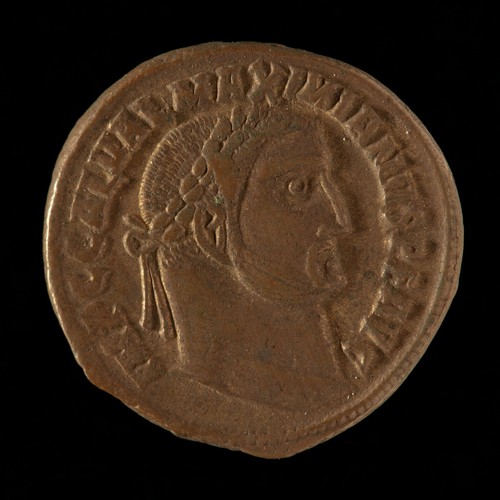
Follis of Galerius
AD 308-310
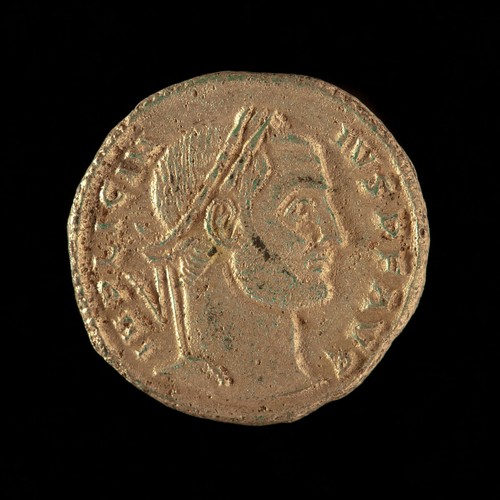
Follis of Licinius I
AD 320-321