
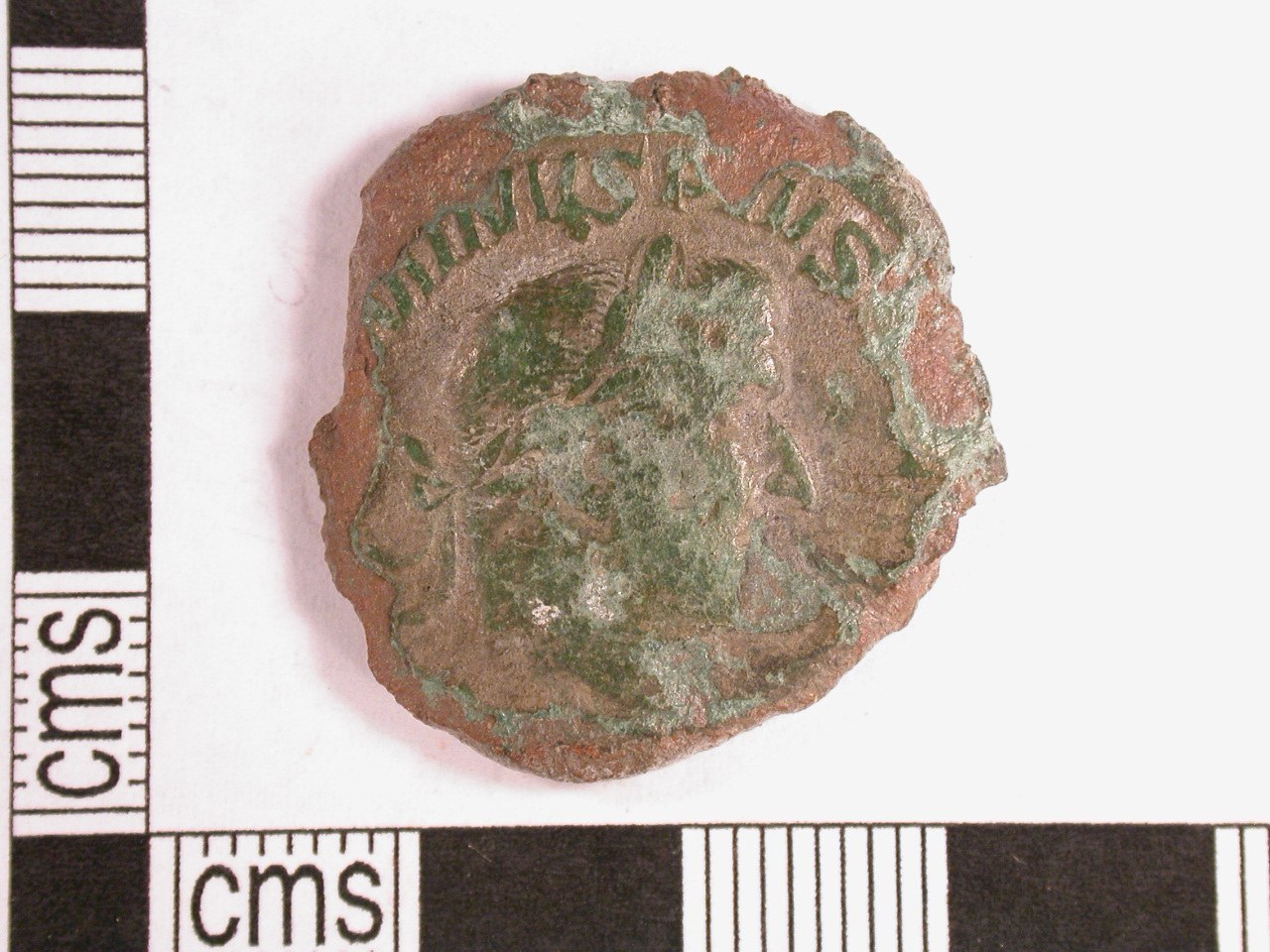
Sestertius of Maximinus Thrax
Large Roman bronze sestertius of Maximinus Thrax (235-238 AD), the first soldier-emperor, with a laureate bust facing right.
- Country
- Roman Empire
- Denomination
- Sestertius
- Metal
- Bronze
Got a coin like this?
Identify any coin from a photo, free.
Overview
The sestertius of Maximinus Thrax is a large brass-and-bronze Roman coin struck during the brief reign of Emperor Gaius Julius Verus Maximinus (235-238 AD), remembered as the first of the "barracks emperors." It is one of the largest circulating denominations of the Roman Empire, typically measuring roughly 28-32 mm across and weighing on the order of 17-25 grams.
The obverse shows the emperor's bust facing right, usually laureate and draped or cuirassed, surrounded by an abbreviated Latin titulature. The reverse carried a personification or slogan reflecting the priorities of a regime built on the loyalty of the army, and Roman bronze coins of this period nearly always bear the letters SC (Senatus Consulto). Because Maximinus reigned only about three years, his sestertii are a compact and popular window onto the crisis-era coinage of third-century Rome.
History & Background
Maximinus Thrax rose from the ranks of the Roman army and was acclaimed emperor by the troops in 235 AD after the murder of Severus Alexander, marking the start of the turbulent period often called the Crisis of the Third Century. Of provincial Thracian origin, he was the first emperor who had not entered the Senate before taking the throne, and he spent much of his reign campaigning on the Rhine and Danube frontiers rather than in Rome.
His coinage, produced at the mint of Rome, projected military strength and imperial virtues to fund and reward the legions. Sestertii were struck in substantial numbers during his short reign but were cut off when he was killed by his own soldiers at Aquileia in 238 AD, during the chaotic "Year of the Six Emperors." As a result, his large bronzes belong to a narrow, well-defined window and are closely associated with the story of the soldier-emperors.
How to Identify
Look first at the size and fabric: a genuine sestertius is a heavy, broad bronze coin, far larger than the smaller silver-washed or silver pieces of the same emperor. The obverse of this type shows a right-facing bust of Maximinus, laureate and typically draped and cuirassed, with a strongly modeled, realistic portrait featuring a prominent jaw and heavy features.
The surrounding obverse legend is an abbreviated imperial title, commonly rendered as IMP MAXIMINVS PIVS AVG or a close variant. Reverse designs vary by issue and usually depict a standing personification or the emperor, with a short slogan such as FIDES MILITVM, PAX AVGVSTI, PROVIDENTIA AVG, SALVS AVGVSTI, LIBERALITAS AVG, or VICTORIA GERMANICA. Nearly all reverses include the letters S C in the field or exergue, confirming a senatorial bronze denomination rather than an imperial precious-metal coin.
Value & Collectibility
Sestertii of Maximinus Thrax are relatively available for a third-century large bronze, so value is driven mainly by condition, portrait quality, surface preservation, and reverse type. Heavily worn or corroded examples with soft detail sit at the low end, while sharply struck coins with clear legends, attractive patina, and a bold portrait command substantial premiums.
As a general guide, well-worn but identifiable pieces trade at modest hobbyist prices, mid-grade coins with pleasing surfaces reach into the mid range, and exceptional high-grade examples with fine style and glossy patina can be worth many times more. Certain scarcer reverse legends and superior artistic portraits add further premium. Because grade and eye appeal swing prices so widely, compare recent auction results for the same reverse type and condition rather than relying on a single figure.
Frequently asked questions
What metal is a sestertius of Maximinus Thrax made of?
It is a large bronze denomination, historically struck from a copper-based alloy (the earlier sestertius used orichalcum, a brass). It is a base-metal coin, not silver or gold, which is why it appears brown, green, or golden-brown depending on its patina.
How big and heavy is one of these coins?
A sestertius is one of the largest Roman circulating coins, generally around 28-32 mm in diameter and roughly 17-25 grams in weight. Individual coins vary because they were struck by hand on hand-made blanks.
What do the letters SC mean on the reverse?
S C stands for Senatus Consulto, "by decree of the Senate." These letters appear on Roman imperial bronze coinage such as the sestertius and mark it as a senatorial base-metal issue, distinct from the emperor's gold and silver.
Why did Maximinus Thrax rule for such a short time?
He was proclaimed emperor by the army in 235 AD and killed by his own troops at Aquileia in 238 AD amid the turmoil of the Crisis of the Third Century, so his coinage spans only about three years.
Sestertius of Maximinus Thrax guides
In-depth guides for identifying, valuing, and collecting Sestertius of Maximinus Thrax.
Other coins you may enjoy
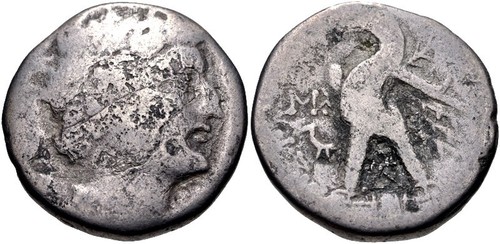
Tetradrachm of Ptolemy XII
80-51 BC
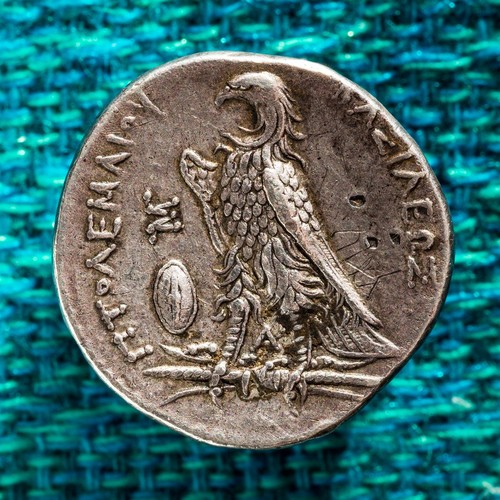
Tetradrachm of Ptolemy I
305-283 BC
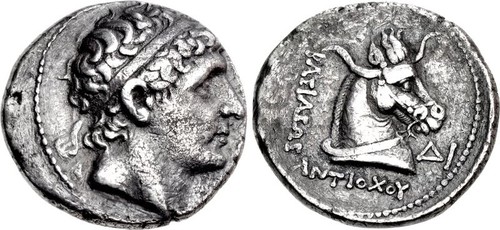
Tetradrachm of Antiochos I Soter
281-261 BC
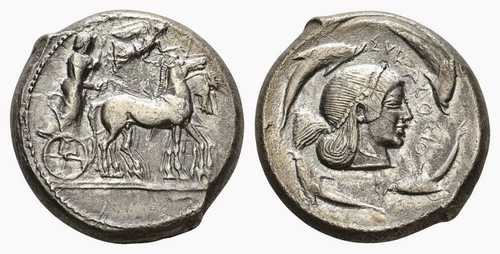
Syracuse Tetradrachm
c. 5th-4th century BC (Classical period)
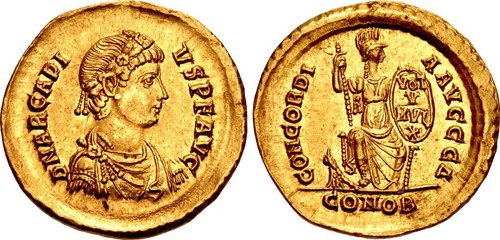
Solidus of Arcadius
AD 395-402
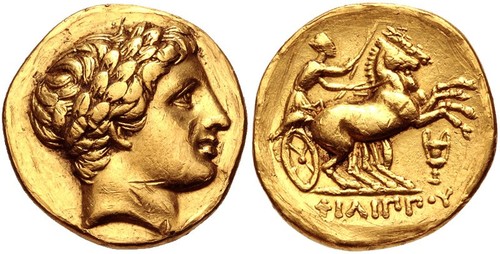
Philip III Gold Stater
323-317 BC
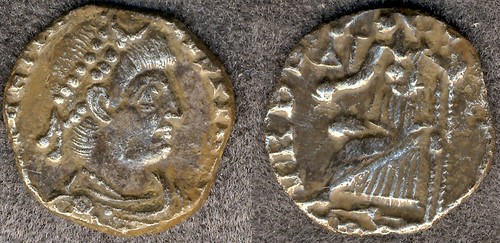
Siliqua of Gratian
AD 367-383
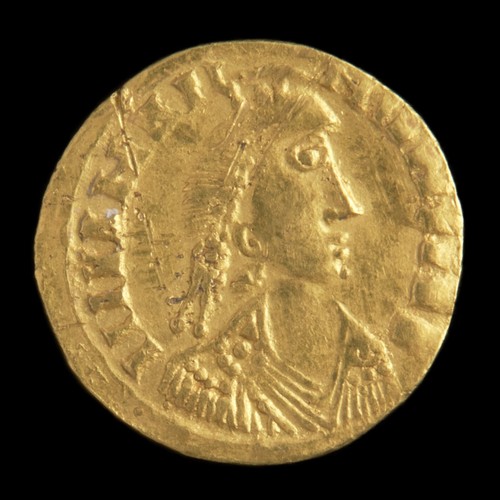
Solidus of Valentinian III
AD 425-455
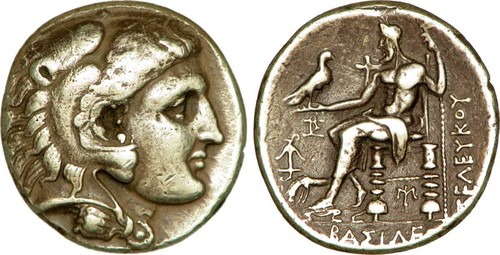
Seleucus I Nicator Tetradrachm
Late 4th-3rd century BC
Nummus of Magnentius
AD 350-353
Follis of Galerius
AD 308-310
Follis of Licinius I
AD 320-321