
How to Identify the Sestertius of Maximinus Thrax
A collector's guide to recognizing the large bronze sestertius of Maximinus Thrax by size, portrait, legend, and the tell-tale SC.
Read the full Sestertius of Maximinus Thrax encyclopedia entry →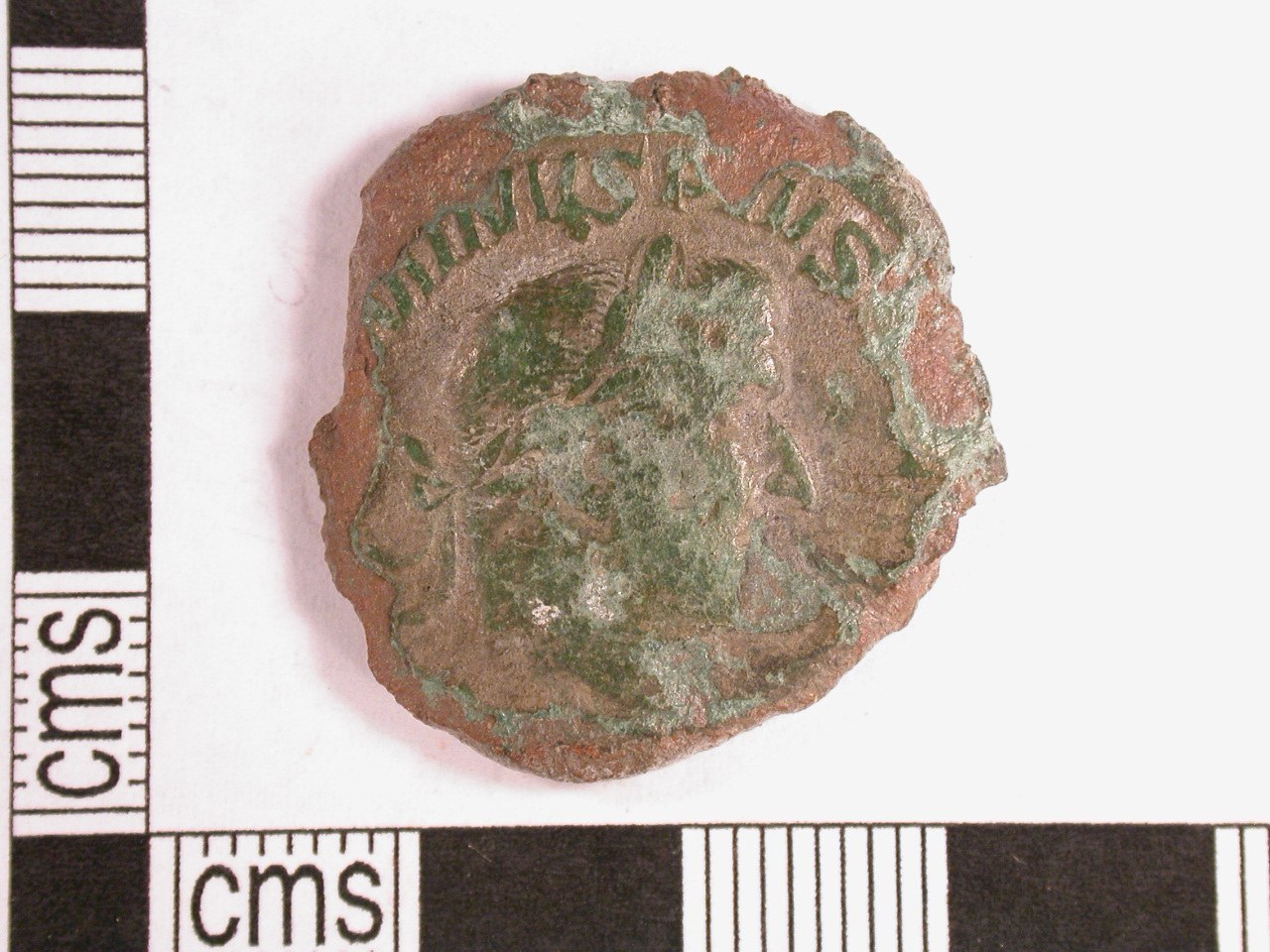
Start by confirming the denomination through size and weight. A sestertius is a big, heavy bronze, typically about 28-32 mm and roughly 17-25 grams; if the coin is small, thin, or silvery, it is a different denomination (such as a denarius or antoninianus) even if it names the same emperor. The fabric should be solid base metal with an earthy brown, green, or golden-brown patina rather than a bright silvery surface.
Next read the obverse. This type shows a right-facing bust, laureate and usually draped and cuirassed, with the blunt, heavy-jawed portrait style associated with Maximinus. The legend around the head is an abbreviated Latin title, most often IMP MAXIMINVS PIVS AVG or a close variant; the name MAXIMINVS is the key diagnostic. Beware of confusion with his son, Maximus (Caesar), whose portrait is a younger, beardless bust and whose legend reads differently.
Then work the reverse. Expect a standing figure or personification paired with a short slogan such as FIDES MILITVM, PAX AVGVSTI, PROVIDENTIA AVG, SALVS AVGVSTI, LIBERALITAS AVG, or VICTORIA GERMANICA. Crucially, look for the letters S C in the field or exergue: their presence confirms a senatorial bronze. Recording the exact reverse legend and figure lets you match the coin to a standard reference (such as RIC) and pin down the specific issue.
Finally, weigh authentication cautions. Popular third-century sestertii are targets for tooling, smoothing, and outright forgery. Watch for suspiciously uniform "sandy" surfaces, seams or casting bubbles that indicate a cast copy, over-sharp recut detail, and a weight or diameter well outside the normal range. When in doubt, favor coins from established dealers or third-party attribution, and compare the style directly against published genuine examples.
Frequently asked questions
How do I tell a sestertius from a smaller bronze of Maximinus?
Size and weight are the quickest test. The sestertius is the large module bronze (about 28-32 mm), while the as and dupondius are smaller and lighter. If the coin is small and silvery, it is likely a denarius or antoninianus instead.
How can I distinguish Maximinus Thrax from his son Maximus on a coin?
Read the legend and study the portrait. Maximinus is shown as a mature, heavy-featured adult and titled AVG (Augustus); his son Maximus appears as a youthful, beardless bust and is titled Caesar, with priestly emblems common on his reverses.
Is a green or brown crust a sign the coin is fake?
Not by itself. A stable green or brown patina is normal and often desirable on ancient bronze. Be more cautious of powdery, uneven, or artificial-looking surfaces, casting seams, and detail that looks recut, which can signal tooling or a forgery.
Do I need the reverse type to identify the coin?
You can identify the emperor and denomination from the obverse and size alone, but recording the reverse figure, its legend, and the position of the S C lets you attribute the exact issue in a reference like RIC and helps assess rarity and value.