
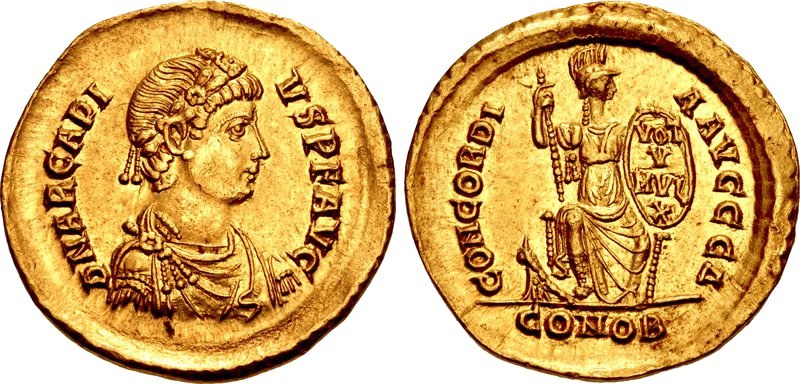
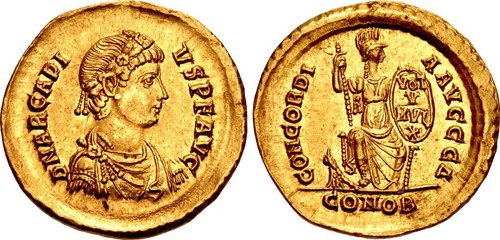
Solidus of Arcadius
A late Roman gold solidus struck for Arcadius, first emperor of the East after AD 395, showing his diademed profile facing right.
- Country
- Roman Empire
- Denomination
- Solidus
- Metal
- Gold
Got a coin like this?
Identify any coin from a photo, free.
Overview
The solidus was the standard gold coin of the late Roman Empire, and this example was struck for Arcadius, the eldest son of Theodosius I, who became senior emperor of the East when the empire was formally divided between him and his younger brother Honorius in AD 395. The obverse shows his diademed bust facing right in the draped, cuirassed style shared across the Theodosian house, the hallmark of an eastern imperial gold issue of the period.
Introduced by Constantine I earlier in the fourth century, the solidus was struck in nearly pure gold at 72 to the Roman pound, close to 4.5 grams. It stood at the top of the monetary system and circulated chiefly among the wealthy, the officer class, and the imperial administration rather than in ordinary marketplace exchange.
Coins bearing Arcadius's portrait belong to the decades when the Roman world settled into a lasting division between East and West. The reverse of the photographed coin carries a Victory holding a shield and palm alongside a standing military figure, a triumphal theme typical of the Theodosian gold of these years. As high-value objects in gold, such solidi are valued both as fine ancient artifacts and as tangible links to the birth of the separate Eastern Roman state.
History & Background
Arcadius was born about AD 377, the elder son of the emperor Theodosius I, and was raised to the rank of Augustus as a child in 383. When Theodosius died in January 395, the empire was divided in practice between his two sons: Arcadius, then about eighteen, took the East from Constantinople, while his younger brother Honorius held the West. This split proved permanent and marks the conventional beginning of the separate Eastern Roman, or Byzantine, line of emperors.
Arcadius's reign was dominated by powerful court officials and generals rather than by the emperor himself. Figures such as the praetorian prefect Rufinus, the eunuch Eutropius, and later the empress Eudoxia and the prefect Anthemius directed policy, while the East faced Gothic unrest, tension with the western court, and the fallout of the great migrations pressing on the frontiers. Arcadius died in AD 408 and was succeeded by his young son Theodosius II.
The solidus that Arcadius issued had been the empire's principal gold denomination since Constantine's coinage reform. It was struck at a network of imperial mints, with Constantinople, Thessalonica, and other eastern centers most active for his gold, each identified by a mint mark in the exergue, commonly the abbreviation CONOB on Constantinopolitan issues. Because Arcadius ruled alongside his brother and other colleagues, his gold often carries reverse types and legends celebrating the concord and shared victory of multiple Augusti.
How to Identify
The obverse is the key to attribution. On this coin Arcadius faces right wearing a pearl diadem, with a draped and cuirassed bust in the standard late-Roman manner. The surrounding Latin legend names him, typically as D N ARCADIVS P F AVG (Dominus Noster Arcadius Pius Felix Augustus). Reading that legend is the surest way to separate him from his father Theodosius I, his brother Honorius, or his son Theodosius II, all of whom share a nearly identical boyish, diademed portrait style.
The photographed example shows a triumphal reverse: a Victory holding a shield and a palm branch beside a standing figure in military dress. Theodosian solidi of this period commonly carry victory and concord themes, with legends such as VICTORIA AVGGG, CONCORDIA AVGG, or NOVA SPES REIPVBLICAE, generally with a mint mark in the exergue beneath the design. A full, specialist attribution rests on matching that exact reverse type, legend, and mint mark to published references.
In hand the coin is small, thin, and dense. A solidus is roughly 20-22 mm across and close to 4.5 grams, struck in high-purity gold that stays warm yellow and untarnished. The relief is crisp and the flan comparatively broad and flat, distinguishing the solidus from the heavier, more compact aureus of earlier reigns.
Value & Collectibility
Gold solidi of Arcadius are scarce, high-value coins that trade well above the base-metal issues of the same reign. Worn or lower-grade examples generally command prices in the high hundreds to low thousands of dollars, while sharply struck, well-centered coins with clear portraits and desirable mints can reach several thousand or more at auction.
Value is driven by the intrinsic gold content, the sharpness of the portrait, the rarity of the specific reverse type and mint, the state of preservation, and documented provenance. Common victory and concord types from busy eastern mints are more affordable than scarcer issues or unusual varieties.
The figures given here are broad context, not an appraisal. Ancient gold is a frequent target for forgery, so the realizable value of any particular coin depends heavily on expert authentication and a documented chain of ownership.
Frequently asked questions
What is a solidus?
The solidus was the standard gold coin of the late Roman and early Byzantine world, introduced by Constantine I and struck at 72 to the Roman pound, about 4.5 grams of nearly pure gold. It was a high-value denomination used for large payments, savings, and military disbursements.
Who was Arcadius?
Arcadius was the eldest son of Theodosius I and became emperor of the East when the Roman Empire was divided between him and his brother Honorius in AD 395. He ruled from Constantinople until his death in 408 and is often counted as the first ruler of the separate Eastern Roman line.
How is a solidus different from an aureus?
Both are Roman gold coins, but the solidus is the lighter reformed standard introduced by Constantine at 72 to the Roman pound. It replaced the older, slightly heavier aureus and became the standard gold coin for centuries afterward.
Are solidi of Arcadius valuable?
Yes. Genuine gold solidi of Arcadius are scarce and typically worth from the high hundreds into the thousands of dollars, with fine examples reaching more at auction. Value depends on condition, reverse type, mint, and provenance.
Solidus of Arcadius guides
In-depth guides for identifying, valuing, and collecting Solidus of Arcadius.
Other coins you may enjoy
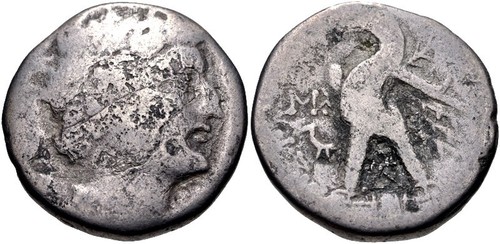
Tetradrachm of Ptolemy XII
80-51 BC
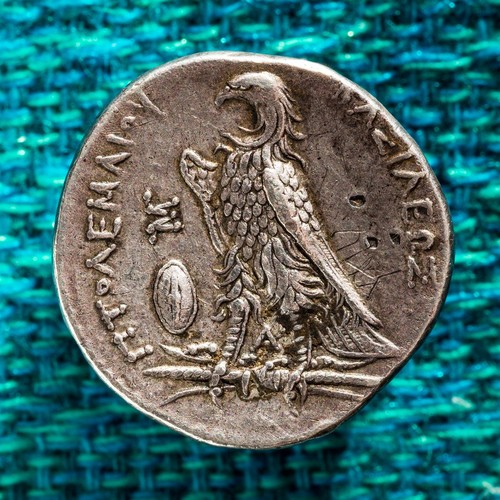
Tetradrachm of Ptolemy I
305-283 BC
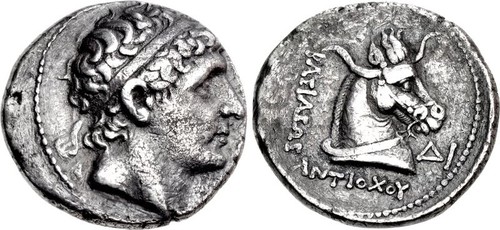
Tetradrachm of Antiochos I Soter
281-261 BC
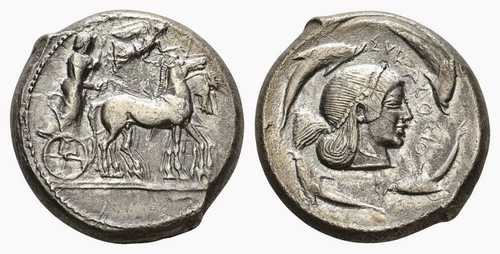
Syracuse Tetradrachm
c. 5th-4th century BC (Classical period)
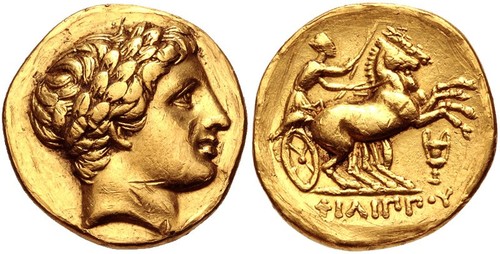
Philip III Gold Stater
323-317 BC
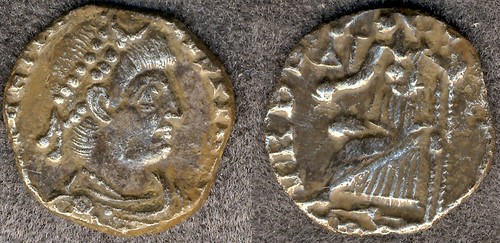
Siliqua of Gratian
AD 367-383
Sestertius of Maximinus Thrax
235-238 AD
Solidus of Valentinian III
AD 425-455
Seleucus I Nicator Tetradrachm
Late 4th-3rd century BC
Nummus of Magnentius
AD 350-353
Follis of Galerius
AD 308-310
Follis of Licinius I
AD 320-321