
Syracuse Tetradrachm
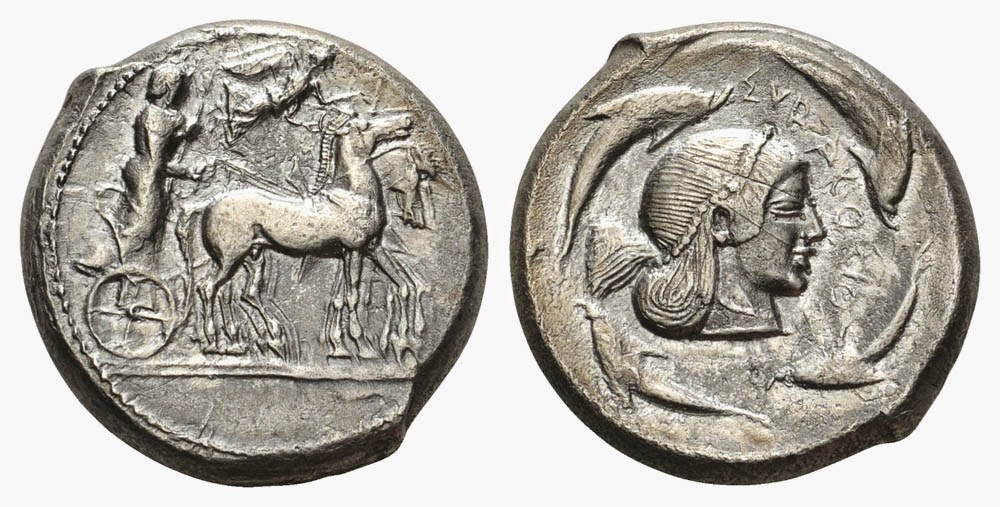
Classical silver tetradrachm of Syracuse in Sicily, showing a racing four-horse chariot on one side and a right-facing nymph's head on the other.
- Country
- Ancient Sicily
- Denomination
- Tetradrachm
- Metal
- Silver
Got a coin like this?
Identify any coin from a photo, free.
Overview
The Syracuse tetradrachm is a large silver coin struck by the Greek city of Syracuse on the island of Sicily during the Classical period, roughly the fifth and fourth centuries BC. It is one of the most admired coinages of the ancient world, prized both in antiquity and by modern collectors for the artistry of its engraving.
One face carries a racing chariot drawn by a team of horses with a charioteer, a four-horse quadriga driven at speed and often crowned by a flying figure of Victory above. The other face shows a head in profile facing right, the water nymph Arethusa associated with the famous spring at Syracuse, her hair bound up and commonly encircled by leaping dolphins.
Struck on the Attic weight standard, the tetradrachm ("four-drachm" piece) is a broad, substantial silver coin. The chariot-and-nymph combination remained the signature type of Syracuse for generations, and the finest dies of the later fifth century are counted among the high points of ancient coin engraving.
History & Background
Syracuse was the leading Greek city of Sicily, and its silver tetradrachms were struck to serve a wealthy trading and military power. The chariot type is often linked to victories in chariot racing at the great games and to the city's civic pride, while the nymph Arethusa on the other side references the freshwater spring on the island of Ortygia that lay at the heart of the city.
Across the Classical period the two types were kept in continuous use while the style evolved, from stiffer early heads to the celebrated high-relief work of the late fifth century. During that peak some dies were signed in tiny letters by their engravers, among them artists known today as Kimon and Euainetos, an unusual sign of the prestige attached to Syracusan coinage.
Because the same chariot-and-nymph formula was produced over many decades and imitated by other Sicilian mints, surviving tetradrachms show a wide range of styles, control letters and small symbols. Individual pieces are placed within the series by this engraving style and by their dies rather than by any date, which ancient coins do not carry.
How to Identify
One side shows a four-horse chariot (quadriga) moving to the right with a charioteer holding the reins, the horses' legs overlapping in a sense of motion, and frequently a small winged figure of Victory flying above to crown the driver or the horses. A short groundline and sometimes a symbol appear in the exergue below.
The other side shows a female head in profile facing right, the nymph Arethusa, with her hair gathered up in a band or net and her ear and neck visible. Small dolphins are usually arranged around the head, and a short Greek legend naming the Syracusans typically runs in the field. There is no portrait of a named ruler and no date.
In hand the coin is a broad silver piece on the Attic standard, generally around 24-27 mm across and roughly 17 grams, usually toned grey with age. Genuine strikes are hand-made and show natural irregularity in centering, flan shape and die wear. The pairing of a racing quadriga with a dolphin-ringed nymph's head is the coin's core identifier.
Value & Collectibility
Syracuse tetradrachms are genuine ancient Sicilian silver and are among the most sought-after of all Greek coins, so they enjoy a deep and well-established market. Worn but clearly identifiable examples commonly trade in the mid hundreds to low thousands of dollars, while sharply struck, well-centered coins with a bold nymph's head and crisp chariot can reach well into four and five figures.
Value is driven by the quality of the engraving and relief, centering, metal surface and toning, and the desirability of the particular style or die, with celebrated late-fifth-century work and signed dies commanding strong premiums. Early, plainer issues are generally more affordable than the famous high-relief pieces.
The figures here are general context, not appraisals. Because the type was produced over a long span and forgeries of this prestigious coinage exist, any specific coin's value depends heavily on style attribution, condition and authenticity, and important pieces are usually sold with specialist attribution or third-party certification.
Frequently asked questions
Who is the head on the tetradrachm?
The right-facing female head is the nymph Arethusa, tied to the celebrated freshwater spring on the island of Ortygia at Syracuse. It is not a portrait of a named ruler, and it is often surrounded by small dolphins.
What is happening on the chariot side?
It shows a four-horse racing chariot, a quadriga, driven to the right by a charioteer, frequently with a small winged Victory flying above to crown the team. The image evokes chariot-racing victory and civic pride.
Why are there dolphins around the head?
The dolphins refer to Syracuse's setting by the sea and to the Arethusa spring legend. They are a standard feature of the nymph type and help confirm the coin as Syracusan.
How big and heavy is it?
It is a large silver tetradrachm on the Attic standard, typically about 24-27 mm across and roughly 17 grams. It is broad and substantial compared with smaller Greek silver denominations.
Does the coin have a date?
No. Like other ancient Greek coins it carries no year. It is placed within the Classical period by its engraving style, legend and dies rather than by any date on the coin.
Syracuse Tetradrachm guides
In-depth guides for identifying, valuing, and collecting Syracuse Tetradrachm.
Other coins you may enjoy
Tetradrachm of Ptolemy XII
80-51 BC
Tetradrachm of Ptolemy I
305-283 BC
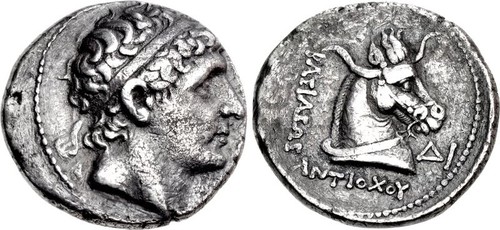
Tetradrachm of Antiochos I Soter
281-261 BC
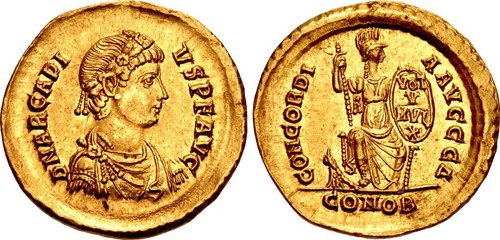
Solidus of Arcadius
AD 395-402
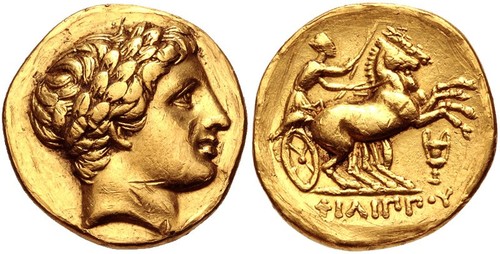
Philip III Gold Stater
323-317 BC
Siliqua of Gratian
AD 367-383
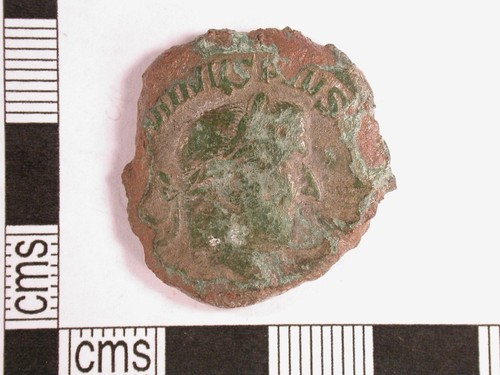
Sestertius of Maximinus Thrax
235-238 AD
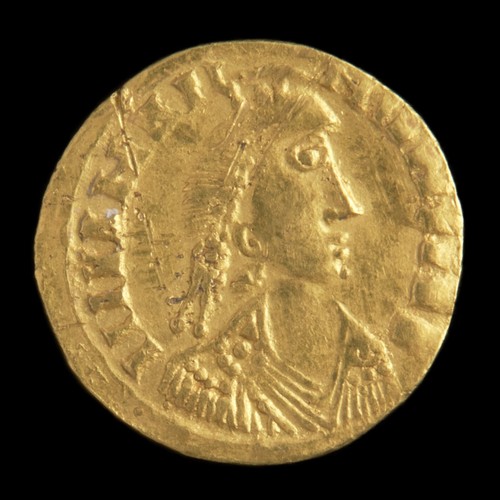
Solidus of Valentinian III
AD 425-455
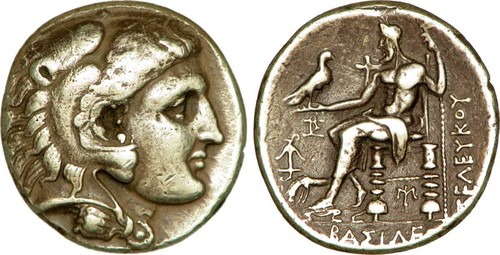
Seleucus I Nicator Tetradrachm
Late 4th-3rd century BC
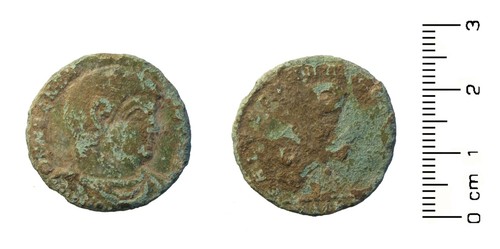
Nummus of Magnentius
AD 350-353
Follis of Galerius
AD 308-310
Follis of Licinius I
AD 320-321