
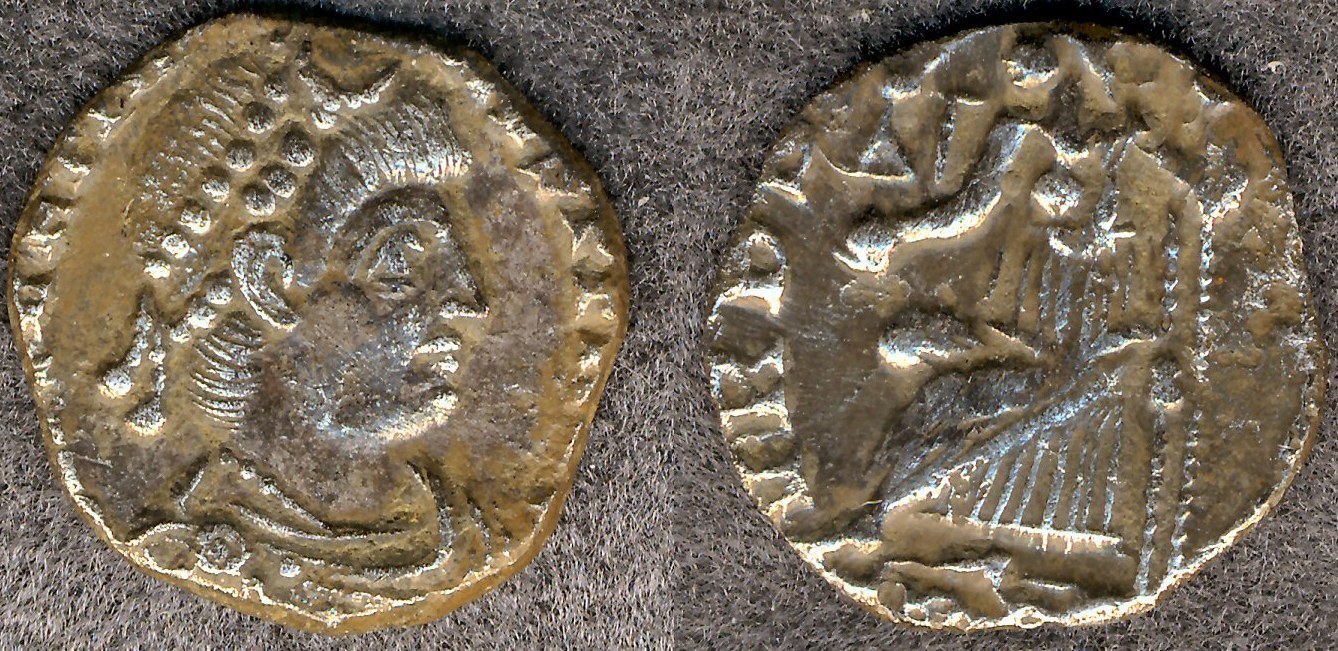
Siliqua of Gratian
A small late Roman silver siliqua of the emperor Gratian (AD 367-383), with his diademed bust on the obverse and a standing figure or personification on the reverse.
- Country
- Roman Empire
- Denomination
- Siliqua
- Metal
- Silver
Got a coin like this?
Identify any coin from a photo, free.
Overview
The siliqua of Gratian is a small silver coin struck during the reign of the Western Roman emperor Gratian (AD 367-383). Unlike the debased base-metal coinage of the third century, the siliqua was a genuine silver denomination of the later empire, thin and broad in fabric and produced to a lighter, reduced standard by this date.
The obverse observed on this coin shows the diademed, draped and cuirassed bust of Gratian facing right, surrounded by a Latin legend naming the emperor. The reverse carries a standing figure, either a military type or a personification such as Victory (Nike) or Roma, whose identity depends on the specific issue and mint. On the example here both sides show honest circulation wear, softening the portrait and legend.
Siliquae were high-value silver coins used alongside the gold solidus in the monetary system of the fourth century. Those of Gratian belong to a well-collected series of late Roman silver and are a familiar type for collectors of the House of Valentinian.
History & Background
Gratian was the son of the emperor Valentinian I and was raised to the rank of Augustus as a boy in AD 367, ruling first alongside his father and then, after Valentinian's death in 375, as senior emperor in the West. He shared power with his half-brother Valentinian II and with Theodosius I in the East before he was overthrown and killed during the revolt of Magnus Maximus in AD 383.
His reign fell in the later fourth century, a period when Roman silver coinage was dominated by the siliqua. The denomination had been established as part of the reformed silver coinage of the House of Constantine, and by Gratian's time it was struck to a reduced weight standard, the so-called reduced siliqua. These coins were produced chiefly at the Western mints that served his part of the empire.
Because silver siliquae circulated widely and many were later carried beyond the frontier, examples survive today in Roman and post-Roman contexts across the West, including hoards found in Britain. This gives the siliquae of Gratian and his contemporaries a steady presence in the market for late Roman silver.
How to Identify
The defining features are the small, thin silver flan and the diademed imperial portrait. On this coin the obverse shows the bust of Gratian facing right, wearing a pearl diadem and imperial drapery, with a legend that typically reads DN GRATIANVS PF AVG or a close variant. The name GRATIANVS in the legend is the key to attribution, since many late fourth-century emperors share the same bust style and diadem.
The reverse carries a standing figure. Depending on the issue this may be a personification such as Roma or Constantinopolis, a figure of Victory (Nike) with wreath and palm, or the emperor in military dress; the accompanying legend and the figure's attributes identify the exact type. Late Roman siliqua reverses also frequently take the form of a vow inscription such as VOT within a wreath, so the standing-figure types should be matched carefully to their legends.
In hand a siliqua of this period is roughly 15-18 mm across and light, generally around 1.5-2.2 grams, struck in good silver with a thin, sometimes slightly cupped or clipped flan. Clipping of the edge, which removed silver, is common on Western examples and can reduce the diameter. Look in the reverse exergue for a mint mark identifying the striking mint, such as Trier, Lugdunum or Arles.
Value & Collectibility
Siliquae of Gratian are collectible silver coins and generally command more than the common base-metal bronzes of the same era, reflecting their precious-metal content and the popularity of late Roman silver. Worn, clipped or ordinary examples often trade in the low-to-middle tens of dollars, while sharp, well-centred and unclipped coins with clear portraits and legends can bring substantially higher figures.
Value is driven by the completeness of the flan, whether the coin has been clipped, the strength of the strike, the clarity of the portrait and legend, the reverse type, the mint, and overall eye appeal. Scarcer reverse types and less common mints can command premiums over the ordinary run of the series.
The figures here are general context rather than appraisals. Condition, clipping, type and provenance can move an individual coin well outside these ranges, and a specialist attribution to a specific mint and reverse variety adds interest and value for a well-preserved example.
Frequently asked questions
Is the siliqua of Gratian actually made of silver?
Yes. Unlike the debased antoniniani of the third century, the siliqua was a genuine silver denomination of the later Roman Empire. Those of Gratian were struck in good silver, though to a reduced weight standard typical of the later fourth century.
How can I tell it is Gratian and not another late Roman emperor?
Read the obverse legend. Gratian's siliquae carry his name, usually in the form DN GRATIANVS PF AVG. Many emperors of the House of Valentinian share the same diademed bust style, so the name in the legend, not the portrait alone, identifies the ruler.
Why is the edge of my coin uneven or trimmed?
Clipping is very common on Western siliquae, especially those found in Britain, where silver was trimmed from the edge after the coin left the mint. A clipped coin has a smaller diameter and reduced weight, which is normal for the series though it affects value.
What does the standing figure on the reverse represent?
It is usually a personification or deity identified by its attributes and legend, such as Roma, Constantinopolis, or a figure of Victory. Late siliquae also often show a vow inscription in a wreath instead, so the reverse type varies by issue and mint.
Siliqua of Gratian guides
In-depth guides for identifying, valuing, and collecting Siliqua of Gratian.
Other coins you may enjoy
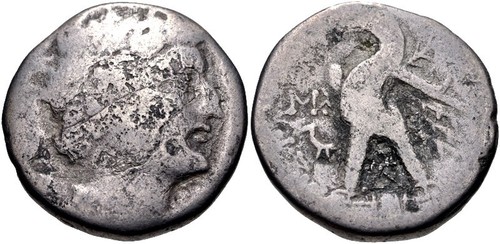
Tetradrachm of Ptolemy XII
80-51 BC
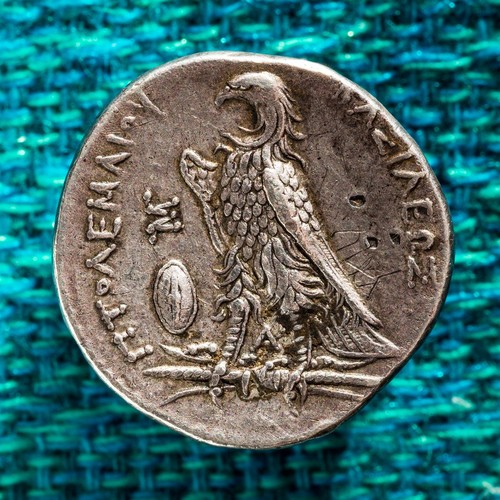
Tetradrachm of Ptolemy I
305-283 BC
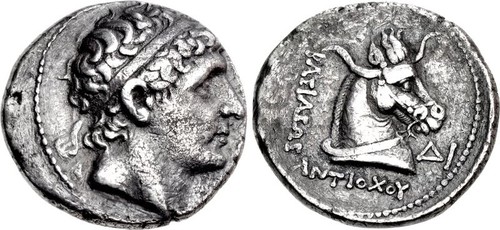
Tetradrachm of Antiochos I Soter
281-261 BC
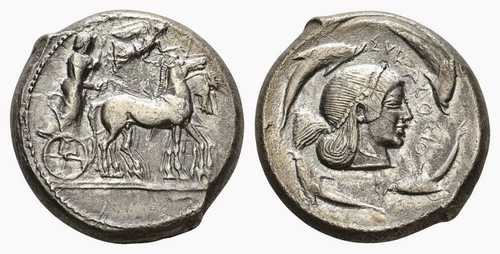
Syracuse Tetradrachm
c. 5th-4th century BC (Classical period)
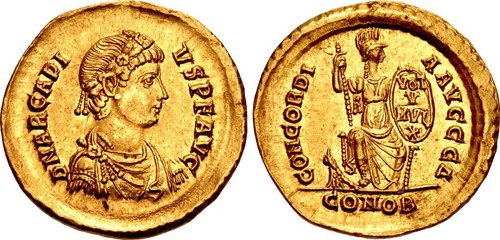
Solidus of Arcadius
AD 395-402
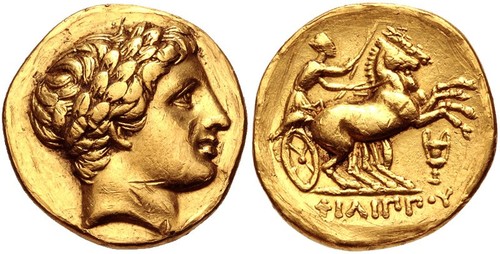
Philip III Gold Stater
323-317 BC
Sestertius of Maximinus Thrax
235-238 AD
Solidus of Valentinian III
AD 425-455
Seleucus I Nicator Tetradrachm
Late 4th-3rd century BC
Nummus of Magnentius
AD 350-353
Follis of Galerius
AD 308-310
Follis of Licinius I
AD 320-321