
How to Identify the Syracuse Tetradrachm
A collector's guide to recognizing Syracuse's silver tetradrachm by its racing quadriga, dolphin-ringed nymph's head, weight and engraving style.
Read the full Syracuse Tetradrachm encyclopedia entry →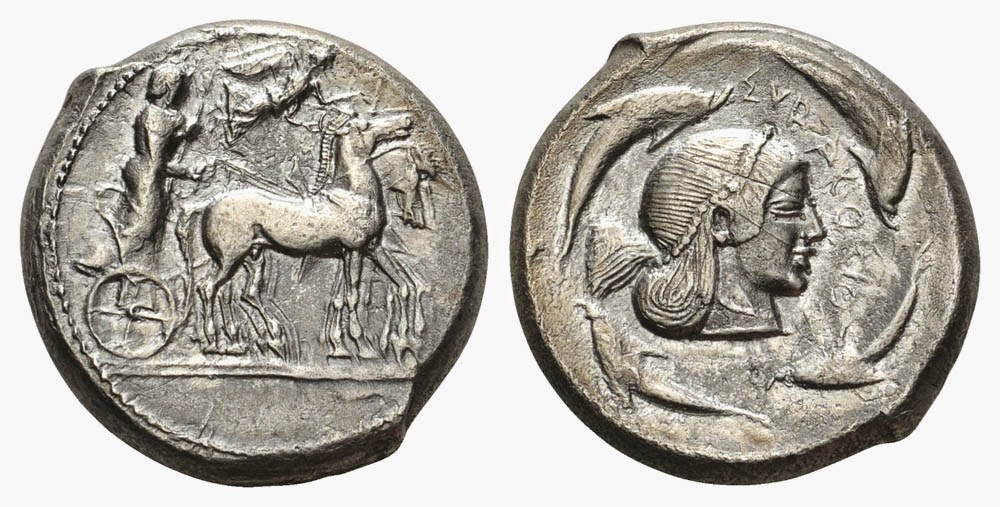
Start with the chariot side. A true Syracuse tetradrachm shows a four-horse chariot (quadriga) driven to the right, the charioteer leaning into the reins and the horses' legs overlapping to suggest speed; look for a small winged Victory flying above to crown the driver or horses, and a groundline or symbol in the exergue below. A chariot moving left, a two-horse team, or a chariot with a standing deity instead of a racing driver points toward a different city or type.
Turn to the head side and read it together with the legend. The type is a female head in profile facing right, the nymph Arethusa, hair gathered in a band or net, with small dolphins arranged around the head and a short Greek legend naming the Syracusans in the field. Confirm the dolphins and the right-facing direction; a bare male head, a helmeted head, or a head without dolphins usually indicates another Sicilian mint that borrowed the chariot idea.
Check size, weight and metal. The tetradrachm is a broad silver coin on the Attic standard, roughly 24-27 mm across and about 17 grams, and should feel dense with natural grey toning. Genuine hand-struck examples show irregular flan shape, some off-center striking and honest die wear. A coin that is suspiciously light, undersized, or a bright modern white metal deserves caution.
Use style and control marks, not a date. The engraving style is the main tool for placing a coin in the series, from stiffer early heads to the celebrated high-relief work of the late fifth century, and small letters, symbols or engraver's signatures may appear by the head, in the dolphins or in the exergue. There is no year on the coin, so any dating comes from comparing style and dies against published references.
Be aware of look-alikes and authenticity risks. Other Sicilian cities such as Gela, Katane and Leontini struck chariot-type tetradrachms, and the prestige of Syracusan coins has attracted both ancient imitations and modern fakes. Cast forgeries betray a seam around the edge, soft or bubbly surfaces and dull tone, while tooled coins show unnaturally sharp detail added to worn metal. Because good examples carry real value, treat bargain offers with suspicion and, for an important purchase, rely on specialist attribution or third-party certification and documented provenance.
Frequently asked questions
How do I tell a Syracuse tetradrachm from another Sicilian chariot coin?
Confirm the right-facing nymph's head ringed by dolphins with the Syracusan legend, paired with a quadriga and a flying Victory. Cities like Gela, Katane and Leontini used chariot types too, so the head, dolphins and legend are what separate a Syracuse coin from its neighbors.
There is no date on the coin. How is it placed in time?
Ancient tetradrachms carry no year. A Syracuse piece is dated within the Classical period by its engraving style, the treatment of the head and chariot, and its dies and control marks, compared against published references.
What weight and size should a genuine one be?
Expect a broad silver coin about 24-27 mm across and roughly 17 grams on the Attic standard. A markedly light, small or bright modern-looking piece is a warning sign worth investigating before buying.
What are the main signs of a fake?
A seam around the rim, soft or bubbly surfaces and a dull non-metallic tone suggest a cast copy, while unnaturally crisp, scratchy detail on otherwise worn metal suggests tooling. For valuable examples, seek specialist attribution or certification.