
How to Identify the Nummus of Magnentius
A collector's guide to the bare-headed curly-haired portrait, Chi-Rho and Victory reverses, and western mintmarks of Magnentius bronzes.
Read the full Nummus of Magnentius encyclopedia entry →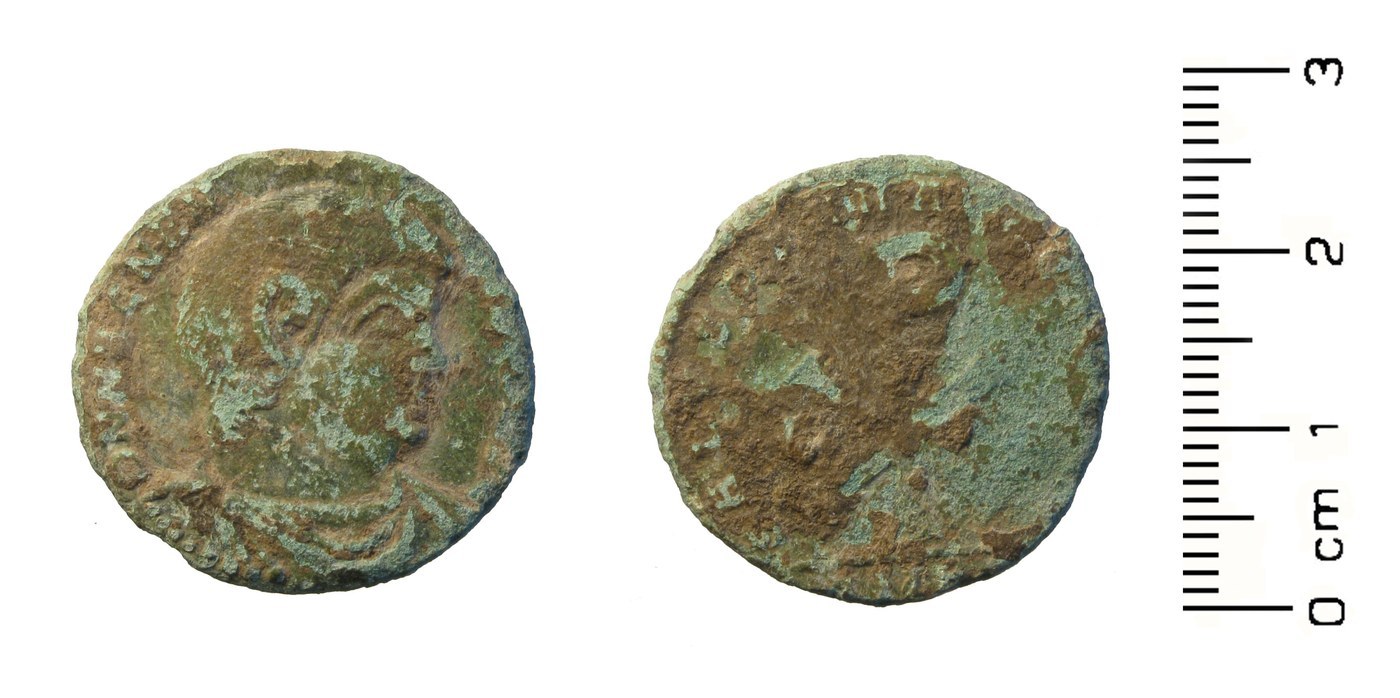
Begin with the head. Unlike most emperors of the mid-fourth century, Magnentius is shown bare-headed rather than wearing a pearl diadem, with a full head of curly hair and a cuirassed, draped bust facing right. Read the obverse legend, which typically runs D N MAGNENTIVS P F AVG; the name itself is the surest confirmation. Some issues add the letter A in the field behind the bust, a normal control mark rather than a defect.
Turn to the reverse and identify the type from its inscription and design. The most distinctive is a large Chi-Rho monogram, usually with the reverse legend SALVS DD NN AVG ET CAES and often flanked by Alpha and Omega. Other common reverses show two facing Victories holding a votive shield reading VOT V MVLT X (legend VICTORIAE DD NN AVG ET CAES), or the emperor riding down a fallen enemy with the legend GLORIA ROMANORVM. The exergue below the design carries a mintmark that ties the coin to a western mint such as Trier (TR), Lyon (LVG), Arles, Amiens (AMB), or Aquileia (AQ), sometimes with an officina letter.
Check size and fabric. These are bronze coins whose module varies by issue: the two-Victories pieces are commonly around 18-22 mm, while the Chi-Rho and horseman bronzes can be roughly 24-28 mm and thick and heavy in the hand. Expect earthen, brown, or green patina, and look for silvery traces where the original surface silvering survives, especially in protected areas around the devices and legend.
Watch for look-alikes. His junior colleague and brother Decentius struck very similar bronzes, including Chi-Rho and Victories types, so read the legend to separate MAGNENTIVS from DECENTIVS. Two-Victories reverses were also used by other members of the Constantinian house, meaning the reverse alone is not enough; always confirm the emperor from the obverse name. As with all late Roman bronzes, be cautious of cast copies and tourist replicas: a seam around the edge, a soft or bubbly surface, an unnaturally smooth even color, or a portrait and lettering style that do not match published examples are warning signs. For a significant purchase, seek attribution against a standard reference or an opinion from a specialist in late Roman coinage.
Frequently asked questions
How do I tell Magnentius from other fourth-century emperors at a glance?
Look for the bare head with curly hair instead of a pearl diadem, then read the obverse legend for MAGNENTIVS. The bare-headed portrait combined with the name is the reliable identifier.
How do I distinguish Magnentius from Decentius?
They used very similar reverse designs, including the Chi-Rho and two-Victories types, so the reverse alone will not decide it. Read the obverse legend: MAGNENTIVS is the senior Augustus, while DECENTIVS names his junior colleague.
What do the letters and marks around the Chi-Rho mean?
The large monogram is the Chi-Rho Christogram, and the flanking letters are the Greek Alpha and Omega. The letters and symbols in the field and exergue are control marks and a mintmark identifying the mint and workshop that struck the coin.
Are these coins usually silvered?
Many were originally given a thin silver surface at the mint. Most now show bronze patina with only patches of silvering surviving in sheltered spots, which is normal; well-preserved silvering adds to a coin's appeal and value.