
How to Identify the Solidus of Valentinian III
A collector's guide to reading the diademed portrait, VALENTINIANVS legend, pure-gold fabric, and CONOB mint marks of his solidi.
Read the full Solidus of Valentinian III encyclopedia entry →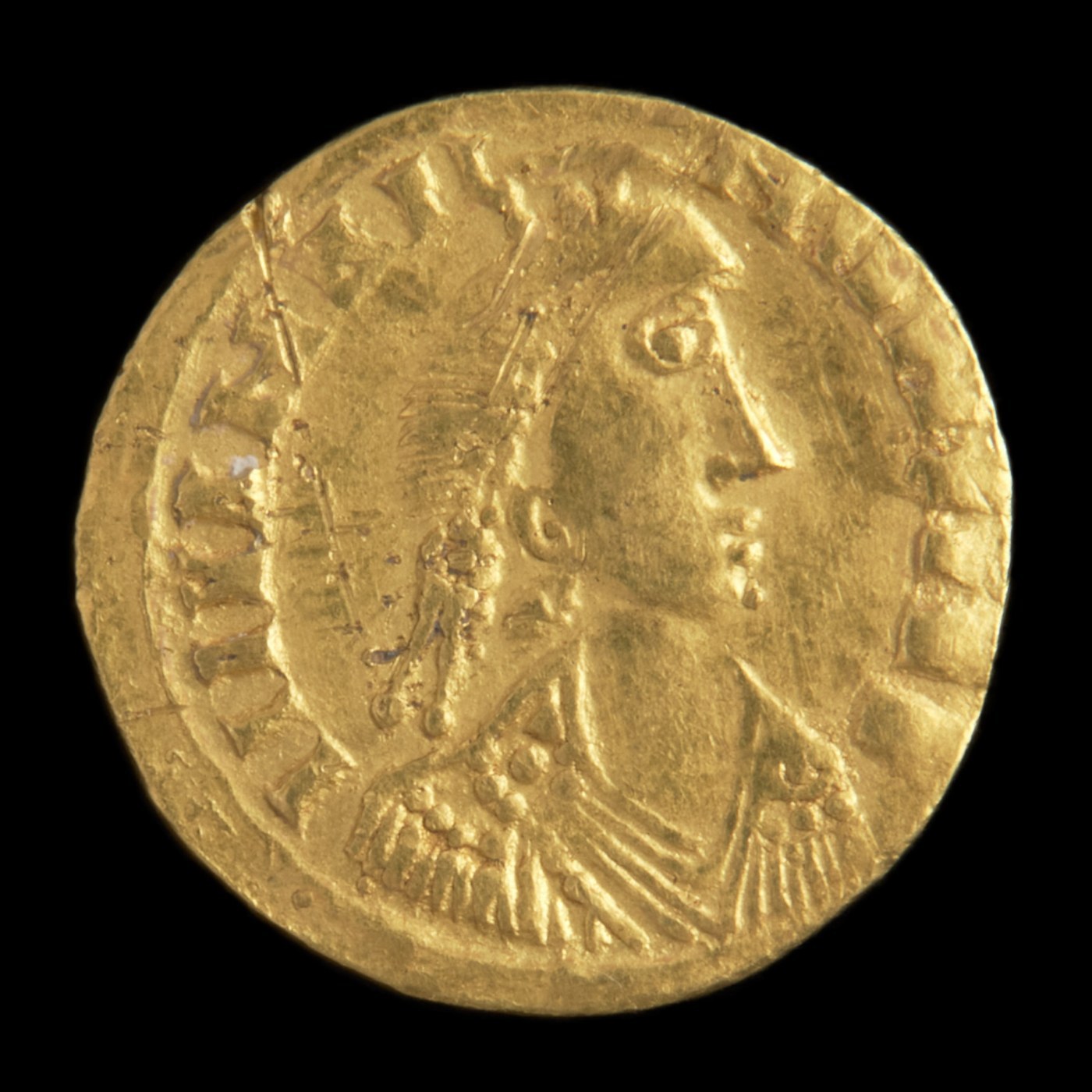
Start with the metal and the name. A solidus is a small, thick disc of nearly pure gold with a warm yellow tone, and on this coin the obverse shows the diademed profile of Valentinian III facing right, wearing a pearl diadem. Read the legend around the edge: it should carry the name VALENTINIANVS, most often as D N PLA VALENTINIANVS P F AVG. Because several fifth-century emperors struck almost identical diademed gold, the legend, not the portrait alone, is what confirms the ruler. Note whether the bust is in strict profile or the three-quarter facing style used on some issues.
Check the fabric, size, and weight. A genuine solidus of Valentinian III is roughly 20-21 mm across and about 4.4-4.5 grams of high-purity gold. The metal is soft and buttery, the lettering is crisply hand-cut, and the flan is often slightly irregular or a touch off-centre, all normal for hand-struck late Roman gold. A coin that is markedly light, thin, spongy, or a suspiciously pale or reddish colour should be treated with caution.
Use the reverse to attribute the type. The most common design shows the emperor standing in military dress holding a long cross or standard and a Victory on a globe, frequently with a foot on a human-headed serpent, under a legend such as VICTORIA AVGGG. Seated Roma or Constantinopolis and cross-within-wreath reverses also occur. In the exergue below the design, look for a mint mark: RV for Ravenna, R M or ROMA for Rome, and the letters CONOB indicating gold of the standard fineness. Matching the reverse figure, legend, and exergue mark together attributes the coin to a mint and issue.
Watch for look-alikes and forgeries. Solidi of contemporaries such as Honorius, Theodosius II, Marcian, and later Western emperors share the same diademed portrait, victory reverses, and CONOB marks, so always read the obverse name rather than assuming from appearance. Late Roman gold is heavily forged: warning signs include a casting seam around the edge, a soft or grainy surface, lettering that is mushy or stylistically wrong for the period, incorrect weight, and pin marks or solder traces from former jewellery mounting. Contemporary barbarian and later imitations also copied these types. For any solidus bought as an investment, seek attribution from a specialist in late Roman gold or a coin with documented provenance and, where appropriate, non-destructive metal testing.
Frequently asked questions
What is the fastest way to confirm a coin is a solidus of Valentinian III?
Confirm it is small, thick, high-purity gold of about 20-21 mm and 4.4-4.5 grams, then read the obverse legend for the name VALENTINIANVS. A victory or military reverse with a Western mint mark and CONOB supports the attribution.
How do I distinguish Valentinian III from other fifth-century emperors?
Read the obverse legend rather than the portrait. His coins name VALENTINIANVS, usually as D N PLA VALENTINIANVS P F AVG. Honorius, Theodosius II, Marcian, and others used near-identical diademed busts and victory reverses but carry different names.
What does CONOB in the exergue mean?
CONOB marks gold of the standard imperial fineness, historically tied to Constantinople but used across mints as a purity and standard mark. It appears alongside or in place of a mint mark such as RV or ROMA and helps confirm the coin is a proper solidus.
How do I guard against a fake solidus?
Weigh and measure it, examine the edge for a casting seam, and look for grainy surfaces, wrong-style lettering, or solder and pin marks from mounting. Because late Roman gold is frequently forged, buy from reputable dealers and prefer coins with provenance or specialist attribution.