
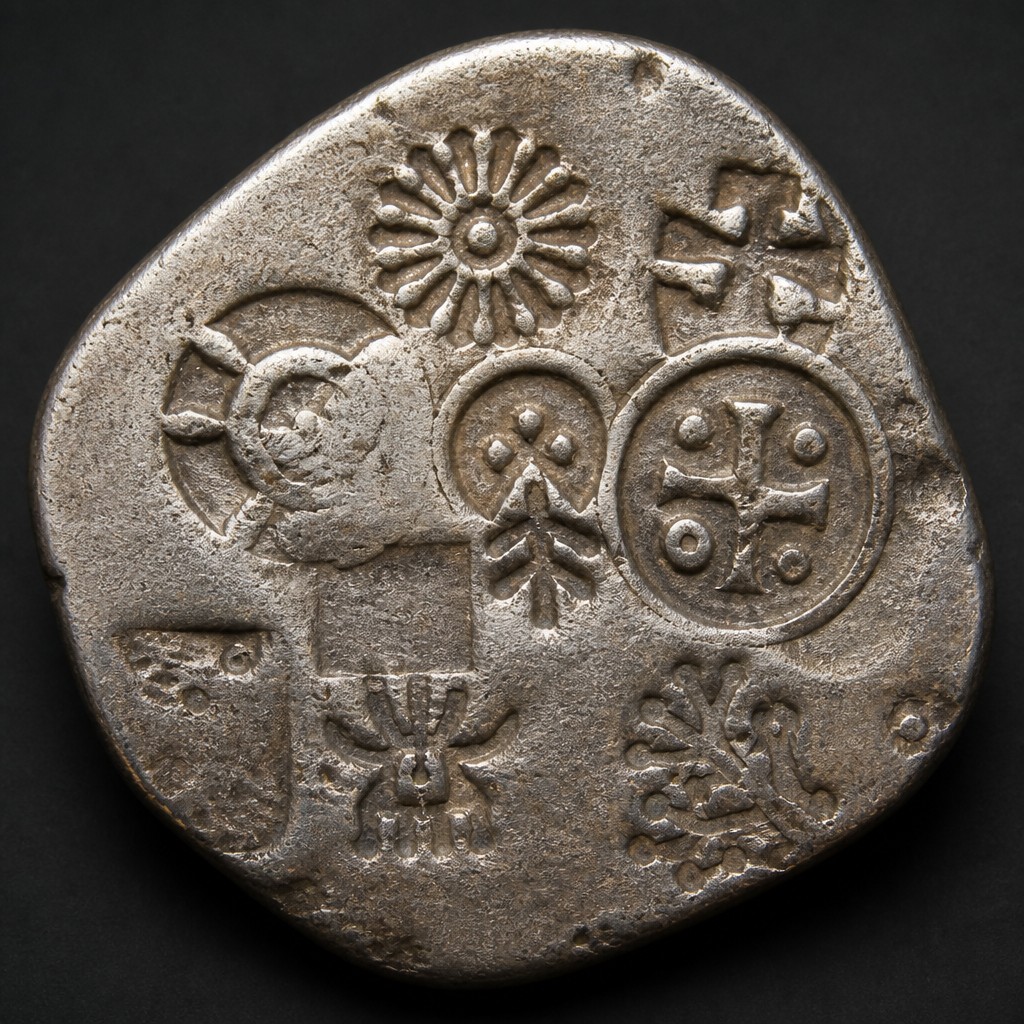
Indian Punch-Marked Karshapana
Among the earliest coins of South Asia, irregular silver bars struck repeatedly with multiple unrelated symbol punches rather than a single unified design.
- Country
- Ancient India
- Denomination
- Karshapana (also called Pana)
- Metal
- Silver (copper Karshapanas also known)
Got a coin like this?
Identify any coin from a photo, free.
Overview
Punch-marked karshapanas represent one of the world's earliest independent coinage traditions, developing in ancient India around the same era that coinage was emerging in Lydia and Greece, but following an entirely distinct visual approach. Rather than a single unified design, each coin bears a cluster of separate small symbol punches, applied individually and often by different authorities over the coin's circulating life.
Collectors and historians value karshapanas for their connection to some of the earliest organized states and trade networks in South Asian history, including the Mahajanapadas and the later Mauryan Empire, even though the coins themselves can be visually unassuming compared to figural ancient coinages elsewhere.
History & Background
Punch-marked coins emerged in the Indian subcontinent by around the 6th century BC, likely developed independently among the Mahajanapadas, the early kingdoms and republics of ancient India, as a way to facilitate trade and taxation. Early literary sources, including the Arthashastra attributed to Kautilya, mention silver karshapanas as a standard unit of value.
Unlike coins from the Mediterranean world, which typically carried a single design applied at the mint, Indian punch-marked coins were made by cutting silver (or sometimes copper) into roughly weight-standardized pieces, which were then individually stamped with several unrelated symbols, such as suns, elephants, trees, hills, or geometric patterns, using separate punches. These symbols may have represented different issuing or validating authorities as the coin passed through commerce over time.
The tradition continued through the rise of the Mauryan Empire, which unified much of the subcontinent by the 3rd century BC under rulers such as Chandragupta Maurya and Ashoka, and persisted in various regional forms even after the empire's decline, gradually giving way to coinages with more unified, single-authority designs in subsequent centuries.
How to Identify
A punch-marked karshapana is typically an irregularly shaped, roughly rectangular flat piece of silver, cut or clipped to a targeted weight rather than cast or struck from a single prepared die. Its most distinctive identifying feature is the presence of several separate small symbol punches scattered across one face, which may include suns, six-armed symbols, animals such as elephants or bulls, trees, hills, or various geometric shapes.
The reverse is usually blank or bears only a few scattered, smaller secondary punch marks, sometimes added later as the coin changed hands or crossed political boundaries. There are no legends or inscriptions on these coins, since the punch-marked tradition predates and is independent of any name-bearing coinage conventions used elsewhere.
Collectors distinguish karshapanas primarily by the specific combination and style of symbols present, which numismatists have used to attempt attribution to specific regions, dynasties, or the imperial Mauryan state mint (which is associated with a particular standardized set of five punch symbols). Weight is another key identifying factor, as the karshapana followed a recognized ancient Indian weight standard.
Value & Collectibility
Punch-marked karshapanas are generally an affordable way to own genuinely ancient South Asian coinage, since large numbers survive and demand, while growing, remains more limited than for classical Greek or Roman coins. Common examples with a few legible symbols are often available at modest prices.
Coins attributed to the imperial Mauryan mint, examples with unusually clear or extensive symbol sets, or pieces tied to specific well-researched issuing authorities can command higher prices among specialists in Indian numismatics. As this is a somewhat niche but growing collecting area, prices can vary significantly based on documentation and attribution confidence.
Frequently asked questions
Why do these coins have several unrelated symbols instead of one design?
Each symbol was applied by a separate punch, possibly representing different issuing or validating authorities as the coin was used, tested, or re-verified during circulation, rather than a single unified minting design.
What metal are karshapanas usually made of?
Most surviving punch-marked karshapanas are silver, though copper examples of similar type are also known.
Do these coins have any writing on them?
No, punch-marked coins bear no inscriptions or legends, only symbolic punch marks, since they predate the use of lettered coin designs in India.
How old are punch-marked karshapanas?
They date back to roughly the 6th century BC, making them among the earliest coinages in South Asia, with production continuing in various regional forms for several centuries.
Are these coins connected to the Mauryan Empire?
Yes, punch-marked coinage continued into the Mauryan period, and numismatists associate a particular standardized group of five punch symbols with the Mauryan imperial mint.
Other coins you may enjoy
Theodosius I Solidus
379–395 AD
Republican Victoriatus
c. 211–170 BC
Islamic Gold Dinar (Umayyad)
c. 696–750 AD
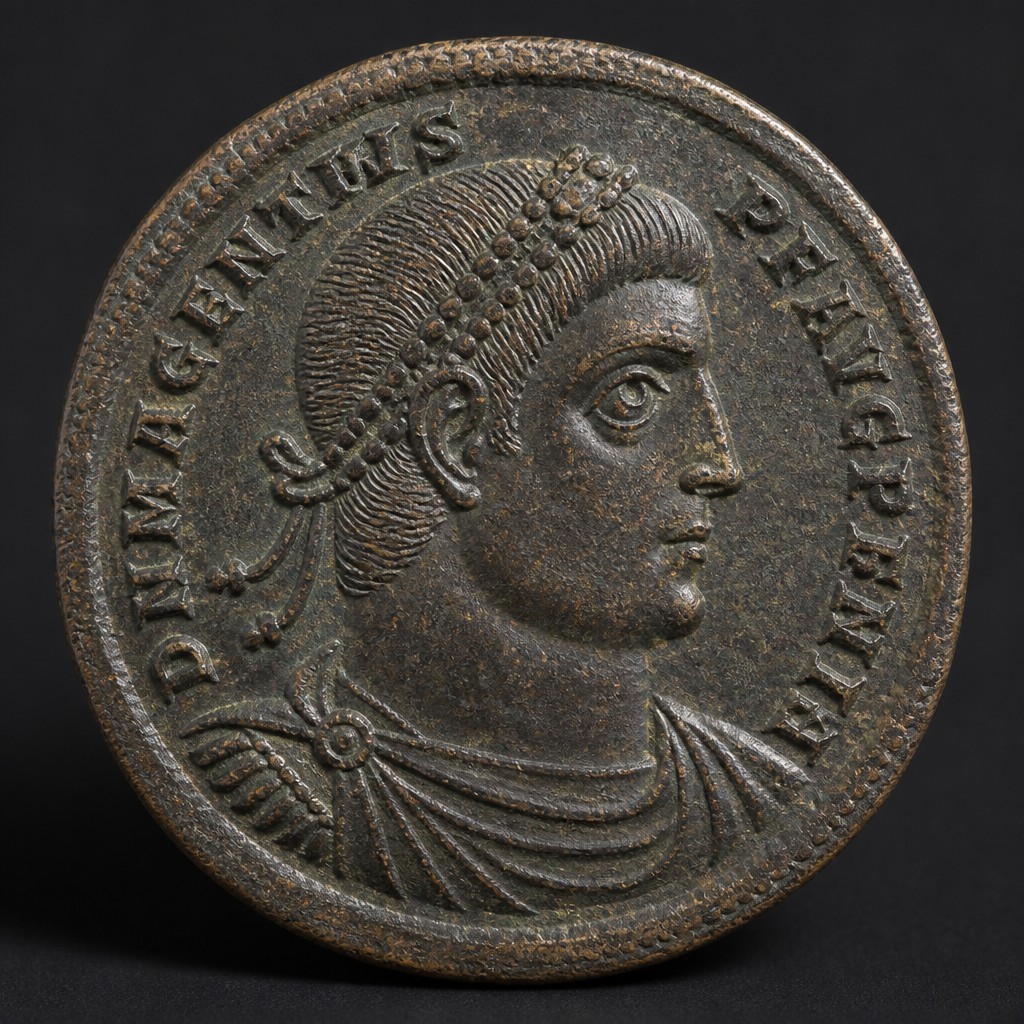
Magnentius Double Centenionalis
350–353 AD
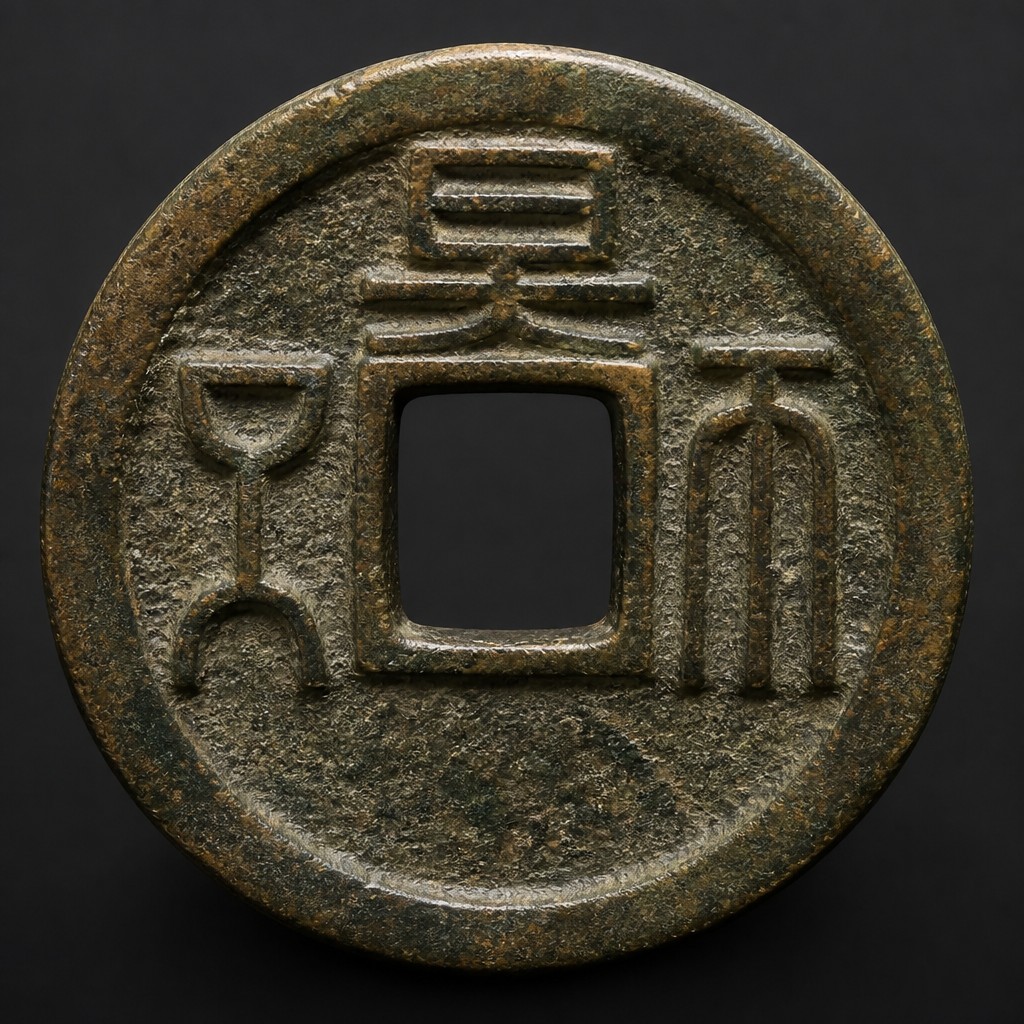
Chinese Wu Zhu Cash
118 BC – 618 AD
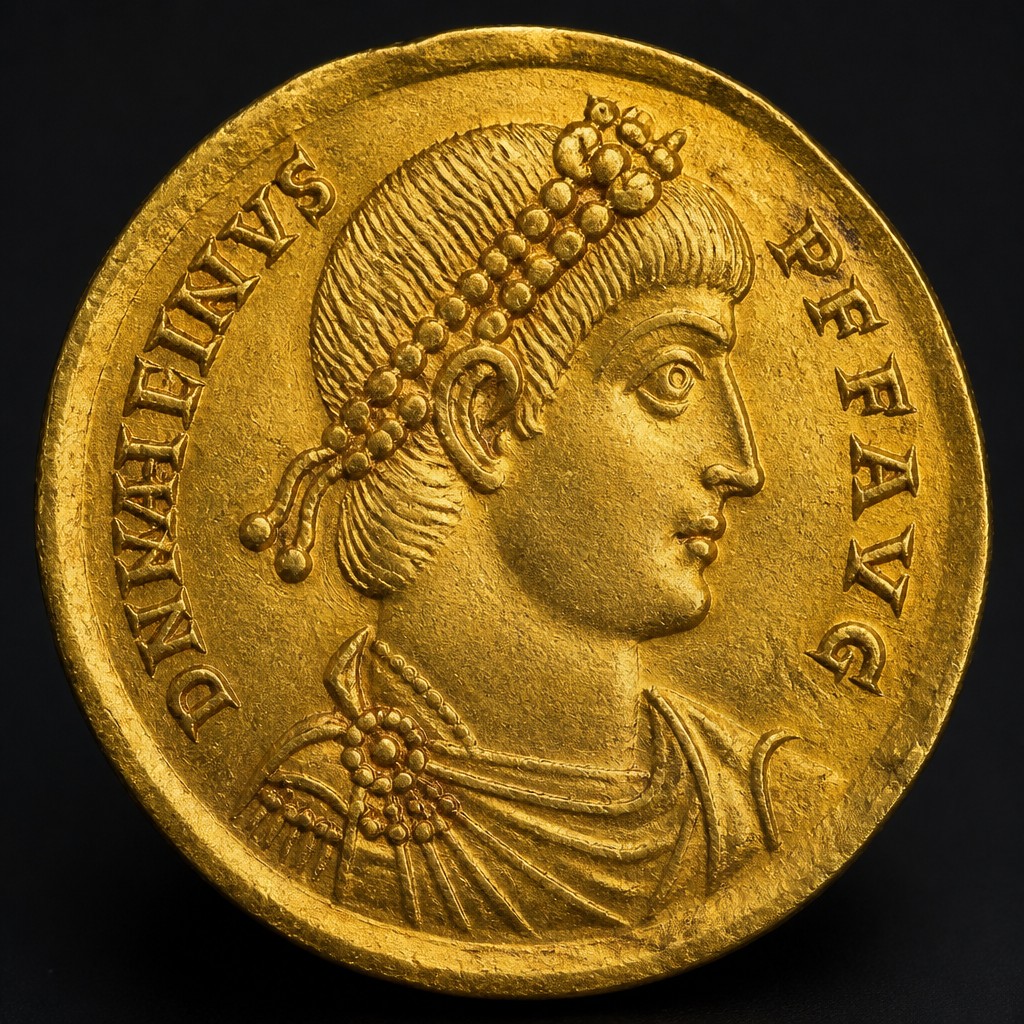
Valentinian I Solidus
364–375 AD
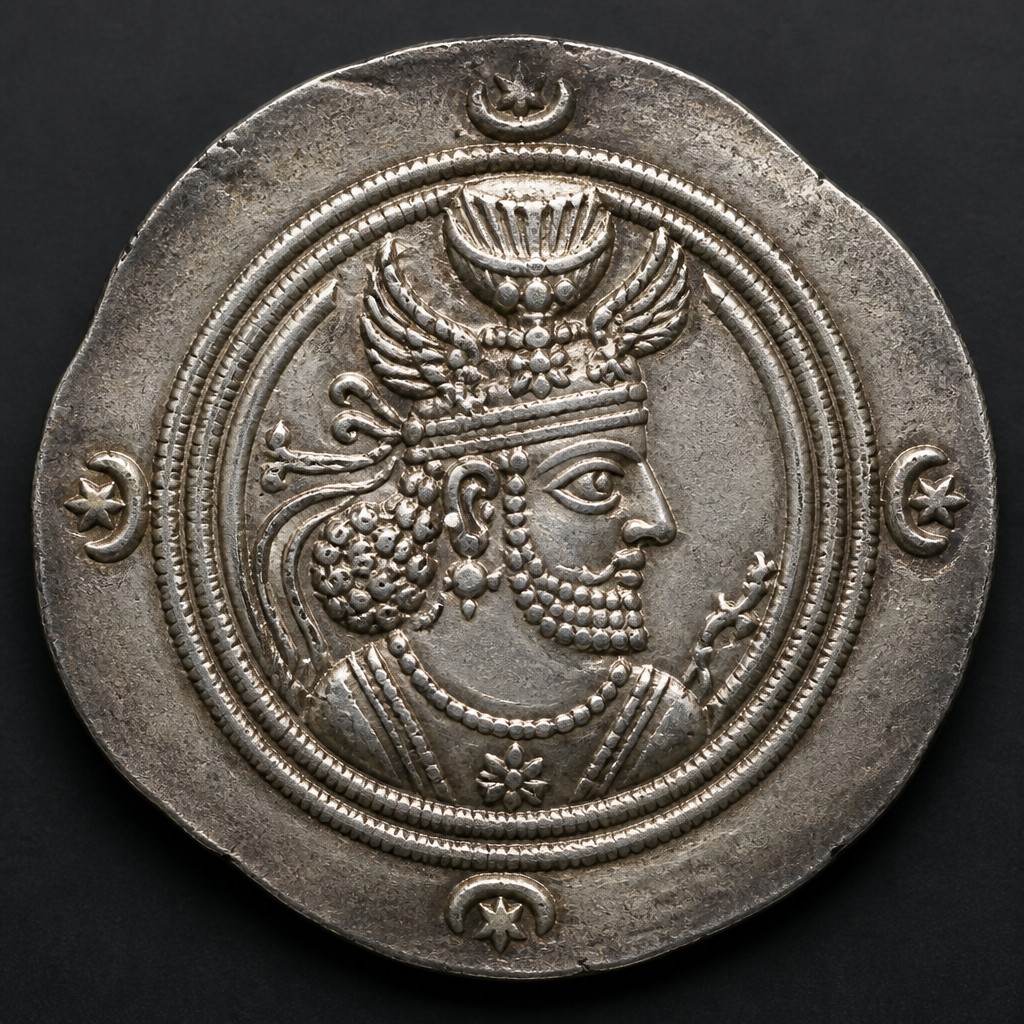
Sassanian Silver Drachm
c. 224–651 AD
Chinese Ban Liang Cash
c. 221–118 BC
Gupta Empire Gold Dinar
c. 320–550 AD
Byzantine Gold Tremissis
c. 4th–7th century AD
Byzantine Follis
498–c. 11th century AD
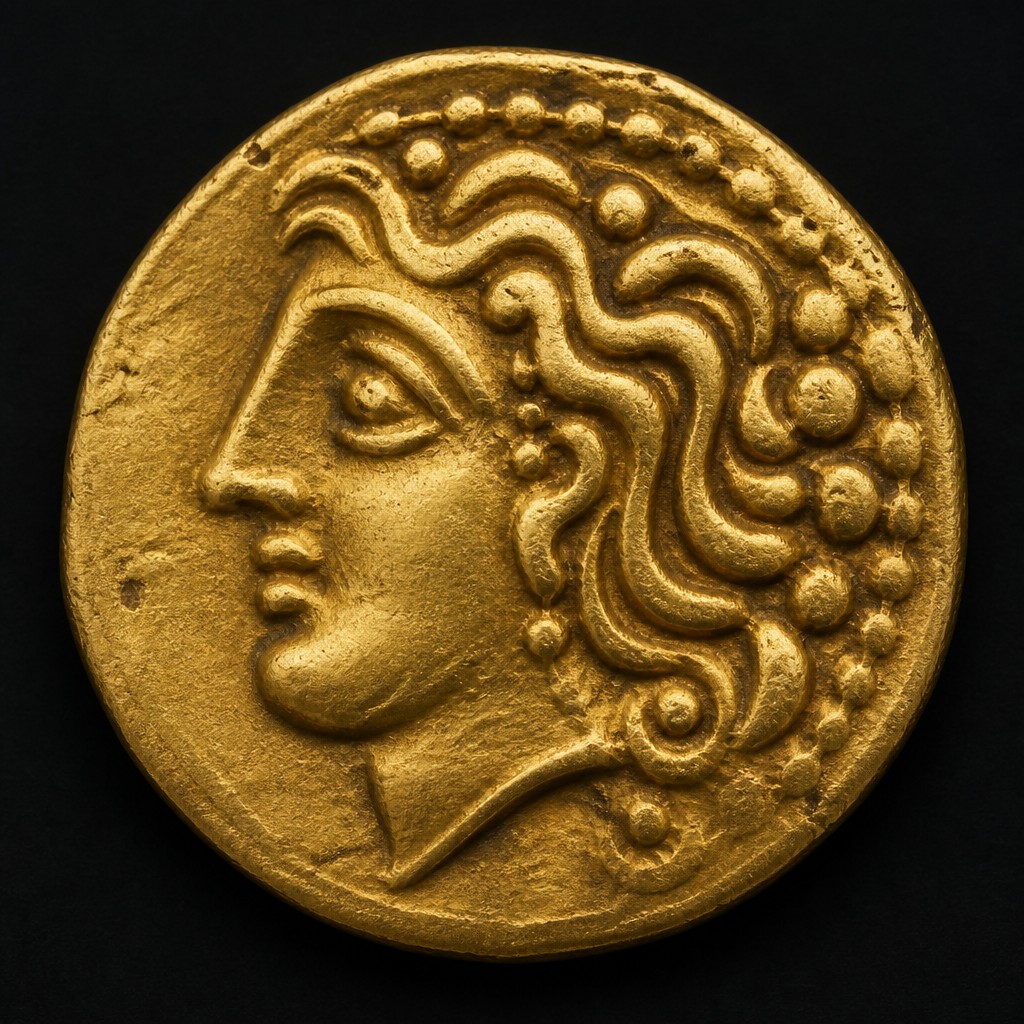
Celtic Gold Stater
c. 3rd century BC – 1st century AD