
Coin Encyclopedia
Search and identify coins from around the world — with country, denomination, metal, mint, history, and how to tell them apart.
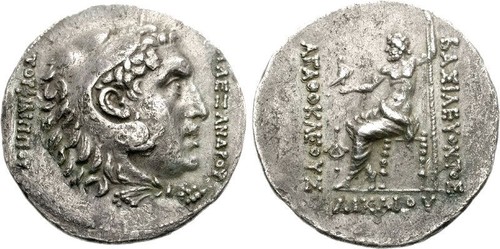
Agathokles Commemorative Tetradrachm for Alexander the Great
Silver tetradrachm of Agathokles of Syracuse, c. 310-300 BC, struck in the Alexander tradition with a bearded head and an enthroned deity reverse.
Ancient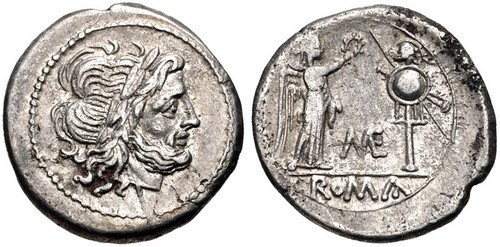
Roman Victoriatus
Silver Roman Republican victoriatus of the late 3rd–2nd century BC, with the laureate head of Jupiter and a Victory crowning a trophy above ROMA.
Ancient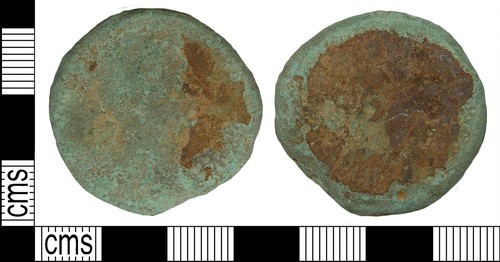
Sestertius of Commodus
A large Roman bronze sestertius of Emperor Commodus (180–192 AD), his laureate bearded head on one side and a standing figure on the other.
Ancient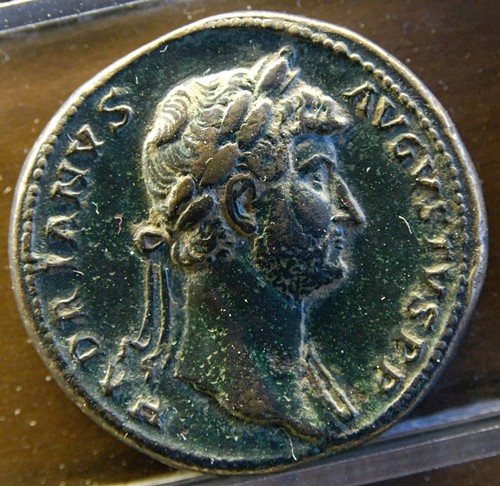
Sestertius of Hadrian
Large Roman bronze sestertius of Emperor Hadrian, showing his bearded curly-haired profile and a standing draped figure with a Latin legend on the reverse.
Ancient Coins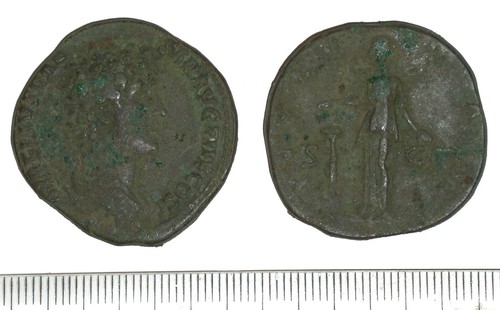
Sestertius of Marcus Aurelius
A large Roman bronze sestertius struck during the reign of Marcus Aurelius (161–180 CE), with his laureate portrait facing right and a Latin legend.
Ancient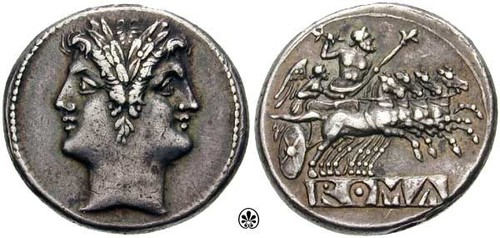
Roman As/Dupondius (Uncertain)
An uncertain Roman bronze As or Dupondius: a double-faced Janus head on one side and a ship (galley/prow) with ROMA below on the other.
Ancient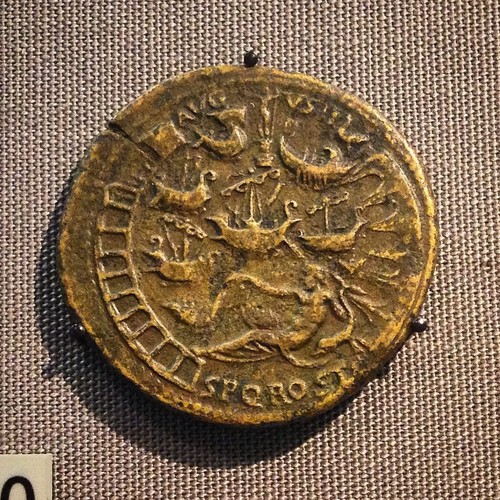
Sestertius of Nero (Port of Ostia)
A large brass sestertius of the emperor Nero (54–68 AD) showing his portrait on one side and a bird's-eye view of the harbour at Ostia on the other.
Ancient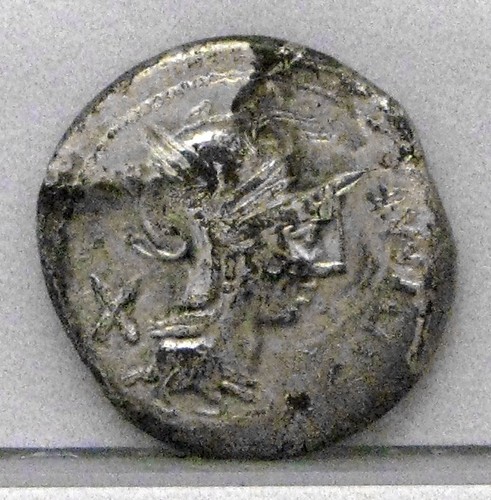
Roman Republican Denarius (Unidentified)
A silver Roman Republican denarius of about 115-114 BC: helmeted Roma on the obverse, Victory driving a two-horse chariot on the reverse.
Ancient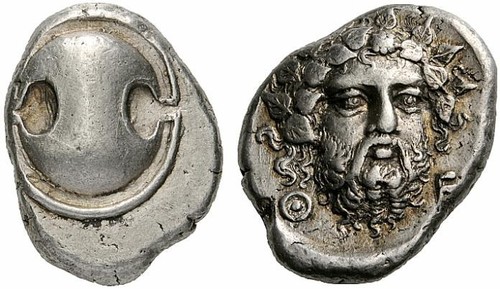
Thebes Stater
Silver stater of Thebes with the Boeotian shield and a bearded head of Dionysos, struck as federal coinage of the Boeotian League, c. 395-338 BC.
Ancient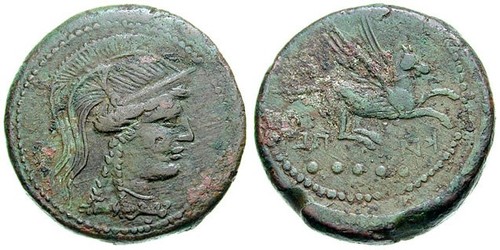
Quincunx of Capua
Bronze quincunx (5 unciae) struck by Capua in Campania in the 3rd century BC, pairing a diademed female head with a lion or griffin and five value pellets.
Ancient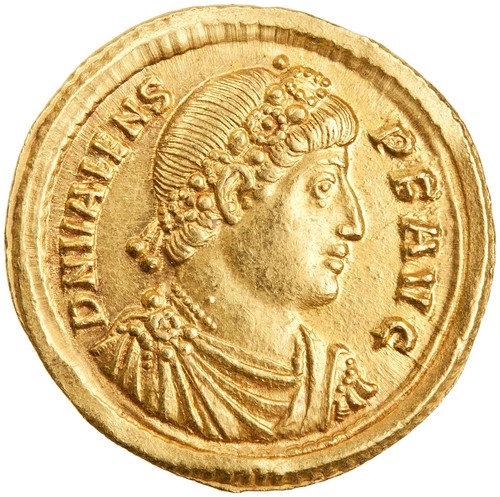
Solidus of Valens
A late Roman gold solidus struck for Valens, eastern emperor from AD 364 to 378, showing his diademed profile facing right.
Ancient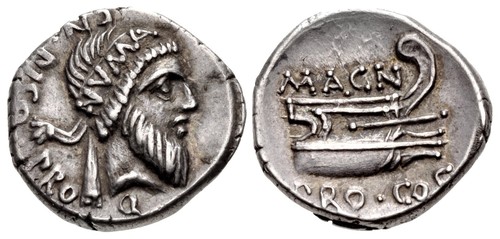
Numapis Denarius
A silver denarius of the Roman Republic (1st century BC) pairing a male portrait facing right with a ship or galley and lettering on the reverse.
Ancient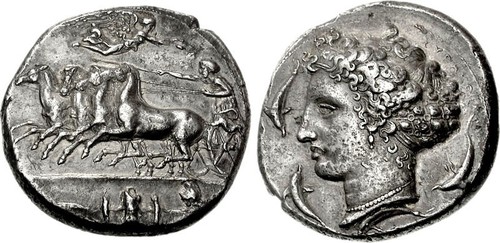
Syracuse Dekadrachm
Large silver dekadrachm of Syracuse, c. 405-380 BC, showing a racing quadriga crowned by Victory and a head of the nymph Arethusa with flowing hair.
Ancient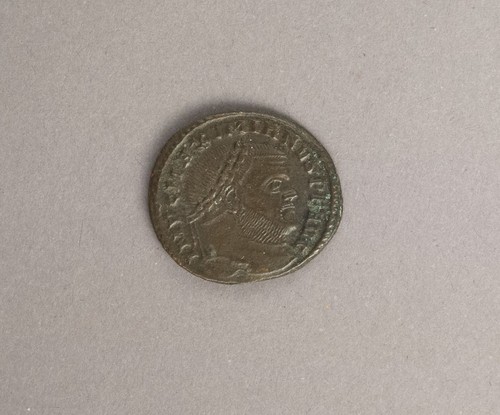
Nummus of Maximianus
A late-Roman bronze nummus (follis) of the emperor Maximianus, with his right-facing laureate portrait and a standing deity on the reverse.
Ancient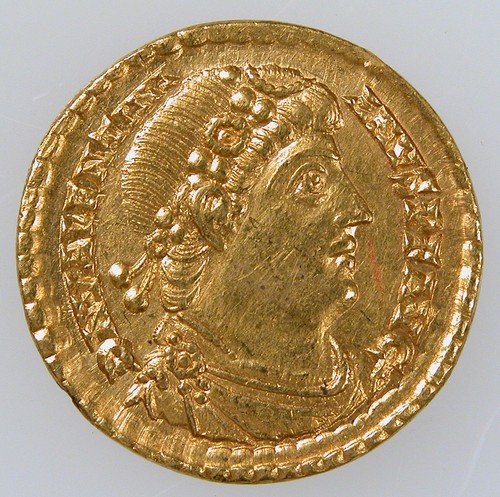
Solidus of Valentinian I
The gold solidus of Valentinian I (AD 364-375), a pure-gold coin bearing his pearl-diademed profile that anchored the late Roman monetary system.
Ancient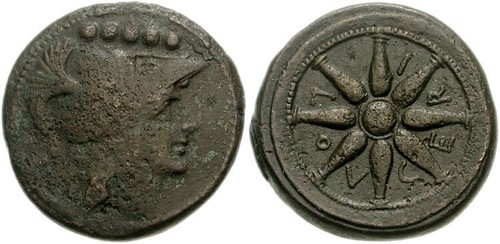
Quincunx of Luceria
A cast bronze quincunx of Luceria in Apulia (3rd century BC), showing a female head and a five-point floral or star device marking five unciae.
Ancient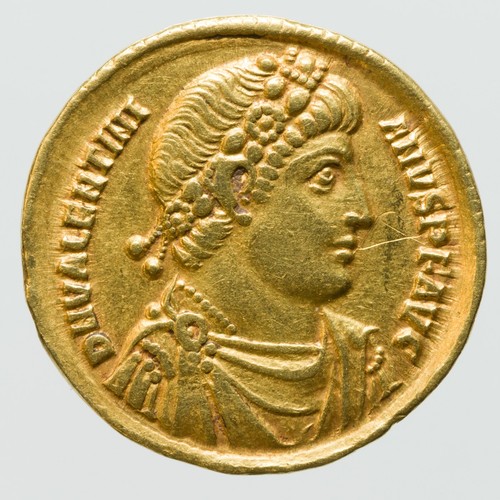
Solidus of Valentinian II
A late Roman gold solidus struck for Valentinian II, showing his diademed profile with the obverse legend D N VALENTINIANVS, from the 380s AD.
Ancient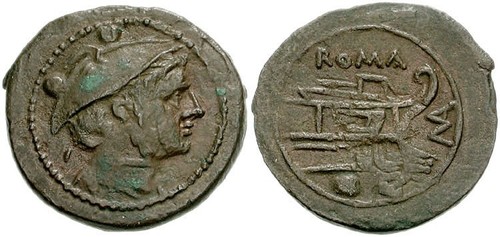
Manlius Vulso Æ Sextans
Small Roman Republican bronze sextans signed by the moneyer Manlius Vulso, with a capped male head and the classic prow reverse marked ROMA.
Ancient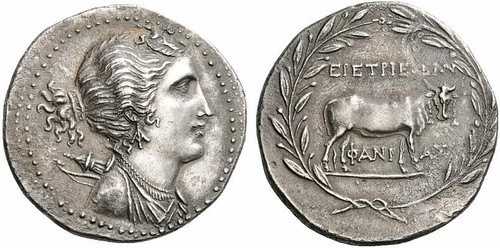
Tetradrachm of Eretria
A silver tetradrachm attributed to Eretria on Euboea, pairing the head of a female figure with a standing bull and the Greek legend EYBOIA.
Ancient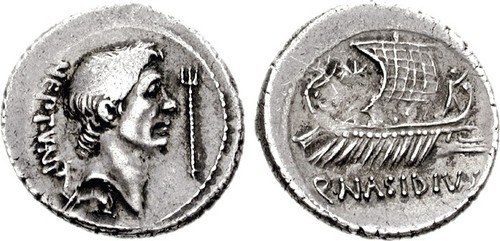
Nasidius Denarius
Roman Republican silver denarius struck for Sextus Pompey's admiral Q. Nasidius, showing Pompey the Great's head and a galley marked NASIDIVS.
Ancient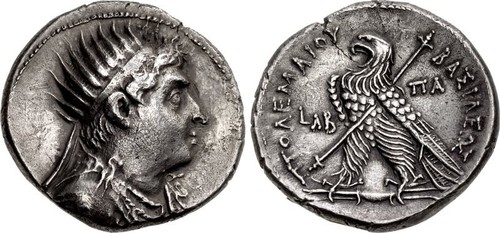
Tetradrachm of Ptolemy VIII
Silver tetradrachm of Ptolemy VIII of Egypt, c. 170-116 BC, with a diademed royal head on the obverse and an eagle on a thunderbolt reverse.
Ancient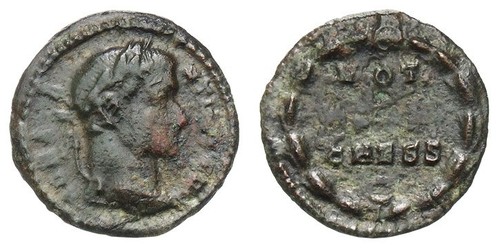
Nummus of Constantine I
Small late Roman bronze nummus (follis) of Constantine I the Great (306-337 CE), identified by his right-facing imperial portrait on the obverse.
Ancient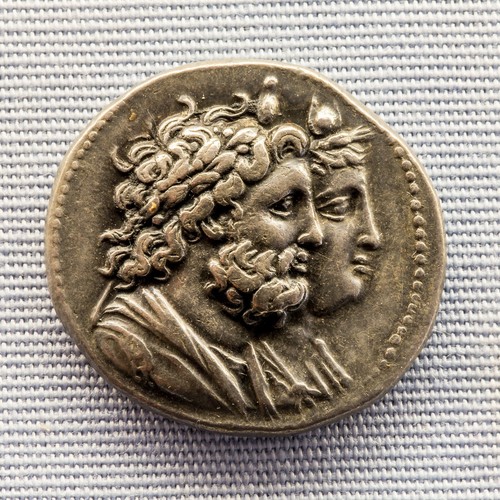
Tetradrachm of Ptolemy IV
Silver tetradrachm of Ptolemy IV Philopator, 221-204 BC, with the jugate busts of Sarapis and Isis on the obverse and an eagle on a thunderbolt on the reverse.
Ancient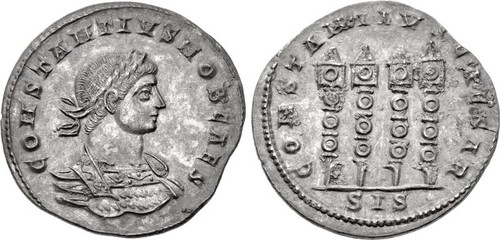
Miliarensis of Constantius II
A late Roman silver miliarensis of Emperor Constantius II (AD 327–361), showing his diademed portrait and a standing reverse figure.
Ancient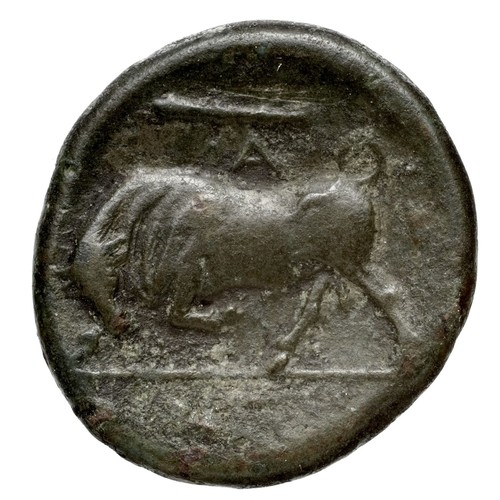
Syracuse Bronze Coin of Hiero II
Ancient Greek bronze of Syracuse struck under King Hieron II, c. 275-215 BC, bearing a Hellenistic profile head; a very common Sicilian city bronze.
Ancient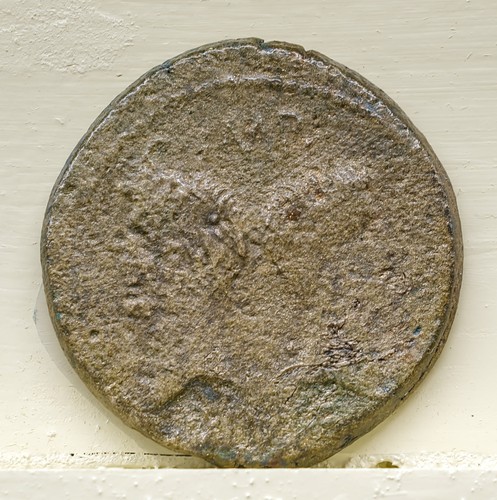
Nemausus As/Dupondius (Crocodile Type)
The famous crocodile of Nimes: a large Roman provincial bronze with paired heads of Agrippa and Augustus and a crocodile chained to a palm.
Ancient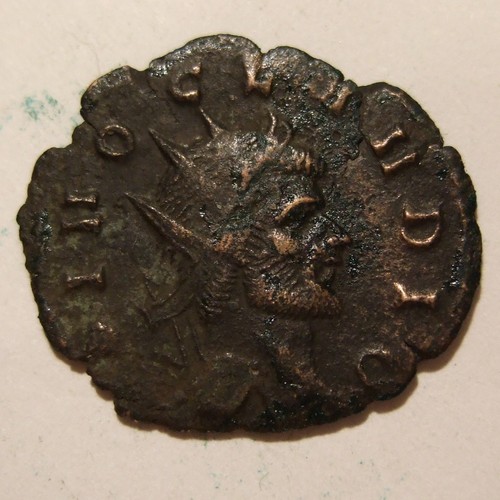
Roman Quadrans
A small Roman bronze quadrans, worth a quarter of an as, here a heavily corroded piece with a laureate head facing right.
Ancient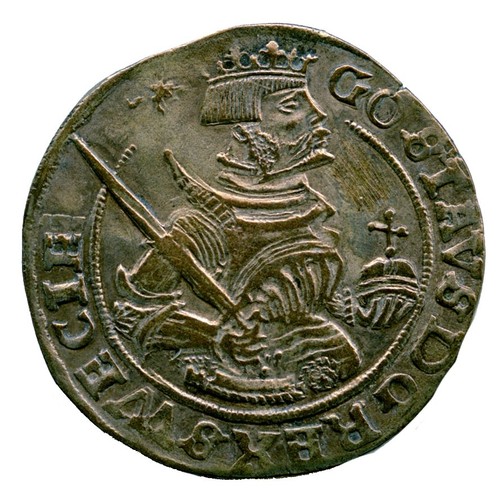
Gustav I Silver Coin
Early-Renaissance Swedish silver of Gustav I Vasa (r. 1523–1560), pairing a crowned armored royal bust with a crowned heraldic lion.
Medieval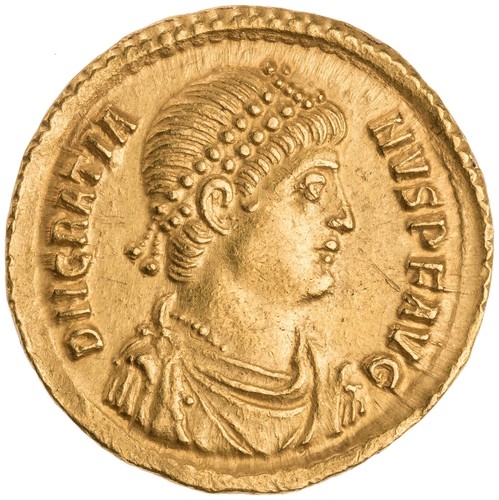
Solidus of Gratian
Late Roman gold solidus of Emperor Gratian (r. 367–383 CE), showing his curly-haired, diademed, draped and cuirassed portrait.
Ancient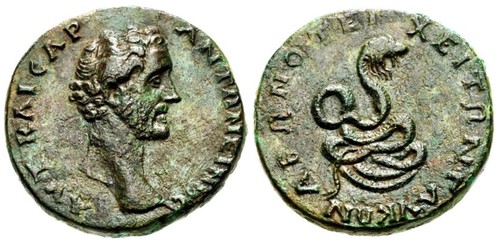
Glycon Bronze Coin
Roman provincial bronze of the 2nd century AD showing the snake-god Glycon: a bearded serpent head on one side and a coiled snake on the other.
Ancient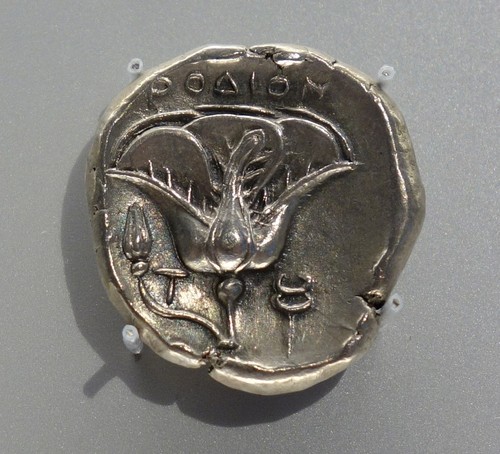
Rhodes Tetradrachm
Silver tetradrachm of the island city of Rhodes, 4th century BC, with the radiate head of the sun-god Helios and a rose, the city's civic emblem.
Ancient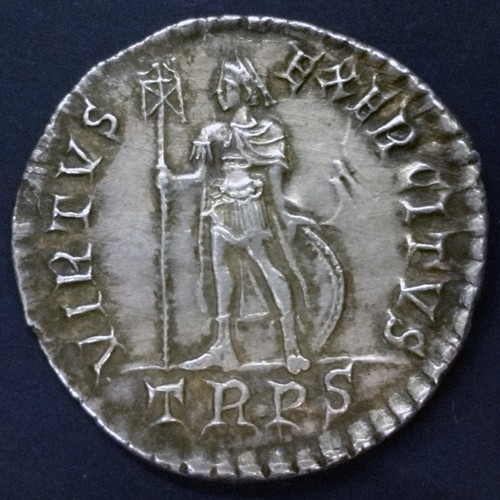
Hoxne Hoard Siliqua
A small late-Roman silver siliqua of the type found in Britain's Hoxne Hoard, with an imperial portrait and a standing figure or personified virtue.
Ancient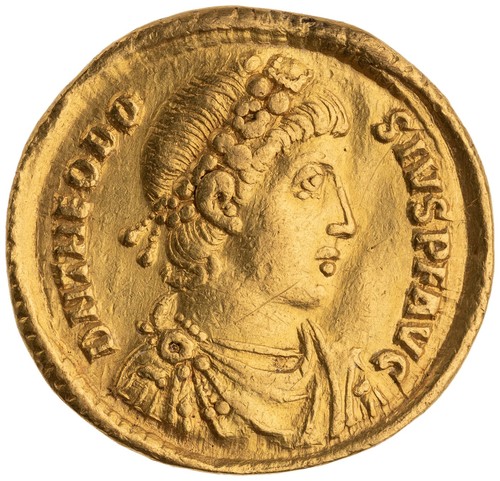
Solidus of Theodosius I
A late Roman gold solidus struck for the emperor Theodosius I (AD 379-395), showing his diademed portrait and the legend D N THEODOSIVS AVG.
Ancient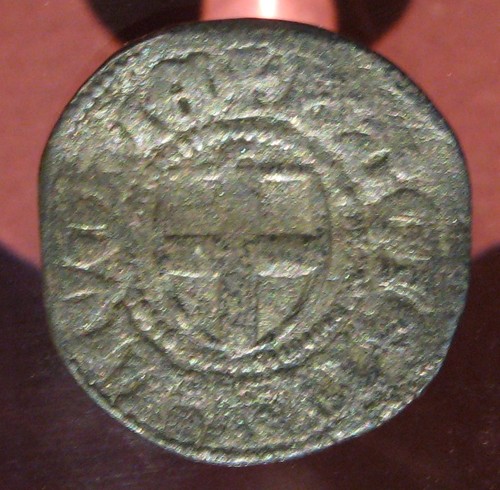
Livonian Order Schilling
A small hammered silver schilling of the medieval Livonian Order, showing heraldic shields and a cross, struck in the Baltic around 1410–1415.
Medieval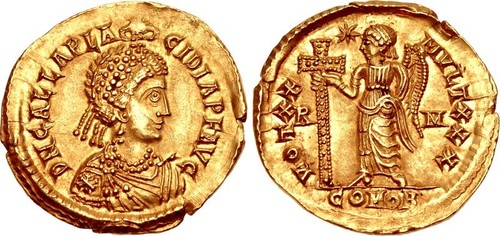
Solidus of Galla Placidia
A late Roman gold solidus struck in the name of Galla Placidia, empress and regent, showing her diademed bust and a Victory holding a long cross.
Ancient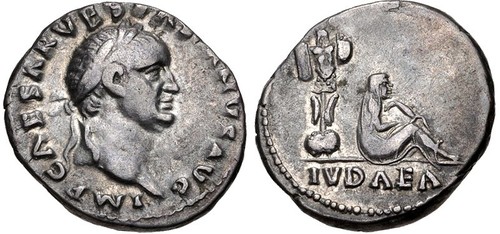
Denarius of Vespasian
Silver denarius struck under the emperor Vespasian (AD 69-79), founder of the Flavian dynasty, with his laureate portrait on the obverse.
Ancient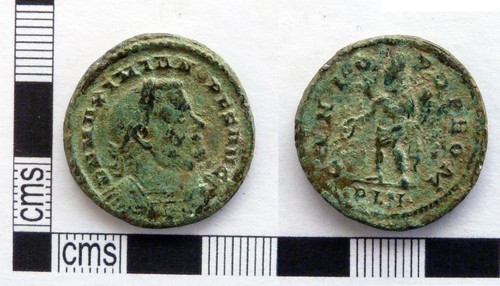
Roman Follis (AE3)
A small late Roman bronze follis of the Constantine I era (AD 320-330), with an emperor's profile obverse and a Victory or vota-in-wreath commemorative reverse.
Ancient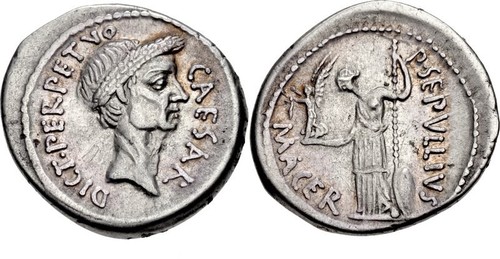
Julius Caesar Denarius
Silver Roman denarius of 44 BC bearing the bareheaded portrait of Julius Caesar, among the first Roman coins to show a living statesman's likeness.
Ancient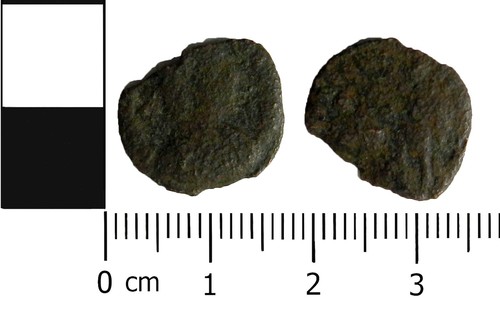
Roman Centenionalis
A small fourth-century Roman bronze coin, part of the reformed low-value currency struck across the empire's mints during a period of frequent monetary change.
Ancient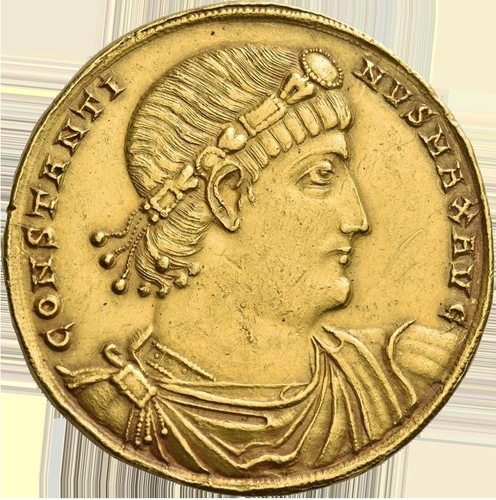
Solidus of Constantine I the Great
Constantine the Great's gold solidus, a high-purity coin struck from about AD 309 that became the standard of late Roman and Byzantine gold.
Ancient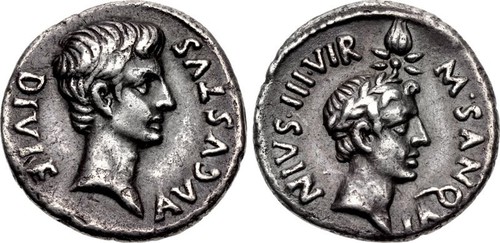
Denarius of Octavian and Caesar
A Roman Imperatorial silver denarius pairing the young Octavian with his adoptive father Julius Caesar, struck around 43–42 BC.
Ancient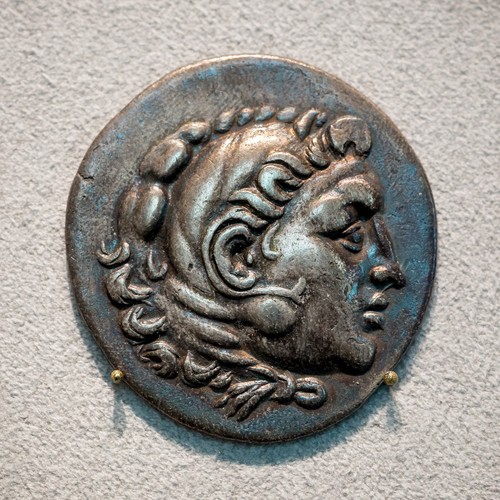
Macedonian Silver Tetradrachm
Large silver tetradrachm of ancient Macedon in the Alexander type, c. 188-170 BC, with the head of Heracles in a lion skin and Zeus enthroned holding an eagle.
Ancient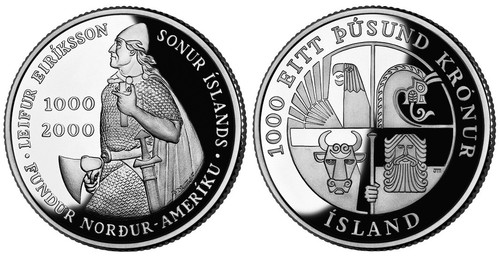
Leif Erikson Commemorative 1000 Króna
Icelandic silver commemorative dated 2000, marking the millennium of Leif Erikson's voyage and the Norse discovery of North America.
Commemorative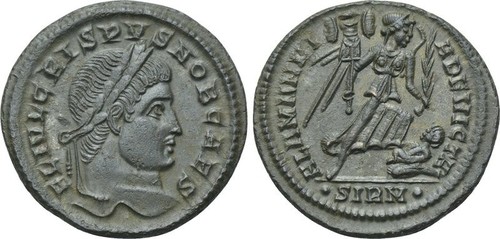
Follis of Crispus
A small bronze follis of Crispus, eldest son of Constantine the Great, with his diademed bust and a winged Victory reverse (317-326 AD).
Ancient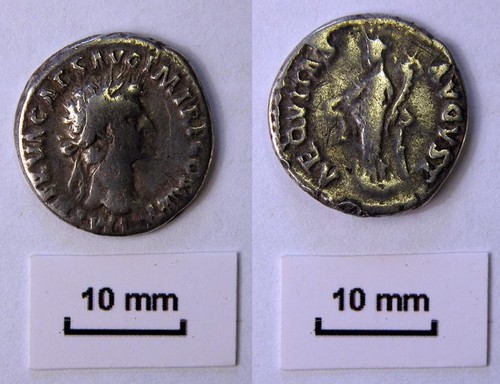
Denarius of Nerva
Roman Imperial silver denarius of Emperor Nerva (96-98 AD), with his laureate portrait and the legend IMP NERVA CAES AVG, and a seated Concordia reverse.
Ancient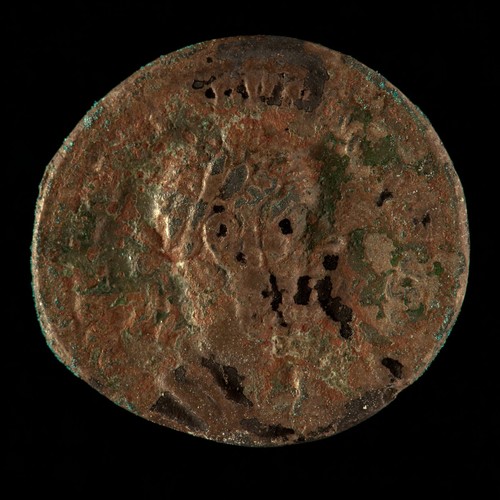
Denarius of Macrinus
Silver denarius of Macrinus (r. 217–218 AD), a bearded emperor portrait paired with a standing deity or personification on the reverse.
Ancient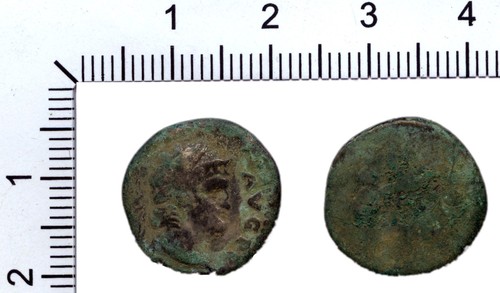
Denarius of Nero
Silver denarius of the emperor Nero (AD 54-68), the last Julio-Claudian ruler, shown with a laureate portrait and a military-standards reverse.
Ancient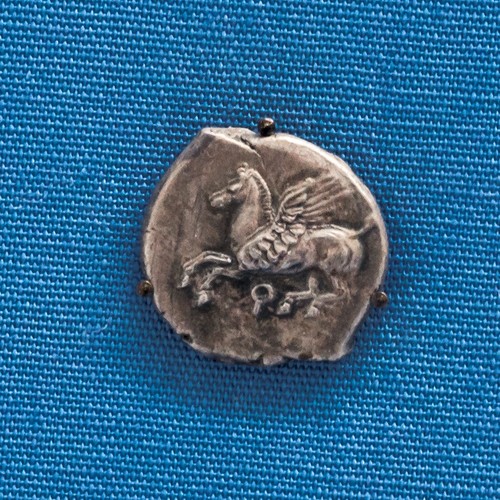
Corinth Pegasos Stater
Classical silver stater of Corinth showing the winged horse Pegasos on the obverse and a helmeted head of Athena on the reverse.
Ancient