
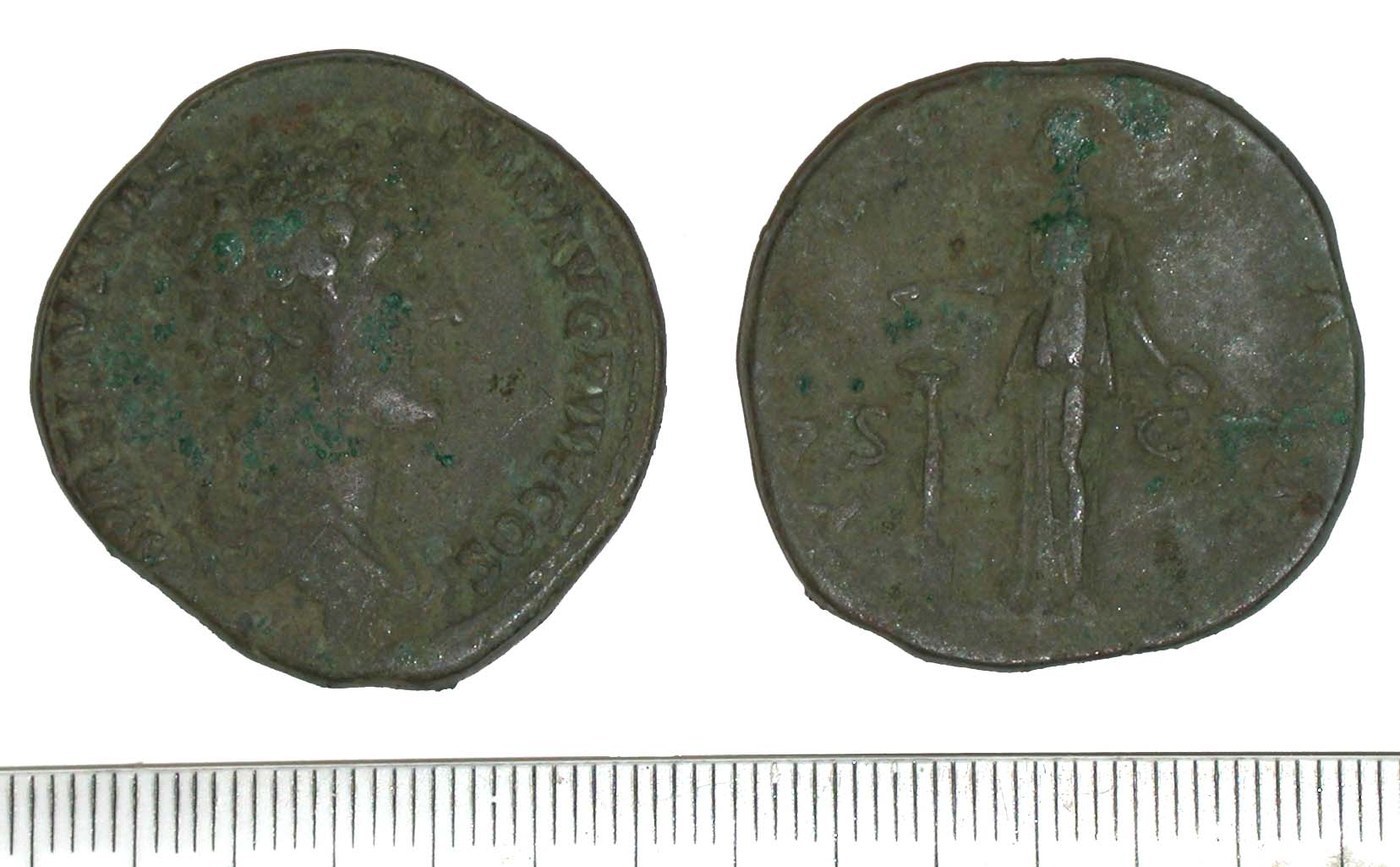
Sestertius of Marcus Aurelius
A large Roman bronze sestertius struck during the reign of Marcus Aurelius (161–180 CE), with his laureate portrait facing right and a Latin legend.
- Country
- Roman Empire
- Denomination
- Sestertius
- Metal
- Bronze
Got a coin like this?
Identify any coin from a photo, free.
Overview
The sestertius of Marcus Aurelius is a large bronze denomination of the Roman Empire, issued during the emperor's reign from 161 to 180 CE. It is one of the most substantial everyday coins of the period, prized by collectors for its broad flan and bold, high-relief portraiture. The example shown here presents the laureate head of Marcus Aurelius facing right, encircled by his Latin titles.
The reverse typically carries a personification or deity, a scene of imperial virtue, or a commemorative design, accompanied by a Latin inscription and the letters S C (senatus consulto) marking it as a senatorial bronze issue. Because the sestertius was struck in copper-alloy bronze rather than silver or gold, surviving pieces often show a rich brown, green, or reddish patina that collectors value highly.
History & Background
Marcus Aurelius ruled as Roman emperor from 161 to 180 CE, initially alongside Lucius Verus and later with his son Commodus. Remembered as the last of the so-called "Five Good Emperors" and as a Stoic philosopher who wrote the Meditations, he presided over a reign marked by frontier wars along the Danube and the Parthian campaign in the East, as well as by plague and financial strain.
The sestertius was the workhorse large bronze of the imperial coinage, struck at the mint of Rome under the authority of the Senate, which is why bronze denominations bear the S C mark. Its reverses functioned as state messaging, celebrating military victories, imperial largesse, the emperor's virtues, or divine protectors of the state. Types struck for Marcus Aurelius commemorate events across his roughly two-decade reign, and coins were often issued in the name of family members as well.
Sestertii continued to be produced by later emperors before the denomination declined in the third century amid debasement and monetary reform. Today these bronzes are a cornerstone of Roman imperial collecting, valued as tangible artifacts of the Antonine age.
How to Identify
The defining feature is size and metal: a sestertius is a large, heavy bronze coin, typically around 30–34 mm in diameter and often 20–27 grams, considerably bigger and thicker than a silver denarius or the smaller bronze as and dupondius. The example here is a bronze coin with the laureate portrait of Marcus Aurelius facing right.
Read the obverse legend, which wraps around the portrait and gives the emperor's name and titles in Latin, commonly forms such as M ANTONINVS AVG or IMP CAES M AVREL ANTONINVS AVG together with titles like ARMENIACVS, GERM, or TR P and consular numbers that can help date the coin. The reverse shows a standing or seated figure, deity, or scene with its own Latin legend, and most bronze reverses include the letters S C in the field. Matching the specific portrait style, titles, and reverse type to a reference catalog (such as RIC, the Roman Imperial Coinage) allows precise attribution.
Value & Collectibility
Sestertii of Marcus Aurelius span a wide value range depending on condition, patina, portrait quality, and the rarity of the reverse type. Heavily worn or corroded examples with weak detail are the most affordable and can be found in the low tens of dollars, while attractive coins with clear portraits and pleasing patina generally sell in the hundreds of dollars.
Exceptional pieces, those with sharp high relief, desirable historical reverses, or superb surfaces, can reach well into the thousands at auction. Because these are hand-struck ancient bronzes, no two are identical, and eye appeal drives price as much as technical grade.
As with all ancient coins, provenance and authenticity strongly affect value, and professional attribution to a specific RIC type and mint can add both certainty and premium. Given ranges are general context rather than fixed prices.
Frequently asked questions
What is a sestertius?
The sestertius was a large bronze denomination of the Roman Empire. Struck under the authority of the Senate, it was one of the biggest everyday coins in circulation and served as a canvas for imperial imagery and propaganda.
How can I tell the coin depicts Marcus Aurelius?
Look for the laureate male portrait facing right and read the surrounding Latin legend, which names the emperor with forms such as M ANTONINVS AVG and imperial titles. Matching the titles and portrait to a catalog confirms the ruler.
What do the letters S C mean on the reverse?
S C stands for senatus consulto, "by decree of the Senate." It appears on Roman bronze coinage to indicate that these denominations were issued under senatorial authority, and is normal on a sestertius.
Why is the coin green or brown instead of shiny?
Sestertii are made of copper-alloy bronze, which develops a patina over centuries of burial. Brown, green, or reddish surfaces are natural and, when smooth and even, are considered desirable by collectors.
Are these coins valuable?
Values range widely. Worn or corroded pieces can be modest, well-preserved examples sell in the hundreds, and exceptional coins with strong portraits and rare reverses can reach thousands. Condition, patina, and reverse type drive the price.
Sestertius of Marcus Aurelius guides
In-depth guides for identifying, valuing, and collecting Sestertius of Marcus Aurelius.
Other coins you may enjoy
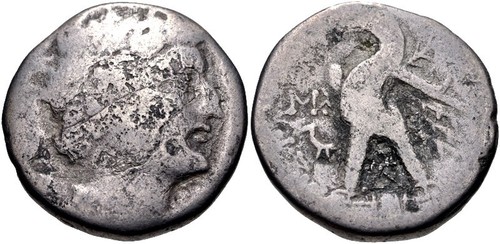
Tetradrachm of Ptolemy XII
80-51 BC
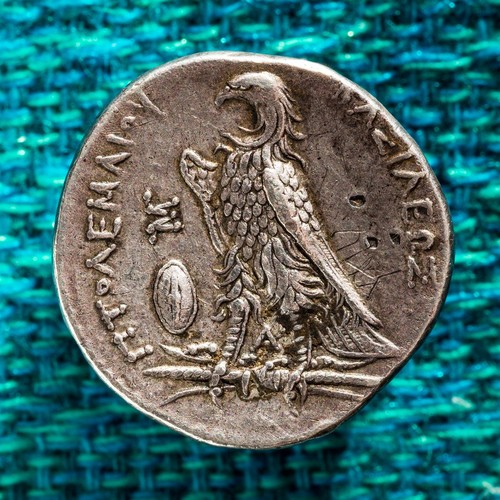
Tetradrachm of Ptolemy I
305-283 BC
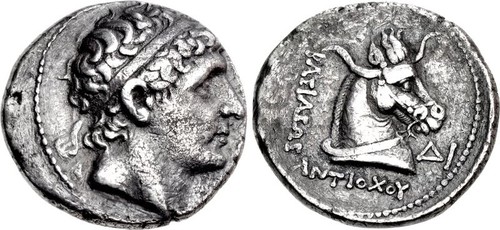
Tetradrachm of Antiochos I Soter
281-261 BC
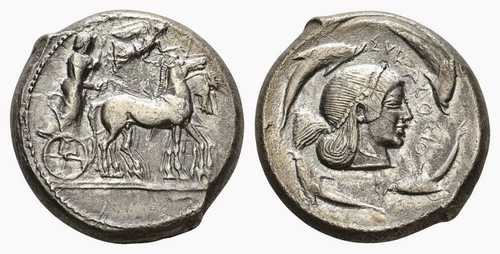
Syracuse Tetradrachm
c. 5th-4th century BC (Classical period)
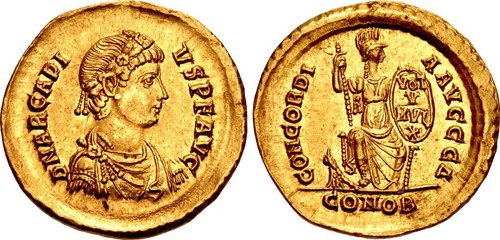
Solidus of Arcadius
AD 395-402
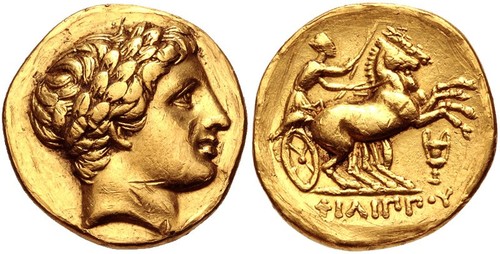
Philip III Gold Stater
323-317 BC
Siliqua of Gratian
AD 367-383
Sestertius of Maximinus Thrax
235-238 AD
Solidus of Valentinian III
AD 425-455
Seleucus I Nicator Tetradrachm
Late 4th-3rd century BC
Nummus of Magnentius
AD 350-353
Follis of Galerius
AD 308-310