
How to Identify the Sestertius of Marcus Aurelius
A collector's guide to recognizing a Marcus Aurelius bronze sestertius by its size, laureate portrait, Latin legend, S C mark, and reverse type.
Read the full Sestertius of Marcus Aurelius encyclopedia entry →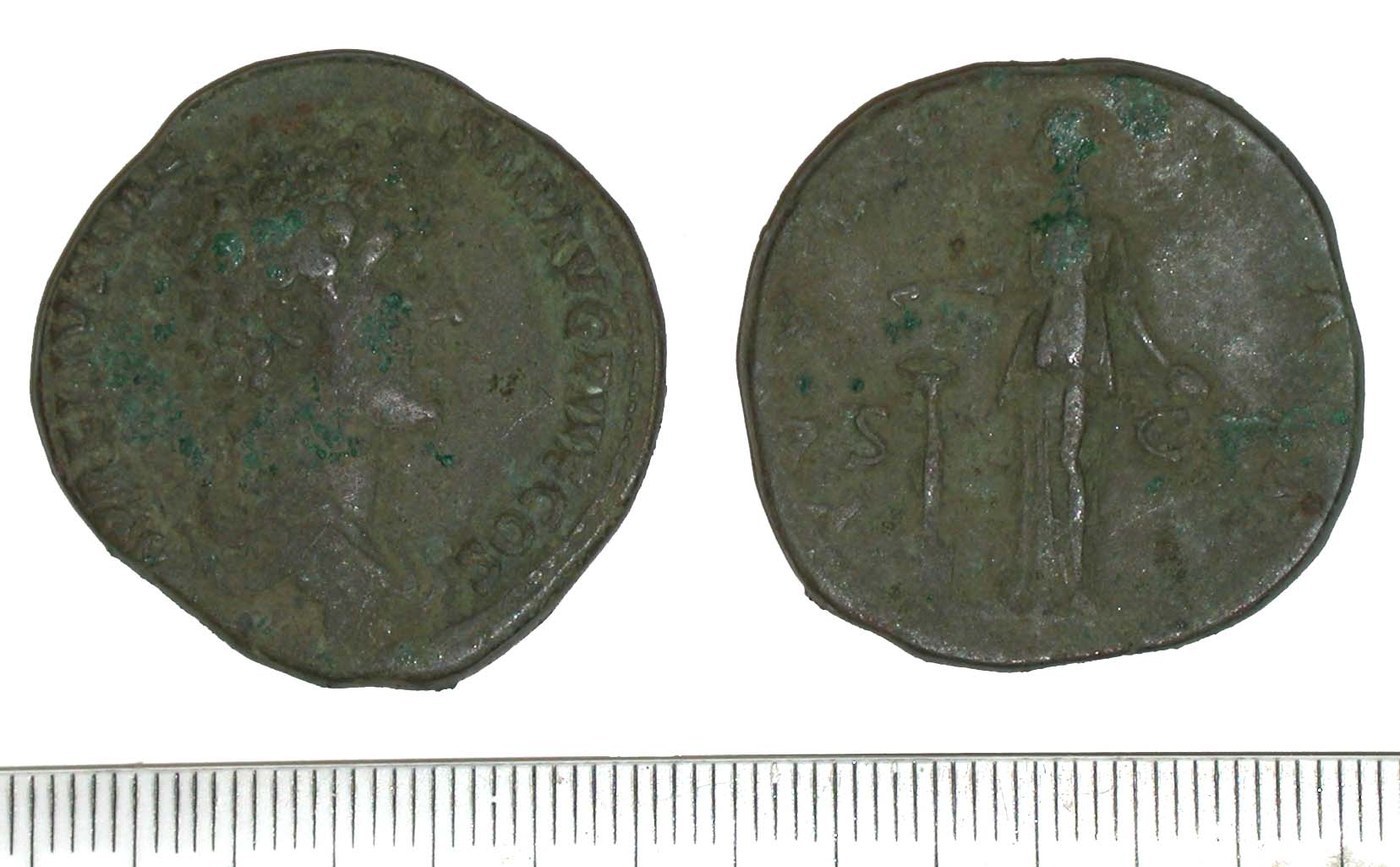
Begin with size and metal, the fastest filter. A genuine sestertius is a large, heavy bronze: roughly 30–34 mm across and often 20–27 grams, clearly bigger and thicker than a silver denarius or the smaller bronze dupondius and as. If your coin is small, silvery, or lightweight, it is a different denomination. The brown, green, or reddish patina typical of buried bronze is expected on an authentic piece.
Study the obverse portrait and legend. Marcus Aurelius is shown as a mature man with a full curly beard, his head laureate (wearing a laurel wreath) and facing right. The Latin legend around the rim carries his name and titles; look for elements like M ANTONINVS AVG or AVREL ANTONINVS along with honorific titles and tribunician or consular numbers. These titles are the key to distinguishing him from other bearded Antonine emperors such as Antoninus Pius or Lucius Verus, whose portraits can look superficially similar.
Turn to the reverse for the type and the S C mark. Most bronze reverses show a standing or seated figure, a deity, or a commemorative scene with its own Latin legend, and the letters S C usually appear in the field, confirming a senatorial bronze issue. Reading the reverse legend and matching the design to a reference such as Roman Imperial Coinage (RIC) lets you pin down the exact type, date, and any historical event it celebrates.
Be alert to look-alikes and reproductions. Coins of Antoninus Pius, Lucius Verus, and Commodus share the format and can be confused at a glance, so always read the legend rather than judging by portrait alone. Cast copies, tooled surfaces (where detail has been re-engraved), and modern fakes exist; signs of concern include seams, unnaturally uniform or grainy surfaces, a soapy cast texture, and detail that looks re-cut. When value or authenticity matters, seek attribution and an opinion from a reputable ancient-coin dealer or grading service.
Frequently asked questions
How do I distinguish a sestertius from a smaller Roman bronze?
Size and weight are decisive. A sestertius is a large bronze, generally 30–34 mm and around 20–27 grams. The dupondius and as are noticeably smaller and lighter, so a big, heavy bronze points to a sestertius.
How can I be sure it is Marcus Aurelius and not another emperor?
Read the obverse legend rather than relying on the bearded portrait, which resembles other Antonine rulers. Names and titles such as M ANTONINVS AVG identify Marcus Aurelius; matching them to a catalog confirms it.
What should make me suspect a fake or altered coin?
Watch for casting seams, a soapy or grainy uniform surface, detail that looks re-engraved (tooled), or a patina that seems painted on. Genuine struck bronzes show crisp, naturally worn detail. For significant coins, get an expert opinion.
Do I need to identify the exact reverse type?
Not to know it is a Marcus Aurelius sestertius, but the reverse legend and design determine the precise RIC type, date, and historical reference, which affect rarity and value. Cataloging the reverse is worth the effort for attribution.