
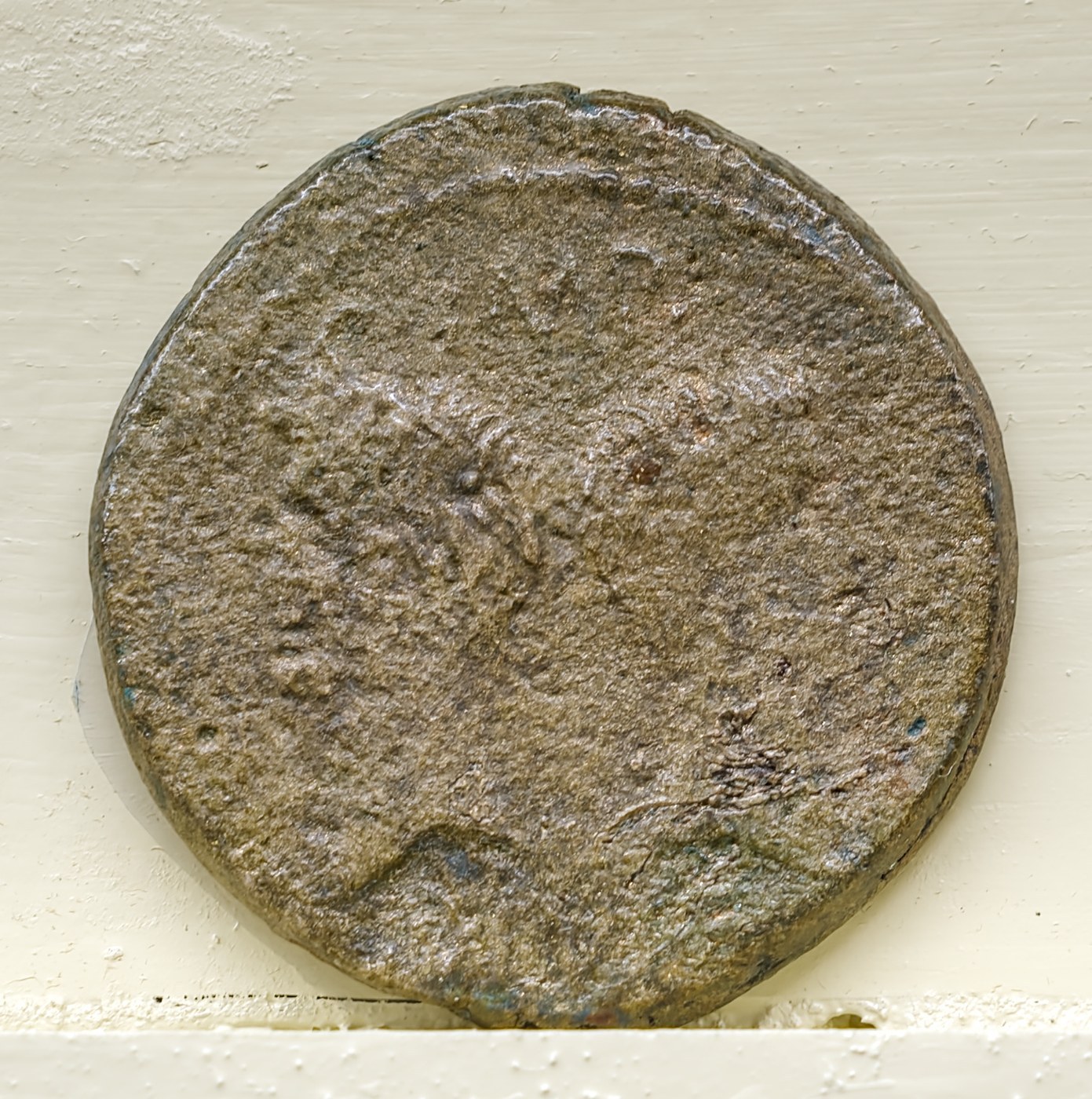
Nemausus As/Dupondius (Crocodile Type)
The famous crocodile of Nimes: a large Roman provincial bronze with paired heads of Agrippa and Augustus and a crocodile chained to a palm.
- Country
- Nemausus (Roman Gaul)
- Denomination
- As or Dupondius
- Metal
- Bronze
Got a coin like this?
Identify any coin from a photo, free.
Overview
This is one of the most recognizable bronze coins of the early Roman world, struck at the colony of Nemausus, modern Nimes, in Roman Gaul. It is a large module bronze usually classed as an as or dupondius, and it is universally known by its reverse image of a crocodile chained to a palm. The example shown here belongs to the later series conventionally dated to roughly 10 BCE through 14 CE.
The portrait side carries two imperial heads set back to back: Agrippa on the left, typically wearing a combined naval and laurel crown, and Augustus on the right. On this coin the reverse presents the crocodile theme with the abbreviated colony legend COL NEM for Colonia Nemausus. Together the two designs make the type instantly identifiable even when worn, and it remains a favorite among collectors of Roman provincial and early imperial bronze.
History & Background
Nemausus was a Roman colony in southern Gaul settled in part with veterans of the campaigns that ended the wars of the late Republic. The crocodile chained to a palm is generally read as a triumphal symbol for the conquest of Egypt following the defeat of Mark Antony and Cleopatra, with the palm and wreath standing for victory. The pairing of Augustus with his loyal general and son in law Marcus Agrippa reflected the two men most associated with that victory.
The type was produced in several successive series over a span of decades rather than as a single issue. Cataloguers commonly divide the coinage into phases distinguished by portrait style, legend arrangement, and small changes to the reverse. The series represented here, placed around 10 BCE to 14 CE, falls late in that sequence, into the closing years of the reign of Augustus.
These coins circulated widely and heavily, and were often deliberately cut in half in antiquity to serve as smaller change, so halved examples survive in quantity. Because production ran across multiple issues over many years, exact mintage figures are not recorded, and the history is reconstructed from surviving coins, hoards, and die studies rather than from precise mint records.
How to Identify
Start with size and fabric. This is a large, heavy bronze, considerably bigger and thicker than a typical small provincial coin, struck on a broad flan and often with an olive to brown or green patina. That heft alone separates it from most ordinary base metal issues of the period.
The defining features are the two designs. One side shows two heads placed back to back, Agrippa on the left and Augustus on the right, a very unusual double portrait arrangement that is diagnostic of this mint. The other side shows a crocodile chained to a palm shoot, usually with a wreath above and the letters COL NEM in the field, standing for Colonia Nemausus. Look also for the letters P P flanking the palm on some issues.
Because the coin was frequently halved in antiquity, do not be surprised by examples that preserve only one head or half the crocodile; these cut pieces are genuine circulating fractions, not damage. As with all ancient coins, expect hand struck irregularity in shape and centering, and use the combination of large bronze module, the back to back heads, and the COL NEM crocodile reverse to confirm the type.
Value & Collectibility
The Nemausus crocodile bronze is a popular and relatively available type, so prices span a wide range according to series, size, strike, and condition. Well worn or halved examples with a legible crocodile and identifiable heads commonly trade in the low tens to low hundreds of dollars, making it an accessible entry point into Roman provincial bronze.
Sharper coins with strong portraits, a crisp crocodile and palm, clear COL NEM legend, complete flans, and attractive even patina command more, and the finest full sized examples of the better series can reach several hundred dollars or above. Earlier or scarcer phases of the coinage, and coins with exceptional surfaces, sit at the higher end.
As always with ancient bronze, condition, eye appeal, and honest surfaces drive value, while corrosion, tooling, smoothing, or heavy cleaning reduce it. Ancient coins are widely forged, so provenance, a credible attribution, or third party certification adds confidence and can meaningfully affect price.
Frequently asked questions
Why is there a crocodile on this Roman coin?
The crocodile chained to a palm is a victory symbol for the Roman conquest of Egypt after the defeat of Antony and Cleopatra. Nemausus was settled with veterans tied to those campaigns, and the palm and wreath represent triumph.
Who are the two heads on the coin?
They are Agrippa on the left, often wearing a combined naval and laurel crown, and Augustus on the right. The two are shown back to back, an unusual double portrait that helps identify the Nemausus mint.
Is it an as or a dupondius?
Cataloguers classify it as a large provincial bronze that has been called both an as and a dupondius. The exact denomination is debated, which is why the type is often listed with both labels.
Why are so many of these coins cut in half?
In antiquity the large bronze was frequently cut in two to make smaller change. Halved examples are genuine circulating fractions rather than damaged coins, and they survive in large numbers.
What does COL NEM mean?
COL NEM abbreviates Colonia Nemausus, the Roman colony at modern Nimes in southern Gaul where the coin was struck. The letters appear in the field around the crocodile and palm on the reverse.
Nemausus As/Dupondius (Crocodile Type) guides
In-depth guides for identifying, valuing, and collecting Nemausus As/Dupondius (Crocodile Type).
Other coins you may enjoy
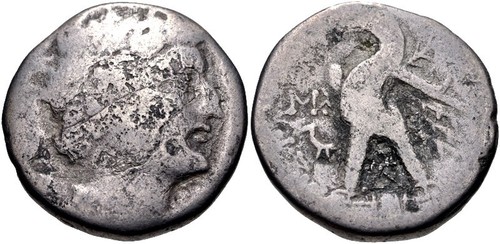
Tetradrachm of Ptolemy XII
80-51 BC
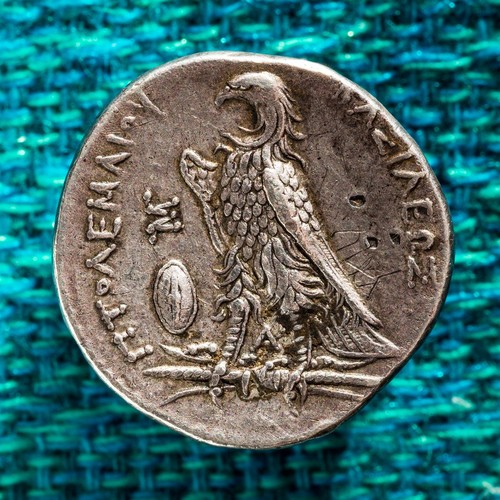
Tetradrachm of Ptolemy I
305-283 BC
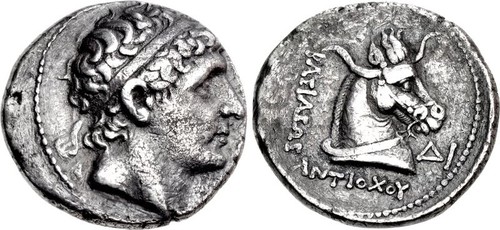
Tetradrachm of Antiochos I Soter
281-261 BC
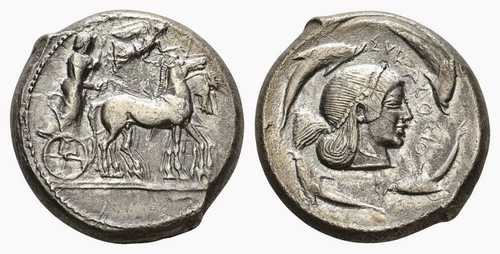
Syracuse Tetradrachm
c. 5th-4th century BC (Classical period)
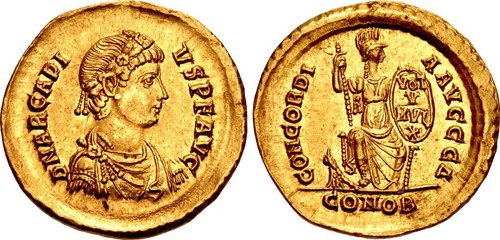
Solidus of Arcadius
AD 395-402
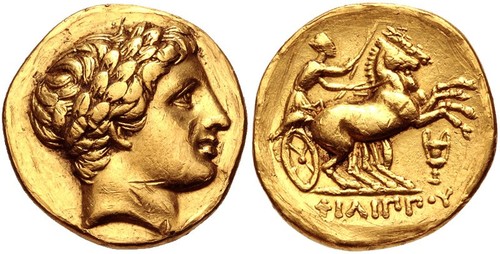
Philip III Gold Stater
323-317 BC
Siliqua of Gratian
AD 367-383
Sestertius of Maximinus Thrax
235-238 AD
Solidus of Valentinian III
AD 425-455
Seleucus I Nicator Tetradrachm
Late 4th-3rd century BC
Nummus of Magnentius
AD 350-353
Follis of Galerius
AD 308-310