
How to Identify the Nemausus As/Dupondius (Crocodile Type)
A collector's guide to spotting the Nemausus crocodile bronze by its paired imperial heads, chained crocodile, COL NEM legend, and large module.
Read the full Nemausus As/Dupondius (Crocodile Type) encyclopedia entry →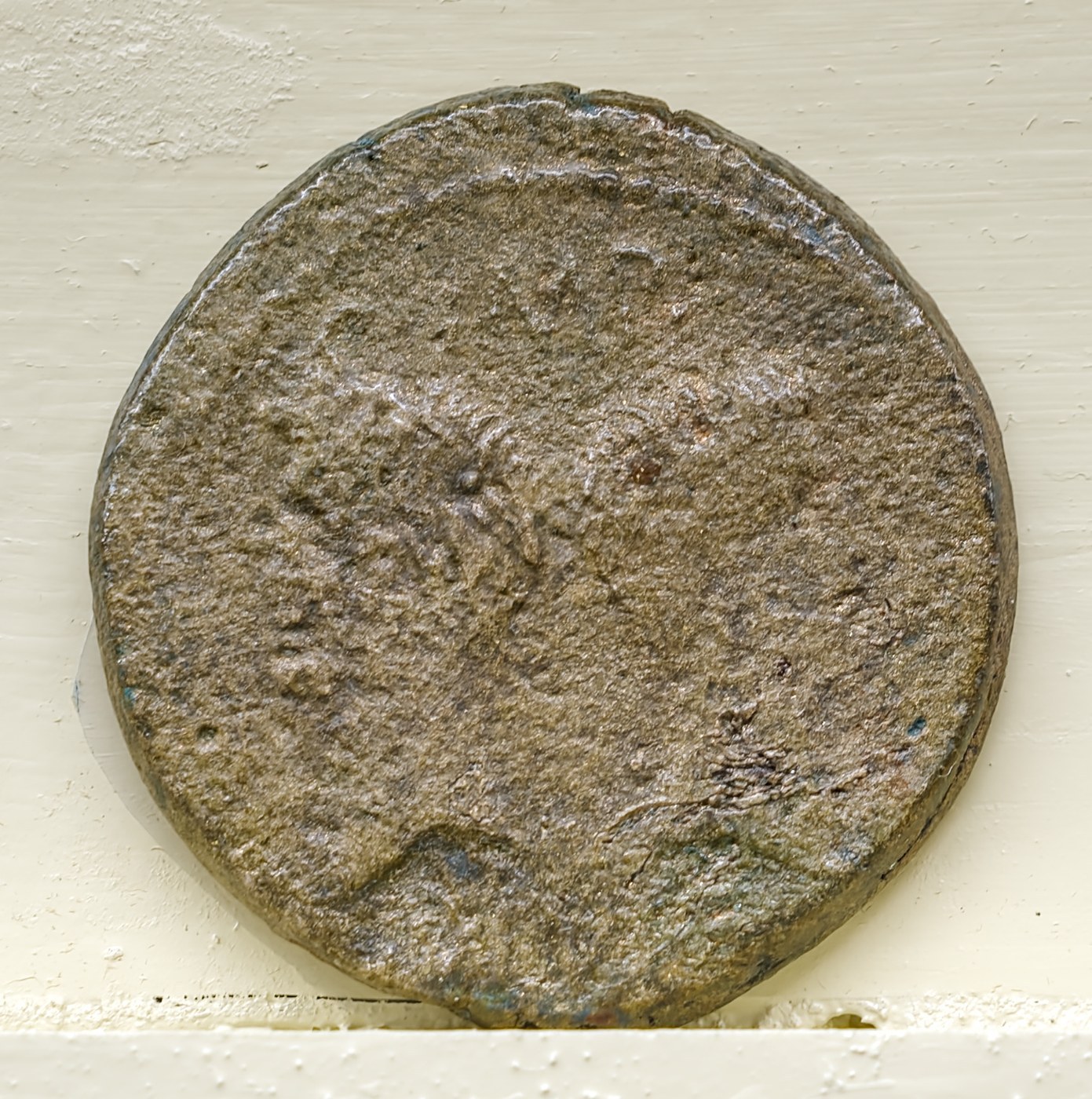
Begin with the module and metal. This is a large, thick bronze struck on a broad flan, noticeably heavier than everyday small change of the period, usually with a brown, olive, or green patina. If a Roman era bronze feels big and substantial in hand, it is worth checking for the two hallmark designs described below.
Look for the double portrait. One side shows two heads set back to back, Agrippa on the left and Augustus on the right. Agrippa often wears a combined naval and laurel crown, while the head on the right is the emperor Augustus. This back to back pairing of two individuals on a single side is uncommon in Roman coinage and is a strong pointer to the Nemausus mint even before you read any letters.
Confirm with the reverse. The signature image is a crocodile chained to an upright palm shoot, frequently with a wreath or ribbons above and the abbreviation COL NEM, for Colonia Nemausus, in the field. Some issues add the letters P P beside the palm. Note the direction the crocodile faces and the arrangement of the legend, since these details separate the successive series, including the later group dated around 10 BCE to 14 CE.
Account for cut and worn examples. Because these coins were routinely halved in antiquity to make change, you will encounter pieces that show only one head or half of the crocodile; these are authentic fractions, not broken coins, so identify them from whatever design survives. Expect hand struck irregularity in shape and centering as well.
Finally, weigh authentication. The crocodile type has been widely copied, from period imitations to modern tourist souvenirs and outright forgeries sold near Nimes and beyond. Be cautious of coins that look cast rather than struck, that have soft mushy detail, seams, or an unnaturally smooth or bright surface. Favor examples with credible provenance, a dealer record, or third party certification, and compare style and fabric against published references before committing.
Frequently asked questions
What is the fastest way to recognize this coin?
Two clues together: a large bronze with two heads back to back on one side, Agrippa left and Augustus right, and a crocodile chained to a palm with COL NEM on the other. That combination is unique to the Nemausus mint.
How do I tell the different series apart?
Compare portrait style, the arrangement and content of the legends, the direction the crocodile faces, and details like a wreath above or P P beside the palm. These small differences distinguish the successive issues, including the later 10 BCE to 14 CE group.
Should I worry that my coin is only half a coin?
No. These bronzes were commonly cut in half in antiquity to serve as smaller denominations, so a halved piece is a genuine circulating fraction. Identify it from the surviving head or the surviving portion of the crocodile.
How can I avoid a fake or a tourist copy?
Watch for cast surfaces, seams, soft detail, and unnaturally smooth or shiny metal, which suggest a modern reproduction rather than a struck ancient coin. Prefer coins with provenance or certification and check style against trusted references.