
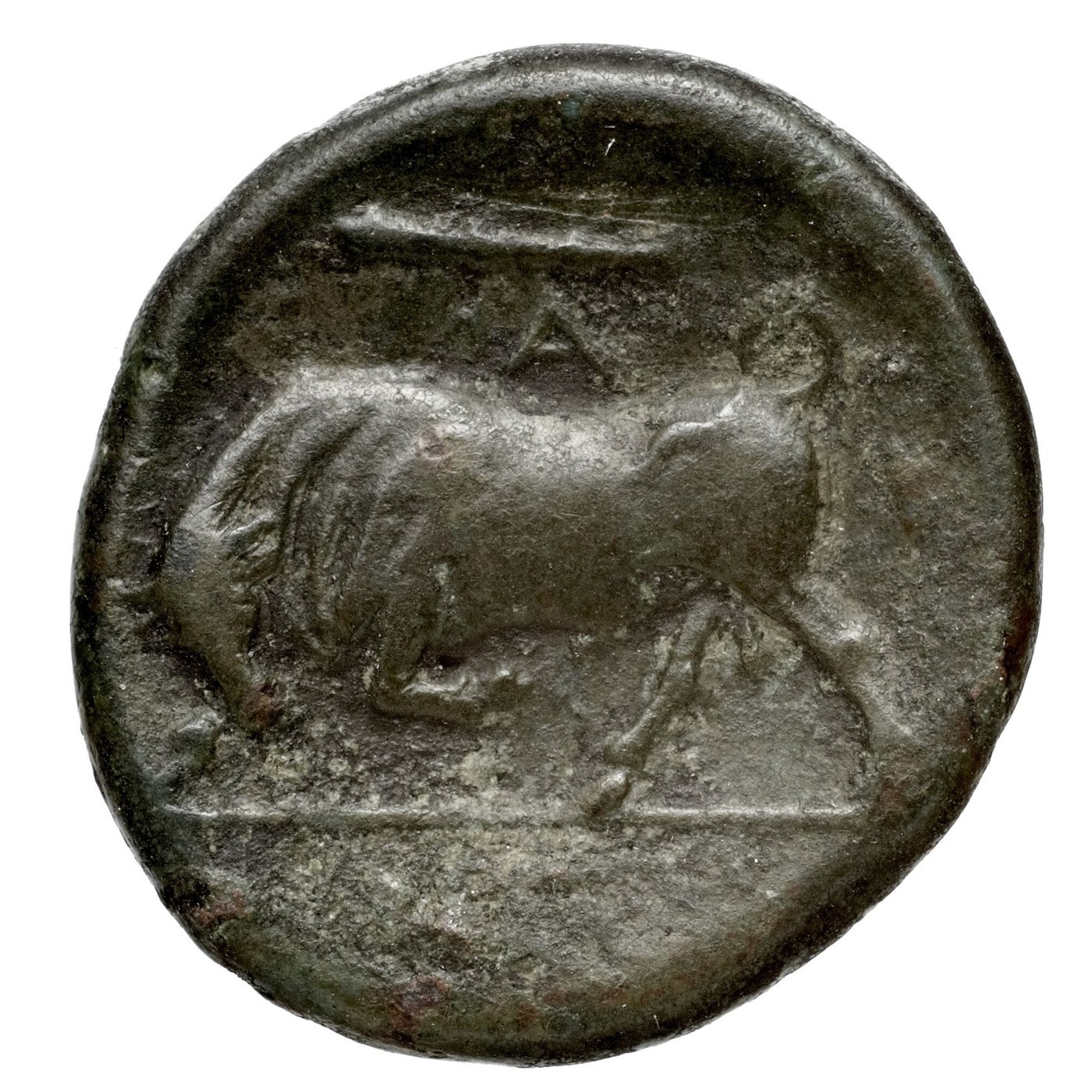
Syracuse Bronze Coin of Hiero II
Ancient Greek bronze of Syracuse struck under King Hieron II, c. 275-215 BC, bearing a Hellenistic profile head; a very common Sicilian city bronze.
- Country
- Ancient Sicily
- Denomination
- Bronze
- Metal
- Bronze
Got a coin like this?
Identify any coin from a photo, free.
Overview
This is an ancient Greek bronze coin from the Sicilian city of Syracuse, struck during the long reign of King Hieron II (Hiero II) in roughly the third century BC. The example shown displays a profile head in Hellenistic style on the obverse, while the reverse is obscured by hard green and brown patina, as is common on excavated bronzes of this period.
Hieron II's mint produced bronze coinage on a large scale, and these pieces are among the most frequently encountered ancient coins of Sicily today. Depending on the specific type, the profile portrait can be a deity such as Poseidon or Persephone (Kore), or the diademed head of the king himself, paired on the reverse with designs such as an ornamented trident between dolphins, a charging bull, or a horseman.
Because the reverse here is masked by patina, the coin is best described broadly as a Syracusan royal bronze of Hieron II, identified by its Hellenistic profile obverse, its bronze fabric, and its size and style consistent with the abundant civic bronze of that reign.
History & Background
Hieron II ruled Syracuse from about 275 or 270 BC until his death around 215 BC, one of the longest and most stable reigns in the city's history. Rising to power as a military commander in the turbulent years after Agathokles, he secured his position, took the title of king (basileus), and steered Syracuse through the era of the First Punic War by allying with Rome after 263 BC.
His decades of peace and prosperity supported a large output of coinage, especially bronze for everyday transactions. These bronzes circulated widely in eastern Sicily and are closely associated with the cultural flourishing of his court, which famously included the mathematician and engineer Archimedes.
After Hieron's death the kingdom passed briefly to his grandson Hieronymos, and Syracuse soon abandoned the Roman alliance, leading to the celebrated Roman siege and the fall of the city in 212 BC. The abundant bronze coinage of Hieron II thus stands as a memorial to the last great independent age of Greek Syracuse before it came under Roman control.
How to Identify
The obverse shows a profile head in fine Hellenistic relief. Across Hieron II's bronze issues this head can be Poseidon (god of the sea, sometimes wreathed), Persephone or Kore (a female head with grain wreath), or the diademed portrait of the king himself. Study the hairstyle, wreath, and any headband to narrow the type, but note that surface wear and patina often blur these clues.
The reverse, where visible, typically carries a strong single motif with a Greek legend such as ΙΕΡΩΝΟΣ ("of Hieron"). The most iconic type pairs a head of Poseidon with an ornamented trident flanked by dolphins; other types show a charging or butting bull, or a horseman with a couched spear. On the coin shown this side is covered by patina and cannot be read directly.
In hand these are bronze (AE) coins, generally in the range of about 15 to 28 mm across and roughly 4 to 20 grams depending on the denomination, the larger trident bronzes being the heaviest. They are struck by hand on somewhat irregular flans and usually carry an earthen green or brown patina. The combination of a Hellenistic profile head, bronze fabric, and Syracusan style in this size range is the core identifier.
Value & Collectibility
Bronze coins of Hieron II are among the most affordable and widely available ancient Greek coins, reflecting their very large original mintage. Worn or heavily patinated examples like typical excavated pieces often trade from roughly ten to a few tens of dollars, and even attractive coins usually remain modestly priced compared with silver of the same city.
Value rises with sharp detail, a well-centered strike, a fully legible reverse, and an appealing smooth patina. The large Poseidon-and-trident bronzes in high grade, or pieces with the king's own portrait clearly struck, command stronger premiums, and coins with a clean surface and complete legend are favored over dark, encrusted, or off-center examples.
These figures are general context rather than appraisals. A patina-obscured coin like the one shown sits at the lower, common end unless cleaning and conservation reveal a strong type; any specific price depends on grade, type, surface, and eye appeal.
Frequently asked questions
Who was Hieron II?
Hieron II was king of Syracuse in Sicily from about 275-270 BC until roughly 215 BC. His long, prosperous reign allied Syracuse with Rome during the First Punic War, and his court supported the famous inventor Archimedes.
Why is the reverse hard to see?
The coin carries a thick green and brown patina, the natural corrosion layer that forms on buried bronze over two thousand years. It preserves the metal but can hide the reverse design until the coin is carefully conserved.
Whose head is on the front?
On Hieron II's bronzes the profile head may be a deity such as Poseidon or Persephone (Kore), or the diademed portrait of the king himself, depending on the type. Wear and patina often make it hard to be certain from the image alone.
Are these coins rare?
No. Hieron II struck bronze on a very large scale, so these are among the most common ancient Greek coins available today and are generally inexpensive, especially in worn or patinated condition.
What is the most famous type?
The best-known type pairs a head of Poseidon with an ornamented trident flanked by dolphins and the Greek legend of Hieron. Other types show a charging bull or a horseman with a couched spear.
Syracuse Bronze Coin of Hiero II guides
In-depth guides for identifying, valuing, and collecting Syracuse Bronze Coin of Hiero II.
Other coins you may enjoy
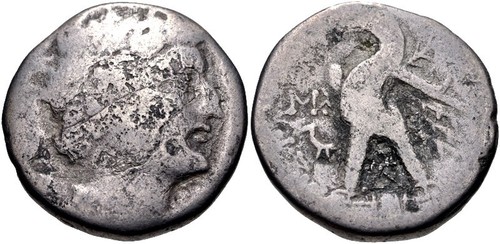
Tetradrachm of Ptolemy XII
80-51 BC
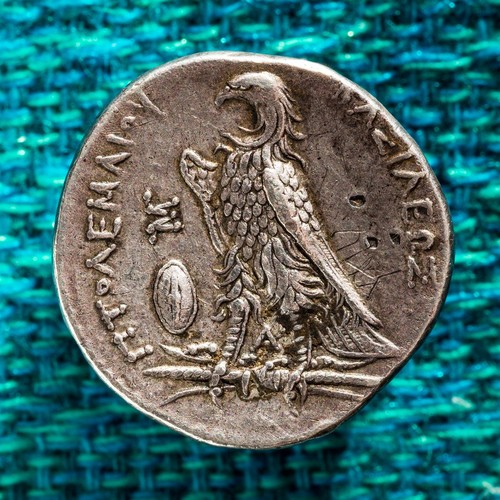
Tetradrachm of Ptolemy I
305-283 BC
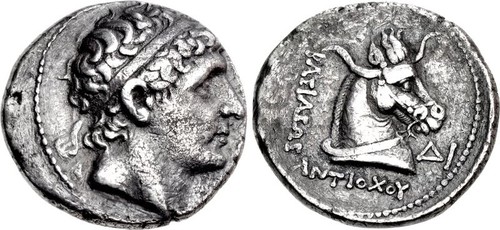
Tetradrachm of Antiochos I Soter
281-261 BC
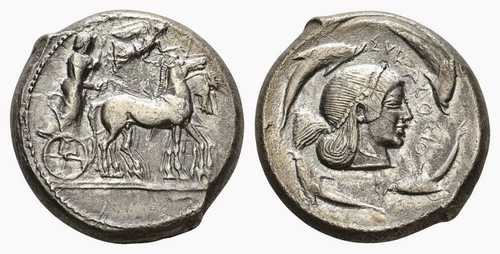
Syracuse Tetradrachm
c. 5th-4th century BC (Classical period)
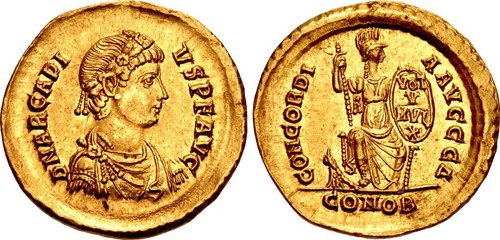
Solidus of Arcadius
AD 395-402
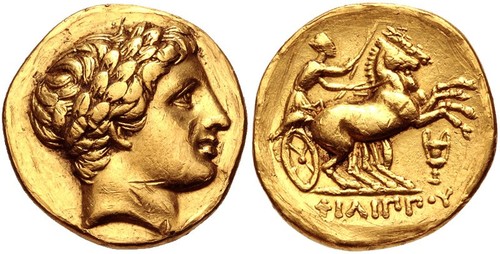
Philip III Gold Stater
323-317 BC
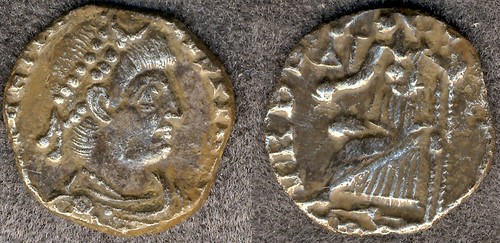
Siliqua of Gratian
AD 367-383
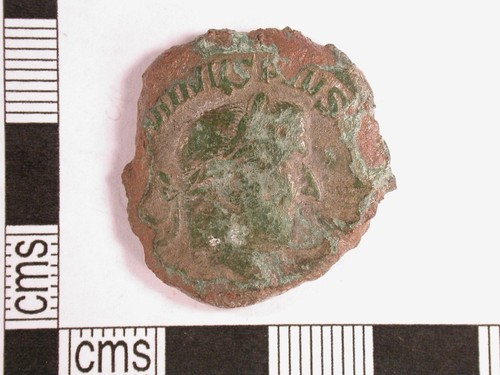
Sestertius of Maximinus Thrax
235-238 AD
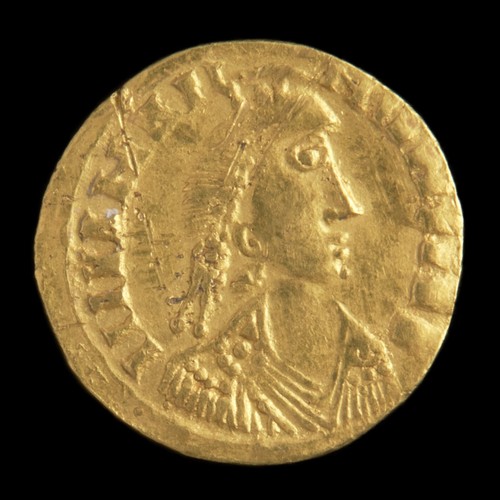
Solidus of Valentinian III
AD 425-455
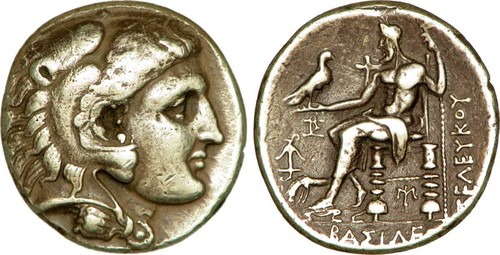
Seleucus I Nicator Tetradrachm
Late 4th-3rd century BC
Nummus of Magnentius
AD 350-353
Follis of Galerius
AD 308-310