
How to Identify the Syracuse Bronze Coin of Hiero II
A collector's guide to recognizing Hieron II Syracusan bronze by its Hellenistic profile head, reverse types, bronze fabric, size, and patina.
Read the full Syracuse Bronze Coin of Hiero II encyclopedia entry →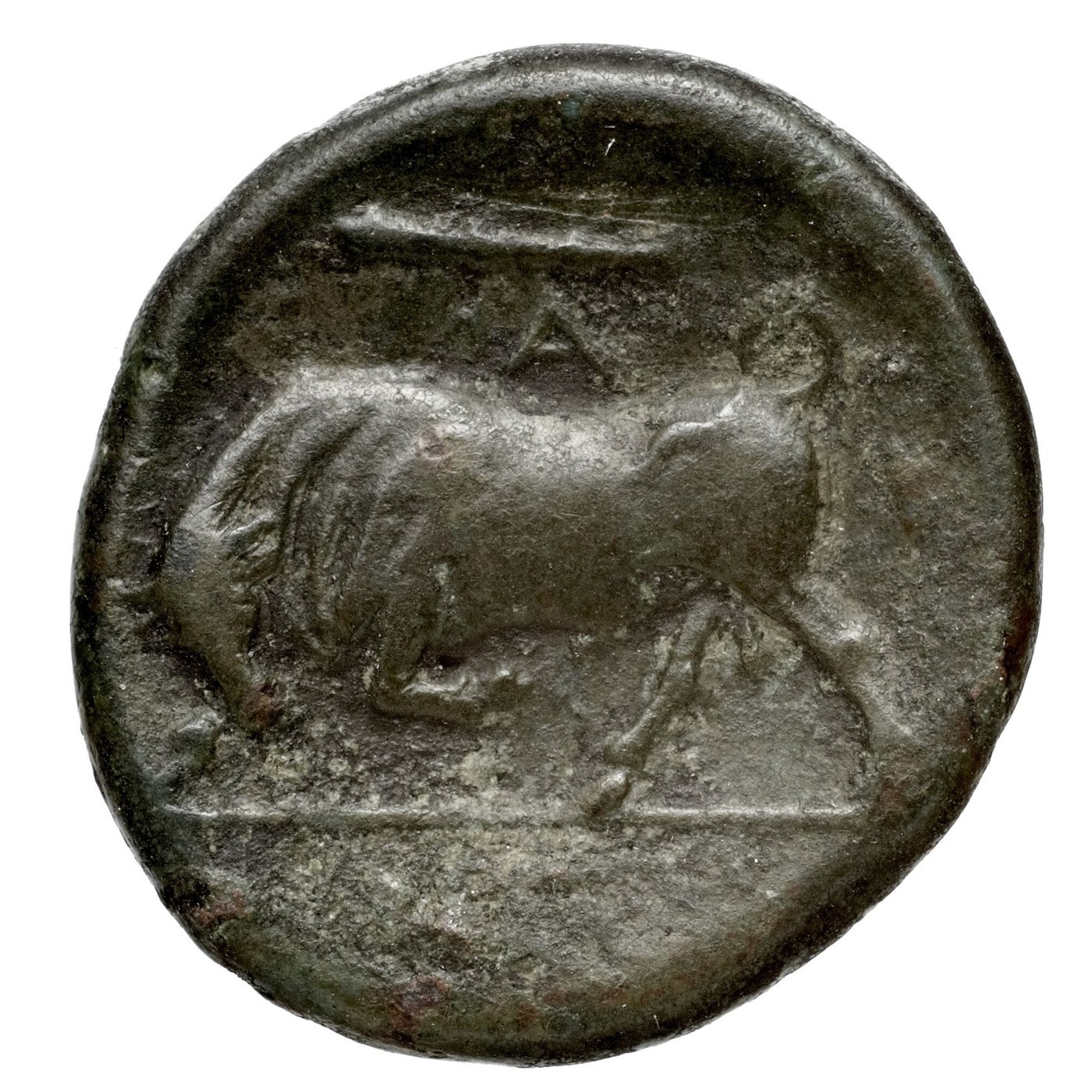
Begin with metal and size. This is a bronze (AE) coin, not silver, generally about 15 to 28 mm across and roughly 4 to 20 grams. Check for a warm brown or green metallic body under any patina; a bright white metal or a much larger, thinner flan points to a different coinage. The larger, heavier pieces in this range are usually the big Poseidon-and-trident bronzes, while smaller, lighter flans are other denominations.
Read the obverse head. Look for a profile in confident Hellenistic relief and try to distinguish the type: Poseidon is a mature male head sometimes with a wreath or taenia, Persephone or Kore is a female head crowned with grain, and the king's own portrait appears diademed. Note the hairstyle, any wreath or headband, and whether the head is male or female. Because wear and encrustation blur these cues, describe the head cautiously rather than forcing a single attribution.
Work on the reverse, even when patina hides it. The classic Hieron II reverses are an ornamented trident between two dolphins, a charging or butting bull, or a horseman with a couched spear, usually accompanied by the Greek legend ΙΕΡΩΝΟΣ and sometimes a monogram or symbol in the field. If the surface is masked, hold the coin at a raking light angle to catch relief; gentle professional conservation, not harsh cleaning, is the safe way to recover a covered type.
Use fabric as a check. Genuine strikes are hand-made and slightly irregular, with an oval or off-round flan, uneven edges, and centering that can crop the design at the rim. An earthen green or brown patina bonded to the surface is normal and reassuring, whereas a coin that looks too regular, too smooth, or artificially colored deserves scrutiny.
Finally, separate look-alikes and watch for fakes. Syracuse struck bronze under many rulers and the city produced other Poseidon, Persephone, and Athena types, so a diademed royal portrait or the specific trident-and-dolphins reverse is what ties a coin to Hieron II rather than a generic Sicilian bronze. Cast counterfeits betray themselves with a mold seam, a soft bubbly surface, and a dull non-metallic tone, while tooled coins show scratchy modern detail cut into worn relief. For an uncertain or valuable piece, rely on the reverse type and legend and, where needed, specialist attribution.
Frequently asked questions
How do I know it is Hieron II and not another Syracusan ruler?
The clearest links are the diademed royal portrait of Hieron and the reverse types with his Greek legend, such as the trident between dolphins, a charging bull, or a horseman. A generic deity head alone is not enough; the reverse type and legend settle the attribution.
Should I clean off the patina to see the reverse?
Avoid harsh home cleaning, which can permanently scar ancient bronze. If the reverse is important, use gentle professional conservation. A stable green or brown patina is normal and often desirable, so light-handed care is best.
How can I tell a bronze of Hieron II from a silver coin of the same style?
Judge the metal and weight. These are bronze coins with a brown or green body and earthen patina, not the grey or toned surface of silver. Weight and a magnet-free bronze feel, together with size, confirm the bronze denomination.
What are the warning signs of a fake?
A seam around the edge, a soft or bubbly surface, and a dull non-metallic color suggest a cast copy, while unnaturally sharp, scratchy detail on otherwise worn relief suggests tooling. For questionable pieces, seek specialist attribution.