
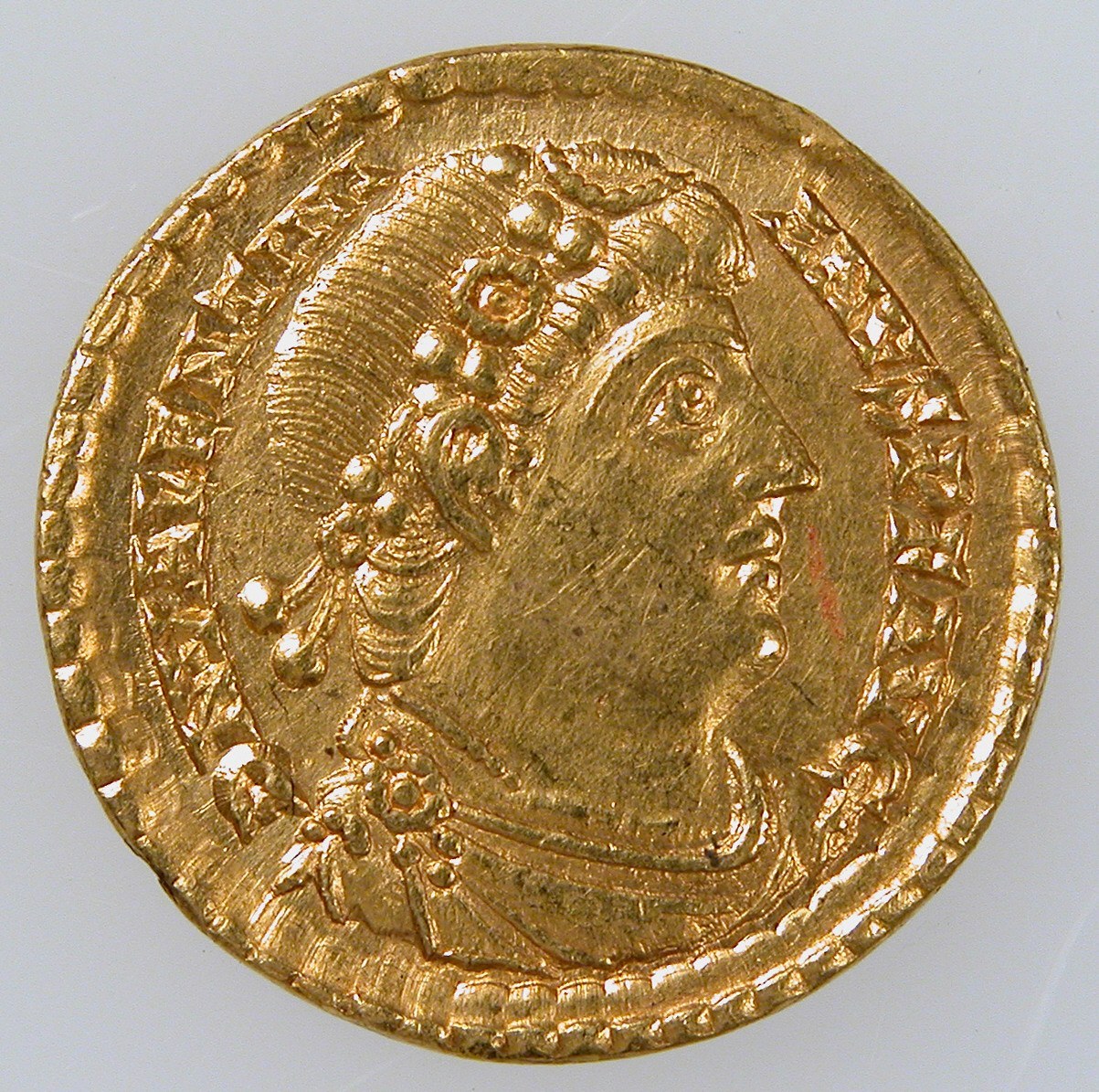
Solidus of Valentinian I
The gold solidus of Valentinian I (AD 364-375), a pure-gold coin bearing his pearl-diademed profile that anchored the late Roman monetary system.
- Country
- Roman Empire
- Denomination
- Solidus
- Metal
- Gold
Got a coin like this?
Identify any coin from a photo, free.
Overview
The solidus is the standard gold coin of the late Roman Empire, and this example was struck in the name of Valentinian I, who ruled the western half of the empire from AD 364 to 375. The observed coin shows the emperor's diademed profile facing right, his hair bound by a pearl-decorated diadem, the hallmark obverse portrait of a fourth-century solidus.
Introduced by Constantine the Great earlier in the century, the solidus was struck at a standard of about 4.5 grams of nearly pure gold, roughly 1/72 of a Roman pound. It replaced the older, less stable gold coinage and became the backbone of imperial finance, taxation, and long-distance trade for centuries.
As a coin of Valentinian I, this solidus belongs to a period when the empire was formally divided between Valentinian in the West and his brother Valens in the East. The reverse is not visible in this image, but solidi of this reign typically carry an imperial or victory type with the emperor's titles.
History & Background
Flavius Valentinianus, known as Valentinian I, was proclaimed emperor in AD 364 and soon elevated his brother Valens as co-emperor, taking the western provinces for himself while Valens governed the East. His reign was dominated by frontier warfare along the Rhine and Danube, and the solidus was central to paying the armies and administration that sustained those campaigns.
The solidus he issued was not a new denomination but a continuation of the reformed gold standard established by Constantine I in AD 309-310. Its near-pure gold content and consistent weight gave it exceptional stability, and it circulated as a trusted store of value far beyond the empire's borders.
Struck at mints across the empire, including Antioch, Constantinople, Trier, and Nicomedia, solidi of Valentinian I record the shared rule of the two brothers. Many reverses celebrate joint victory or the security of the state, reflecting the dynastic partnership that defined the era. Valentinian died in AD 375, and his solidi remain a tangible link to the last century of a unified imperial gold coinage.
How to Identify
The obverse is the key to this coin. Look for the diademed profile bust of the emperor facing right, with the hair bound by a diadem set with pearls, the exact feature seen on this piece. The surrounding Latin legend typically reads D N VALENTINIANVS P F AVG (Dominus Noster Valentinianus Pius Felix Augustus), naming the ruler; reading this legend is the surest way to attribute the coin to Valentinian I rather than to his brother Valens or his son Gratian, whose solidi look very similar.
The reverse is not visible in the photographed example, so it cannot be described from this coin. For reference, solidi of Valentinian I commonly carry types such as two seated emperors with a small Victory between them (VICTORIA AVGG) or the standing emperor as restorer of the state (RESTITVTOR REIPVBLICAE), with a mint mark in the exergue and the gold-purity abbreviation CONOB or COMOB.
In hand the coin should be a thin, bright gold disc about 20-21 mm across and close to 4.5 grams. The metal is high-purity gold, warm yellow and non-tarnishing, and the fabric is hand-struck, so slight flan irregularity and off-center legends are normal for the period.
Value & Collectibility
As a pure-gold imperial coin of a well-known emperor, the solidus of Valentinian I is a desirable and valuable piece. Its worth rests on a combination of bullion content, roughly 4.5 grams of near-pure gold, and its numismatic appeal, so even a worn example carries substantial intrinsic value.
Collector prices commonly range from the high hundreds into the low or mid thousands of dollars, with the exact figure driven by the sharpness of the portrait, the reverse type and mint, centering, and overall preservation. Scarcer mints, unusual reverse types, and exceptional eye appeal command the strongest premiums.
The figures here are general context, not an appraisal. Gold coins of this class are also frequently targeted by forgers, so authentication and provenance materially affect what a specific coin will bring at market.
Frequently asked questions
What is a solidus?
The solidus is the standard late Roman gold coin, introduced by Constantine the Great and struck at about 4.5 grams of near-pure gold. It anchored the empire's currency and taxation for centuries and circulated widely as a trusted store of value.
How do I know this solidus is Valentinian I and not another emperor?
Read the obverse legend. A solidus of Valentinian I is inscribed D N VALENTINIANVS P F AVG around the diademed portrait. His brother Valens and son Gratian struck near-identical coins, so the name in the legend is the deciding clue.
What is the pearl diadem on the portrait?
It is a jeweled headband tied at the back, set with rows of pearls, worn by late Roman emperors as a symbol of sovereign rank. On this coin it binds the emperor's hair and is a characteristic feature of fourth-century solidus portraits.
Is a solidus of Valentinian I valuable?
Yes. It is a pure-gold coin with real bullion value plus collector demand, typically ranging from the high hundreds into the low thousands of dollars depending on condition, mint, reverse type, and authenticity.
Solidus of Valentinian I guides
In-depth guides for identifying, valuing, and collecting Solidus of Valentinian I.
Other coins you may enjoy
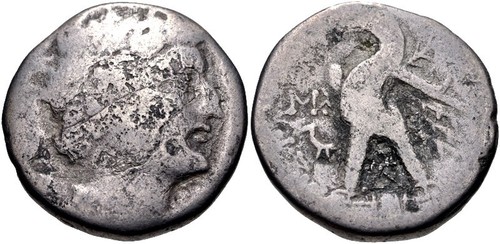
Tetradrachm of Ptolemy XII
80-51 BC
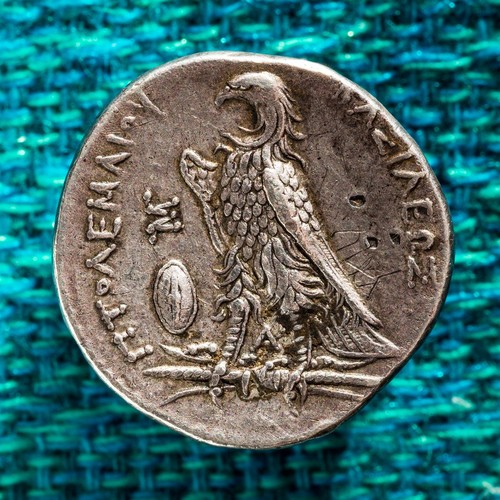
Tetradrachm of Ptolemy I
305-283 BC
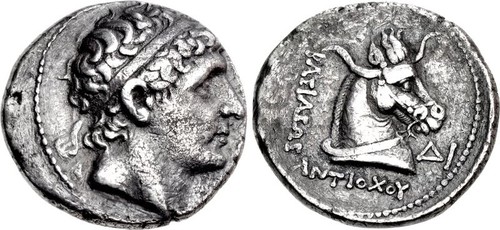
Tetradrachm of Antiochos I Soter
281-261 BC
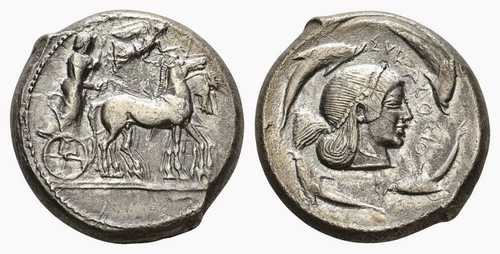
Syracuse Tetradrachm
c. 5th-4th century BC (Classical period)
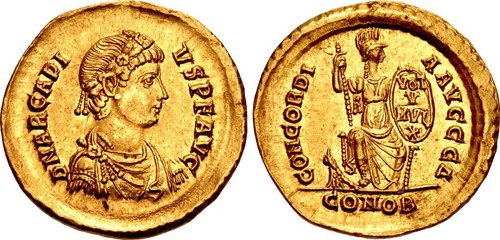
Solidus of Arcadius
AD 395-402
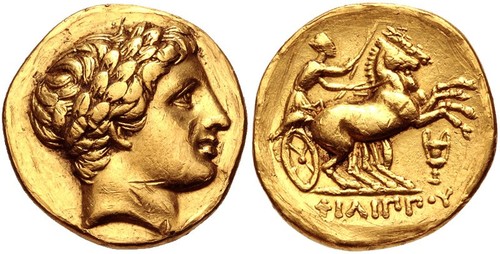
Philip III Gold Stater
323-317 BC
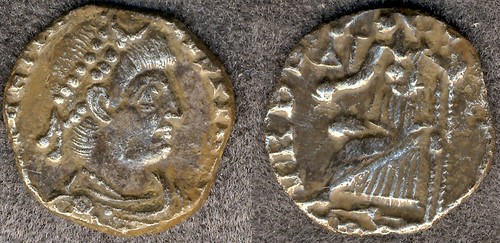
Siliqua of Gratian
AD 367-383
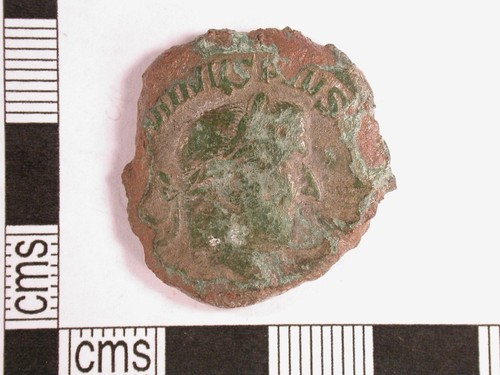
Sestertius of Maximinus Thrax
235-238 AD
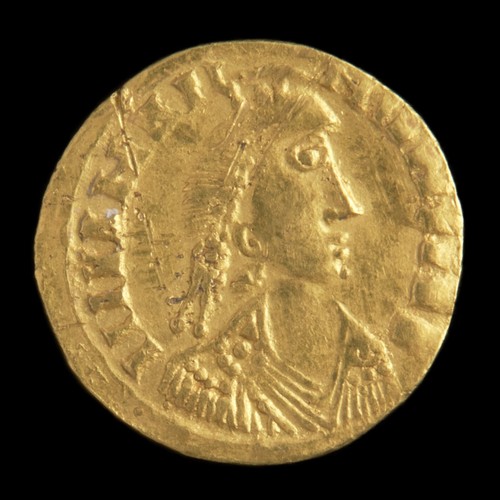
Solidus of Valentinian III
AD 425-455
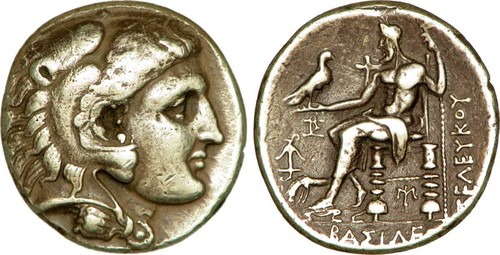
Seleucus I Nicator Tetradrachm
Late 4th-3rd century BC
Nummus of Magnentius
AD 350-353
Follis of Galerius
AD 308-310