
How to Identify the Solidus of Valentinian I
A collector's guide to the pearl-diademed portrait, gold fabric, mint marks, and near-identical look-alikes of Valentinian I's solidus.
Read the full Solidus of Valentinian I encyclopedia entry →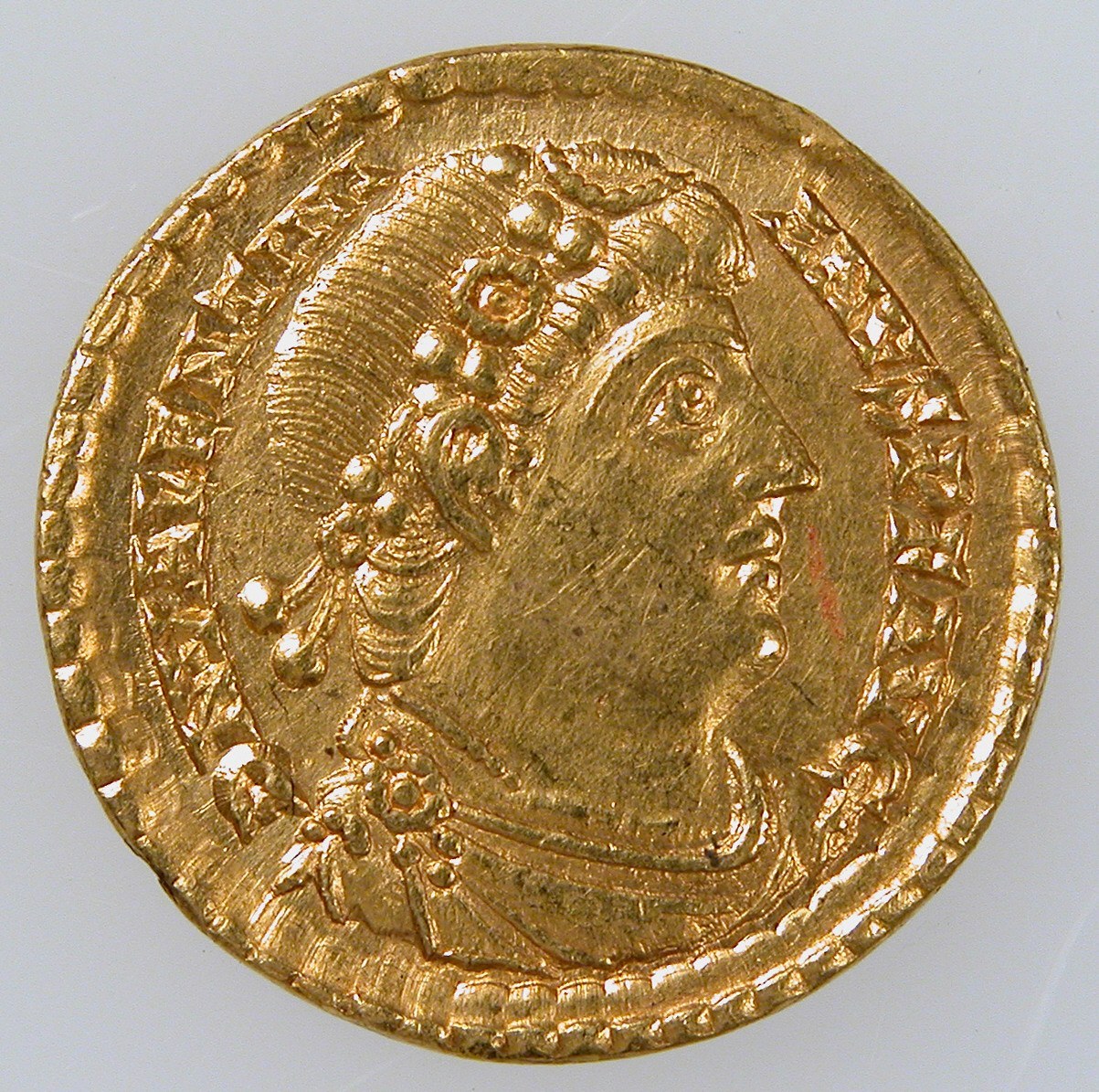
Begin with the obverse portrait and legend, because that is where the coin is identified. A solidus of Valentinian I shows a diademed bust facing right, the hair bound by a diadem set with pearls, usually draped and cuirassed at the shoulder. Around it runs the legend D N VALENTINIANVS P F AVG. Reading that name is essential: Valentinian I, his co-emperor brother Valens, and his son Gratian all struck solidi with nearly identical portraits, so the crown and profile alone will not tell them apart. Only the spelled-out name in the obverse legend confirms the ruler.
Check size, weight, and metal next. A genuine solidus is a thin, bright gold disc roughly 20-21 mm across and close to 4.5 grams. The gold is of high purity, so it should be a warm, even yellow with no tarnish, staining, or coppery patches. A coin that is markedly underweight, off-color, or magnetic is an immediate warning sign. Hand-struck production means slight flan irregularity, uneven edges, and legends that run off the flan are normal and not defects.
Use the reverse and its mint mark for full attribution when it is present. The reverse of this photographed coin is not visible, but on solidi of this reign it typically carries a type such as two seated, nimbate emperors with a small Victory between them (VICTORIA AVGG), or the emperor standing as restorer of the state (RESTITVTOR REIPVBLICAE). In the exergue look for the mint abbreviation, for example ANT for Antioch, CON for Constantinople, or TR for Trier, usually followed by OB or the letters CONOB / COMOB, which signal refined gold. These marks pin the coin to a specific mint and issue.
Be deliberate about look-alikes and authentication. Beyond the Valens and Gratian confusion, later emperors such as Valentinian II struck coins under a similar name, so read the full legend rather than the first syllables. Solidi are heavily forged: watch for casting seams around the edge, a grainy or soft surface, mushy lettering, incorrect weight, or a reverse type and mint mark that do not match a known issue for this reign. Because the intrinsic gold value is high, treat any solidus offered cheaply with suspicion and seek attribution from a specialist in late Roman gold or a coin with documented provenance before buying.
Frequently asked questions
What is the fastest way to attribute this coin to Valentinian I?
Read the obverse legend around the portrait. D N VALENTINIANVS P F AVG identifies Valentinian I. His brother Valens and son Gratian used near-identical portraits, so rely on the name in the legend, not the diademed bust alone.
What should a genuine solidus weigh and measure?
About 4.5 grams and roughly 20-21 mm in diameter, struck in high-purity, warm-yellow gold. Significant deviation in weight, color, or a magnetic response is a strong sign of a forgery or a plated copy.
What do the reverse letters CONOB or COMOB mean?
They combine a mint abbreviation (such as CON for Constantinople) with OB, a mark indicating refined gold. Together with the mint letters in the exergue, they identify where the solidus was struck and confirm it as an official gold issue.
Why are solidi of this emperor often faked?
Because they are pure gold with high intrinsic and collector value, they are a frequent target for cast and struck counterfeits. Check for edge seams, soft or grainy surfaces, wrong weight, and reverse types that do not match known issues, and prefer coins with provenance.