
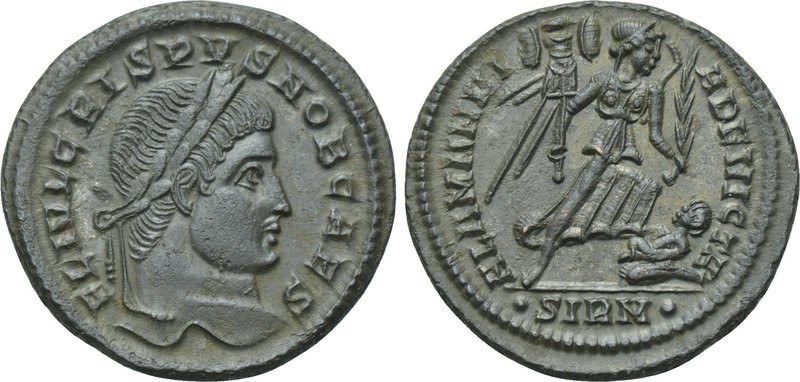
Follis of Crispus
A small bronze follis of Crispus, eldest son of Constantine the Great, with his diademed bust and a winged Victory reverse (317-326 AD).
- Country
- Roman Empire
- Denomination
- Follis
- Metal
- Bronze
Got a coin like this?
Identify any coin from a photo, free.
Overview
The follis of Crispus is a small late-Roman bronze coin struck for Flavius Julius Crispus, the eldest son of Constantine the Great. Crispus held the junior imperial rank of Caesar from AD 317 until his death in 326, and his coinage was produced throughout that period across the empire's imperial mints. By this date the follis had shrunk far from the large silver-washed piece of Diocletian's reform and circulated as a modest bronze, the denomination modern collectors often label an AE3.
The example shown here follows the standard pattern for Crispus. The obverse carries his youthful bust facing right, wearing a wreath or diadem in the heavy Constantinian style, with a Latin legend naming him as Caesar. The reverse shows a winged Victory (the Roman Nike) advancing or standing, holding a palm branch together with a trophy or military standard, a triumphal type that was widely used across the Constantinian family's coinage.
As the son and heir of the reigning emperor, Crispus appears on large quantities of bronze from this era, making his follis one of the more accessible portrait coins of the House of Constantine.
History & Background
Crispus was the eldest son of Constantine the Great, born to Minervina around the turn of the fourth century. In AD 317 Constantine raised him to the rank of Caesar alongside his half-brother Constantine II and his cousin Licinius II, and Crispus went on to win a series of military successes, notably naval and land campaigns that helped secure his father's victory over Licinius in AD 324.
During these years the imperial mints struck an abundant bronze coinage in his name. The follis of this period was a reduced denomination, much smaller and lighter than Diocletian's original reform coin, and it carried a wide range of reverse types celebrating imperial victory, providence, tranquility, and vows for the ruling house. Victory reverses like the one seen here fit the triumphal messaging of a young Caesar credited with battlefield success.
Crispus's career ended abruptly and mysteriously in AD 326, when he was arrested and executed on Constantine's orders, the reasons for which remain debated. He suffered a form of official disgrace, yet his coins had already been issued in great numbers and could not be recalled, which is why his folles survive in quantity today.
How to Identify
Begin with the obverse legend, as it is the surest guide to the ruler. A follis of Crispus shows a youthful bust facing right, here wearing a diademed wreath in the rounded Constantinian style, with the surrounding Latin legend naming him. Look for the name CRISPVS, usually accompanied by the rank NOB C or NOB CAES (Nobilissimus Caesar), for example in forms such as CRISPVS NOB CAES or IVL CRISPVS NOB C. Reading CRISPVS in the legend is what separates this coin from the very similar folles of his father Constantine and his brothers.
The reverse of the observed coin shows a winged Victory holding a palm branch and a trophy or standard. Match the figure's wings and attributes to the surrounding legend and to the mint mark in the exergue below to pin down the exact issue. Note that several standard reverse types were shared across the Constantinian family, so the obverse name remains the decisive attribution point.
In hand this is a small coin, typically around 18-20 mm across and roughly 2.5-3.5 grams, struck in bronze on a thin flan. Most surviving examples show a brown, green, or dark patina; the light silver wash these coins once carried is usually long gone, so a bronze-toned surface is normal and expected.
Value & Collectibility
Folles of Crispus are common and generally affordable, having been struck in large numbers across many mints during his years as Caesar. Worn but clearly identifiable examples trade at modest prices, while well-centered coins with a sharp portrait, full legends, and a clear mint mark bring a higher figure.
Condition and eye appeal are the main drivers of value. Coins with strong Constantinian portraiture, attractive patina, surviving traces of silvering, or scarcer reverse and mint combinations command a premium over ordinary circulated pieces. The historical interest of Crispus, a promising heir executed by his own father, also adds to his coins' popularity with collectors.
The descriptions here are general context rather than an appraisal. An individual coin's price depends on its grade, reverse type, mint, surfaces, and provenance, and unusual or high-grade examples can sit well above the level of common circulated specimens.
Frequently asked questions
Who was Crispus?
Crispus was the eldest son of Constantine the Great. He held the junior imperial rank of Caesar from AD 317 and won military victories for his father before being executed on Constantine's orders in AD 326 for reasons that remain uncertain.
Why is this coin called a follis when it is so small?
The follis introduced by Diocletian was a large silver-washed bronze, but the denomination was steadily reduced over the following decades. By Crispus's time it had become a small bronze coin, which collectors also describe as an AE3.
What does the Victory on the reverse represent?
The winged figure is Victory, the Roman equivalent of the Greek Nike. Holding a palm and a trophy or standard, she symbolizes military triumph, a fitting theme for a young Caesar credited with battlefield successes.
Are folles of Crispus rare?
No. Despite his disgrace and early death, his bronze coinage was issued in large quantities and survives in abundance, making his folles among the more accessible portrait coins of the House of Constantine.
Follis of Crispus guides
In-depth guides for identifying, valuing, and collecting Follis of Crispus.
Other coins you may enjoy
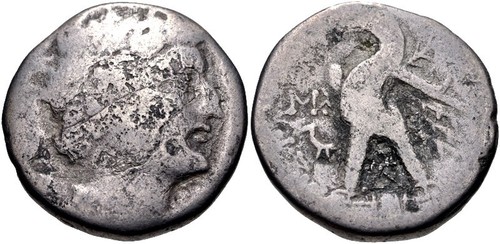
Tetradrachm of Ptolemy XII
80-51 BC
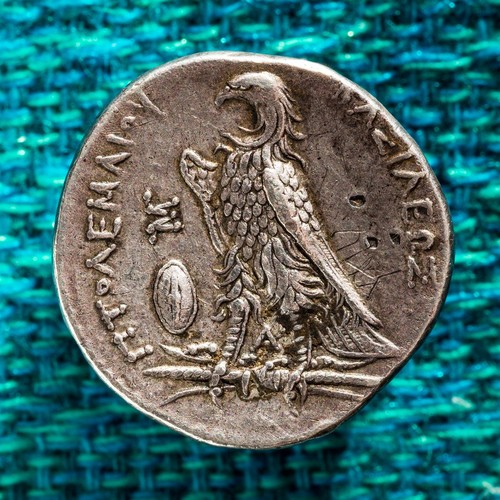
Tetradrachm of Ptolemy I
305-283 BC
Tetradrachm of Antiochos I Soter
281-261 BC
Syracuse Tetradrachm
c. 5th-4th century BC (Classical period)
Solidus of Arcadius
AD 395-402
Philip III Gold Stater
323-317 BC
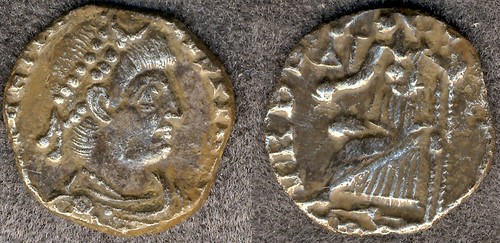
Siliqua of Gratian
AD 367-383
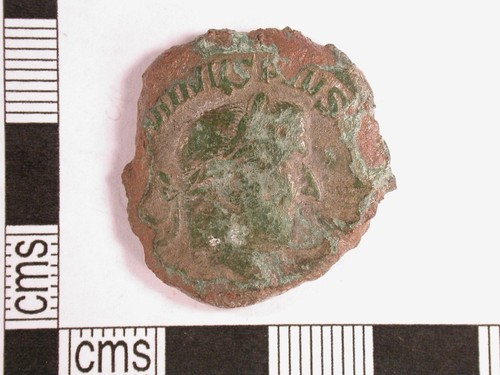
Sestertius of Maximinus Thrax
235-238 AD
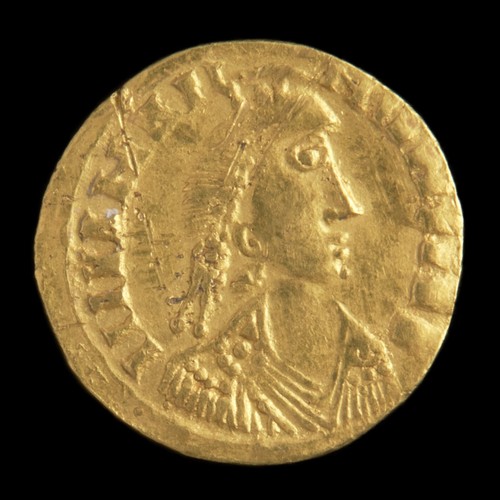
Solidus of Valentinian III
AD 425-455
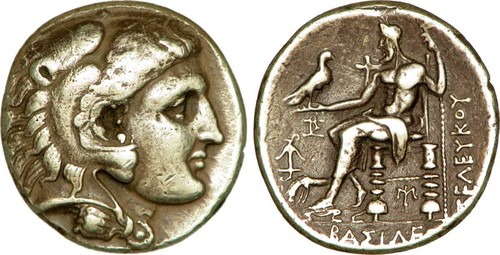
Seleucus I Nicator Tetradrachm
Late 4th-3rd century BC
Nummus of Magnentius
AD 350-353
Follis of Galerius
AD 308-310