
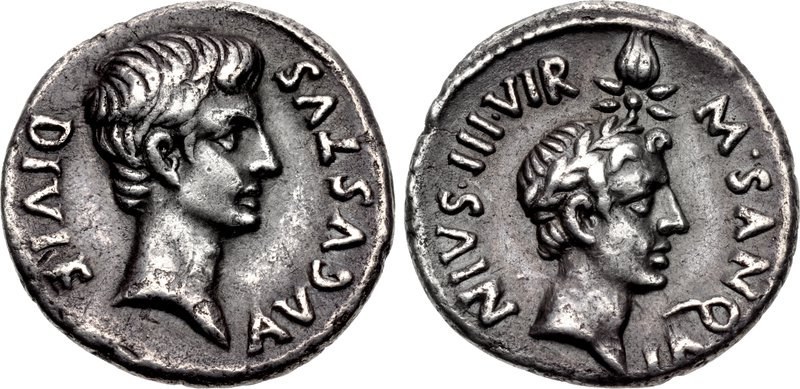
Denarius of Octavian and Caesar
A Roman Imperatorial silver denarius pairing the young Octavian with his adoptive father Julius Caesar, struck around 43–42 BC.
- Country
- Rome
- Denomination
- Denarius
- Metal
- Silver
Got a coin like this?
Identify any coin from a photo, free.
Overview
This is a silver denarius from the turbulent years after the assassination of Julius Caesar, when his teenage heir, Octavian (the future emperor Augustus), was consolidating power. The coin carries a portrait of Octavian on one face and a portrait of Julius Caesar on the other, an unmistakable pairing of adoptive son and father used to advertise Octavian's legitimacy. The example shown here is dated to roughly 43–42 BC.
The denarius was the standard silver coin of the Roman world, and issues like this belong to the Imperatorial period, the era of civil war between the death of Caesar in 44 BC and the rise of Augustus. By placing his own bare head opposite the head of the man Rome would soon deify as Divus Julius, Octavian tied himself directly to Caesar's name, memory, and loyal legions. Because these were struck at military mints during wartime, individual dies and legends vary, and the coin is best read from the two facing portraits and their surrounding inscriptions.
History & Background
Julius Caesar was murdered in 44 BC, naming his great-nephew Gaius Octavius as his adopted son and principal heir. The young Octavian took Caesar's name and, in 43 BC, joined Mark Antony and Lepidus in the Second Triumvirate, a legally established three-man commission to reorganize the Roman state. Denarii pairing Octavian with Caesar were struck in this period as open propaganda: they broadcast the heir's descent from the beloved and soon-deified dictator to the soldiers and citizens whose support he needed.
Coins of this kind were produced by moving military mints traveling with the armies in Italy and Gaul rather than at a single fixed facility. They date to the years around 43–42 BC, the same span that saw the formation of the Triumvirate, the proscriptions, and the campaign that ended at Philippi in 42 BC, where Caesar's assassins Brutus and Cassius were defeated.
Because these were emergency, war-driven issues, there are no surviving official mintage records, and the historical picture is reconstructed from the coins themselves, hoards, and ancient accounts. The type marks the beginning of the long trajectory that would turn Octavian into Augustus, Rome's first emperor, by 27 BC.
How to Identify
Start with the two portraits. The defining feature of this type is a male head on each side: the youthful, bare head of Octavian on one face and the head of Julius Caesar on the other. Read the facing directions and note that Octavian is shown as a clean-shaven young man, while Caesar typically appears older and more gaunt, sometimes wreathed or veiled. Latin legends around the portraits carry names and titles such as CAESAR and abbreviations of Octavian's triumviral office; even partial lettering helps confirm the attribution.
Confirm the physical coin. A denarius of this era is a small hand-struck silver piece, roughly 17–20 mm across and generally in the region of about 3.5–4 grams, though wartime issues vary. Genuine ancient silver shows toning, patina, or old surface texture rather than bright modern shine, and the flan is often slightly irregular or off-center.
Expect the hallmarks of hand striking: uneven borders, portraits that drift off the flan, and die-to-die variation in the legends. No two genuine strikes are identical. The combination of the paired Octavian and Caesar heads, the denarius weight and diameter, and legible Latin titling is what separates this Imperatorial issue from later Augustan coins or from unrelated Roman portrait denarii.
Value & Collectibility
Denarii linking Octavian with Julius Caesar are historically significant and sought after, so values run well above those of common Roman silver. Worn, off-center, or corroded examples with weak portraits often trade in the mid hundreds of dollars, while well-centered coins with clear heads and legible legends command more, and exceptional pieces with fine style and strong surfaces can reach into the thousands.
With hand-struck ancient coins, strike quality and eye appeal matter as much as raw grade. Sharp, centered portraits of both Octavian and Caesar, complete legends, and attractive toning add substantial value, whereas tooling, smoothing, cleaning scratches, corrosion, or edge damage reduce it.
Because famous Imperatorial types like this are heavily forged, provenance and authentication weigh heavily on price. A denarius with a credible attribution, an auction or dealer record, or third-party certification will generally be worth considerably more than an unattributed coin of similar apparent grade. Any specific price should be treated as a range and confirmed against recent sales of the same type.
Frequently asked questions
Who are the two men on this coin?
One face shows Octavian, the adopted heir of Julius Caesar who later became the emperor Augustus, and the other shows Julius Caesar himself. Pairing the two advertised Octavian's descent from the deified dictator.
How old is a denarius of Octavian and Caesar?
This type dates to roughly 43–42 BC, the Imperatorial period of Roman civil war after Caesar's assassination in 44 BC and before Octavian became Augustus in 27 BC.
What is this coin worth?
It varies widely. Worn or off-center examples often sell in the mid hundreds of dollars, while sharp, well-centered coins with clear portraits and legends go higher, sometimes into the thousands. Authentication and provenance strongly affect price.
Is it made of real silver?
Yes. The denarius was Rome's standard silver coin, and genuine examples of this era are struck in silver, typically showing toning or patina rather than bright modern luster.
Are these coins often faked?
Yes. Historically important Imperatorial denarii of Octavian and Caesar are frequent targets for forgery and tooling, so weight, style, strike, legends, and documented provenance matter greatly when judging authenticity.
Denarius of Octavian and Caesar guides
In-depth guides for identifying, valuing, and collecting Denarius of Octavian and Caesar.
Other coins you may enjoy
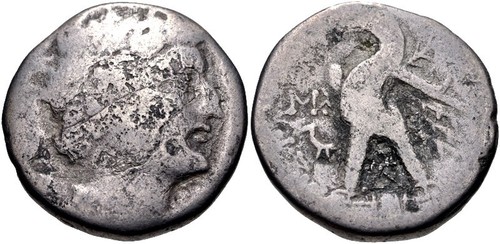
Tetradrachm of Ptolemy XII
80-51 BC
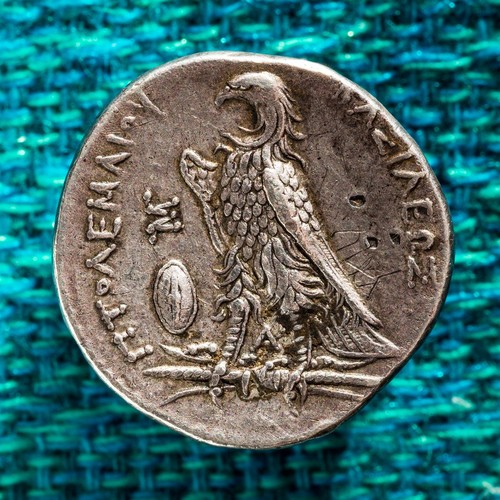
Tetradrachm of Ptolemy I
305-283 BC
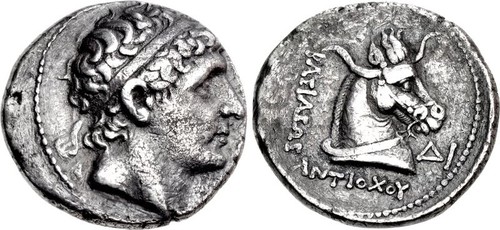
Tetradrachm of Antiochos I Soter
281-261 BC
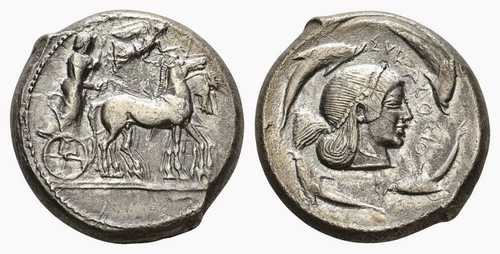
Syracuse Tetradrachm
c. 5th-4th century BC (Classical period)
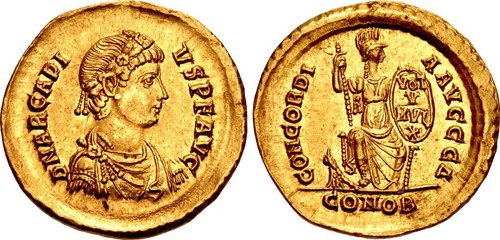
Solidus of Arcadius
AD 395-402
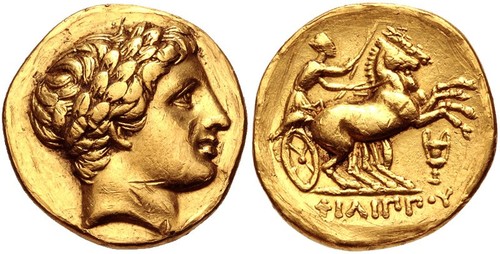
Philip III Gold Stater
323-317 BC
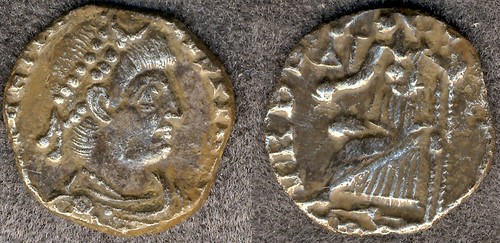
Siliqua of Gratian
AD 367-383
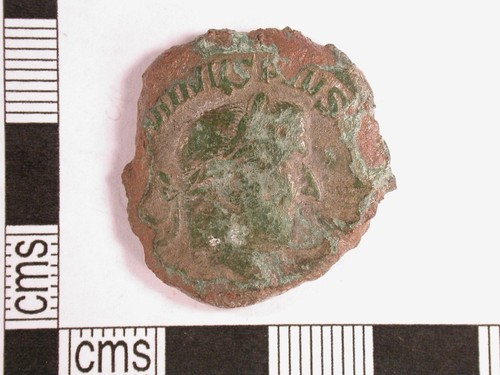
Sestertius of Maximinus Thrax
235-238 AD
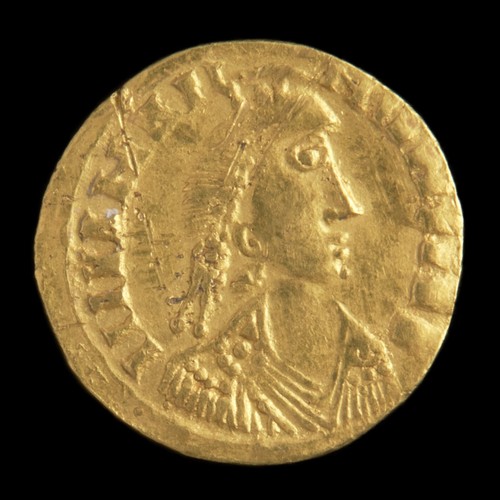
Solidus of Valentinian III
AD 425-455
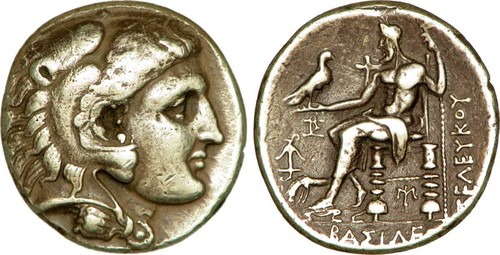
Seleucus I Nicator Tetradrachm
Late 4th-3rd century BC
Nummus of Magnentius
AD 350-353
Follis of Galerius
AD 308-310