
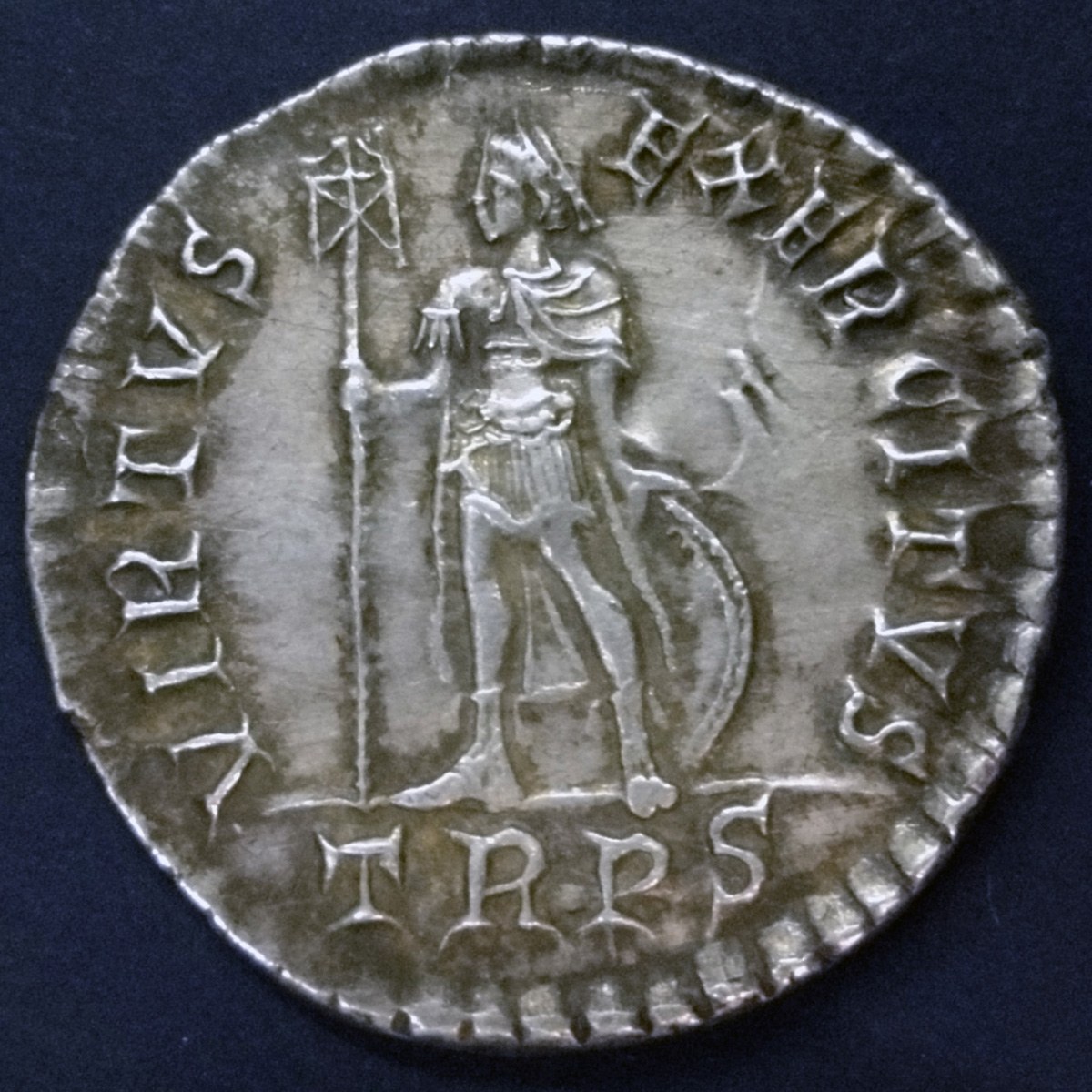
Hoxne Hoard Siliqua
A small late-Roman silver siliqua of the type found in Britain's Hoxne Hoard, with an imperial portrait and a standing figure or personified virtue.
- Country
- Roman Empire
- Denomination
- Siliqua
- Metal
- Silver
Got a coin like this?
Identify any coin from a photo, free.
Overview
This is a siliqua, a small thin silver coin of the late Roman Empire, of the kind that made up the great mass of silver in the Hoxne Hoard discovered in Suffolk, England, in 1992. The example shown pairs a diademed imperial portrait facing right, with the characteristic late-Roman styling of the period, and a reverse showing a standing figure or personified virtue such as Roma or Virtus. These are the defining motifs of siliquae struck in the closing decades of the 4th century AD.
Because siliquae of this era were issued in the names of several emperors and struck at more than one western mint using closely related designs, the exact ruler, mint, and precise year cannot always be fixed from the images alone. The coin is best described as a late-Roman silver siliqua of the Hoxne Hoard type, rather than tied with certainty to a single emperor or date.
History & Background
The siliqua was the standard small silver coin of the later Roman Empire from the reign of Constantine the Great onward, and it circulated heavily in the western provinces, including Roman Britain, through the 4th century AD. Struck in the names of emperors of the Constantinian and Theodosian houses, these coins carried imperial portraits paired with reverse types celebrating Roman power, victory, and civic virtue.
The Hoxne Hoard, unearthed by a metal detectorist in 1992 and excavated by archaeologists, is one of the richest late-Roman treasures ever found in Britain. It contained thousands of gold and silver coins alongside precious tableware and jewellery, buried in the early 5th century as Roman authority in Britain was collapsing. Its many siliquae, spanning a run of late-4th-century emperors, made the hoard a landmark for the study of the period's silver coinage.
A notable feature of siliquae from this horizon is clipping: the edges of many coins were deliberately trimmed, probably to recover silver as fresh imperial coin stopped arriving in Britain. Surviving pieces therefore range from full, well-struck flans to markedly reduced, clipped examples that have lost part of their border and legend.
How to Identify
The defining features are a small, thin silver flan bearing a diademed imperial bust facing right on the obverse and a standing or seated figure on the reverse, often a personified virtue such as Roma or Virtus, or a similar late-Roman military or civic type. Latin legends run around both faces: an imperial titulature naming the emperor around the portrait, and a reverse legend such as a VIRTVS or VRBS type. A mint mark in the reverse exergue, the small line of letters below the design, can indicate the striking mint when legible.
The coin is hand-struck silver, so expect an irregularly round shape, modest diameter, and relatively low weight compared with earlier, heavier silver. Many siliquae of this era show clipping, where the outer edge has been trimmed away, leaving a smaller flan and sometimes cutting into the legend. Genuine pieces usually carry soft gray toning rather than bright modern shine.
Because the portrait style and reverse types are shared across several emperors and mints, secure attribution depends on reading the legends and mint mark. Where these are worn, clipped away, or off the flan, the coin can only be catalogued broadly as a late-4th-century Roman siliqua of the Hoxne type.
Value & Collectibility
Late-Roman siliquae span a wide value range, so no single figure applies. Common, worn, or heavily clipped examples are among the more affordable pieces of collectible ancient silver, while full-flan, sharply struck coins with clear legends, a legible mint mark, and attractive toning command significantly more. Coins with a documented link to a famous find such as the Hoxne Hoard can carry an added premium tied to provenance.
Because a given coin cannot always be pinned to a specific emperor, mint, or year from images alone, any estimate is only broad context rather than a firm valuation. Attribution from the obverse legend, reverse type, and exergual mint mark, together with the degree of clipping and overall condition, would sharply narrow the range.
Anyone buying or selling siliquae of this type should seek an in-hand assessment by a specialist in late-Roman coinage and confirm lawful provenance and export history, since authenticity, condition, and documentation matter far more to value than the general type alone.
Frequently asked questions
What exactly is a siliqua?
It is a small, thin silver coin of the later Roman Empire, common in the 4th century AD. This example is of the type that filled the Hoxne Hoard, showing an imperial portrait on one side and a standing figure or personified virtue on the other.
What is the Hoxne Hoard?
It is one of the richest late-Roman treasures found in Britain, discovered in Suffolk, England, in 1992. Buried in the early 5th century, it contained thousands of gold and silver coins, including many siliquae, alongside precious tableware and jewellery.
Which emperor is on the coin?
Siliquae of this era were struck for several late-4th-century emperors of the Theodosian and related houses. The specific ruler depends on the obverse legend, which may be worn or clipped away, so it cannot always be confirmed from the images alone.
Why are the edges of some siliquae trimmed?
Many siliquae were deliberately clipped, most likely to recover silver once fresh imperial coin stopped reaching Britain. Clipping leaves a smaller flan and can cut into the legend, which is a characteristic trait of coins from this horizon.
How much is it worth?
Values range from modest sums for worn or heavily clipped coins to considerably more for full, well-struck examples with clear legends and mint marks. Provenance to a famous hoard can add a premium, so an in-hand expert appraisal is recommended.
Hoxne Hoard Siliqua guides
In-depth guides for identifying, valuing, and collecting Hoxne Hoard Siliqua.
Other coins you may enjoy
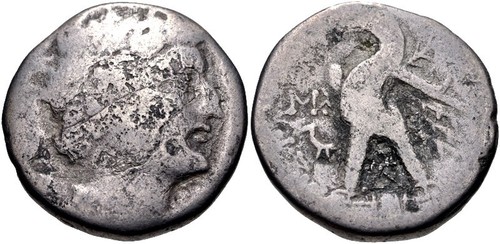
Tetradrachm of Ptolemy XII
80-51 BC
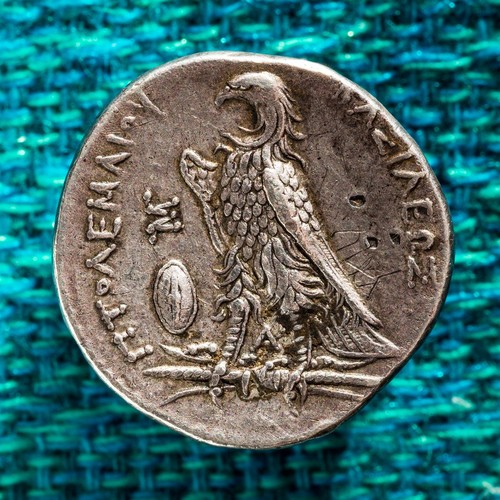
Tetradrachm of Ptolemy I
305-283 BC
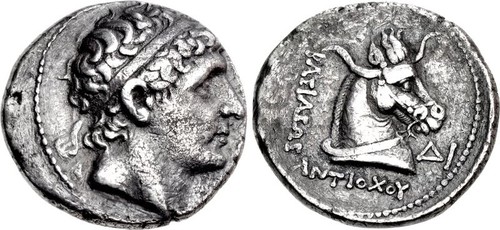
Tetradrachm of Antiochos I Soter
281-261 BC
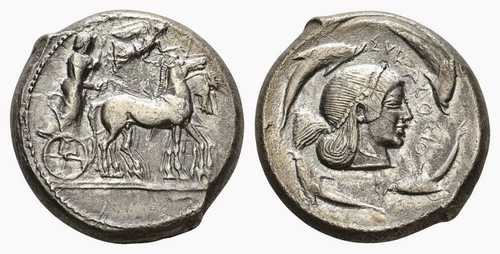
Syracuse Tetradrachm
c. 5th-4th century BC (Classical period)
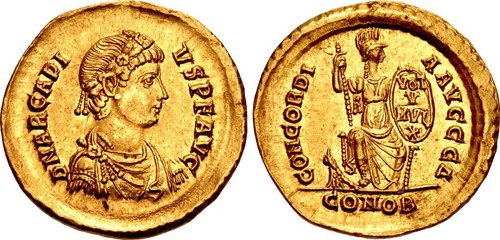
Solidus of Arcadius
AD 395-402
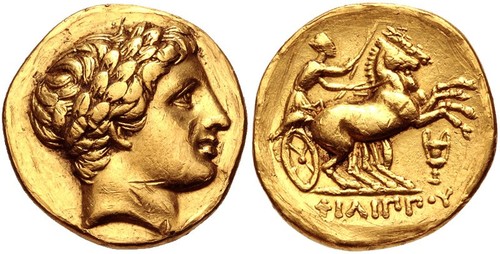
Philip III Gold Stater
323-317 BC
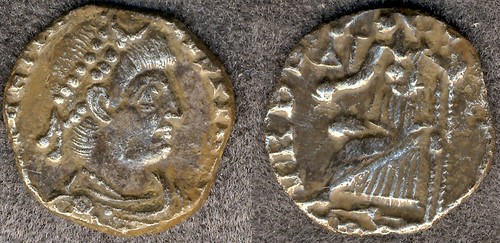
Siliqua of Gratian
AD 367-383
Sestertius of Maximinus Thrax
235-238 AD
Solidus of Valentinian III
AD 425-455
Seleucus I Nicator Tetradrachm
Late 4th-3rd century BC
Nummus of Magnentius
AD 350-353
Follis of Galerius
AD 308-310