
How to Identify the Hoxne Hoard Siliqua
A collector's guide to recognizing a late-Roman silver siliqua by its imperial portrait, standing reverse figure, small thin flan, and telltale clipping.
Read the full Hoxne Hoard Siliqua encyclopedia entry →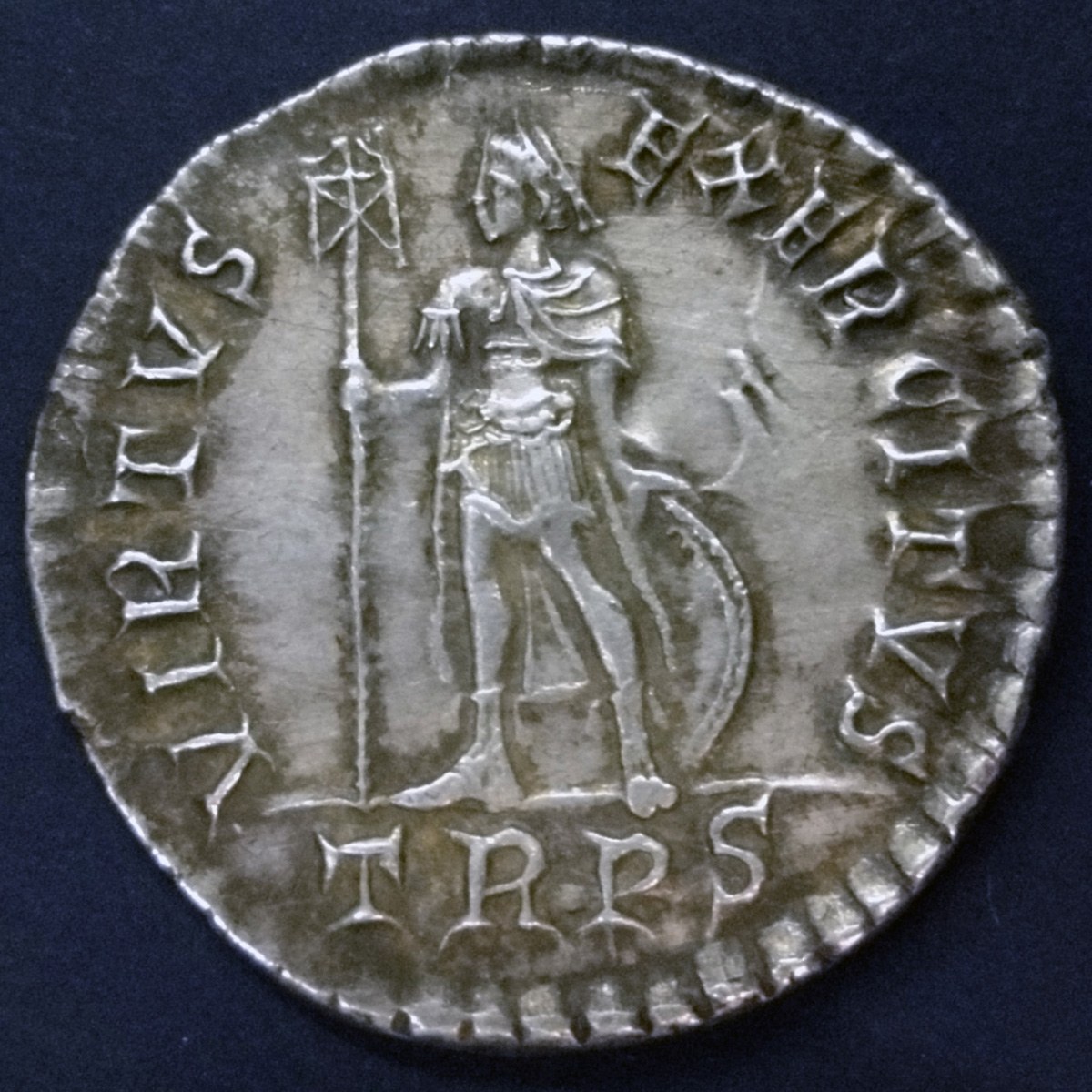
Start with the two central designs. A siliqua of this family shows a diademed imperial bust facing right on the obverse and a standing or seated figure on the reverse, frequently a personified virtue such as Roma or Virtus. That pairing of a late-Roman portrait with a single upright figure, on a small silver flan, is the quickest way to place a coin in the late-4th-century siliqua tradition represented in the Hoxne Hoard.
Examine the fabric and size. This should be hand-struck silver on a small, relatively thin, and often slightly irregular flan, lighter than earlier Roman silver. Natural gray or muted cabinet toning is normal; a bright, evenly shiny surface can be a warning sign of a cast or plated reproduction. Look closely at the edge, because many genuine siliquae of this period are clipped, with the outer border trimmed away and sometimes cutting into the surrounding legend.
Read the legends and the mint mark. The Latin titulature around the portrait names the emperor, while the reverse legend describes the type, such as a VIRTVS or VRBS ROMA formula. In the reverse exergue, the small line beneath the design, a mint mark can identify the striking mint when it survives. On clipped or worn coins these details are often partly lost, in which case the piece can only be described broadly as a late-Roman siliqua rather than attributed to a specific emperor or mint.
Watch for look-alikes and authentication cautions. Other late-Roman silver denominations and neighbouring reverse types can resemble a siliqua, and both ancient imitations and modern copies exist. Do not assume a particular ruler, mint, or hoard association from style alone; a claimed link to the Hoxne Hoard in particular should be backed by documentation. For any coin of potential value, have it authenticated and attributed by a specialist in late-Roman coinage and confirm lawful provenance before relying on the identification.
Frequently asked questions
What is the fastest way to recognize a late-Roman siliqua?
Look for a small, thin silver coin with a diademed imperial bust facing right and a single standing or seated figure on the reverse, often a personified virtue such as Roma or Virtus, with Latin legends around both faces.
How can I tell which emperor and mint it is?
Read the obverse titulature for the emperor's name and check the reverse exergue for a mint mark. When these are legible they give the attribution; when worn or clipped away, the coin can only be called a late-4th-century siliqua without firm attribution.
Why is the edge trimmed, and does clipping matter?
Clipping was done to recover silver as fresh coin stopped reaching Britain, and it is common on siliquae from this period. It reduces the flan and can remove part of the legend, which affects both attribution and, often, value.
Should I worry about fakes or wrong attributions?
Yes. Siliquae are copied, and a hoard association such as Hoxne needs documentation to be credible. Watch for unnaturally bright surfaces or seams, and have any promising coin examined by a specialist in late-Roman coinage before assigning value.