
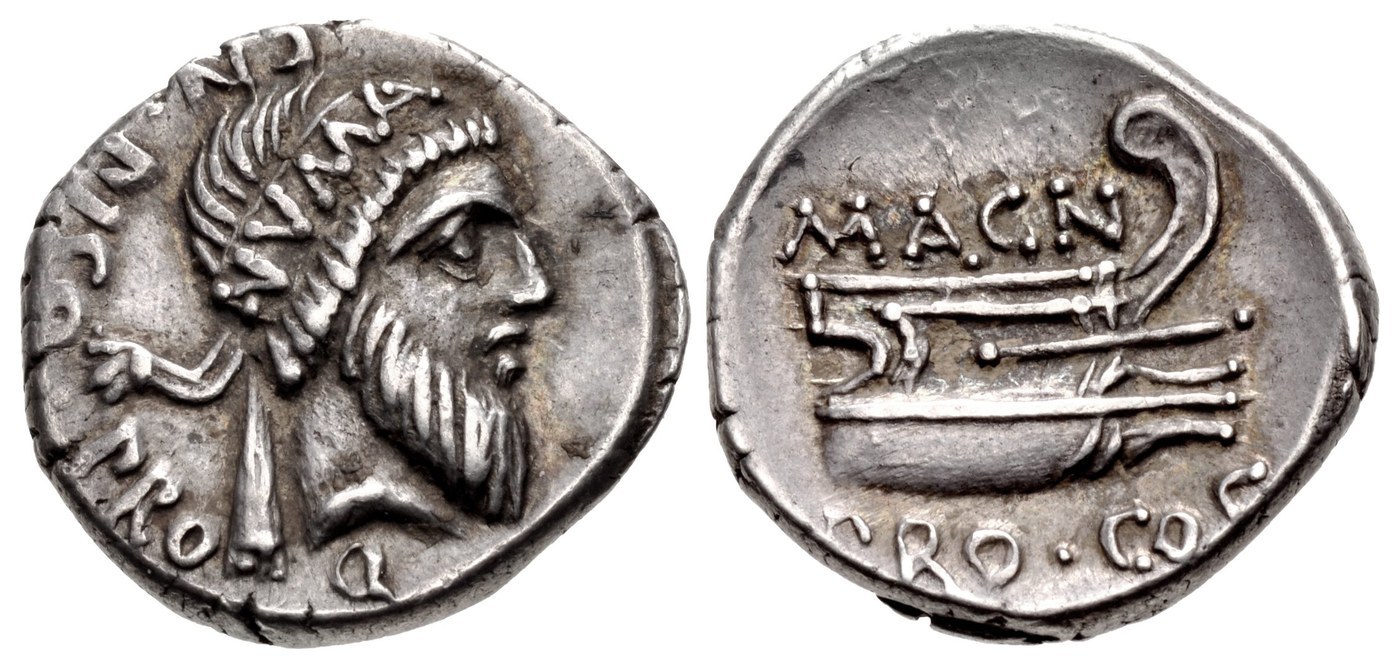
Numapis Denarius
A silver denarius of the Roman Republic (1st century BC) pairing a male portrait facing right with a ship or galley and lettering on the reverse.
- Country
- Roman Republic
- Denomination
- Denarius
- Metal
- Silver
Got a coin like this?
Identify any coin from a photo, free.
Overview
The Numapis denarius is a silver coin of the Roman Republic struck in the 1st century BC. Like other denarii of its era it is a small, hand-struck disc of good silver, and the example shown here follows the classic late-Republican pattern: a male head in profile facing right on the obverse and a ship or galley with an inscription and ornamental detail on the reverse.
The denarius was the workhorse silver coin of Rome, and issues of this period frequently carried the name of the moneyer responsible for striking them along with imagery referencing family history, military achievement, or naval power. A galley or warship reverse points to that maritime symbolism, a common theme on Republican coinage tied to Rome's fleets and coastal campaigns.
Because it was struck by hand from dies onto a flan, no two examples are perfectly identical. Slight variations in centering, flan shape, and strike are normal and are part of what distinguishes genuine ancient coins from modern machine-made pieces.
History & Background
The denarius was introduced in the late 3rd century BC and became the standard silver coin of the Roman Republic for well over a century. By the 1st century BC, when this type was struck, denarii were produced under officials known as moneyers, whose names and chosen designs appear on the coins.
During the late Republic, moneyers increasingly used coin imagery for political and family messaging. Ships and galleys were a recurring motif, evoking naval commands, victories at sea, or ancestral connections to Rome's maritime history. A portrait paired with a warship reverse fits squarely within this tradition of the final decades of the Republic, a turbulent era of civil wars and shifting power that ended with the rise of the Roman Empire.
Coins of this period circulated widely across the Mediterranean world and are found today from hoards and archaeological contexts throughout the former Roman sphere, which is why Republican denarii remain relatively available to collectors despite their age.
How to Identify
Confirm first that the coin is a small silver disc, roughly the diameter of a modern small coin and struck by hand, with the slightly irregular flan and off-center features typical of ancient minting. Genuine Republican denarii show real silver toning and honest wear rather than the sharp, uniform surfaces of cast copies.
The obverse of this type carries a male head in profile facing right. The reverse shows a ship or galley accompanied by lettering and ornamental design. On Republican denarii that lettering usually includes the moneyer's name or abbreviated legend; read it carefully, since the inscription is the primary key to attributing the exact issue.
Because hand-struck ancient coins vary, expect differences in centering and strike between examples. Look for the combination of profile portrait, galley reverse, silver fabric, and Republican-style legend together rather than relying on any single feature.
Value & Collectibility
Roman Republic denarii span a very wide value range depending on the specific moneyer, rarity of the issue, and condition. Common, worn examples of ordinary types are frequently affordable and trade in the modest tens of dollars, while scarce issues, coins with sharp strikes and good centering, or historically significant types can reach substantially higher figures.
Condition matters enormously for ancient silver: eye appeal, surface quality, attractive toning, and a well-centered strike all add premiums, while corrosion, cleaning marks, or damage reduce value. A clear, legible reverse legend that pins down the exact issue also affects desirability.
Because values hinge on the precise attribution, an example like this is best appraised once the reverse inscription and design details are matched to a standard reference. Authenticated pieces sold with clear provenance generally command more than unattributed coins of uncertain origin.
Frequently asked questions
Is the Numapis denarius made of real silver?
Yes. Denarii of the Roman Republic in the 1st century BC were struck in good silver, and this type is a silver coin. Genuine examples show natural silver toning and honest wear.
What does the ship on the reverse mean?
A galley or warship on a Republican denarius typically references naval power, a sea command or victory, or a moneyer's family history tied to the fleet. Maritime imagery was a common theme on late-Republican coinage.
Who is on the obverse?
The obverse shows a male head in profile facing right. On Republican denarii such portraits can represent deities, personifications, or ancestral figures; the exact identity is determined from the design details and legend.
How can I tell it is genuine and not a copy?
Look for real silver fabric, natural toning, honest wear, and the slightly irregular flan of a hand-struck coin. Cast copies tend to show seams, bubbles, and unnaturally uniform surfaces. When in doubt, seek expert authentication.
Are Roman Republic denarii rare?
Many types are relatively available because they circulated widely and survive in hoards, though specific issues can be scarce. Value and rarity depend on the exact moneyer and design, so precise attribution matters.
Numapis Denarius guides
In-depth guides for identifying, valuing, and collecting Numapis Denarius.
Other coins you may enjoy
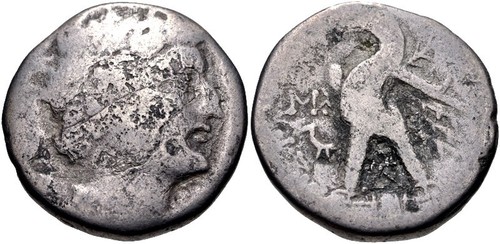
Tetradrachm of Ptolemy XII
80-51 BC
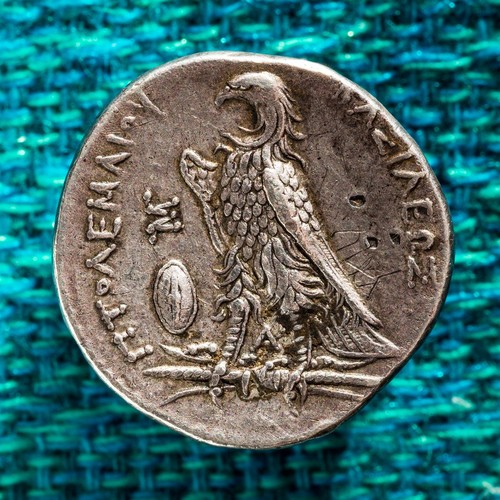
Tetradrachm of Ptolemy I
305-283 BC
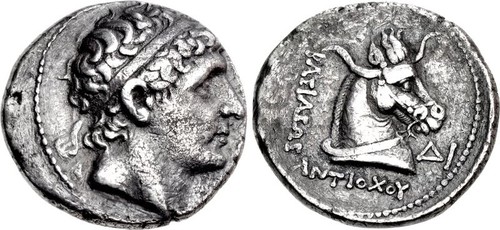
Tetradrachm of Antiochos I Soter
281-261 BC
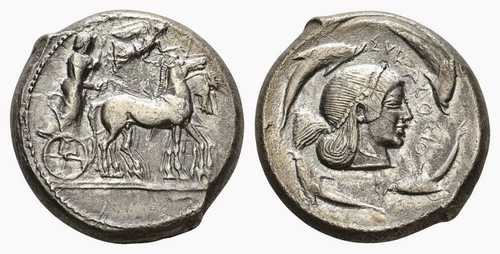
Syracuse Tetradrachm
c. 5th-4th century BC (Classical period)
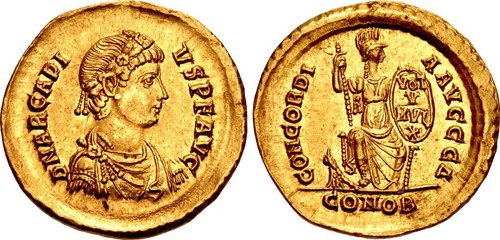
Solidus of Arcadius
AD 395-402
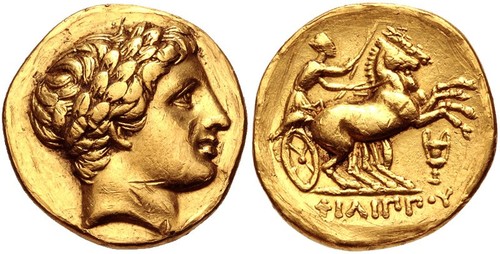
Philip III Gold Stater
323-317 BC
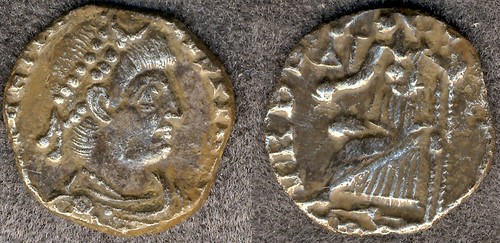
Siliqua of Gratian
AD 367-383
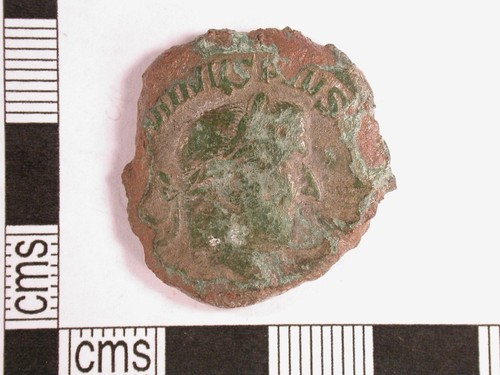
Sestertius of Maximinus Thrax
235-238 AD
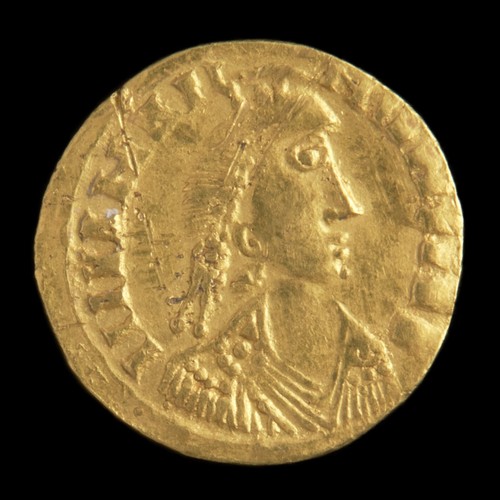
Solidus of Valentinian III
AD 425-455
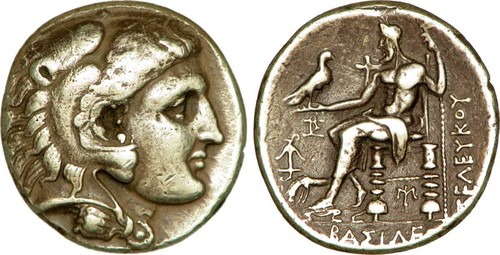
Seleucus I Nicator Tetradrachm
Late 4th-3rd century BC
Nummus of Magnentius
AD 350-353
Follis of Galerius
AD 308-310