
How to Identify the Numapis Denarius
A collector's guide to recognizing this Roman Republic silver denarius by its profile portrait, galley reverse, silver fabric, and Republican legend.
Read the full Numapis Denarius encyclopedia entry →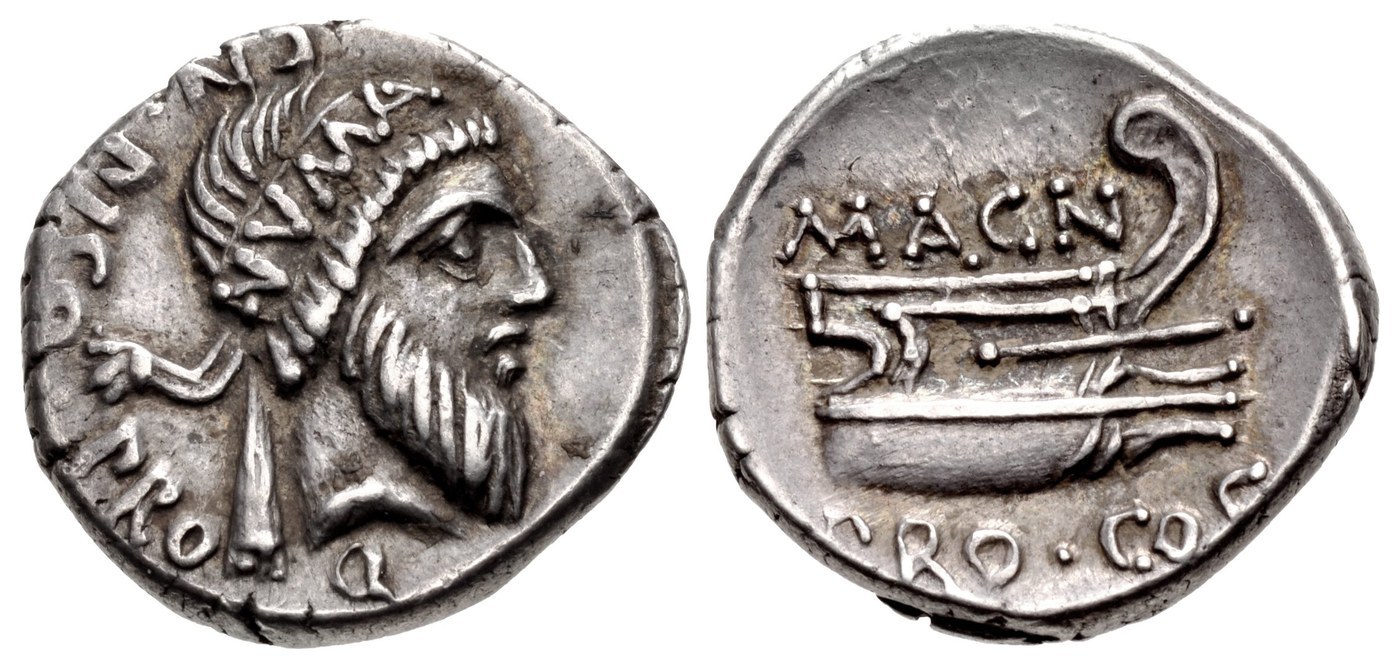
Begin with the physical basics. This is a silver denarius of the Roman Republic, so you should see a small, hand-struck silver disc with a slightly irregular flan and the natural toning of ancient silver. If the piece is base metal, perfectly round with machine-sharp edges, or shows casting seams and bubbles, it is more likely a modern reproduction than an authentic ancient coin.
Read the two faces in order. The obverse carries a male head in profile facing right; note the hairstyle, any headgear, and symbols in the field, as these help narrow the type. The reverse shows a ship or galley with lettering and ornamental design. On Republican denarii that reverse legend usually spells out or abbreviates the moneyer's name, and it is the single most important feature for attributing the exact issue, so examine it under magnification.
Check scale and fabric against a known denarius. These coins are small, roughly the size of a modern small silver coin, and typically light in hand. The strike is hand-made, so expect some off-centering, flat areas, or a legend that runs off the flan; this is normal and is actually a point in favor of authenticity rather than against it.
Watch for look-alikes. Galley and prow reverses appear on several Roman coin types, including bronze issues and later Imperial pieces, so confirm the silver denarius fabric together with the profile portrait and Republican-style legend before concluding. Beware of tourist replicas and cast forgeries, which often copy famous galley designs; telltale signs include a soft, mushy strike, uniform artificial patina, and mold seams along the edge.
For authentication, weigh and measure the coin and compare the reverse legend and design to a standard catalog of Republican moneyers. Because value depends heavily on the precise issue and on genuineness, a coin like this is best confirmed by an experienced dealer or grading service before any purchase or sale.
Frequently asked questions
What is the fastest way to confirm this is a Republican denarius?
Check for a small hand-struck silver disc with a profile portrait on one side and a galley reverse with a legend on the other. The silver fabric, irregular flan, and Republican-style moneyer legend together confirm the category.
Where do I find the information that identifies the exact issue?
The reverse legend beside the ship usually carries the moneyer's name or an abbreviation. Reading it under magnification and matching it to a catalog of Republican moneyers is the key to pinning down the specific type.
How do I spot a fake galley denarius?
Cast forgeries and tourist replicas often show mold seams, surface bubbles, a soft mushy strike, and artificial uniform patina. Genuine coins have real silver toning, honest wear, and the natural irregularities of hand striking.
Could a galley coin be bronze instead of silver?
Yes. Ship and prow designs appear on Roman bronze and later coins too, so always confirm the silver denarius fabric and the profile portrait before identifying a piece as this type.