
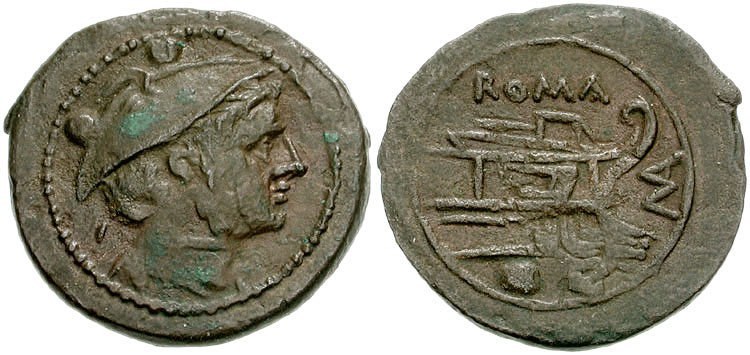
Manlius Vulso Æ Sextans
Small Roman Republican bronze sextans signed by the moneyer Manlius Vulso, with a capped male head and the classic prow reverse marked ROMA.
- Country
- Roman Republic
- Denomination
- Sextans
- Metal
- Bronze
Got a coin like this?
Identify any coin from a photo, free.
Overview
The Manlius Vulso Æ Sextans is a small struck bronze coin of the Roman Republic, issued in the 2nd century BC. The sextans was a fraction of the bronze as, valued at one-sixth of an as — that is, two unciae — placing it near the bottom of the everyday Roman bronze series used for small change.
The coin follows the standard Republican bronze design: a male head facing right on the obverse, here wearing a conical or Phrygian-style cap, and on the reverse the prow of a galley with the legend ROMA below. The issue is attributed to a moneyer of the gens Manlia bearing the cognomen Vulso, whose personal mark identifies his particular striking within the long-running prow coinage.
History & Background
By the 2nd century BC the Romans had largely abandoned the heavy cast bronze (aes grave) of earlier generations in favor of smaller struck bronze denominations produced at the mint in Rome. The as and its fractions — semis, triens, quadrans, sextans, and uncia — carried a divine head on the obverse and a ship's prow on the reverse, a design that stayed remarkably stable for well over a century.
Beginning in the later 3rd and continuing through the 2nd century BC, individual moneyers (the tresviri monetales) began adding names, monograms, or symbols to these coins so that specific issues could be told apart. The mark of Manlius Vulso identifies this sextans as one such signed issue; the gens Manlia was a prominent Republican family that supplied magistrates and moneyers across the period.
The 2nd century BC was also a time of steadily falling bronze weights. As Rome moved through the sextantal and then uncial standards, coins like the sextans grew lighter and more variable, which is why surviving examples of the same denomination can differ noticeably in size and mass.
How to Identify
Identify this type from its two defining sides. The obverse shows a male head facing right wearing a peaked cap — described here as a Phrygian or conical cap, in the manner used across Republican bronze fractions. The reverse carries the prow of a galley facing right, with ROMA inscribed below the prow. This head-and-prow pairing is the signature of Roman Republican bronze.
The key to the denomination is the value mark: a sextans is normally indicated by two pellets (••), corresponding to its worth of two unciae, placed in the field with the prow. Two pellets separate a sextans from its neighbors — the uncia carries a single pellet, the quadrans three, and the triens four.
The moneyer is read from an added name, monogram, or symbol tied to Manlius Vulso, set near the prow or in the obverse field. Physically the coin is a small bronze, generally in the range of roughly 15-23 mm and a few grams, with the exact size depending on where in the 2nd-century weight decline it was struck. Expect a brown, green, or earthen patina rather than bright metal.
Value & Collectibility
Roman Republican bronze fractions are among the more affordable ancient coins, and a sextans of this kind is a common, entry-level type rather than a rarity. Worn examples with legible devices typically trade in the low tens of dollars, while pieces with sharp detail, a clear prow, readable value marks, and an attractive patina bring a solid premium.
Condition and legibility drive price far more than the denomination itself. A coin where the capped head, the prow, the ROMA legend, and the moneyer's mark are all clear is worth considerably more than a smooth, corroded piece. Original, stable patina is prized; harsh cleaning or active corrosion depresses value.
Because attribution to a specific moneyer like Vulso can add interest, confirm both the type and the reading against recent auction results and a standard reference for Republican bronze rather than relying on a single guide figure.
Frequently asked questions
What is a sextans worth in the Roman system?
A sextans was one-sixth of a bronze as, equal to two unciae. It was a small-change denomination near the bottom of the Roman Republican bronze series, used for everyday minor transactions.
Who was Manlius Vulso?
Vulso was a cognomen of the gens Manlia, a prominent Republican family. The name marks this coin as the signed issue of a moneyer from that family, whose mark distinguishes his striking within the standard prow coinage.
Why does the reverse show a ship's prow?
The prow was the standard reverse for Roman Republican struck bronze for well over a century, appearing on the as and all its fractions. It is paired with the legend ROMA below the prow.
How do I tell a sextans from other bronze fractions?
Look at the value marks. A sextans normally carries two pellets, versus one for the uncia, three for the quadrans, and four for the triens. The two pellets confirm the one-sixth-as denomination.
Is this coin rare or valuable?
Republican bronze sextantes are common and affordable. Value depends mainly on condition and legibility, with clear, well-patinated examples worth a premium over worn or corroded ones.
Manlius Vulso Æ Sextans guides
In-depth guides for identifying, valuing, and collecting Manlius Vulso Æ Sextans.
Other coins you may enjoy
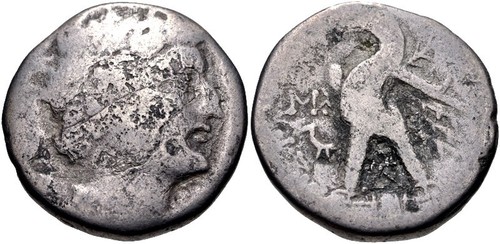
Tetradrachm of Ptolemy XII
80-51 BC
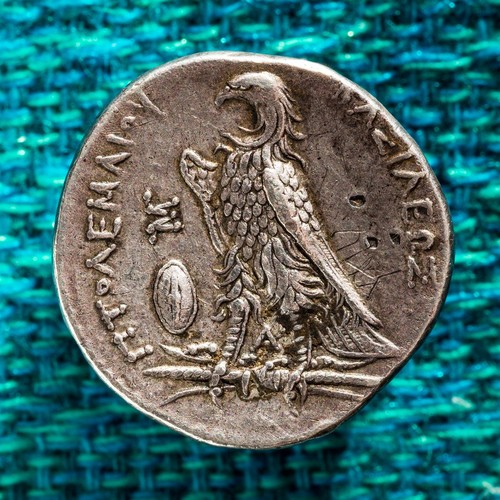
Tetradrachm of Ptolemy I
305-283 BC
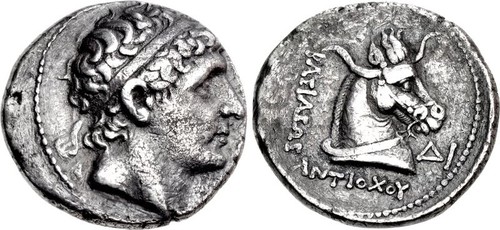
Tetradrachm of Antiochos I Soter
281-261 BC
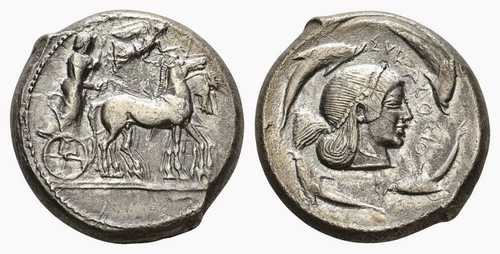
Syracuse Tetradrachm
c. 5th-4th century BC (Classical period)
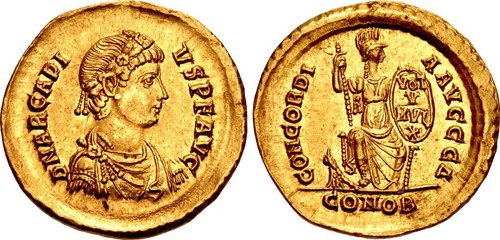
Solidus of Arcadius
AD 395-402
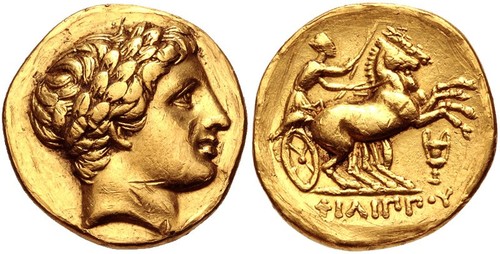
Philip III Gold Stater
323-317 BC
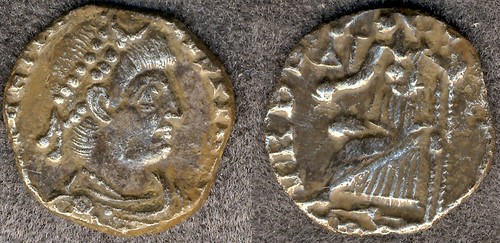
Siliqua of Gratian
AD 367-383
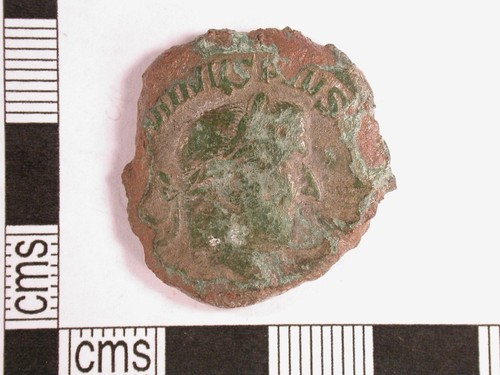
Sestertius of Maximinus Thrax
235-238 AD
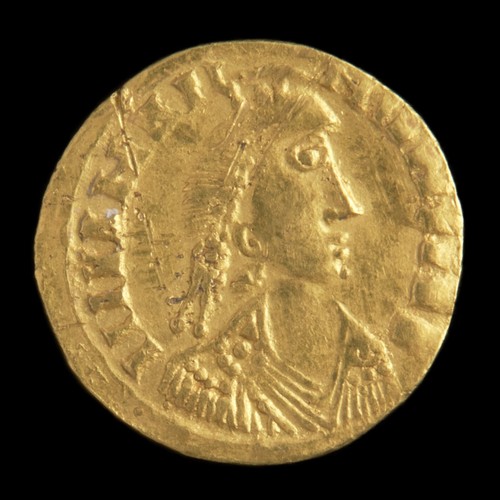
Solidus of Valentinian III
AD 425-455
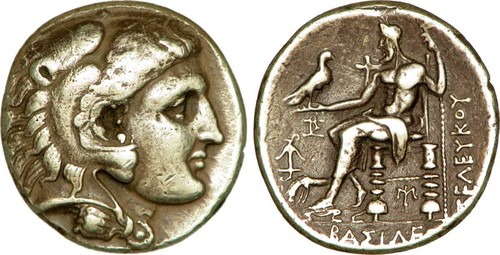
Seleucus I Nicator Tetradrachm
Late 4th-3rd century BC
Nummus of Magnentius
AD 350-353
Follis of Galerius
AD 308-310