
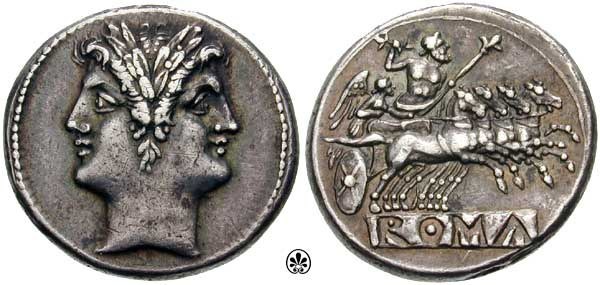
Roman As/Dupondius (Uncertain)
An uncertain Roman bronze As or Dupondius: a double-faced Janus head on one side and a ship (galley/prow) with ROMA below on the other.
- Country
- Roman Empire
- Denomination
- As or Dupondius
- Metal
- Bronze
Got a coin like this?
Identify any coin from a photo, free.
Overview
This is an ancient Roman bronze coin of the As or Dupondius family, shown here with a two-faced (Janus) head on the obverse and a ship with the inscription ROMA below on the reverse. The exact denomination and date are recorded as uncertain, which is common for worn Roman bronzes where the surviving detail is not enough to pin down a precise issue.
The pairing of a double-faced Janus head with a ship device and the legend ROMA is one of the most recognizable formats in Roman coinage. The As was the standard bronze unit of Roman money for centuries, and the Dupondius was a related bronze denomination worth two Asses. Because both circulated as everyday base-metal money and were struck across a very long period, individual worn pieces often cannot be assigned to a single year or authority with confidence.
History & Background
Bronze aes coinage was the backbone of everyday Roman money. During the Roman Republic, the cast and later struck bronze As typically carried the head of the two-faced god Janus on the obverse and the prow of a galley (a ship's forepart) on the reverse, usually with ROMA in the field or exergue. This Janus-and-ship format ran through much of the Republican period and is the classic ancestor of the design seen here.
Under the Roman Empire the bronze denominations were reorganized, and a visual convention developed in which a radiate crown often marked the Dupondius while a bare or laureate head marked the As. Because the coin here is described as uncertain, it may represent a Republican As of the Janus-and-prow type, a related bronze issue, or a later piece; the surviving evidence is not enough to fix its place in that long sequence.
What is certain is the family it belongs to: the Roman bronze coinage that circulated across the Mediterranean world for centuries, handled daily in markets, wages, and small purchases, and produced in enormous quantities over its lifetime.
How to Identify
Look for the diagnostic pair of devices. One face shows a Janus head: a single head with two faces looking in opposite directions, a design unique to Roman coinage and unmistakable once recognized. The other face shows a ship, described here as a galley or ship's prow, with the letters ROMA placed below. That ROMA legend and the ship together mark it as a Roman bronze of the As/Dupondius tradition.
The coin is struck in bronze (a copper-based alloy) and typically carries an earthy brown, green, or reddish patina from age. Genuine ancient bronzes usually show real wear, softened relief, and porosity or encrustation rather than crisp machine-made surfaces.
Because this specimen is catalogued as uncertain, treat the denomination as As or Dupondius pending closer study. Fine distinctions, such as whether any crown is radiate (a hint toward Dupondius) versus bare or laureate, along with size and weight, are what specialists use to narrow the attribution.
Value & Collectibility
Common worn Roman bronze Asses and Dupondii are among the more affordable ancient coins because they were produced in vast numbers and many survive. Heavily circulated, uncertain, or unattributed pieces typically trade in the low tens of dollars, sometimes less, with much depending on how much design remains visible.
Value rises with clear detail, a well-preserved Janus head and ship, a legible ROMA, attractive patina, and a firm attribution to a known issuer or period. A securely identified type in good condition can be worth substantially more than an uncertain worn example, so professional identification can meaningfully affect price.
As with all ancient coins, provenance and legal collecting history matter. Because uncertain bronzes are easy to misrepresent, buyers generally pay for condition and reliable attribution rather than for the mere age of the piece.
Frequently asked questions
What is the two-faced head on this coin?
It is Janus, the Roman god of beginnings and doorways, shown as a single head with two faces looking in opposite directions. The Janus head is a hallmark of Roman bronze coinage.
Is it an As or a Dupondius?
This example is catalogued as uncertain. Both are Roman bronze denominations, with the Dupondius worth two Asses. Distinguishing them usually requires assessing size, weight, and whether any crown is radiate, which worn pieces may not preserve.
What does ROMA on the reverse mean?
ROMA identifies the coin as an issue of Rome. On this type it appears below the ship, a placement typical of the classic Janus-and-ship bronze format.
How old is this coin?
It belongs to the Roman bronze As/Dupondius tradition, which spans the Republic and Empire over many centuries. Without a firm attribution the precise date is uncertain, but such coins are roughly two thousand years old.
Are these coins valuable?
Common worn examples are relatively affordable, often in the low tens of dollars. Value increases with clear detail, attractive patina, and a confident attribution to a specific issue.
Roman As/Dupondius (Uncertain) guides
In-depth guides for identifying, valuing, and collecting Roman As/Dupondius (Uncertain).
Other coins you may enjoy
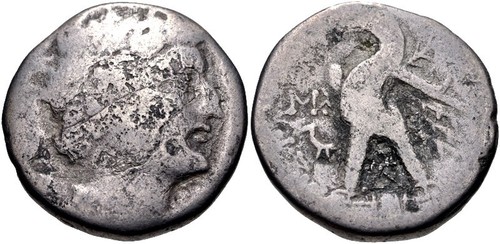
Tetradrachm of Ptolemy XII
80-51 BC
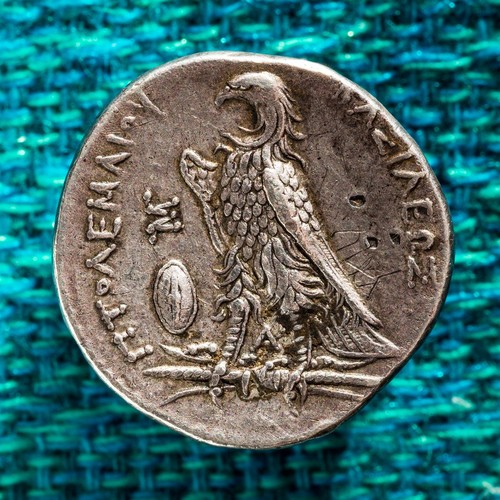
Tetradrachm of Ptolemy I
305-283 BC
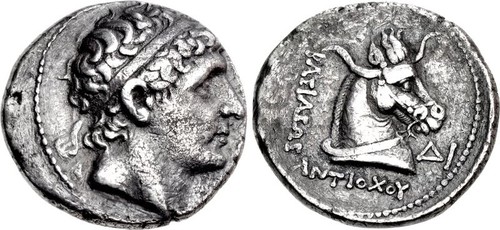
Tetradrachm of Antiochos I Soter
281-261 BC
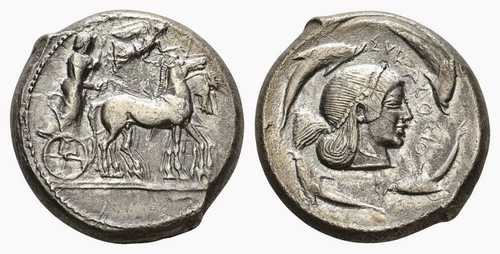
Syracuse Tetradrachm
c. 5th-4th century BC (Classical period)
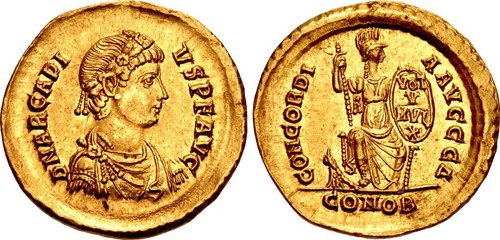
Solidus of Arcadius
AD 395-402
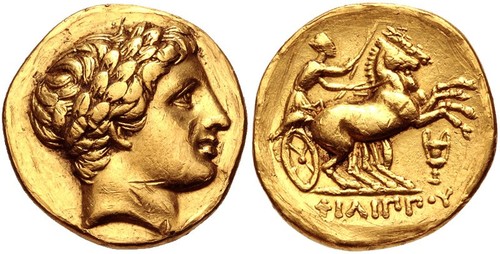
Philip III Gold Stater
323-317 BC
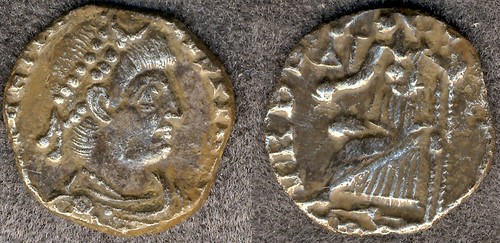
Siliqua of Gratian
AD 367-383
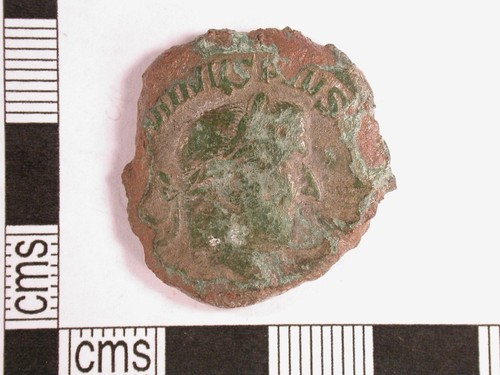
Sestertius of Maximinus Thrax
235-238 AD
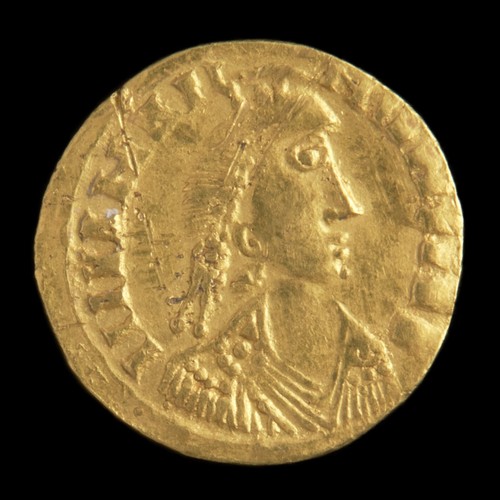
Solidus of Valentinian III
AD 425-455
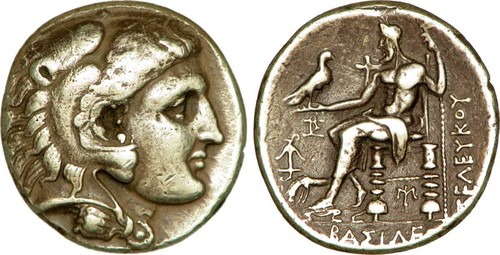
Seleucus I Nicator Tetradrachm
Late 4th-3rd century BC
Nummus of Magnentius
AD 350-353
Follis of Galerius
AD 308-310