
How to Identify the Roman As/Dupondius (Uncertain)
A collector's guide to recognizing a Roman bronze As or Dupondius by its Janus head, ship reverse, ROMA legend, metal, and patina.
Read the full Roman As/Dupondius (Uncertain) encyclopedia entry →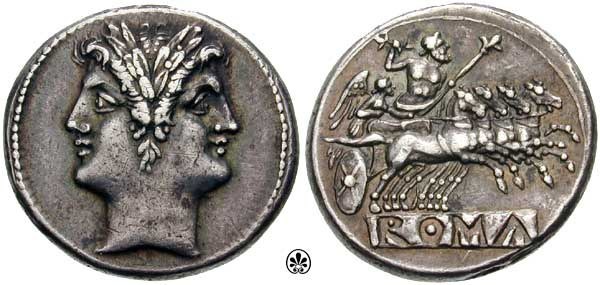
Begin with the two headline devices, because together they identify the family fast. One face should show a Janus head: a single head with two faces set back to back, looking in opposite directions. The other face shows a ship, here described as a galley or ship's prow, with the letters ROMA below it. Confirming both the double-faced head and the ship-with-ROMA reverse places the coin squarely in the Roman bronze As/Dupondius tradition.
Check the metal and surfaces next. This is a bronze (copper-alloy) coin, so expect a brown, green, or reddish patina and the softened, slightly irregular relief of a hand-struck ancient piece. Genuine examples usually show honest wear, and often some porosity, earthen deposits, or edge irregularity. Perfectly smooth, sharp, uniform surfaces on a supposedly ancient bronze are a caution sign.
To move from family toward denomination, look at size, weight, and any crown. Roman convention often associated a radiate crown with the Dupondius and a bare or laureate head with the As, so note whether the Janus head shows radiate points. Diameter and weight also help separate the denominations. On a worn or uncertain piece these clues may be incomplete, which is exactly why this specimen is catalogued as As or Dupondius uncertain; a specialist reference or in-hand measurement is the reliable next step.
Watch for look-alikes and reproductions. Provincial and later imitative bronzes, tourist replicas, and cast copies can mimic the general look. The specific Janus-and-ship-with-ROMA combination narrows it to Roman issues, but authentication of any ancient coin should rest on weight, fabric, style, and patina rather than design alone. When value or attribution matters, seek an opinion from a reputable ancient-coin dealer or grading service, and keep any provenance documentation you have.
Frequently asked questions
What is the single most telling feature?
The double-faced Janus head. A single head with two faces looking opposite ways is distinctive to Roman coinage, and paired with a ship and ROMA it confirms a Roman bronze As or Dupondius.
How can I tell the As from the Dupondius?
Compare size and weight, and check whether any crown is radiate, which leans toward a Dupondius, versus bare or laureate for an As. Worn coins may not preserve these clues, leaving the denomination uncertain.
How do I know it is genuine and not a replica?
Genuine ancient bronzes show real wear, hand-struck irregularity, and an aged patina rather than crisp, uniform machine surfaces. Judge authenticity by weight, fabric, style, and patina, and consult a reputable dealer when in doubt.
Why is the exact date and denomination listed as uncertain?
The Janus-and-ship bronze format spans a long stretch of Roman history and was struck in huge quantities. When a coin is worn or lacks distinguishing detail, it cannot be pinned to a single issue, so it is recorded as an uncertain As or Dupondius.