
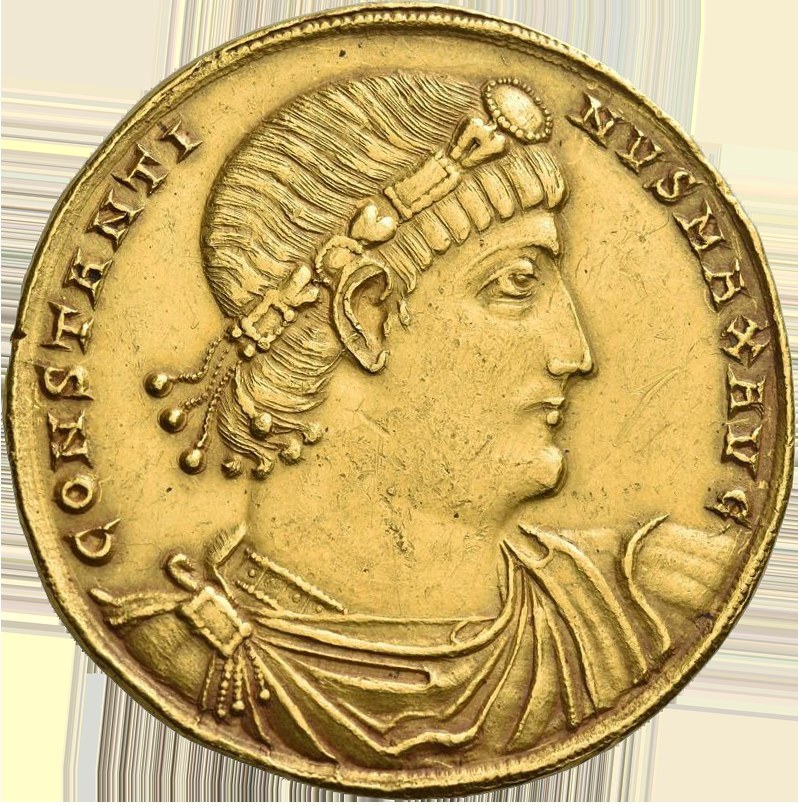
Solidus of Constantine I the Great
Constantine the Great's gold solidus, a high-purity coin struck from about AD 309 that became the standard of late Roman and Byzantine gold.
- Country
- Roman Empire
- Denomination
- Solidus
- Metal
- Gold
Got a coin like this?
Identify any coin from a photo, free.
Overview
The solidus is a Roman gold coin permanently established under Constantine I ("the Great"), who ruled from AD 306 to 337. Struck at roughly 4.5 grams and 24 carats, the solidus replaced the older, heavier aureus and set a new standard of weight and purity that would anchor Roman and later Byzantine gold coinage for centuries.
The piece observed here shows the classic Constantinian obverse: the emperor facing right in an ornate, jewelled diadem-and-wreath headdress, surrounded by a Latin legend that includes his name, CONSTANTINVS. Solidi of this type were prestige coins used for large payments, donatives to the army, and imperial gifts rather than everyday market transactions.
Because of their high gold content and their association with one of Rome's most consequential emperors, Constantine's solidi are among the most sought-after and historically significant coins of the late Empire.
History & Background
Constantine introduced the solidus early in his reign, around AD 309, first at the mint of Trier, as part of a broader reform of the debased Roman currency. Set at 72 to the Roman pound, it stabilized the value of imperial gold after decades of monetary chaos in the third century and quickly spread across the mints of the Empire.
Constantine's long reign (AD 306-337) also transformed the Roman world: he reunified the Empire under a single ruler, extended official tolerance to Christianity, and founded a new eastern capital at Constantinople. His coinage reflects these shifts, moving from the earlier laureate and military portraiture toward the more idealized, diademed imperial image seen on later issues.
The solidus proved so successful that it outlasted the Western Empire, continuing as the mainstay of Byzantine gold for hundreds of years and lending its name to later coins and even the word "soldier." Constantine's own solidi therefore stand at the very beginning of one of history's most durable coinages.
How to Identify
The defining traits are the metal and the portrait. A genuine Constantinian solidus is struck in high-purity gold, weighs roughly 4.4-4.5 grams, and measures about 19-21 mm across, smaller and thinner than the earlier aureus. The obverse shows Constantine facing right; on this example he wears an ornate jewelled headdress combined with a wreath, and the legend carries his name beginning CONSTANTINVS (here the portion CONSTANTINI is visible).
Obverse legends typically expand to forms such as CONSTANTINVS P F AVG or CONSTANTINVS MAX AVG, with the bust style ranging from laureate and cuirassed to the diademed, upward-gazing portrait of his later years. Reverse types, not shown on this obverse-only image, commonly feature Victory, the emperor enthroned or standing, Sol, or personifications of the army and state, with a mint mark in the exergue.
Mint marks in the reverse exergue identify the striking city, with Trier, Nicomedia, Antioch, Thessalonica, Constantinople, and others all producing solidi during the reign. The combination of high-karat gold, a portrait weight near 4.5 grams, and a CONSTANTINVS legend is the core signature of the type.
Value & Collectibility
As high-purity ancient gold tied to a famous emperor, solidi of Constantine I command strong prices. Even worn or common examples generally trade in the high hundreds to low thousands of dollars for their gold and historical interest, while sharp, well-centered coins with attractive portraits and desirable reverse types can reach several thousand dollars or more.
Value is driven by condition, the clarity and artistry of the portrait, the reverse type and mint, centering, and any notable provenance. Rare mints, special donative issues, and exceptional eye appeal add significant premiums, and top-grade or historically important pieces can bring five figures at auction.
The figures here are general context, not appraisals. Because ancient gold is widely faked and legal export and ownership rules vary by country, buyers should treat provenance and authentication as essential parts of a coin's value.
Frequently asked questions
What is a solidus?
The solidus is a Roman gold coin permanently established by Constantine I around AD 309. Struck at about 4.5 grams of high-purity gold and 72 to the Roman pound, it replaced the aureus and became the standard gold coin of the late Roman and Byzantine world.
How do I know a coin is Constantine's solidus and not another emperor's?
Read the obverse legend. Constantine's solidi carry his name beginning CONSTANTINVS, often expanded to forms like CONSTANTINVS P F AVG or CONSTANTINVS MAX AVG. Many later emperors also struck solidi, so the name in the legend, not just the gold, identifies the ruler.
What metal and weight should it be?
A genuine solidus is high-karat gold weighing roughly 4.4-4.5 grams and measuring about 19-21 mm. A coin that is significantly light, off-color, or of low gold content is a warning sign of a forgery or a plated piece.
Are Constantine's solidi rare and valuable?
They are prestigious gold coins and command prices from the high hundreds into the thousands of dollars, with exceptional examples reaching far higher. Condition, mint, reverse type, and provenance all strongly affect value.
Solidus of Constantine I the Great guides
In-depth guides for identifying, valuing, and collecting Solidus of Constantine I the Great.
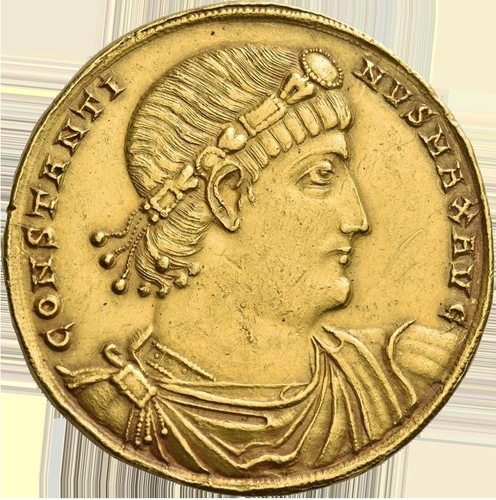
Other coins you may enjoy
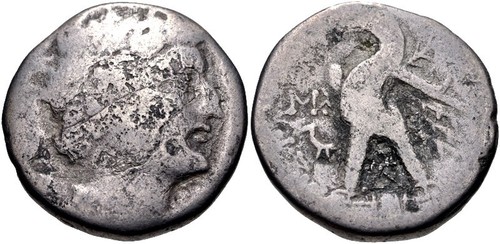
Tetradrachm of Ptolemy XII
80-51 BC
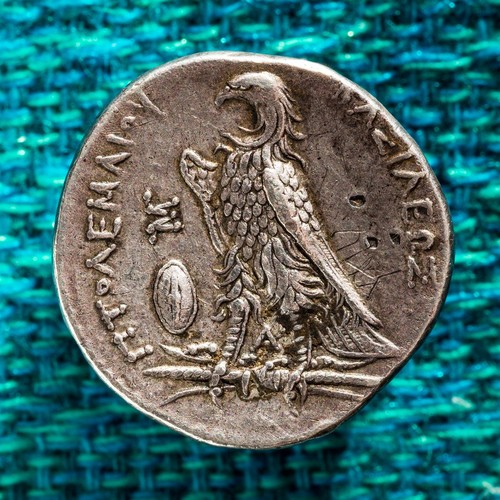
Tetradrachm of Ptolemy I
305-283 BC
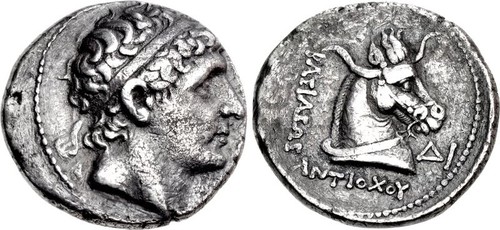
Tetradrachm of Antiochos I Soter
281-261 BC
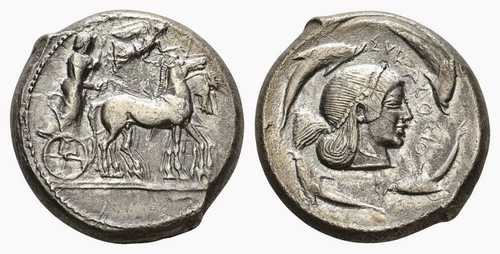
Syracuse Tetradrachm
c. 5th-4th century BC (Classical period)
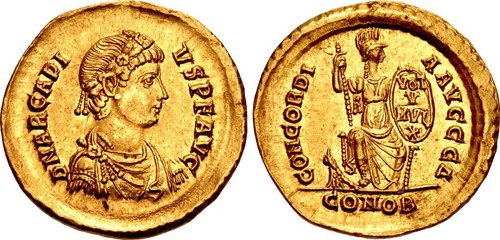
Solidus of Arcadius
AD 395-402
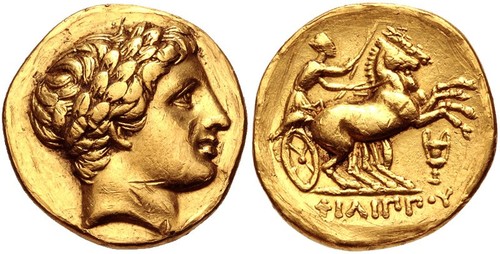
Philip III Gold Stater
323-317 BC
Siliqua of Gratian
AD 367-383
Sestertius of Maximinus Thrax
235-238 AD
Solidus of Valentinian III
AD 425-455
Seleucus I Nicator Tetradrachm
Late 4th-3rd century BC
Nummus of Magnentius
AD 350-353
Follis of Galerius
AD 308-310