
How to Identify the Solidus of Constantine I the Great
A collector's guide to the gold, weight, diademed portrait, and CONSTANTINVS legend that mark a genuine solidus of Constantine the Great.
Read the full Solidus of Constantine I the Great encyclopedia entry →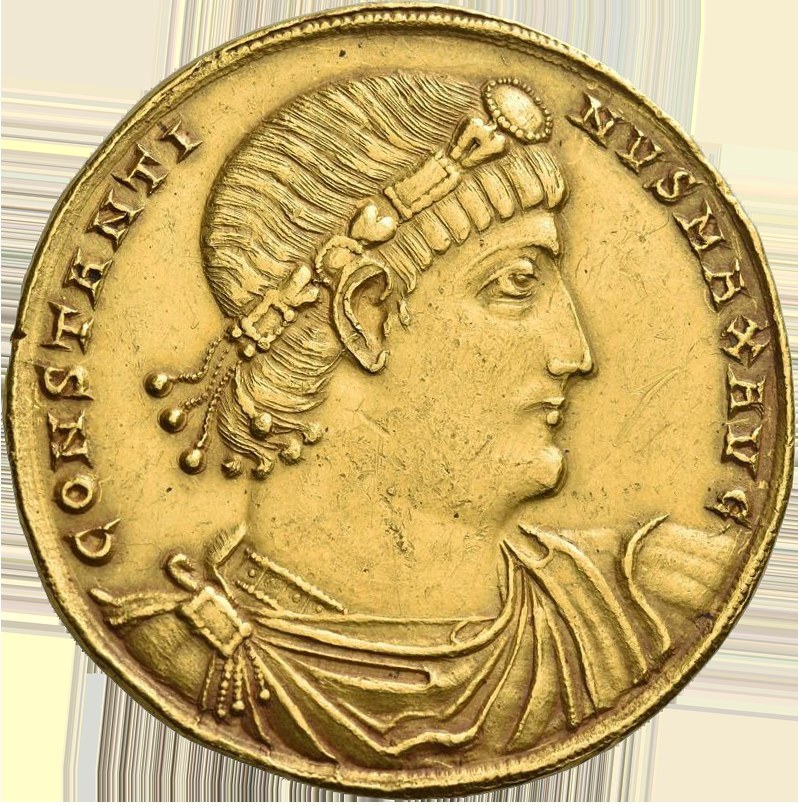
Begin with the metal and physical specifications, because they narrow the field fast. A genuine solidus of Constantine I is struck in high-purity gold, weighs about 4.4-4.5 grams, and spans roughly 19-21 mm. That combination sets it apart from the heavier third-century aureus and from base-metal coins of the same era. Gold of this period should show a warm, even color with no coppery or greyish tone that would suggest a plated or debased fake.
Read the obverse and its legend carefully. The portrait faces right and, depending on the issue, ranges from a laureate, cuirassed military bust to the later jewelled diadem-and-wreath headdress seen on this example, sometimes with the eyes raised upward in the idealized late style. The surrounding legend must name the emperor: look for CONSTANTINVS, often continuing to P F AVG or MAX AVG. On this coin the visible portion CONSTANTINI confirms the name. Matching bust style to legend helps place the coin within the AD 306-337 reign.
Use the reverse and mint mark to attribute the coin, even though the reverse is not shown here. Solidi of Constantine commonly depict Victory advancing or seated, the emperor standing or enthroned, Sol, or personifications such as the army and Roman state, with a Latin legend naming the type. The exergue below the reverse design usually carries a mint mark: Trier (TR), Nicomedia (SMN), Antioch (AN), Thessalonica (TES), Constantinople (CONS), and others each struck solidi during the reign, and the mark is essential for full attribution.
Watch closely for look-alikes and forgeries. Many later emperors, from Constantine's sons to Valentinian and beyond, struck similar diademed gold solidi, so always read the name in the legend rather than relying on the general appearance. Ancient gold is heavily counterfeited: modern cast copies, tooled surfaces, and gold-plated base-metal fakes all circulate. Warning signs include incorrect weight, a visible casting seam, soft or grainy detail, mismatched portrait and legend styles, and lettering that does not match known die styles. For any significant purchase, insist on solid provenance and, ideally, authentication or grading by a specialist in late Roman gold, and be aware that antiquities export and ownership laws differ by country.
Frequently asked questions
What is the fastest way to spot a genuine Constantine solidus?
Check the trio of gold color, weight, and legend. It should be high-karat gold at about 4.4-4.5 grams and 19-21 mm, with a right-facing portrait and a legend naming CONSTANTINVS. Anything far off those specs deserves suspicion.
How do I tell Constantine's solidus from his sons' coins?
Read the obverse legend. Constantine I appears as CONSTANTINVS with titles like P F AVG or MAX AVG, while his sons carry names such as CONSTANTINVS IVN, CONSTANTIVS, or CONSTANS. The similar diademed style makes the exact name essential.
Where is the mint mark and why does it matter?
The mint mark sits in the exergue, the space beneath the reverse design. Abbreviations like TR, SMN, AN, TES, or CONS identify the striking city and are needed for full attribution and can affect rarity and value.
How can I guard against gold fakes?
Verify weight and diameter, examine the edge for casting seams, and compare the portrait and lettering to published die styles. Because ancient gold is widely forged, buy from reputable sources and seek expert authentication and clear provenance for valuable pieces.