
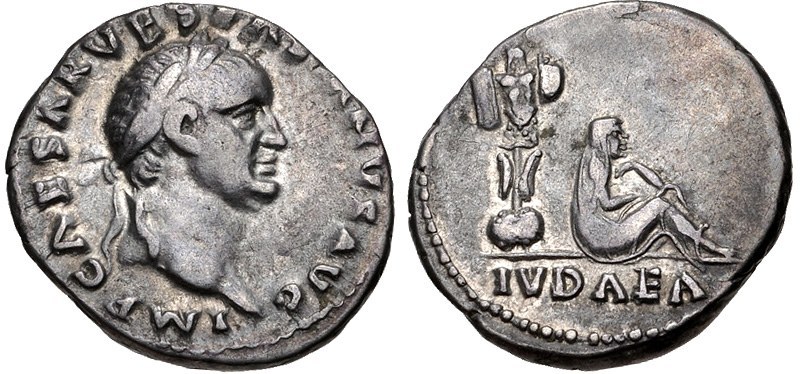
Denarius of Vespasian
Silver denarius struck under the emperor Vespasian (AD 69-79), founder of the Flavian dynasty, with his laureate portrait on the obverse.
- Country
- Roman Empire
- Denomination
- Denarius
- Metal
- Silver
Got a coin like this?
Identify any coin from a photo, free.
Overview
The denarius of Vespasian is a Roman silver coin issued during the reign of Titus Flavius Vespasianus, who ruled from AD 69 to 79 and founded the Flavian dynasty after the turmoil of the Year of the Four Emperors. It was the standard silver denomination of the Roman Empire and circulated widely across the Mediterranean world during his ten-year reign.
The obverse shows the laureate head of Vespasian facing right, surrounded by a Latin legend that names and titles him, most often opening with some form of IMP CAESAR VESPASIANVS AVG. The reverse carries one of many changing designs: personifications such as Fortuna, Pax, Aequitas or Concordia, seated or standing figures, sacrificial and religious implements, or references to his victories. The specific reverse type and legend are the main way individual issues are catalogued.
History & Background
Vespasian came to power at the end of AD 69, the chaotic Year of the Four Emperors, and restored stability to the Roman state after Nero's fall. To rebuild depleted finances he struck coinage in large volume, and the silver denarius was the workhorse denomination used to pay soldiers, fund building projects such as the Colosseum, and support everyday commerce.
His denarii were produced mainly at the mint of Rome, with additional issues from provincial mints during his reign. The coins were struck in silver of the standard imperial fineness of the period, though the metal was somewhat debased compared with the earlier Julio-Claudian denarius, part of a long gradual decline in the coin's silver content over the imperial centuries.
Because Vespasian reigned for a full decade and minted prolifically, denarii bearing his portrait survive in considerable numbers today and are among the more frequently encountered Roman imperial silver coins. They were struck across many years and reverse types, making the series a popular and accessible entry point for collectors of Roman coinage.
How to Identify
Look first for the laureate male portrait facing right, a mature man with a broad, lined face and receding hairline, a likeness Roman engravers rendered fairly realistically. The surrounding obverse legend should include the name VESPASIANVS, typically in a titulature such as IMP CAESAR VESPASIANVS AVG, sometimes with additional titles like COS or PON MAX and tribunician year abbreviations that help date the issue.
The coin is a small silver piece, roughly 17 to 19 mm across and around 3 grams, hand-struck so the shape is slightly irregular and the design is often a little off-center. Genuine ancient examples show honest wear, toned or slightly uneven silver surfaces, and the flat, sometimes cracked flans typical of hammered coinage rather than the sharp uniform edges of a machine-made coin.
The reverse varies widely: common types include standing or seated personifications (Pax, Fortuna, Aequitas, Salus, Victory), animals, or ritual objects, each with its own Latin legend. Because there is no single reverse, identification rests on reading the obverse VESPASIANVS legend together with the specific reverse figure and its inscription, which together match the coin to a catalogue reference.
Value & Collectibility
Denarii of Vespasian are among the more affordable Roman imperial silver coins because they were struck in large numbers over a ten-year reign. Worn but clearly identifiable examples with a readable portrait and legend commonly trade in the range of a few tens of dollars, while attractive, well-centered pieces with clear detail typically bring roughly one to a few hundred dollars.
Value is driven by condition, centering, the completeness of the legends, and the desirability of the particular reverse type. Rarer reverse designs, exceptional portraits, or high-grade examples with sharp detail and pleasant toning command higher prices, while corroded, holed, or heavily worn coins sell for less.
Provenance and authentication matter for ancient coins: pieces with documented collection history or professional certification generally realize stronger prices. As always with antiquities, these are broad ranges rather than fixed prices, and actual results depend on the individual coin and the market at the time of sale.
Frequently asked questions
Is a denarius of Vespasian real silver?
Yes. The imperial denarius was struck in silver, though by Vespasian's reign the alloy was somewhat debased compared with earlier issues. Genuine examples are silver coins weighing around 3 grams.
How old is a Vespasian denarius?
It dates to Vespasian's reign, AD 69 to 79, making surviving examples roughly 1,950 years old.
Are Vespasian denarii rare?
Not especially. Vespasian ruled for a decade and minted prolifically, so his denarii are among the more commonly encountered Roman imperial silver coins, which also keeps them relatively affordable.
What is on the reverse of the coin?
There is no single reverse. Vespasian's denarii use many designs, including personifications such as Pax, Fortuna and Aequitas, seated or standing figures, animals, and religious implements, each with its own Latin legend.
How can I tell which specific issue I have?
Read the obverse legend around the portrait to confirm VESPASIANVS and note any dating titles, then match the reverse figure and its inscription to a catalogue such as RIC. The combination identifies the exact issue.
Denarius of Vespasian guides
In-depth guides for identifying, valuing, and collecting Denarius of Vespasian.
Other coins you may enjoy
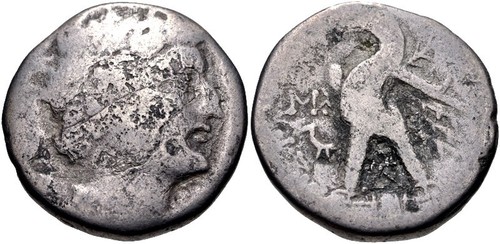
Tetradrachm of Ptolemy XII
80-51 BC
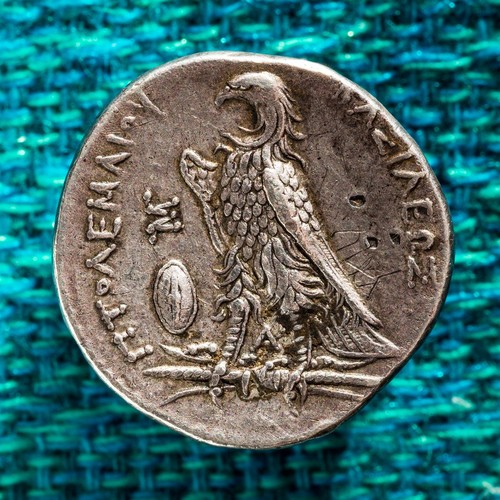
Tetradrachm of Ptolemy I
305-283 BC
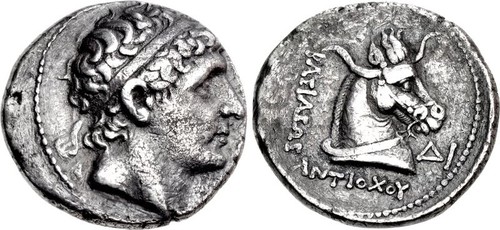
Tetradrachm of Antiochos I Soter
281-261 BC
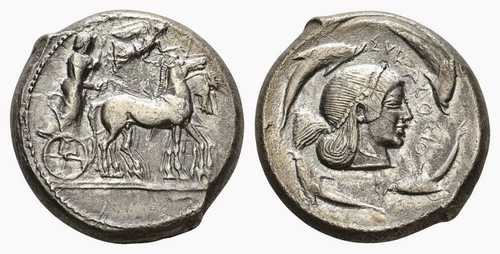
Syracuse Tetradrachm
c. 5th-4th century BC (Classical period)
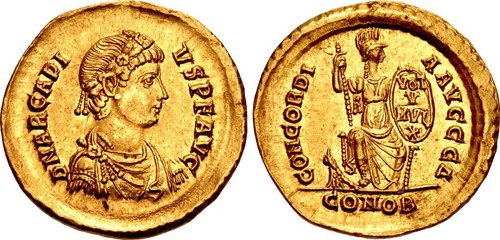
Solidus of Arcadius
AD 395-402
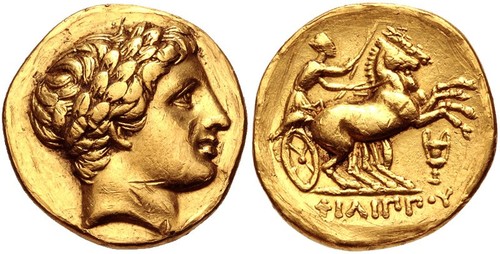
Philip III Gold Stater
323-317 BC
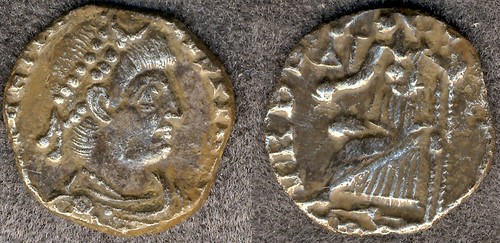
Siliqua of Gratian
AD 367-383
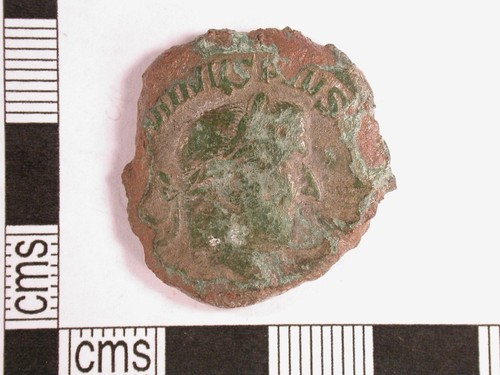
Sestertius of Maximinus Thrax
235-238 AD
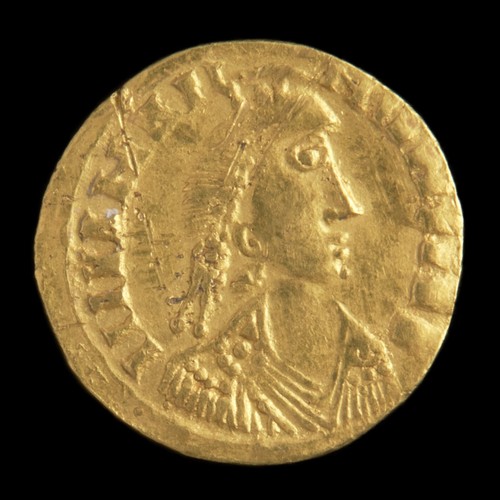
Solidus of Valentinian III
AD 425-455
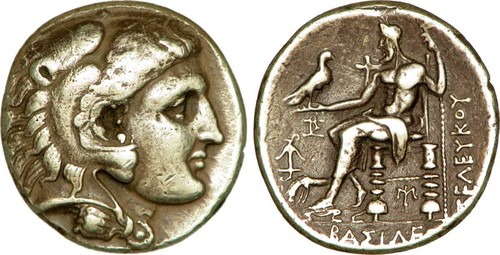
Seleucus I Nicator Tetradrachm
Late 4th-3rd century BC
Nummus of Magnentius
AD 350-353
Follis of Galerius
AD 308-310