
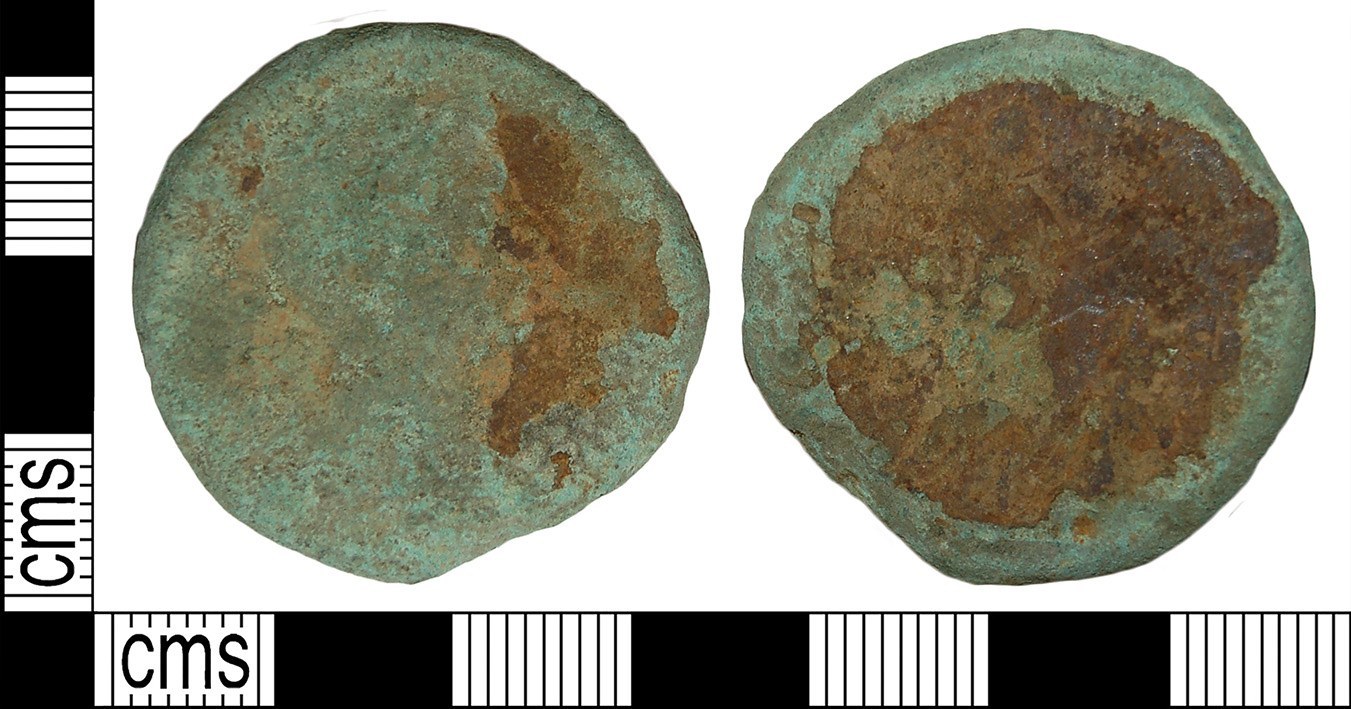
Sestertius of Commodus
A large Roman bronze sestertius of Emperor Commodus (180–192 AD), his laureate bearded head on one side and a standing figure on the other.
- Country
- Roman Empire
- Denomination
- Sestertius
- Metal
- Bronze/Orichalcum
Got a coin like this?
Identify any coin from a photo, free.
Overview
The sestertius was the largest common bronze denomination of imperial Rome, and this example was struck during the sole reign of Emperor Commodus, roughly 180 to 192 AD. It is a big, heavy coin cast in a golden-brown copper alloy, and the piece shown here carries the bearded, right-facing head of Commodus on the obverse and a standing figure, likely a deity or a military personification, on the reverse.
Sestertii like this served as high-value small change across the Roman world and were also a primary vehicle for imperial propaganda. The abbreviated Latin legends running around both faces name and title the emperor and describe the scene or virtue depicted on the reverse. Worn and patinated after nearly two millennia, coins of this type are widely collected today as tangible relics of the later Antonine and early Commodan period.
History & Background
Commodus ruled as sole emperor from 180 AD, following the death of his father Marcus Aurelius, until his assassination at the end of 192 AD. His reign is often treated as a turning point that closed the era of the so-called "Five Good Emperors," and his coinage reflects an increasingly self-glorifying imperial image, culminating in later issues that associated him with Hercules.
The sestertius had been the workhorse large bronze of Rome since the Augustan reform, struck in an orichalcum (a brass-like copper-zinc alloy) that originally gave it a bright golden tone. Throughout Commodus's reign the mint at Rome produced sestertii bearing evolving portraits and a rotating series of reverse types honoring gods, victories, imperial virtues, and public benefactions, dated internally by the emperor's tribunician and consular titles rather than by a calendar year.
Because his titulature changed almost yearly, specialists can often place a given Commodus sestertius within a narrow window inside the 180–192 span by reading its reverse legend. After his death and official condemnation, many of his coins remained in circulation for decades, which is one reason they survive in quantity.
How to Identify
The first clue is size and heft: a sestertius is a large, thick bronze coin, substantially bigger and heavier than the smaller dupondii, asses, and silver denarii of the same era. The metal is a copper alloy (orichalcum or bronze) that today usually shows a brown, green, or reddish patina rather than its original golden luster.
The obverse shows the head of Commodus facing right, mature and bearded in the Antonine style, typically laureate. It is encircled by an abbreviated Latin legend giving his name and titles, commonly opening with M COMMODVS or L AELIVS AVRELIVS COMMODVS along with imperial titles such as ANTONINVS AVG. The reverse depicts a standing figure and its own legend; on this coin the upright figure could be a deity or a personified virtue, and the letters S C (Senatus Consulto) generally appear in the field, marking it as a senatorial bronze issue.
Use the details of the standing reverse figure, any objects it holds, and the surrounding legend to identify the specific type and to narrow the date within the reign. The exact reading of the legend, rather than the portrait alone, is what pins down the issue.
Value & Collectibility
Values for a Commodus sestertius vary enormously with condition, since these are ancient hand-struck coins that have survived roughly 1,800 years. Heavily worn, corroded, or roughly patinated examples with weak legends are the most affordable and often trade in the modest tens of dollars up to low hundreds, while a clear portrait and a legible reverse push a coin higher.
Well-centered pieces with a sharp portrait, a fully readable legend, and an attractive even patina can reach several hundred to well into the thousands of dollars, and exceptional rare reverse types or superb-quality examples command considerably more at specialist auctions. As a broad guide only, most collectable middle-grade sestertii of Commodus fall somewhere in the low hundreds of dollars.
Because the field carries both genuine ancient rarities and modern forgeries, and because provenance and eye appeal heavily influence price, any significant purchase should rely on a specialist's assessment rather than a fixed catalog figure.
Frequently asked questions
What is a sestertius of Commodus made of?
It is a large Roman bronze denomination struck in a copper alloy, orichalcum or bronze. Originally golden-toned, surviving examples usually show a brown, green, or reddish patina from centuries of aging.
How old is this coin?
It dates to the reign of Commodus, roughly 180 to 192 AD, making it close to 1,800 years old. The precise year within that span is usually determined from the emperor's titles in the legend.
Who is shown on the coin?
The obverse bears the bearded, right-facing head of Emperor Commodus. The reverse shows a standing figure, typically a Roman deity or a personified virtue, accompanied by its own descriptive legend.
What does S C on the reverse mean?
S C stands for Senatus Consulto, "by decree of the Senate." It appears on Roman bronze coinage, including sestertii, marking these denominations as senatorial issues.
Are these coins valuable?
Value depends heavily on condition. Worn examples can be quite affordable, while sharp, well-patinated pieces with clear legends or rare reverse types can be worth hundreds to thousands of dollars. A specialist appraisal is advisable.
Sestertius of Commodus guides
In-depth guides for identifying, valuing, and collecting Sestertius of Commodus.
Other coins you may enjoy
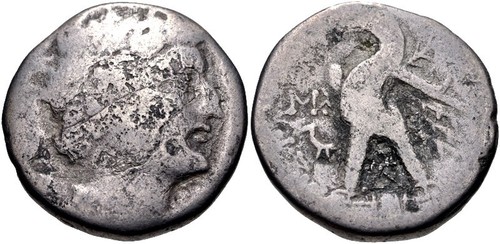
Tetradrachm of Ptolemy XII
80-51 BC
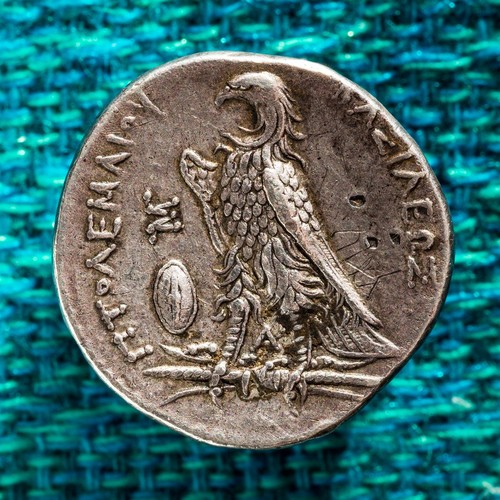
Tetradrachm of Ptolemy I
305-283 BC
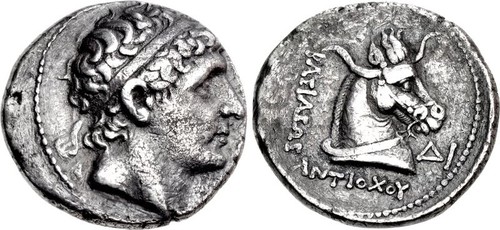
Tetradrachm of Antiochos I Soter
281-261 BC
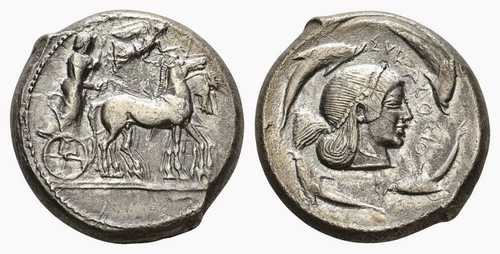
Syracuse Tetradrachm
c. 5th-4th century BC (Classical period)
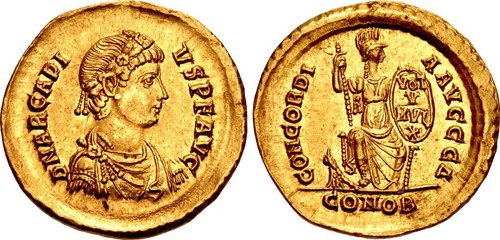
Solidus of Arcadius
AD 395-402
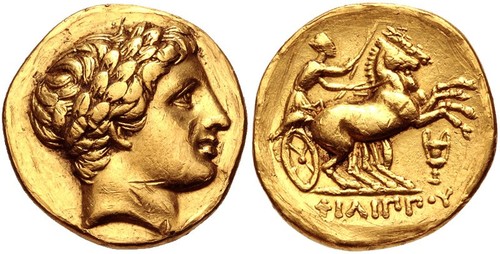
Philip III Gold Stater
323-317 BC
Siliqua of Gratian
AD 367-383
Sestertius of Maximinus Thrax
235-238 AD
Solidus of Valentinian III
AD 425-455
Seleucus I Nicator Tetradrachm
Late 4th-3rd century BC
Nummus of Magnentius
AD 350-353
Follis of Galerius
AD 308-310