
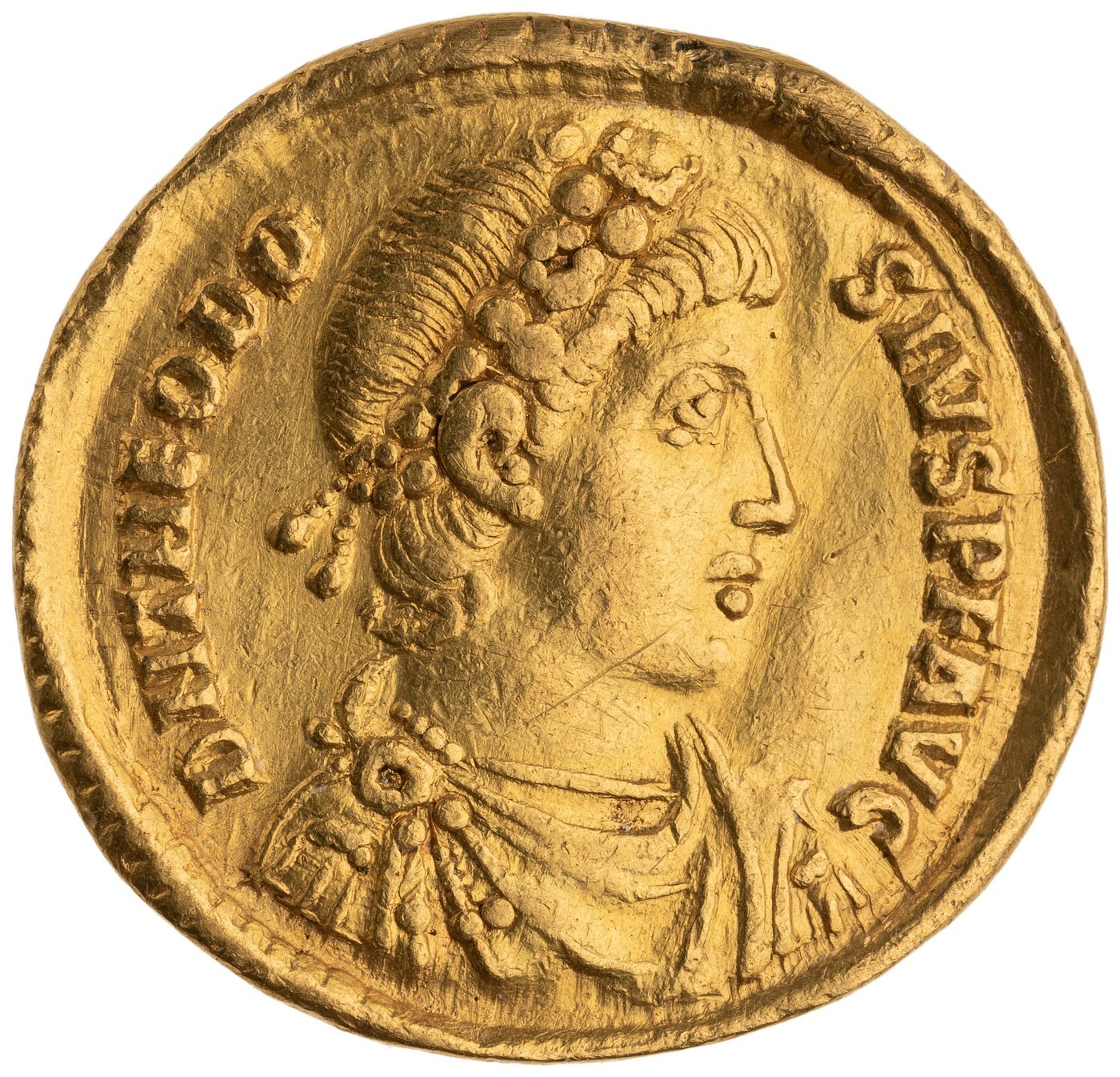
Solidus of Theodosius I
A late Roman gold solidus struck for the emperor Theodosius I (AD 379-395), showing his diademed portrait and the legend D N THEODOSIVS AVG.
- Country
- Roman Empire
- Denomination
- Solidus
- Metal
- Gold
Got a coin like this?
Identify any coin from a photo, free.
Overview
The solidus was the standard gold coin of the late Roman Empire, a piece of roughly 4.5 grams struck at 72 to the Roman pound. Introduced under Constantine the Great early in the fourth century, it held its weight and purity for centuries and became the backbone of imperial finance and long-distance payment.
This solidus was issued for Theodosius I, emperor from AD 379 to 395 and the last man to rule both halves of the Roman world. The obverse carries his diademed bust facing right with an elaborate treatment of curled hair, encircled by the Latin legend D N THEODOSIVS AVG, short for Dominus Noster Theodosius Augustus, "Our Lord Theodosius, Emperor."
As a high-value gold coin of a well-known emperor from the twilight of the united empire, the Theodosian solidus is prized by collectors of late Roman and early Byzantine gold. Its reverse, not visible on the coin photographed here, would have carried one of the standard imperial types of the period together with a mint mark.
History & Background
Theodosius I, later called Theodosius the Great, was raised to the purple in AD 379 to stabilize the eastern provinces after the disastrous Roman defeat at Adrianople. Over his reign he settled the Goths within the empire, defeated rival claimants in the West, and in 391-392 made Nicene Christianity the state religion, ending official toleration of the old pagan cults.
His gold coinage was struck at several imperial mints, including Constantinople, Thessalonica, Milan, and other western and eastern centers. The solidus of this era was a deliberately stable store of value: while base-metal coinage was repeatedly reformed and debased, the gold solidus kept its weight and fineness, underwriting state salaries, military pay, and diplomacy.
When Theodosius died at Milan in AD 395, the empire was divided between his sons Arcadius in the East and Honorius in the West, a split that proved permanent. His solidi therefore belong to the final years of a single Roman state and sit at the historical bridge between the classical Roman and the Byzantine gold coinages.
How to Identify
Begin with the metal and size. A solidus is struck in high-purity gold, weighs about 4.4 to 4.5 grams, and measures roughly 20 to 21 mm across. It has the warm, rich color and heft of nearly pure gold rather than the paler tone of a gold alloy.
Read the obverse legend around the portrait. On this coin it runs D N THEODOSIVS AVG, naming the emperor Theodosius with the late Roman formula Dominus Noster and the title Augustus. The bust faces right and wears a pearl or rosette diadem, with the hair shown in elaborate curls, matching the portrait style of the late fourth century. The diadem, not a laurel wreath or radiate crown, is characteristic of this period.
The reverse is not shown on the coin photographed, but Theodosian solidi typically carry types such as an enthroned emperor or two seated emperors (Concordia and Victoria types), a Victory or an emperor figure, with legends like CONCORDIA AVGGG or VICTORIA AVGGG and a mint mark in the exergue such as CONOB, indicating gold struck at Constantinople or another imperial mint. Reading that mark and reverse legend is how the exact issue and mint are attributed.
Value & Collectibility
Solidi of Theodosius I are collectible late Roman gold and carry both their bullion value and a numismatic premium. As pieces of nearly pure gold weighing about 4.5 grams, they always retain a metal floor, and desirable examples trade well above it. Typical collector coins range from the mid hundreds into the low thousands of dollars depending on condition, while exceptional or rare mint and reverse combinations can go higher.
Value is driven by the sharpness of the portrait, the completeness of the legends, centering and flan quality, the specific mint and reverse type, and provenance. Because gold does not corrode, many solidi survive with clear detail, so eye appeal and rarity of the issue matter more than mere preservation.
The figures here are general context, not an appraisal. Because these are high-value gold coins, they are also among the more frequently faked ancient types, so authentication and attribution by a specialist meaningfully affect what a given coin is worth.
Frequently asked questions
What does the legend D N THEODOSIVS AVG mean?
It stands for Dominus Noster Theodosius Augustus, meaning "Our Lord Theodosius, Emperor." Dominus Noster (D N) is the standard late Roman imperial style, and AVG marks him as an Augustus.
How much gold is in a solidus?
The solidus was struck in high-purity gold at 72 coins to the Roman pound, giving a weight of about 4.4 to 4.5 grams of nearly pure gold. It was designed to hold its weight and fineness over a long period.
Which Theodosius is this coin?
This is Theodosius I, who reigned AD 379 to 395 and is known as Theodosius the Great. A later Theodosius II also struck solidi, so the reign dates and portrait style help separate the two.
Where was it minted?
Theodosian solidi were struck at several imperial mints, including Constantinople, Thessalonica, and Milan. The mint mark in the reverse exergue, such as CONOB, identifies the specific mint of a given coin.
Solidus of Theodosius I guides
In-depth guides for identifying, valuing, and collecting Solidus of Theodosius I.
Other coins you may enjoy
Tetradrachm of Ptolemy XII
80-51 BC
Tetradrachm of Ptolemy I
305-283 BC
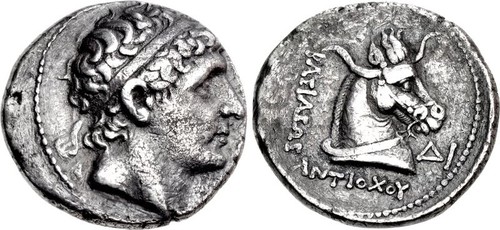
Tetradrachm of Antiochos I Soter
281-261 BC
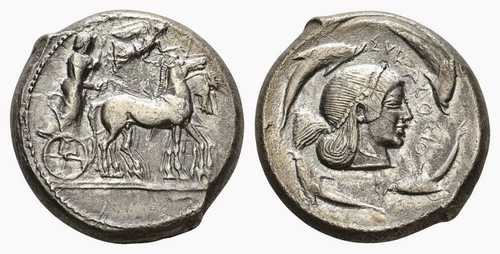
Syracuse Tetradrachm
c. 5th-4th century BC (Classical period)
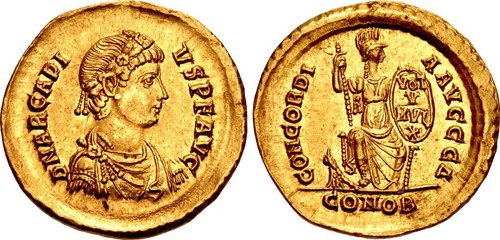
Solidus of Arcadius
AD 395-402
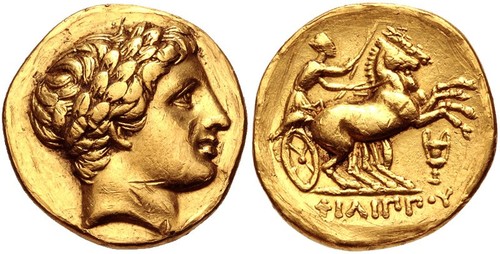
Philip III Gold Stater
323-317 BC
Siliqua of Gratian
AD 367-383
Sestertius of Maximinus Thrax
235-238 AD
Solidus of Valentinian III
AD 425-455
Seleucus I Nicator Tetradrachm
Late 4th-3rd century BC
Nummus of Magnentius
AD 350-353
Follis of Galerius
AD 308-310