
How to Identify the Solidus of Theodosius I
A collector's guide to reading the D N THEODOSIVS AVG legend, diademed portrait, gold fabric, and mint marks of a Theodosian solidus.
Read the full Solidus of Theodosius I encyclopedia entry →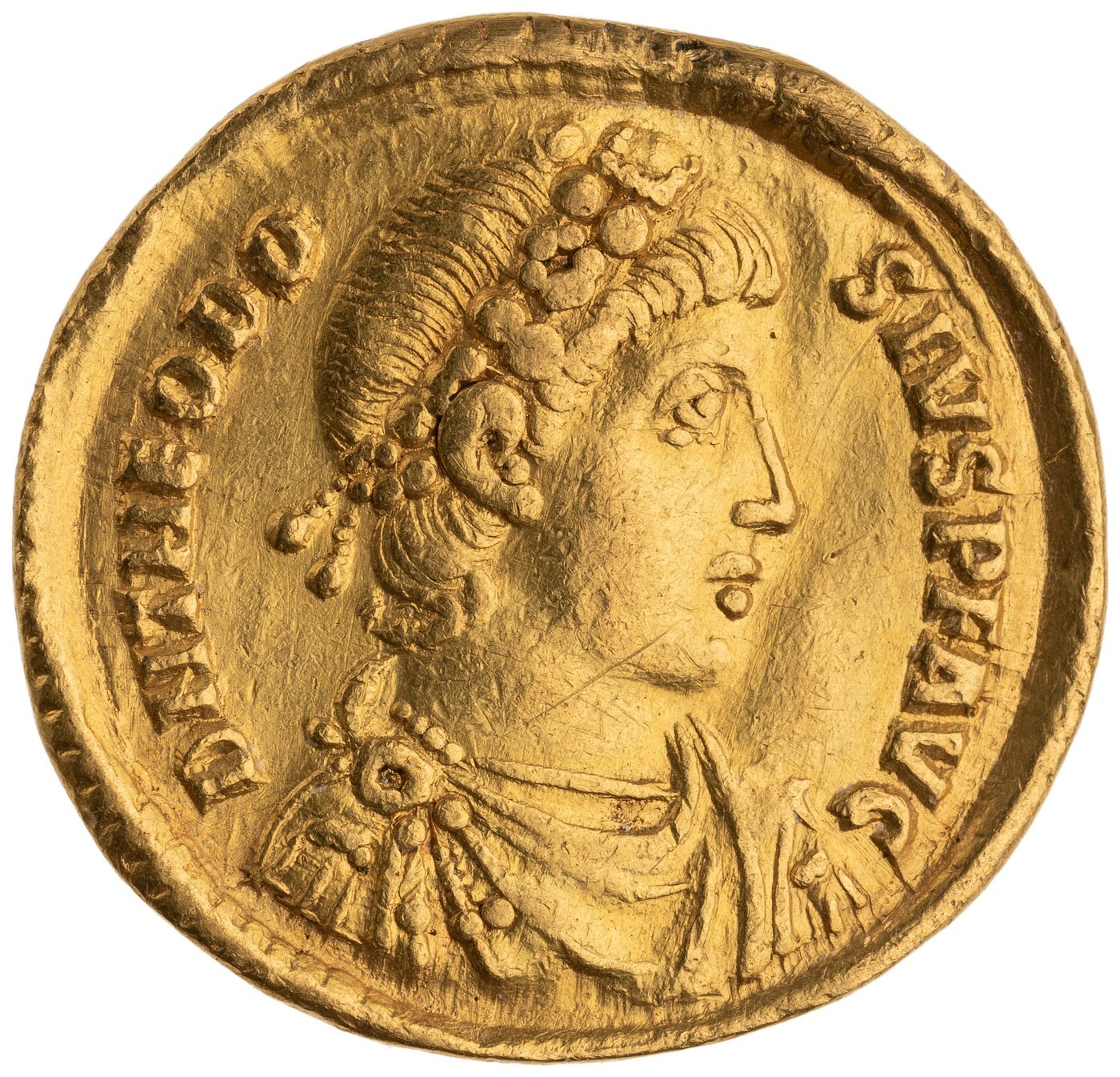
Start with the obverse legend, which is the surest identifier. A solidus of Theodosius I reads D N THEODOSIVS AVG around a right-facing bust. The D N (Dominus Noster) opening and the AVG title are the late Roman imperial formula, and the name THEODOSIVS confirms the ruler. Because a later emperor, Theodosius II, used nearly the same name, note the portrait style and any reverse type: Theodosius I belongs to AD 379-395 and shows the mature fourth-century diademed style rather than the more frontal, helmeted busts of the fifth century.
Check the crown and hairstyle. The emperor wears a pearl or rosette diadem tied at the back, not a laurel wreath and not a radiate crown, and the hair is rendered in tight, elaborate curls. This diademed, richly detailed portrait is typical of late fourth-century gold and helps distinguish a genuine period style from a clumsy imitation.
Confirm the metal and physical specs. A real solidus is high-purity gold with a warm yellow color, weighs about 4.4 to 4.5 grams, and is roughly 20 to 21 mm in diameter, usually on a fairly thin, broad flan. A coin that is markedly underweight, pale or reddish in tone, or magnetic is a warning sign. Because gold survives well, genuine solidi often show crisp detail, so unusually soft or grainy surfaces deserve scrutiny.
Use the reverse and mint mark for attribution. The coin photographed here does not show its reverse, but Theodosian solidi commonly carry enthroned-emperor or seated-figures types with legends such as CONCORDIA AVGGG or VICTORIA AVGGG, and an exergue mark like CONOB (Constantinople gold) or the abbreviation of another mint. Reading that mark and reverse legend pins the coin to a specific mint and issue.
Be cautious with authentication. Solidi are high-value gold and are among the more commonly forged ancient coins, produced as cast copies, modern struck fakes, and gold-plated base-metal pieces. Look for a casting seam around the edge, letters that are mushy or inconsistent with period lettering, incorrect weight, or a portrait and legend that do not match a documented issue. For any significant purchase, rely on a specialist in late Roman and Byzantine gold or on a coin with solid provenance and, where appropriate, non-destructive metal testing.
Frequently asked questions
How do I tell Theodosius I from Theodosius II on a solidus?
Both share the name in the legend, so use the reign dates and style. Theodosius I (AD 379-395) shows a right-facing diademed bust in fourth-century style, while Theodosius II's later coins often use a frontal, helmeted bust and fifth-century reverse types.
What weight and size should a genuine solidus be?
About 4.4 to 4.5 grams of high-purity gold and roughly 20 to 21 mm across, usually on a thin, broad flan. Coins well outside this weight, or of pale or reddish color, should be treated with suspicion.
What is CONOB in the reverse exergue?
CONOB marks gold struck at Constantinople (CON) with OB denoting refined gold. Other mints used their own abbreviations, so the exergue mark identifies where a particular solidus was made.
Are Theodosian solidi often faked?
Yes. As high-value pure gold, they are among the more frequently forged ancient coins. Watch for casting seams, poor lettering, wrong weight, or gold-plated cores, and seek specialist attribution for anything bought as an investment.