
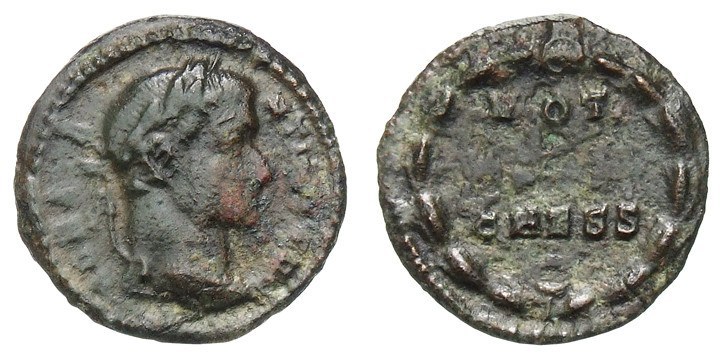
Nummus of Constantine I
Small late Roman bronze nummus (follis) of Constantine I the Great (306-337 CE), identified by his right-facing imperial portrait on the obverse.
- Country
- Roman Empire
- Denomination
- Nummus
- Metal
- Bronze
Got a coin like this?
Identify any coin from a photo, free.
Overview
The Nummus of Constantine I is a small bronze coin struck during the long reign of Constantine the Great, sole and joint ruler of the Roman Empire between 306 and 337 CE. The example shown here displays the defining obverse feature: a portrait of Constantine facing right, surrounded by his name and titles in abbreviated Latin.
The nummus — often called a follis by collectors — was the workhorse bronze denomination of the early fourth century. Struck in enormous quantities at mints across the empire, from Britain to the eastern provinces, these coins are among the most commonly encountered ancient Roman bronzes and are a familiar entry point for new collectors of the period.
History & Background
Constantine I was proclaimed emperor by his troops at York (Eboracum) in 306 CE and, over the following decades, fought his way to become sole ruler of the Roman world. He is remembered above all for his support of Christianity, for founding Constantinople as a new eastern capital, and for the sweeping administrative and monetary reforms of his reign, which lasted until his death in 337 CE.
The nummus he inherited had begun life under Diocletian's reforms as a fairly large silvered bronze coin, but it was progressively reduced in size and weight through the early fourth century. Constantinian nummi are therefore generally smaller and lighter than the earlier folles, and their thin silver coating has usually worn away entirely, leaving a plain bronze surface.
Because the reverse of this particular coin is not clearly visible, its specific type and legend cannot be read from the image alone. Constantinian reverses are famously varied, including military-camp gate designs, standards between soldiers, personifications such as Sol Invictus and Providentia, victory and vota types, and the widely produced posthumous and commemorative issues struck in his name.
How to Identify
Identify this coin first by the right-facing portrait of Constantine on the obverse, typically laureate, diademed, or helmeted depending on the issue. The surrounding legend renders his name and titles in abbreviated Latin, commonly including CONSTANTINVS with AVG (Augustus) or, on earlier issues, NOB C or CAES for his junior ranks. Reading even part of the legend helps confirm the ruler.
The coin is small and made of bronze, generally around 17-25 mm in diameter and only a few grams, though exact size varies because the denomination shrank over Constantine's reign. Genuine examples are usually brown, green, or grey from age; a few retain traces of the original silvering, but most do not. The metal is non-magnetic and should not resemble bright modern silver.
The reverse is not clearly visible in this image, so the exact reverse type and its mint mark cannot be confirmed here. On a fully legible coin, the reverse legend and the small mint mark in the exergue (the flat area below the design) are the keys to identifying the issuing mint and the specific type.
Value & Collectibility
Bronze nummi of Constantine I are among the most affordable and widely available ancient Roman coins, because they were struck in vast numbers across many mints and survive in enormous quantities today. Common, worn examples typically trade for modest sums — often a few dollars to a couple of tens of dollars — making them a classic first ancient coin for many collectors.
Value rises with condition, surviving silvering, sharp portrait detail, full legible legends, and desirable or scarcer reverse types and mint marks. Well-centered coins with attractive patina, or sought-after types such as certain commemoratives, can command meaningfully more, and exceptional examples sell higher still.
Because the reverse is not clearly visible here, the specific type — a major factor in value — cannot be assessed from this image. As with all ancient coins, price depends on eye appeal and authenticity rather than a fixed catalog figure, and recent sales of comparable coins in similar grade are the best guide.
Frequently asked questions
What is a nummus?
The nummus is the standard bronze denomination of the early fourth-century Roman Empire, often called a follis by collectors. It began as a larger silvered bronze under Diocletian and was steadily reduced in size through Constantine's reign.
How do I know the portrait is Constantine I?
The obverse legend names the ruler in abbreviated Latin, typically including CONSTANTINVS with AVG or a junior title. Combined with the right-facing portrait and the 306-337 CE period, that identifies the coin as a nummus of Constantine I.
Is this coin silver or bronze?
It is bronze. Early nummi carried a thin silver wash, but on most surviving Constantinian coins that coating has worn away, leaving a plain brown, green, or grey bronze surface.
Are coins of Constantine I rare or valuable?
They are common. Constantine struck bronze nummi in huge numbers at many mints, so most are inexpensive. Value depends on condition, surviving silvering, and the specific reverse type rather than the emperor's rarity.
Why can't the reverse be identified here?
The reverse is not clearly visible in this image. On a legible coin the reverse design, legend, and the mint mark in the exergue would be needed to confirm the exact type and issuing mint.
Nummus of Constantine I guides
In-depth guides for identifying, valuing, and collecting Nummus of Constantine I.
Other coins you may enjoy
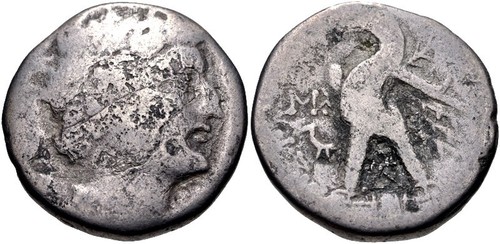
Tetradrachm of Ptolemy XII
80-51 BC
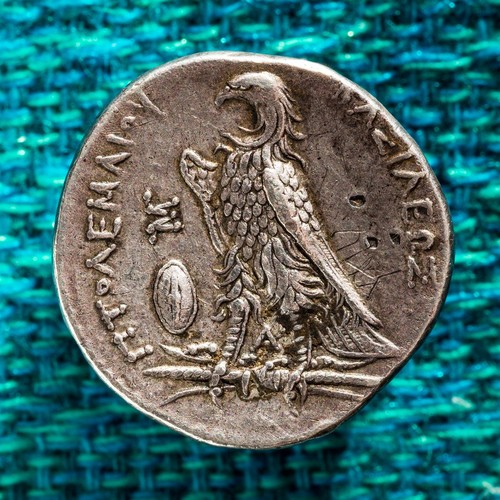
Tetradrachm of Ptolemy I
305-283 BC
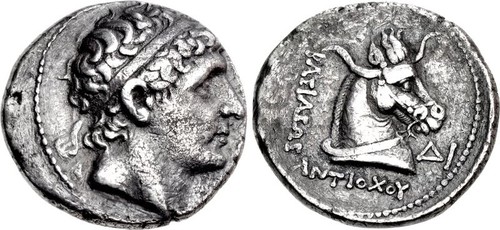
Tetradrachm of Antiochos I Soter
281-261 BC
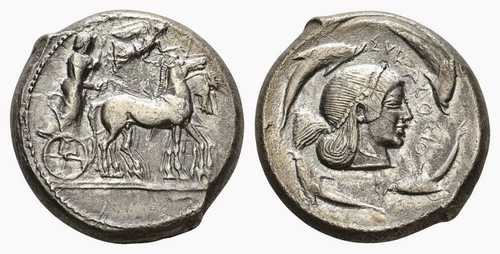
Syracuse Tetradrachm
c. 5th-4th century BC (Classical period)
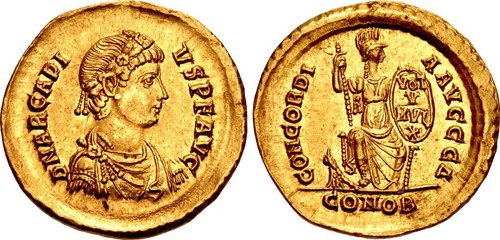
Solidus of Arcadius
AD 395-402
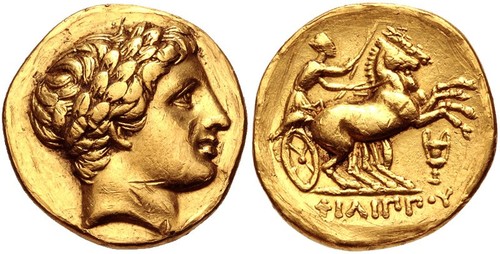
Philip III Gold Stater
323-317 BC
Siliqua of Gratian
AD 367-383
Sestertius of Maximinus Thrax
235-238 AD
Solidus of Valentinian III
AD 425-455
Seleucus I Nicator Tetradrachm
Late 4th-3rd century BC
Nummus of Magnentius
AD 350-353
Follis of Galerius
AD 308-310