
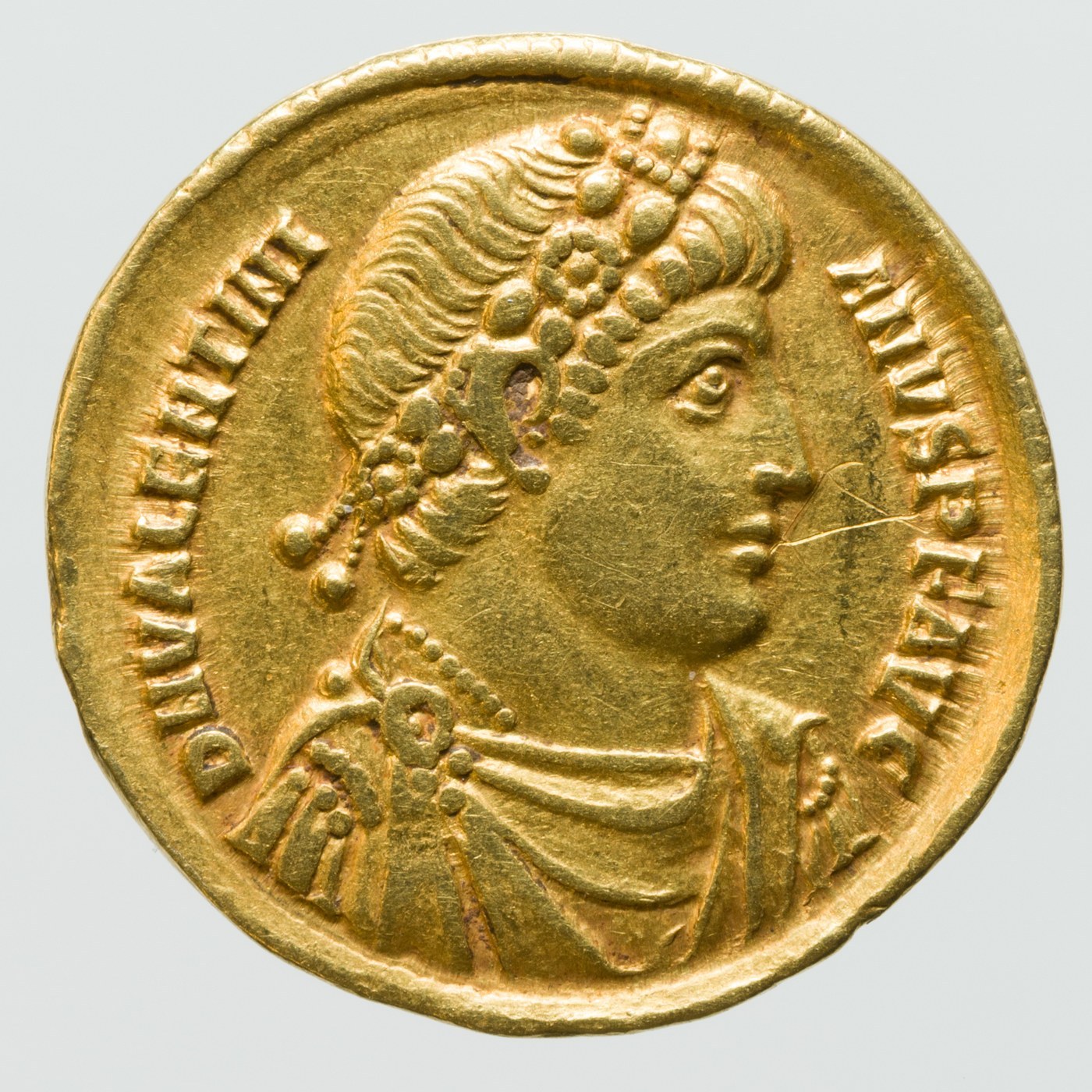
Solidus of Valentinian II
A late Roman gold solidus struck for Valentinian II, showing his diademed profile with the obverse legend D N VALENTINIANVS, from the 380s AD.
- Country
- Roman Empire
- Denomination
- Solidus
- Metal
- Gold
Got a coin like this?
Identify any coin from a photo, free.
Overview
The solidus was the standard gold coin of the late Roman Empire, and this example was struck for Valentinian II (reigned AD 375-392), a Western emperor who came to the throne as a small child. The obverse shows his bust facing right with an ornate, pearl-diademed hairstyle and the Latin legend D N VALENTINIANVS, the form of name used for him on late imperial gold.
By the 380s the solidus had become the empire's principal high-value coin, struck in nearly pure gold at 72 to the Roman pound. It was the currency of the state, the army, and the wealthy rather than a coin of everyday trade, and its stable gold content made it a trusted store of value across the Mediterranean world.
The date range associated with this piece, roughly AD 383-387, places it in the middle years of Valentinian's nominal reign, a period dominated by powerful generals and rival emperors acting in the young ruler's name. Gold coins from this era are valued both as fine ancient objects and as artifacts of the fractured politics of the late fourth-century West.
History & Background
Valentinian II was proclaimed Augustus in AD 375 at about four years of age, immediately after the sudden death of his father, Valentinian I. He ruled the Western provinces alongside his older half-brother Gratian, though real power lay with his mother Justina and a succession of army commanders. After Gratian was killed in AD 383 by the usurper Magnus Maximus, Valentinian's position in Italy became increasingly precarious.
During the years around AD 383-387 the boy emperor's court, based at Milan, was caught between the pressure of Maximus in the West and dependence on the Eastern emperor Theodosius I. Maximus invaded Italy in AD 387, forcing Valentinian to flee east; Theodosius later restored him, but he remained a figurehead. He died in AD 392 at Vienne in Gaul, under the control of the general Arbogast, in circumstances that were reported as suicide and widely suspected to be murder.
The solidus he was named on had been introduced by Constantine I earlier in the century and had become the backbone of the late Roman monetary system. It was produced at a network of imperial mints, and Western gold of this period is commonly associated with mints such as Trier, Milan, and Aquileia, while Eastern issues came from Constantinople, Thessalonica, and elsewhere. Because several emperors reigned jointly in these years, the coinage names each ruler individually while sharing common reverse designs.
How to Identify
The obverse legend is the decisive feature. This coin reads D N VALENTINIANVS, an abbreviation of Dominus Noster Valentinianus ("Our Lord Valentinian"), usually completed with titles such as P F AVG. The bust faces right and is shown with the elaborate pearl-diademed hair typical of late-fourth-century imperial portraits, draped and cuirassed. Reading that legend is the surest way to attribute the coin, because the portraits of this period are highly standardized and look broadly alike across different emperors.
The reverse is described only as a standard solidus type and is not detailed here. Gold solidi of the 380s commonly carried enthroned imperial or personification reverses with legends such as VICTORIA AVGG or CONCORDIA AVGGG, a mint mark in the exergue, and the gold-mint signature OB. A specialist attribution to a specific issue rests on matching that reverse type and mint mark against published references.
In hand the solidus is a small, thin, dense disc: about 20-21 mm across and close to 4.5 grams, struck in high-purity gold that stays a warm, untarnished yellow. The relief is crisp and carefully engraved, and the flan is broader and flatter than the thicker gold coins of earlier centuries.
Value & Collectibility
Gold solidi of Valentinian II are scarce, high-value coins that trade well above the bronze coinage of the same period. Worn or lower-grade examples commonly sell in the high hundreds to low thousands of dollars, while sharply struck, well-centered coins with fine portraits and desirable mints can reach several thousand or more at auction.
Value is driven by the intrinsic gold content, the sharpness of the portrait, the rarity of the particular mint and reverse type, the state of preservation, and documented provenance. Coins from Western mints and unusual issues tend to attract stronger interest from specialists.
The figures given here are general context rather than an appraisal. Ancient gold is a frequent target for forgery, so the realizable value of any specific solidus depends heavily on expert authentication and a clear ownership history.
Frequently asked questions
What is a solidus?
The solidus was the standard gold coin of the late Roman Empire, introduced by Constantine I and struck at 72 to the Roman pound (about 4.5 grams). It was a high-value coin used for large payments, state finance, and military pay rather than daily trade.
Who was Valentinian II?
Valentinian II was a Western Roman emperor who reigned from AD 375 to 392. He was made Augustus as a young child after his father's death and remained largely a figurehead, controlled by his mother and a series of army commanders.
What does D N VALENTINIANVS mean?
It is short for Dominus Noster Valentinianus, or "Our Lord Valentinian," the standard obverse naming formula on his gold coinage. It is usually completed with imperial titles such as P F AVG.
Are solidi of Valentinian II valuable?
Yes. Genuine gold solidi of Valentinian II are scarce and typically worth from the high hundreds into the thousands of dollars, with fine examples reaching more at auction. Value depends on condition, mint, reverse type, and provenance.
Solidus of Valentinian II guides
In-depth guides for identifying, valuing, and collecting Solidus of Valentinian II.
Other coins you may enjoy
Tetradrachm of Ptolemy XII
80-51 BC
Tetradrachm of Ptolemy I
305-283 BC
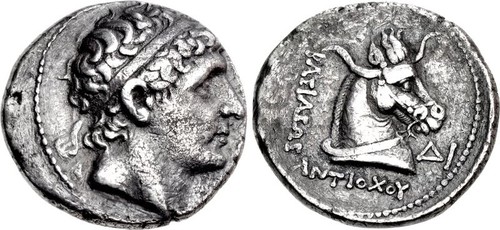
Tetradrachm of Antiochos I Soter
281-261 BC
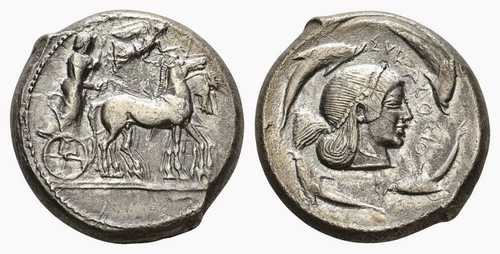
Syracuse Tetradrachm
c. 5th-4th century BC (Classical period)
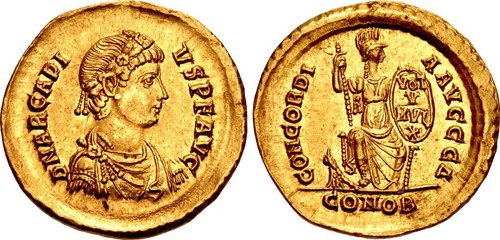
Solidus of Arcadius
AD 395-402
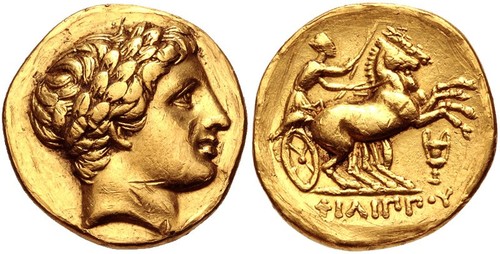
Philip III Gold Stater
323-317 BC
Siliqua of Gratian
AD 367-383
Sestertius of Maximinus Thrax
235-238 AD
Solidus of Valentinian III
AD 425-455
Seleucus I Nicator Tetradrachm
Late 4th-3rd century BC
Nummus of Magnentius
AD 350-353
Follis of Galerius
AD 308-310