
How to Identify the Solidus of Valentinian II
A collector's guide to reading the diademed portrait, D N VALENTINIANVS legend, weight, and gold fabric that mark a genuine solidus of Valentinian II.
Read the full Solidus of Valentinian II encyclopedia entry →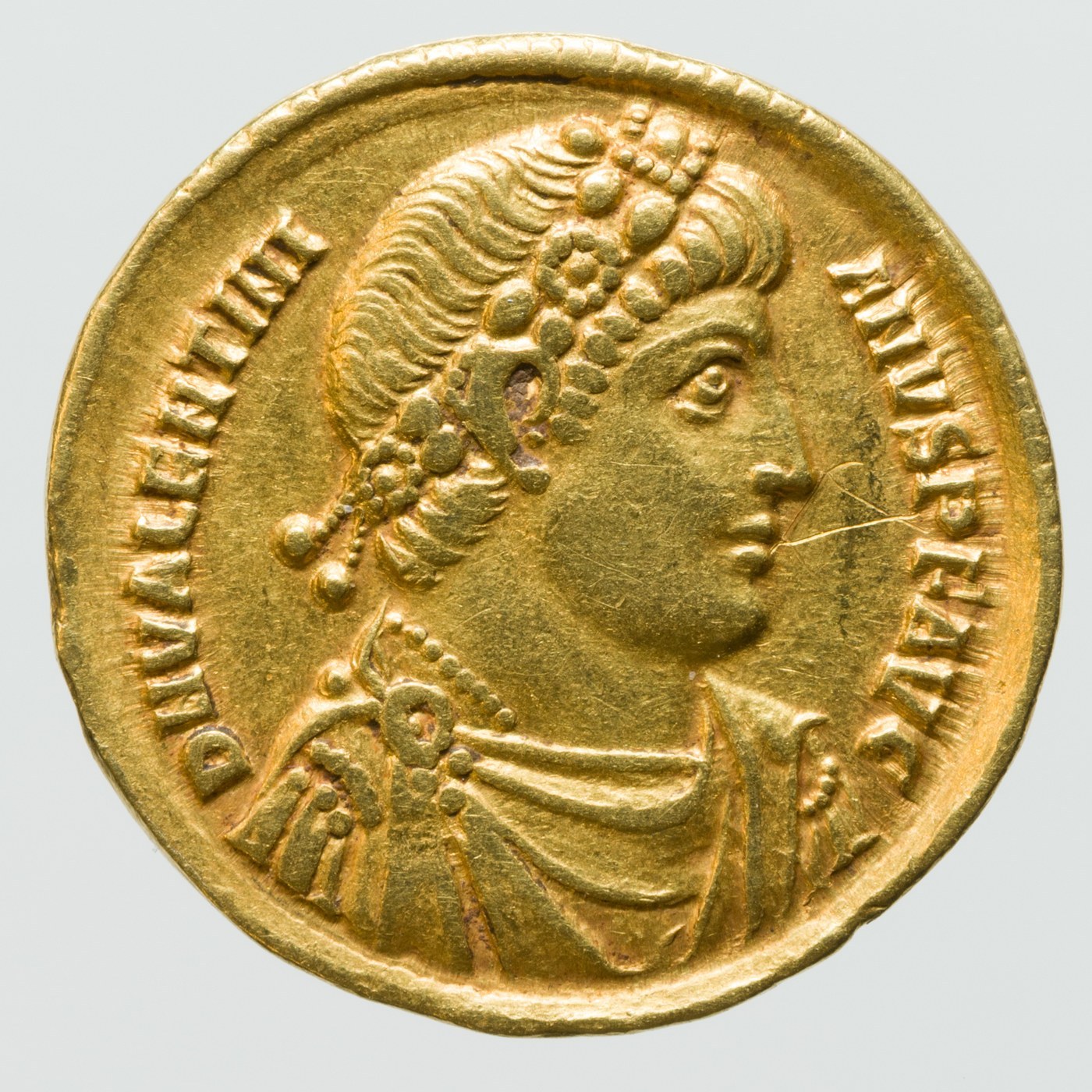
Start with the obverse legend, because the portrait alone will not settle the attribution. Late-fourth-century emperors all wear a similar right-facing, pearl-diademed bust, so read the Latin around the edge: this coin names D N VALENTINIANVS, short for Dominus Noster Valentinianus, usually with P F AVG following. That legend is what separates it from otherwise near-identical solidi of contemporaries such as Gratian, Theodosius I, Arcadius, or the usurper Magnus Maximus.
Be careful to distinguish the several rulers named Valentinian. Valentinian I (AD 364-375) and Valentinian III (AD 425-455) also appear as VALENTINIANVS on gold, so the surrounding titles, portrait style, mint mark, and reverse type must be read together to confirm this is Valentinian II of the 380s rather than an earlier or later namesake. The youthful, idealized portrait typical of his reign is a helpful but not conclusive clue.
Check size, weight, and metal. A genuine solidus is a thin, broad gold disc about 20-21 mm across and close to 4.5 grams, in high-purity gold that stays bright yellow without tarnish. The flan is flatter and wider than the chunkier aurei of earlier centuries, and the relief should be crisp and hand-struck. A coin that is too heavy, too light, or made of pale or reddish metal deserves suspicion.
Use the reverse and its mint mark for a full attribution. The photographed example shows only a standard solidus reverse, but on coins of this period the reverse type and the exergue mint mark, together with the gold signature OB, tie a coin to a specific mint and issue. Western solidi of Valentinian II are commonly linked to mints such as Trier, Milan, and Aquileia; matching the type and mark against a reference such as Roman Imperial Coinage is how specialists confirm the exact issue.
Treat authenticity with caution, because ancient gold is heavily forged. Warning signs include incorrect weight or diameter, a casting seam or grainy surface pointing to a cast rather than a struck coin, lettering and portrait style that do not match published dies, and gold that looks too brassy or too red. Given the values involved, any solidus of Valentinian II is best bought with expert authentication and documented provenance.
Frequently asked questions
How do I know the coin is Valentinian II and not another emperor?
Read the obverse legend. This coin names D N VALENTINIANVS. Because late Roman gold portraits look very similar across emperors, the legend rather than the face identifies the ruler, and the titles and date help confirm it is Valentinian II.
How can I tell Valentinian II from Valentinian I or III?
All three appear as VALENTINIANVS on gold. Distinguishing them relies on reading the full titles, the portrait style, and above all the mint mark and reverse type, which place the coin in the 380s rather than an earlier or later reign.
The reverse isn't detailed. Can I still identify the coin?
You can confirm the emperor from the obverse legend and portrait, but a full attribution to a specific issue needs the reverse type and the mint mark in the exergue. Without a legible reverse, only a general identification is possible.
What should make me suspect a forgery?
Watch for wrong weight or diameter, a casting seam or grainy surface, lettering and portrait style that do not match known dies, and gold that looks too brassy or red. Ancient gold is widely faked, so seek expert authentication and provenance.